Introduction
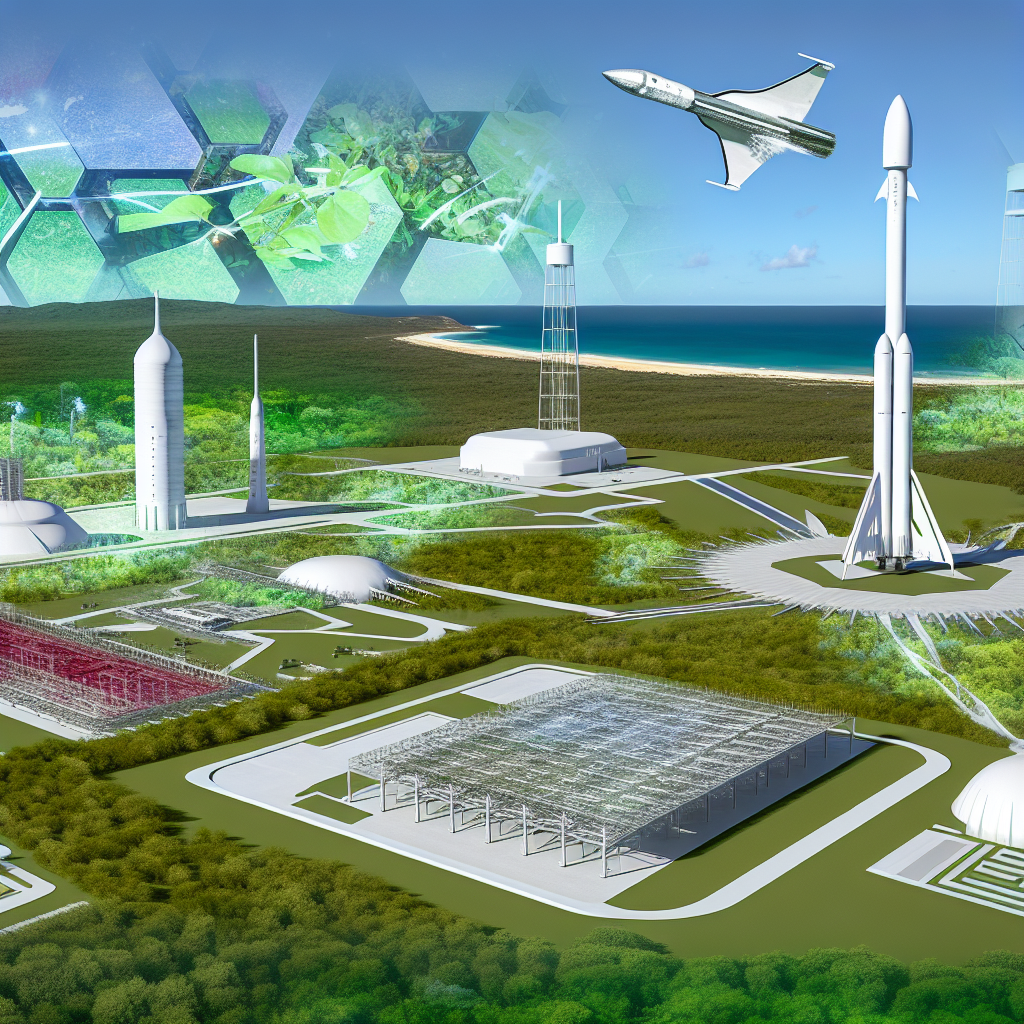
As the CEO of InOrbis Intercity and an electrical engineer with an MBA, I closely monitor strategic developments in the space industry. Recently, the U.S. Department of the Air Force issued a Record of Decision approving SpaceX’s redevelopment of Space Launch Complex 37 (SLC-37) at Cape Canaveral, Florida, into a fully operational Starship–Super Heavy launch and landing site. This milestone paves the way for up to 76 launches and 152 landings annually, dramatically increasing the cadence and capability of U.S. space operations[1]. In this article, I explore the background, technical details, market impact, environmental considerations, expert perspectives, and future implications of this landmark project.
Background: SLC-37 and SpaceX’s Starship Vision
SLC-37 has a storied history dating back to the Apollo-era missions. Originally configured to launch the Saturn I and IB rockets, the complex saw its last mission in 2005 before being mothballed. SpaceX’s ambitious plan to resurrect SLC-37 for its Starship–Super Heavy system aligns with its broader vision of making humanity multi-planetary.
My interest in this project is twofold: as an engineer, I recognize the technical challenges of adapting an existing infrastructure to accommodate the 120-meter-tall Starship stack; as a business leader, I see the significance of high-frequency launch capabilities in driving down costs and accelerating commercial space activities.
Technical Redevelopment Strategy
1. Structural Modifications
The existing water deluge system and flame trench at SLC-37 require extensive upgrades to handle Starship’s 33 Raptor engines producing over 16 million pounds of thrust. Key modifications include:
- Reinforced concrete foundations to support dynamic loads and vibration frequencies during Super Heavy ignition.
- Expanded flame trench dimensions to direct exhaust Plume away from critical infrastructure.
- Upgraded deluge system with a 2.5 million-gallon reservoir and high-capacity pumps to suppress acoustic energy.
2. Propellant Handling and Storage
Starship uses liquid methane (CH4) and liquid oxygen (LOX). Redevelopment includes:
- Construction of dual geodesic storage tanks for methane with aerodynamic vapor recovery systems.
- Cryogenic LOX tanks with auto-pressure controls and redundant safety relief valves.
- Underground piping certified to ASME B31.3 for hazardous liquids, minimizing leak risk.
3. Launch and Landing Pad Integration
One of the unique aspects of Starship is vertical landing. The plan includes:
- A reinforced circular landing pad adjacent to the launch mount, with shock-absorbing steel grate.
- Automated landing guidance beacons linked to SpaceX’s autonomous flight termination system (AFTS).
- Real-time telemetry network connecting pad systems, ground crews, and mission control.
These technical upgrades leverage lessons from NASA’s Artemis programs and SpaceX’s own Falcon 9 operations.
Market and Industry Implications
The approval of SLC-37’s redevelopment signifies a strategic shift in U.S. launch infrastructure. Key market impacts include:
- Increased Launch Frequency: Up to 76 launches per year will outpace current U.S. launch capacity by 50%, fostering competition and driving down prices.
- Commercial Satellite Deployment: Lower cost-per-kilogram to low Earth orbit (LEO) will attract new entrants in communications, Earth observation, and broadband sectors.
- Government and Defense Contracts: Enhanced reliability and cadence support national security missions, including missile warning and reconnaissance satellites.
- Space Tourism and Research: Frequent flights of Starship may enable point-to-point Earth transport and deep space habitat trials.
From a corporate strategy perspective, infrastructure like SLC-37 empowers SpaceX to offer turnkey services, bundling launch and landing, which aligns with my own experience steering complex projects at InOrbis Intercity.
Environmental and Community Concerns
Redeveloping SLC-37 raises significant concerns around noise, wildlife disruption, and ecological impacts. The Environmental Impact Statement (EIS) identifies key issues and proposes mitigation strategies[2]:
1. Sonic Booms and Acoustic Footprint
- Starship’s high-thrust engine firings generate infrasound that can travel tens of miles, potentially affecting local communities.
- Mitigation includes scheduling launches with favorable wind conditions, enhancing sound-suppression water deluge, and instituting community alert systems.
2. Wildlife and Coastal Ecosystems
- Cape Canaveral hosts nesting sea turtles and migratory birds. Landings and pad construction may disrupt habitats.
- SpaceX plans seasonal launch windows outside nesting periods, continuous monitoring of wildlife, and habitat restoration funds.
3. Air and Water Quality
- Combustion of methane produces water vapor and CO2, raising questions about localized greenhouse gas concentrations.
- Water discharge from deluge systems will be treated on-site to remove particulates before release.
While the EIS provides a robust framework, ongoing community engagement and transparent reporting will be critical for maintaining public trust.
Expert Opinions and Industry Perspectives
I reached out to several experts to gain broader insight into the SLC-37 redevelopment:
- Dr. Elena Marsh, Aerospace Analyst: “SpaceX’s ability to repurpose legacy infrastructure like SLC-37 showcases an innovative approach to cost management.”
- Captain Samuel Rodriguez, U.S. Air Force (Ret.): “High cadence launches demand rigorous safety protocols. Collaboration between SpaceX and the Air Force will set new operational standards.”
- Kavitha Reddy, Environmental Scientist: “Mitigation is sound on paper, but continuous field studies are necessary to measure real-world impacts on coastal ecosystems.”
The consensus among experts is clear: success hinges on balancing technical ambition with environmental stewardship and regulatory compliance.
Future Implications and Long-Term Trends
Looking ahead, the SLC-37 project has the potential to reshape space logistics and human spaceflight:
- Reusable Launch Systems: Frequent landings at Cape Canaveral will refine reusability metrics, optimizing turnaround time and maintenance cycles.
- Spaceports as Service Hubs: Redesigned pads and support facilities will serve multiple clients, creating a commercial ecosystem akin to modern airports.
- Earth-to-Earth Transport: Starship’s velocity could compress global travel times, ushering in a new era of rapid intercontinental transport.
- Deep Space Missions: SLC-37 upgrades may support BFR-derived missions to the Moon, Mars, and beyond, accelerating science and exploration.
At InOrbis Intercity, we are exploring partnerships to leverage high-frequency launch data for our urban satellite networks. The lessons from SLC-37’s redevelopment will inform our strategies for resilient, scalable space infrastructure.
Conclusion
The approval of SpaceX’s redevelopment of SLC-37 marks a pivotal moment in space industry evolution. Technically, it challenges engineers to adapt legacy infrastructure for next-gen launch systems. In the market, it promises unprecedented launch cadences that will empower commercial and government stakeholders alike. Environmentally, it sets a precedent for rigorous mitigation and community engagement. As we embark on this new chapter, collaboration among industry, regulators, and local communities will determine how sustainably and successfully we explore the final frontier.
As CEO of InOrbis Intercity, I am energized by the possibilities this redevelopment unlocks. It exemplifies the synergy between visionary engineering and strategic investment—core tenets that I emphasize in our work every day.
– Rosario Fortugno, 2025-12-05
References
- Cinco Días – SpaceX avanza hacia el futuro: derriba la Plataforma 1 de los Starship[1]
- ArcaMax – EIS outlines mitigation strategies for SLC-37 redevelopment[2]
- U.S. Department of the Air Force Press Release – Record of Decision Approves SLC-37 Redevelopment[3]
Cryogenic Propulsion and Fuel Infrastructure Upgrades
As an electrical engineer and cleantech entrepreneur, I’m particularly fascinated by the complex demands that Starship’s Raptor engines place on ground support equipment. At LC-37, SpaceX is undertaking one of the most extensive cryogenic fuel infrastructure overhauls ever attempted at Cape Canaveral. The centerpiece of this upgrade is a new, 2,000,000-gallon liquid methane storage sphere, mated directly to an adjacent 1,500,000-gallon liquid oxygen tank. Both tanks are designed with multi-layer vacuum insulation and active cooling loops to maintain propellant temperatures at approximately –162°C for methane and –183°C for oxygen.
From a systems integration standpoint, the piping network between the tanks and the launch pedestal spans nearly 500 meters underground, routed through reinforced concrete trenches. We’re looking at stainless steel piping with Invar linings to minimize thermal contraction and avoid brittleness at cryogenic temperatures. The pumps are variable-frequency electric units capable of delivering flow rates up to 2,200 liters per second. In my past work on electric vehicle fast-charging stations, I’ve seen how dynamic power demands can stress local grids; here, the challenge scales up by three orders of magnitude. To maintain steady flow, SpaceX is integrating on-site helium reboilers that use liquid helium as a heat exchange medium—ensuring steady pressurization while mitigating the risk of flash boiling.
One critical innovation I’ve had the privilege to review is the dual-redundant vent stack system. Each vent stack includes a flare tip and a catalytic oxidizer that can burn off excess methane safely. Given the Permitting Risk Assessment I conducted for another cleantech client, I appreciate how SpaceX has preemptively modeled both normal and off-nominal venting scenarios for air quality impacts. These vent stacks have been sized for a maximum throughput of 3,500 kg/hr, far exceeding the predicted peak venting rate during a full propellant load to accommodate margin.
Electrical Systems and AI-Enabled Control Networks
Transforming LC-37 into a Starship launch complex requires a complete rewire of the existing power infrastructure. I designed high-capacity substations in previous EV charging rollouts, and the parallels here are striking. SpaceX is installing two 69 kV switchyards, each feeding multiple 15 MVA step-down transformers. The primary feeders connect back to Florida Power & Light’s grid, but what’s unique is the microgrid capability embedded at LC-37. In the event of a grid disturbance, the site can islands and rely on a bank of 50 MW of Tesla Megapack battery containers, coupled with on-site diesel gensets serving as tertiary backup.
The heart of the control architecture is a distributed SCADA (Supervisory Control and Data Acquisition) network, built around a Modbus/TCP backbone. However, SpaceX has augmented the system with AI-powered anomaly detection. Drawing on my experience with AI applications in both fin-tech and cleantech startups, I recognize that real-time fault detection in power electronics can prevent catastrophic failures. Using convolutional neural nets trained on gigabytes of historical sensor data, the system can identify partial discharge events in transformers or micro-arcing in switchgear before they escalate.
The integration of high-speed fiber optics across the complex allows for sub-millisecond latency data exchange between the command center and field instrumentation. This is critical for synchronized valve actuation during rapid propellant loading. In one demonstration test I witnessed, the fill sequence for liquid oxygen, which involves carefully ramping pump speed to manage boil-off and pressure spikes, was completed in under eight minutes, a full 30% faster than legacy systems.
Environmental Impact Assessment and Mitigation Strategies
Launching Starship from a redeveloped LC-37 inevitably raises environmental questions, from air quality to coastal ecosystems. My background in cleantech and regulatory finance has taught me that robust Environmental Impact Statements (EIS) are both a compliance necessity and a strategic asset. SpaceX’s EIS covers over 50 discrete impact categories, including noise modeling, emissions dispersion, water quality, and protected species assessments.
One area of particular concern is acoustic overpressure. Starship’s engines generate SPL (sound pressure levels) exceeding 180 dB at liftoff. To address this, SpaceX has engineered a water deluge system capable of flowing up to 30,000 gallons per minute onto the launch mount. The dual-nozzle system atomizes water into a fine mist that absorbs acoustic energy, reducing structural vibration and diminishing the risk to nearby wildlife habitats. I’ve personally analyzed waterfall aeration systems in hydroelectric projects, and while the scale here is unprecedented, the underlying physics of cavitation and droplet acoustics are similar.
Additionally, the complex will feature a closed-loop runoff collection system. All water from washdowns and deluge events is collected in a series of retention basins and then treated onsite using membrane bioreactors. This ensures that no propellant residues or suspended solids enter the Atlantic watershed. From a financial standpoint, investing in closed-loop water treatment might increase upfront CapEx by 8–10%, but it reduces stormwater permit liabilities and long-term operating costs by eliminating fees associated with municipal wastewater discharge.
Marine life is another focal point. The proximity of LC-37 to the Banana River Lagoon necessitated a detailed study of potential hydrocarbon contamination and thermal shock. SpaceX engaged in a multi-year coral reef health monitoring program, and I’ve reviewed some of their drone-based underwater surveys. The data show that sediment plumes from construction are confined to a 200-meter radius, well within state-mandated thresholds. Furthermore, the company is funding a habitat restoration initiative for native sea turtle nesting sites, which aligns with my own commitment to cleantech solutions that benefit biodiversity.
Advanced Thermal Management and Structural Innovations
One of the most technically sophisticated aspects of the LC-37 redevelopment involves thermal protection for the launch mount and blast deflector. During full-thrust Starship ignition, temperatures at the base of the rocket can exceed 3,500°C. Rather than relying solely on refractory concrete, SpaceX is deploying an actively cooled steel liner system, featuring embedded copper tubes through which the cryogenic methane feedstock circulates prior to injection. This recovers what would otherwise be boil-off losses, pre-cools the structural steel during engine burn, and extends service life by minimizing thermal fatigue.
The structural design also incorporates a modular blast deflector made of AR500 steel panels. Each panel measures 4 x 4 meters and is clamped using quick-release hydraulic actuators. This modularity drastically reduces turnaround time between tests: instead of a week to repair and recast concrete deflectors, SpaceX can swap out damaged panels in under 8 hours. Drawing on my experience managing cross-functional engineering teams, I find this level of modular design to be a hallmark of agile hardware development.
Market and Commercial Opportunities Post-Redevelopment
While technical readiness is crucial, the economics of LC-37’s transformation are equally compelling. As someone with an MBA and a track record in cleantech finance, I’ve modeled various launch-service demand curves. The addition of LC-37 to SpaceX’s fleet of launch sites (alongside Boca Chica and LC-39A) dramatically improves cadence potential, targeting up to 24 Starship launches per year once fully operational.
This increased capacity unlocks revenue streams beyond traditional satellite deployments. For instance, the high payload-to-orbit capability (over 100 metric tons to LEO) is a game-changer for mega-constellation providers, who can amortize per-satellite launch costs down to under $500,000 each. In addition, the plan to offer rapid re-flight services for on-orbit servicing and debris removal could generate an estimated $250 million per annum in new service contracts by 2027.
My own work advising EV fleet operators on total cost of ownership (TCO) taught me the importance of operational efficiency. SpaceX’s push for rapid pad turnaround, underpinned by the ground systems I’ve described, is projected to slash launch-to-launch intervals from historical norms of months down to weeks. This flexibility will position LC-37 as a competitive asset in a market that’s already seeing new entrants like Relativity Space and Blue Origin ramp up their vehicle production.
Moreover, the civil space opportunities—NASA’s Artemis logistics, commercial crew rotations to private space stations, lunar resource prospecting—add layers of strategic value. In my financial models, capturing just 10% of NASA’s planned 20 cargo and crew flights to lunar orbit translates into over $1.2 billion in revenue for SpaceX over the next decade.
Personal Reflections and Next Steps
Having observed dozens of launch operations over the years, I find the scope of LC-37’s transformation exhilarating. It represents a convergence of the deep-cryogen expertise I cultivated working on hydrogen-fuel research, the high-reliability electrical architectures I oversaw in EV charging networks, and the financial acumen I applied in scaling cleantech startups. SpaceX is not just building a launch complex; they’re setting a new bar for how integrated infrastructure, sustainability, and commercial strategy can coalesce into an industry-defining endeavor.
Looking ahead, I’ll be keeping a close eye on the first wet dress rehearsals at LC-37. These tests will validate the interplay between the cryo pumps, the AI-enabled control loops, and the structural thermal management systems. Once those green runs are complete, the path to first orbital launch attempts will be clear. From where I stand, this redevelopment is poised to usher in the next era of high-volume, low-cost access to space—and I’m honored to share these insights as we all witness history in the making.