
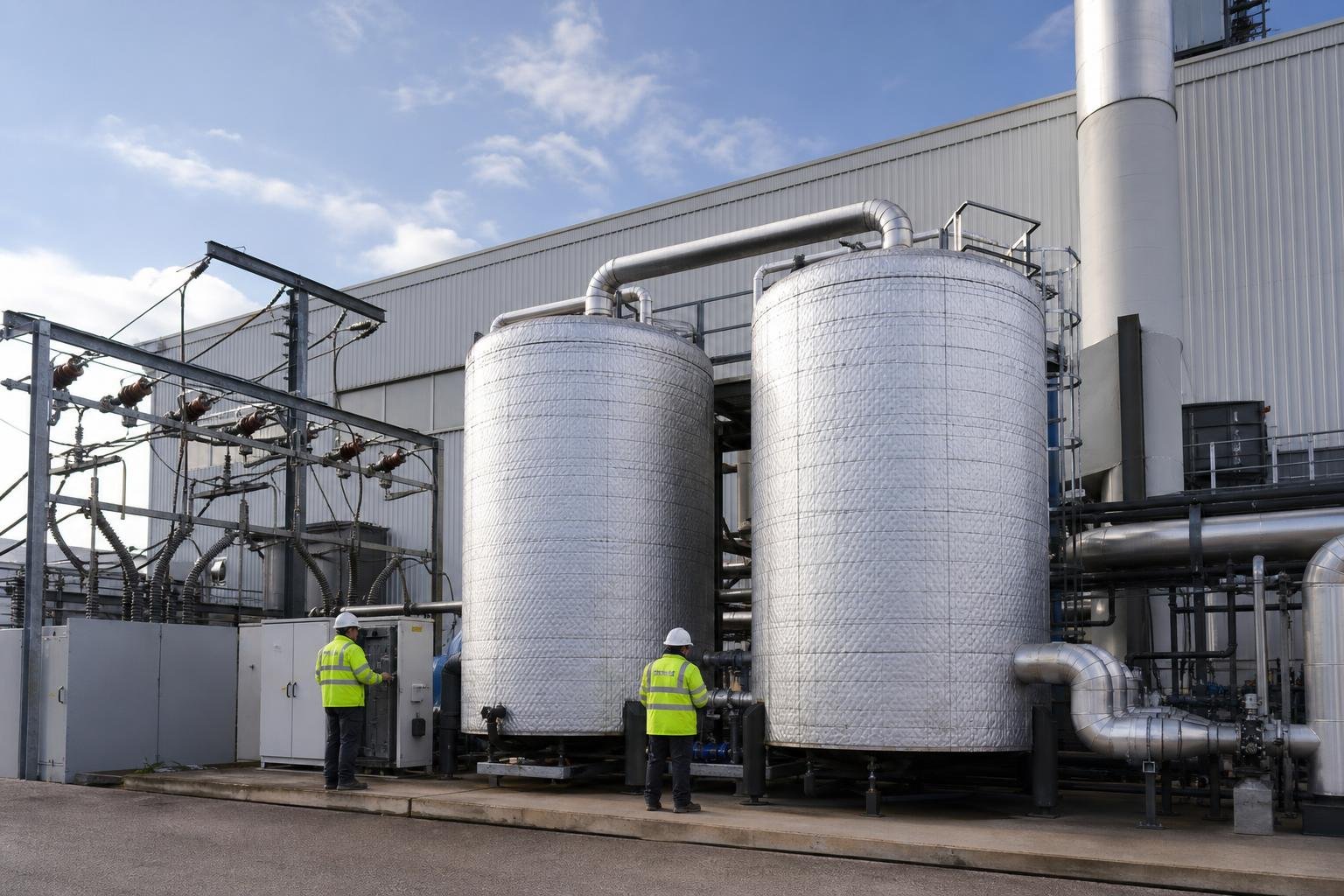
Antora Energy has raised a $550 million Series C round to expand its thermal-battery business, bringing the company’s total funding to $770 million. The company announced the financing on July 30 and said it has recently deployed a 5-gigawatt-hour thermal-storage system in South Dakota.[1]
The investment is significant because the energy challenge surrounding AI infrastructure is usually discussed in terms of new generation, transmission lines and conventional electrochemical batteries. Antora is pursuing a different part of the problem: using low-cost electricity when it is available, storing it as high-temperature heat, and supplying that heat to industrial customers or converting it back into electricity. The industrial-heat application is comparatively direct. Supplying the tightly controlled, always-on electrical load of a data center is a more difficult and less proven proposition.
By the numbers
- $550 million: Size of Antora’s Series C financing.
- $770 million: Total funding raised by the company following the round.
- 5 GWh: Capacity of the thermal-storage system Antora said it recently deployed in South Dakota.
- July 30: Date of the company’s Series C announcement.
Why thermal storage is attracting capital
Thermal batteries are designed around a simple physical advantage: heat can be stored in relatively inexpensive, durable materials. Rather than preserving energy through a chemical reaction, as lithium-ion batteries do, a thermal system uses electricity to heat a storage medium—commonly a solid material—then retains that energy for later use. Antora’s approach centers on storing electricity as heat in carbon-based blocks, according to the company’s public description of its technology.[1]
That matters most where the desired output is heat. Industrial operations consume large quantities of thermal energy for processes such as drying, curing, boilers, furnaces and materials processing. In those cases, a storage system can avoid one costly conversion: electricity becomes heat, and the stored heat is delivered as heat. A facility does not need to turn the energy back into electricity merely to run a thermal process.
For an industrial customer, the economic proposition is therefore not just energy storage. It is fuel substitution and energy-price management. A heat battery can charge when renewable generation or grid electricity is inexpensive, then discharge when a plant needs high-temperature energy. If it replaces fossil-fuel combustion, it can also reduce on-site emissions. The value depends on local power prices, the customer’s required temperature, charging availability, and the cost of the heat the system displaces.
The 5-GWh South Dakota deployment is consequential because thermal-storage projects have historically struggled to move from pilots to equipment deployed at infrastructure scale. Capacity alone does not reveal a project’s discharge duration, thermal output, operating temperature or commercial performance. Still, it indicates that Antora is discussing installations in gigawatt-hour terms rather than laboratory demonstrations or small industrial trials.[1]
Industrial heat is the near-term use case
The strongest case for heat batteries is in factories that already buy fuel to make heat. These facilities often need energy for long periods, and many need temperatures that are difficult or expensive to serve with conventional electric equipment alone. Thermal storage can separate the moment electricity is purchased from the moment heat is consumed, giving an industrial operator more flexibility than a direct electric heater.
It also addresses a mismatch in the clean-energy system. Wind and solar output varies by hour and season, while industrial plants generally need predictable energy on production schedules. A thermal battery does not make intermittent generation constant, but it can shift some of that low-cost generation into the hours when a factory needs it.
That distinction is important for evaluating Antora’s announcement. The company’s claim that its systems can provide round-the-clock heat aligns directly with the operational needs of industrial customers.[1] The technical chain is relatively short: charge electrically, store thermally, discharge thermally. Thermal losses, insulation performance, cycling durability and integration with a plant’s existing equipment remain important, but the system is serving energy in its stored form.
For heavy industry, this can be more practical than treating every decarbonization problem as an electricity-storage problem. Lithium-ion systems are valuable where the customer needs electrical output, rapid response or compact installations. They are not necessarily the lowest-cost option when the end product is many hours of process heat.

The data-center opportunity comes with a harder conversion problem
Antora has also positioned thermal batteries as a potential source of firm power for data centers.[1] This is where the technology intersects with the rapid expansion of AI computing, which is driving demand for large, continuous loads in regions where grid interconnection and new generation are constrained.
But a data center does not consume industrial heat. It consumes electricity with stringent requirements for availability, voltage and frequency quality, redundancy, rapid transfer to backup systems, and predictable operation during peak demand. To serve that load, a thermal battery must convert stored heat back into electricity. Antora’s system uses thermophotovoltaic conversion: hot material emits light, and photovoltaic cells convert that light into electrical power.
The process has an appealing systems-level rationale. It can store energy cheaply in heat and create electricity only when required, potentially using longer-duration storage than many conventional battery installations. Yet every conversion step affects efficiency. Electricity becomes heat; heat is retained; heat becomes radiation; radiation becomes electricity. The quality of the conversion equipment, the temperature of the storage medium, insulation losses, cycling behavior and balance-of-plant design all shape the usable output.
That does not make the data-center case implausible. It means it should be judged differently from an industrial heat installation. A heat customer can value low-cost thermal output even if the storage system is not optimized for electrical round-trip efficiency. A data center needs verified electrical performance and a clearly defined role alongside utility supply, on-site generation, UPS equipment and conventional batteries. Thermal storage may eventually help power-constrained regions by shifting clean electricity across longer periods, but it is not automatically a replacement for a data center’s existing reliability stack.
What the financing signals for the storage market
A $550 million round provides more than a vote of confidence in a storage concept. Large thermal systems require manufacturing capacity, engineered installation work, customer-specific integration, long procurement cycles and project financing. The Series C gives Antora more room to build the commercial organization and supply chain required to deliver large systems, while total funding of $770 million places the company among the more heavily financed companies pursuing industrial decarbonization through thermal storage.[1]
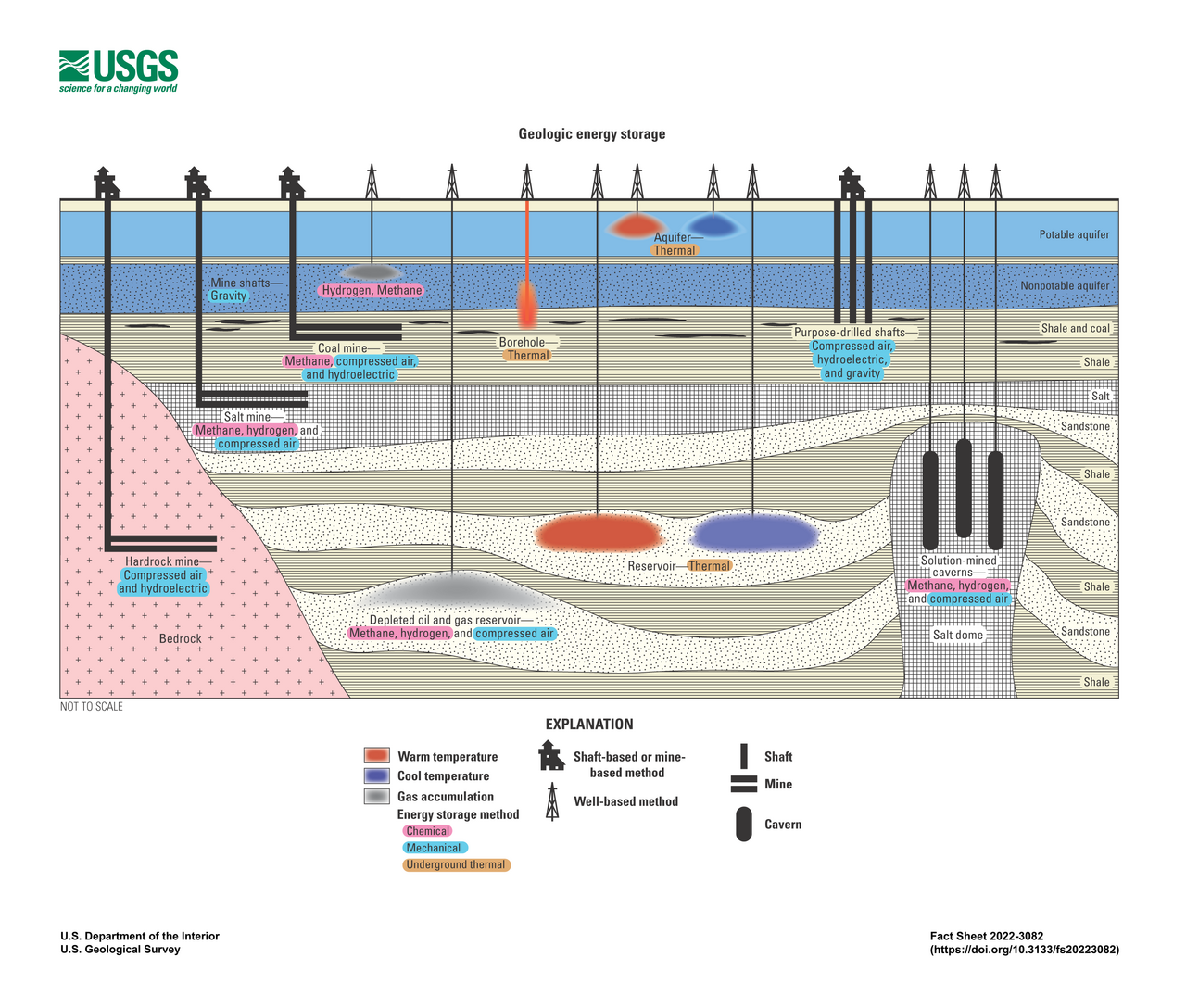
The wider market implication is that storage is becoming more segmented. Grid batteries, pumped hydro, hydrogen, compressed-air systems and thermal batteries solve different duration, location and output problems. The question is not which category will win every use case. It is whether project developers and large energy users will match each technology to the form of energy the customer actually needs.
For factories, that increasingly means considering heat as a stored product rather than an unavoidable byproduct of fuel combustion. For data-center developers, it means examining whether long-duration thermal storage can complement new renewable generation and grid capacity where transmission queues and generation shortages delay construction. The latter opportunity could be large, but it will depend on demonstrated electric-output economics, not simply on the scale of AI demand.
Execution risks remain substantial
Antora’s South Dakota deployment is an important concrete marker, but the project does not by itself establish fleet-wide economics. Developers will need to demonstrate how systems perform over years of thermal cycling, how much usable energy remains after standby periods, how quickly units can charge and discharge, and how reliably they integrate with industrial processes. The practical questions include installation footprint, safety systems, maintenance requirements and the cost of replacing components exposed to repeated high-temperature operation.
Commercial risk is equally material. Industrial customers often make investment decisions around uptime and fuel costs, not technology novelty. A thermal battery must fit production schedules and provide a credible payback against gas, coal, oil or direct electrification alternatives. Its business case can improve where cheap renewable electricity is abundant, but it can weaken where power prices stay high or grid connections are limited.
For data centers, the burden of proof is higher. Operators will want independently validated availability, duration, response behavior, conversion efficiency and maintenance plans before treating thermal storage as a core power source. The most credible early role may be as a component in a broader power architecture—helping manage energy over extended periods—rather than as a standalone answer to the sector’s reliability needs.
Editor’s Take
I see the industrial-heat application as the real center of gravity in this announcement. If a factory needs heat, storing electricity as heat avoids asking an expensive electrical-storage system to do unnecessary conversion work. A 5-GWh deployment and a financing round of this size suggest Antora is moving into the stage where manufacturing discipline, site integration and customer economics matter more than a compelling technical diagram.
The data-center angle deserves attention, but it needs sharper language than the usual AI-power narrative. Thermal batteries could become valuable infrastructure in constrained power markets, particularly where they can absorb cheap generation and support a diversified supply portfolio. What I would watch next is operational evidence: electrical output, duration, availability, conversion performance and contract structures. Until those are public at commercial scale, thermal storage should be viewed as a promising complement to data-center power systems, not a proven substitute for firm generation and conventional backup.



.png)
.jpg)