
1Password has launched 1Password for Agents, a system intended to let AI assistants access a user’s online accounts without ever receiving the underlying passwords. Instead of handing an autonomous system a reusable secret, the user receives an access request, approves it, and 1Password authenticates the agent through a digital identity key.[1]
The announcement addresses a fundamental obstacle to more capable AI agents: delegation. Agents can draft messages, compare products and navigate websites, but actions that cross account boundaries require authority. Today, that authority is often granted unsafely, through pasted passwords, persistent browser sessions or broad API tokens. A password manager acting as an approval and identity layer could offer a more controlled alternative—provided its permissions, records and revocation mechanisms are strong enough for agents that operate at machine speed.
Delegation, Not Just Better Models
The difficult part of making an agent useful is increasingly not whether a model can understand an instruction. It is whether the system can prove that it is acting for the right person, access only the appropriate account, and remain constrained to the task it was given.
Passwords are poorly suited to that job. They are bearer secrets: whoever possesses one can generally use it until it is changed or another security control intervenes. Giving a password to an agent creates several problems at once. The credential may be stored in logs, memory or an integration service; it may be usable outside the original task; and the user may have little ability to distinguish an agent’s actions from their own.
1Password for Agents proposes a different division of responsibilities. The agent asks for access, the human approves the request, and the password manager completes authentication without disclosing the credential to the agent.[1] The useful concept is not merely password autofill for AI. It is a mediated delegation path in which the agent receives proof that it has been authorized for a particular interaction rather than a copy of the secret that unlocks the account.
That approach follows a zero-trust principle increasingly being applied to autonomous systems: organizations need to know who owns an agent, what it is permitted to do, which systems it can reach, and how unexpected behavior will be detected. Security guidance from SANS argues that those questions require continuous records of agent creation, access changes, delegation and termination, rather than depending only on periodic audits.[2]
How the Authentication Flow Changes
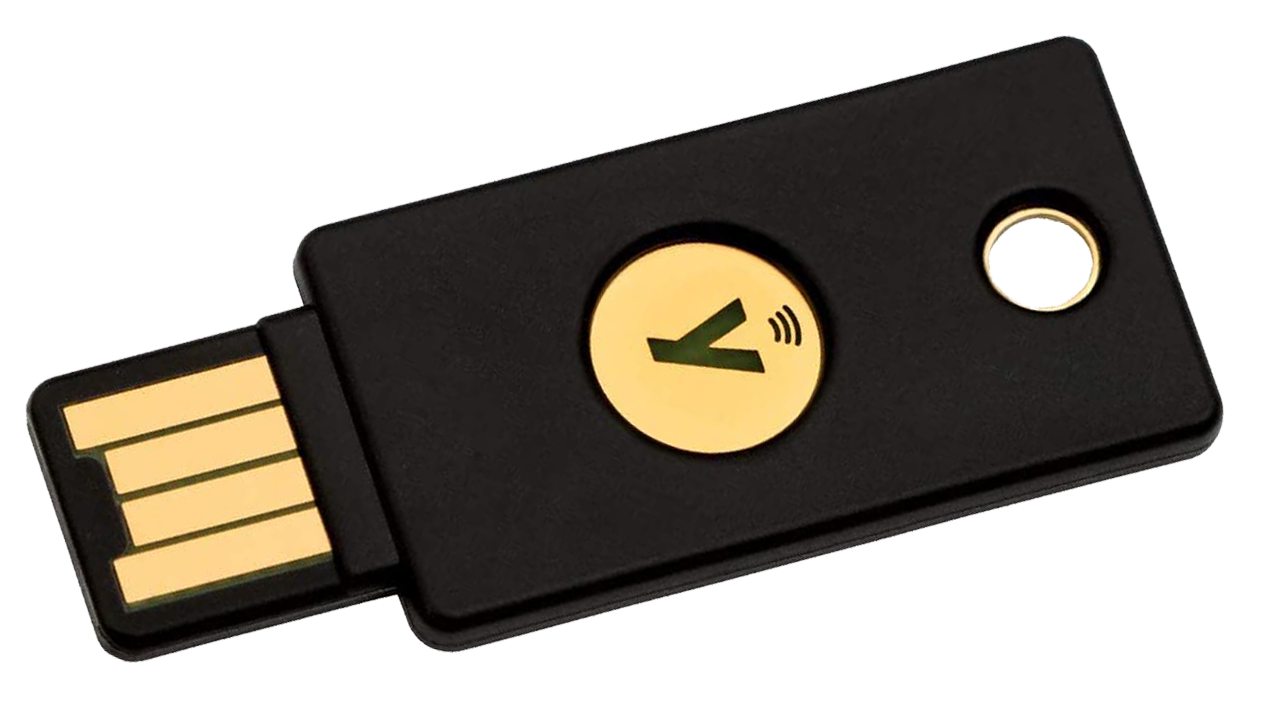
Under the model described by 1Password, an agent initiates a request for account access. The user is alerted and approves it. 1Password then authenticates the agent using a digital identity key while keeping the site password out of the agent’s view.[1] This separates authorization—the user’s decision to permit access—from authentication—the technical act of proving that approved access to the service.
1Password’s security documentation for its Claude integration offers a more detailed view of the design pattern. It describes application pairing, distinct identities for agent sessions, cryptographic session credentials, human approval for every credential request, and encrypted local communication between the paired components.[2] In practical terms, session-specific identities can make an approved interaction less reusable than a static password, while pairing helps ensure that a request originates from a recognized local application relationship.
The distinction matters because an agent should not need a general-purpose password vault. A secure delegation system should provide only the minimum capability needed to complete a requested sign-in or action. It should also bind that capability to a defined agent identity, session and destination wherever possible. If copied credentials are the currency of agent access, compromise tends to spread. If narrowly issued, cryptographically verifiable grants are the currency, access can be made more specific and more readily withdrawn.
Still, hiding the password does not automatically make every action safe. A successfully authenticated agent may be able to change an address, submit an order, download data or alter account settings depending on what the website permits after login. The system reduces a major credential-exposure risk; it does not independently determine whether the requested action is wise or reversible.

Scope, Records and Revocation Are the Next Tests
The central product question is the granularity of approval. A notification that says only “allow agent access to this account” can become the digital equivalent of handing over a house key. A useful approval screen should identify the agent, the account, the site or service, the requested task, the access duration and, ideally, the categories of actions expected after sign-in.
Permissions should be narrow by default. An agent delegated to retrieve an invoice should not automatically receive authority to change payment details. An agent authorized to book travel should not necessarily be allowed to cancel existing reservations. Some limits can be imposed by the website itself, but an intermediary such as a password manager can still add important boundaries: one-time approvals, time-limited sessions, destination restrictions and prompts for sensitive follow-on actions.
Auditability is equally important. A trustworthy agent-access record needs more than a successful-login event. It should capture which agent identity made the request, who approved it, which credential or account was used, when the authorization began and expired, what scope was granted, and when it was revoked. Those records should be searchable and understandable to consumers, administrators and incident responders. Continuous lifecycle logging, as SANS recommends, is especially relevant when agents can be created, paired, reassigned or terminated quickly.[2]
Revocation must also be immediate and reliable. Users need a way to stop a specific agent session without resetting a password across every device, and organizations need controls to disable agents when an employee leaves, a model integration is compromised or a policy changes. The strongest design would let a user revoke a single delegation, a paired application, an agent identity or all active agent access independently.
A Shift for Password Managers and Agent Platforms
The launch positions password managers as potential trust brokers for AI. Their existing role is to store credentials and decide when to fill them; the next role is to decide when an agent may invoke them. That is strategically significant because agent platforms, browser makers, identity providers and enterprise access-management vendors are all likely to compete for the layer that mediates user intent and account access.
For developers of agents, a credential-less flow could reduce pressure to build unsafe secret-storage features into every application. For businesses, it could offer a path between two unattractive choices: forbidding agents from accessing business systems altogether, or granting them long-lived credentials and hoping monitoring catches misuse. For websites, it may eventually create demand for finer-grained, machine-readable permissions beyond the all-or-nothing access of a conventional logged-in browser session.
Interoperability will determine how far this can go. A password manager can mediate login to existing websites, but the web was largely designed around human-driven sessions, not delegated software actors. The more safely agents are expected to act—especially in finance, health, commerce and enterprise administration—the more services will need their own explicit controls for delegated identity, transaction confirmation and action-specific consent.
Where the Limits Remain
The system’s security depends on more than encryption. Users must be able to recognize legitimate prompts and reject deceptive ones. Agents must not be able to repeatedly request approval until a user consents without understanding the consequence. The paired application and local communication path must resist malware on the user’s device. And the agent’s digital identity must remain protected against impersonation or unauthorized reuse.
There is also a usability trade-off. Requiring human approval for each credential request, as described in 1Password’s Claude documentation, can prevent silent escalation but may be too interruptive for longer workflows.[2] The industry will need to find a middle ground: approval policies that are specific enough to protect users but durable enough for legitimate multi-step tasks. That likely means tiered controls, with low-risk read operations handled differently from purchases, account recovery, data export or changes to security settings.
Most importantly, users should not mistake authenticated access for complete control. An agent can be properly identified and still misunderstand an instruction, navigate to the wrong page or make an undesirable choice within its allowed scope. The durable safety model will combine credential protection with task boundaries, action previews, transaction confirmations, anomaly detection and a complete trail of what happened.
Editor’s Take
I see this as a more consequential agent feature than another incremental model upgrade. The practical bottleneck has been that agents need to touch real services, while the safest existing answer has often been to keep them away from those services. Letting a password manager broker a narrowly approved sign-in is a credible way to remove passwords from the agent’s operating environment without making the agent useless.
What I will watch is the quality of the permission model, not the elegance of the demo. An approval that names the site but not the intended action is too broad. The winning systems will make it simple to grant a one-time, time-bounded delegation; show a clear event trail afterward; and kill access instantly when something looks wrong. If 1Password and the sites agents visit can make those controls routine, delegated identity could become foundational infrastructure for useful automation.