Runway has released open model weights for Praxis-1 under the Apache 2.0 license and published checkpoints targeting the SO-100/SO-101 low-cost robot-arm platform, according to a November 13 announcement reported by Highplane. The release also includes a quantized variant said to run on a single Nvidia RTX 5090 GPU. [1]
The significance is less about one new arm demonstration than about the changing economics of embodied-AI research. Open weights, a permissive software license, a consumer-class GPU target and hobbyist-oriented manipulators can give smaller universities, early-stage robotics companies and capable independent researchers a more reproducible path into learning-based robot control. That access does not eliminate the hard parts of robotics—data collection, safety, calibration and real-world reliability—but it shifts the starting point substantially.
By the numbers
- November 13: Date of the reported Praxis-1 open-weight and arm-checkpoint release.
- Apache 2.0: License attached to the released Praxis-1 weights.
- 2 arm platforms: Checkpoints were added for SO-100 and SO-101 arms.
- 1 RTX 5090: Reported hardware target for the quantized Praxis-1 variant.
From closed demonstrations to reproducible starting points
Embodied AI systems attempt to translate perception into physical action. In a robot-arm setting, a policy commonly takes observations such as camera frames and state information, then produces commands for the arm and gripper. Video-trained policies aim to learn useful relationships between what a scene looks like and how a manipulator should move through it.
That approach has attracted intense interest because it offers a potential alternative to hand-authoring every grasp, trajectory and object-specific rule. But leading results have frequently remained difficult to test outside the organizations that produced them. A paper, video or hosted demonstration may establish that a capability exists, yet it does not give another lab the trained parameters, the target hardware configuration or an established route to reproduce behavior on a physical robot.
Releasing weights changes that equation. Model weights are the learned numerical parameters produced during training. They let users run and adapt a trained model without recreating the entire pretraining process. The SO-100/SO-101 checkpoints add another practical layer: they align the release with a specific, accessible arm family rather than leaving adopters to translate a general model to their own hardware stack from scratch.
Apache 2.0 is also meaningful in a research-to-product context. The widely used permissive open-source license generally allows use, modification and redistribution, including commercial use, while carrying notice and patent-license provisions. The precise obligations and any accompanying model or dataset terms still require review, but Apache 2.0 is materially more accommodating than research-only or non-commercial release terms.
Why low-cost arms and consumer compute matter together
A robot-learning project has traditionally required more than a model. It needed a capable robot, sensors, a control interface, compute for inference and training, engineering time, and enough physical infrastructure to collect and repeat experiments. Each dependency narrowed participation. A research lab might have access to industrial hardware and a GPU cluster; a student team or small startup often did not.
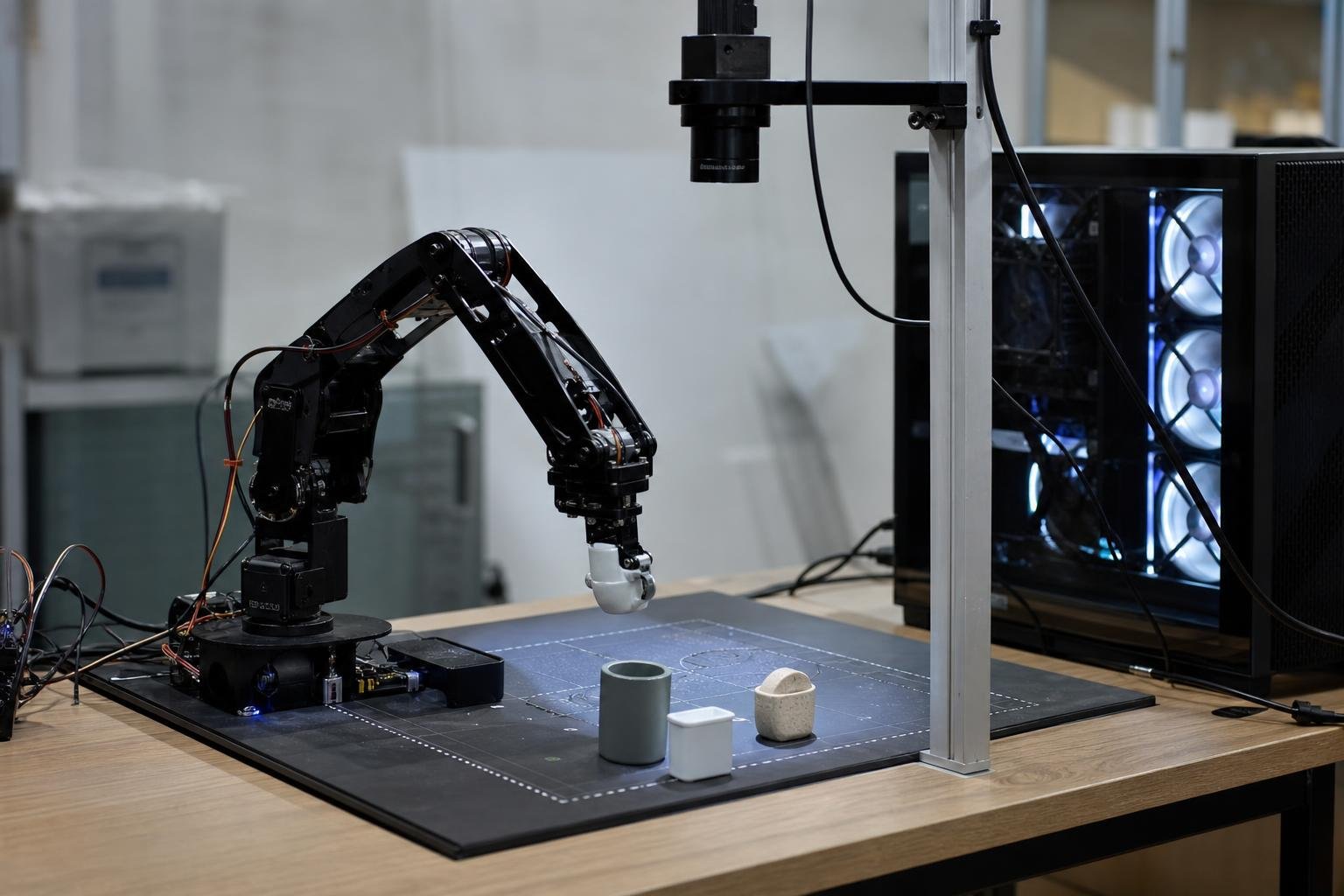
The Praxis-1 release addresses two of those constraints directly. SO-100 and SO-101 arms are positioned as hobbyist and low-cost platforms, making them far more approachable than industrial manipulators. Meanwhile, quantization reduces the numerical precision used to store and execute model parameters. In exchange for some possible accuracy or robustness trade-offs, quantization can cut memory requirements and make a model feasible on less expensive hardware.
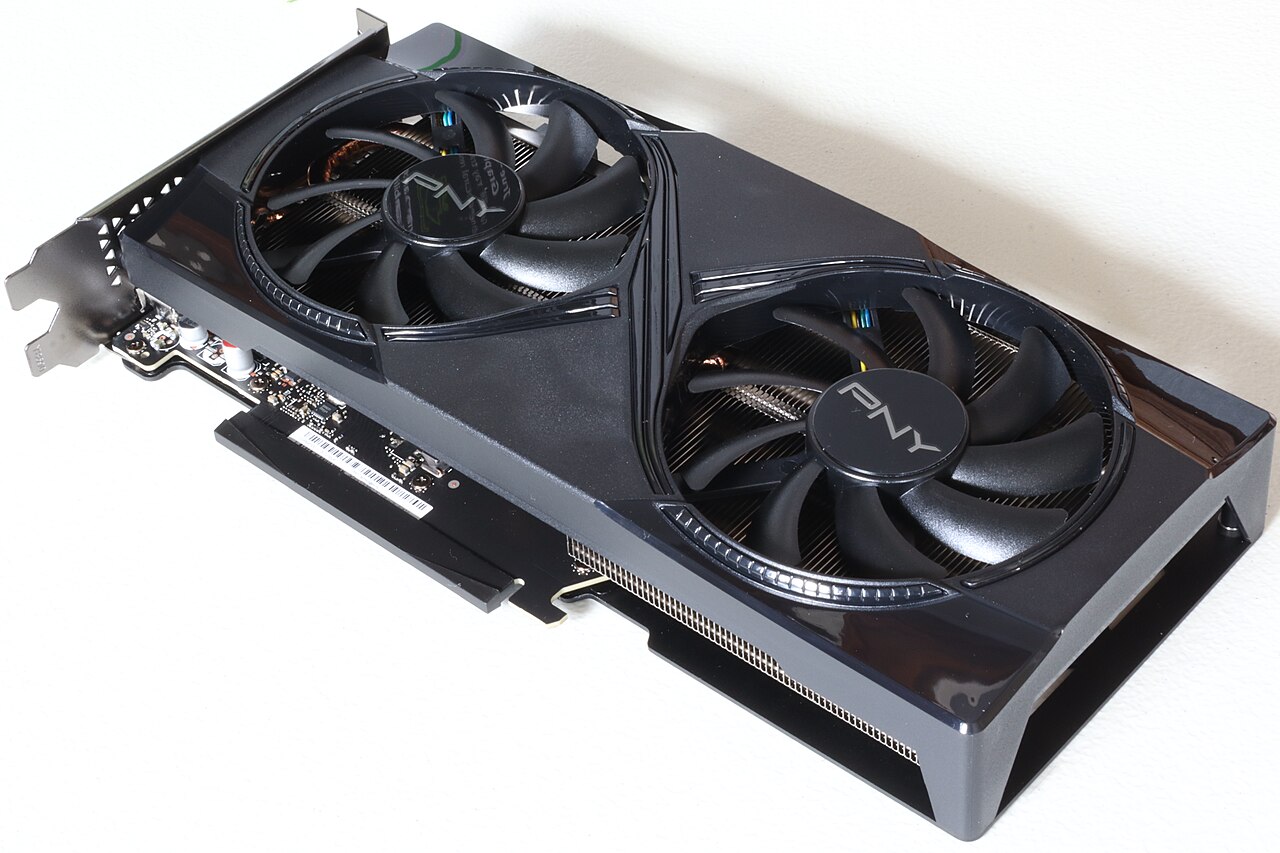
Runway’s reported single-RTX-5090 target is therefore important as a deployment threshold. It does not mean that training a large video-based robotics model, gathering demonstrations or conducting extensive evaluation can be done at negligible cost. It means experimentation with an already trained policy may no longer require datacenter-class inference infrastructure. [1]
For an academic robotics course, this can turn a model from a cloud-only artifact into something students can inspect and operate on real hardware. For a startup, it can shorten the distance between evaluating a foundation policy and deciding whether it is useful for a warehouse, lab-automation or light-manufacturing workflow. For serious hobbyists, it creates an opportunity to build on a common baseline rather than beginning with an empty control stack.
The technical work that remains outside the checkpoint
A checkpoint is not a turnkey robot product. The mapping from camera pixels to motor commands is unusually sensitive to the physical world. Camera placement, lighting, table geometry, gripper condition, actuator backlash, joint limits, object appearance and timing can all differ from the environment represented in training data. Small changes can cause a policy that appears fluent in one setup to fail in another.
SO-100/SO-101-specific checkpoints should reduce hardware mismatch, but they do not remove the need for calibration. Users must establish correct camera and robot coordinate relationships, validate joint and gripper behavior, configure command rates and confirm that emergency-stop and workspace limits function independently of the learned policy. A policy should not be the only safety layer between a robot and a person, camera, cable or fragile object.
Data is another enduring bottleneck. Video-trained systems depend on the relevance and diversity of their training examples. If a prospective user needs a different tool, object category, lighting condition, camera view or task sequence, fine-tuning or new demonstrations may be necessary. Collecting high-quality robot data remains labor-intensive because physical trials take time and failures are costly. Open weights reduce the cost of beginning; they do not automatically provide the task-specific data needed for production reliability.
Evaluation will be especially important. A compelling video may show a successful sequence, while operational deployment requires repeated trials across varied objects and conditions, measured success rates, recovery behavior and a clear account of failure modes. Researchers using Praxis-1 will need to distinguish between reproducing an example and demonstrating robust generalization.
A competitive signal for embodied AI
The release arrives as the AI industry broadens its focus from models that generate text, images and video to models that perceive and act in physical settings. The commercial prize is substantial: flexible automation could reach tasks that are currently too variable for conventional robotics, from lab handling to fulfillment and small-batch production.
Yet high barriers have concentrated work in well-funded corporate labs and major research institutions. Open releases aimed at affordable hardware can diversify that field. They give smaller organizations a shared substrate for benchmarking, adaptation and tooling. This can accelerate development of better data-collection interfaces, simulation pipelines, evaluation suites, teleoperation tools and safety controls around a common arm platform.
There is also a strategic distinction between access and advantage. Large robotics companies will retain advantages in proprietary datasets, specialized hardware, fleet operations, manufacturing integration and field-service experience. An open checkpoint does not erase those moats. It can, however, make the model layer less exclusive and force competition toward execution quality: data operations, reliability engineering, integration and customer-specific deployment.
For Runway, releasing Praxis-1 weights also extends the company’s relevance beyond its established association with generative video. The connection is technically coherent: video understanding and generation research can inform representations useful for visual robot policies. The harder question is whether those representations translate into dependable behavior under the timing, contact dynamics and safety constraints of physical manipulation.
What researchers should test next
The first useful tests will be modest and disciplined. Teams should begin with bounded tabletop tasks, fixed camera positions and clear success criteria. They should record not only completion rates but also latency, grasp failures, collisions, retries and performance under changes in lighting and object placement. Comparisons between the full-precision and quantized versions would be valuable, particularly if they measure whether reduced precision affects action smoothness or task reliability.
The broader test is reproducibility. If independent users can set up an SO-100 or SO-101, load the checkpoint, follow documented procedures and achieve comparable results, the release will have delivered on its most important promise. If every installation requires extensive undocumented intervention, the lower hardware bill will not be enough to democratize embodied-AI work.
Editor’s Take
I see the combination of open weights, an Apache 2.0 license and a modest arm target as the important part of this release. A single-GPU inference claim is not the same as inexpensive robotics, but it is a much better starting point than asking every experimenter to secure a cluster and an industrial arm before they can evaluate a policy.
The next thing I would watch is independent replication, not more polished demos. Can a university lab set up the checkpoint quickly, quantify its success rate, and fine-tune it for a new tabletop task without a hidden engineering team? If that happens, Praxis-1 could become useful infrastructure. If performance depends on a narrow, carefully staged setup, the release will still be valuable research material—but the democratization narrative will have outrun the practical result.
References
- Highplane – https://www.highplane.co/news?date=2026-11-13