OpenAI says its GPT-6 models have produced experimentally validated protein binders in a design workflow built around model reasoning and general-purpose code, rather than relying exclusively on a specialized protein-generation system. Working with biotechnology company Onava, OpenAI reported that 35 of 322 GPT-6.2-designed minibinder candidates showed binding across five biological targets in wet-lab tests.[1]
The result does not establish that a general-purpose frontier model can replace the specialized models, structural methods and laboratory systems used in modern drug discovery. OpenAI’s own account makes clear that specialized systems still generated protein sequences and helped select candidates. But the reported binders matter because they move the claim beyond an in-silico benchmark: molecules made through the workflow were synthesized and tested, and a subset interacted with their intended targets in the laboratory.
- 35 GPT-6.2-designed minibinders reported to show binding
- 322 candidates tested in the reported program
- 5 biological targets included in the tests
- GPT-6.2 was the model identified for the minibinder-design work
What the reported hits demonstrate
Protein design is a demanding test for AI systems because the output must survive multiple layers of physical reality. A candidate must be expressible and stable enough to make in the lab, adopt a useful three-dimensional structure, and bind a target with measurable interaction. Depending on the eventual application, it may also need favorable selectivity, manufacturability, pharmacology and safety. A plausible-looking amino-acid sequence or structure prediction is therefore far from a therapeutic product.
OpenAI’s reported result is narrower, but important on its own terms. The company says GPT-6 models reasoned about protein structures and sequences and used general-purpose coding capabilities to carry out parts of the design process. The output was then taken into a wet-lab workflow with Onava. Of 322 designed minibinders, 35 showed binding to one of five targets.[1] That is an experimental signal that the model’s reasoning can contribute useful hypotheses inside a real design loop.
Minibinders are compact engineered proteins designed to attach to a defined molecular target. Their small size can make them attractive research and therapeutic modalities, but their design remains difficult: binding depends on the geometry and chemistry of the interaction surface, not simply on recognizing a target name or a sequence pattern. The 35 binding results therefore provide more meaningful evidence than a score on a structure-prediction or sequence-recovery benchmark.
At the same time, a binding hit is an early-stage outcome, not proof of drug-like performance. OpenAI did not present the reported count as evidence that every hit has the affinity, specificity, stability or downstream biological activity required for a development program. The practical significance is that GPT-6.2 contributed candidates with enough physical validity to clear an initial experimental threshold.
General-purpose reasoning did not replace the specialist stack
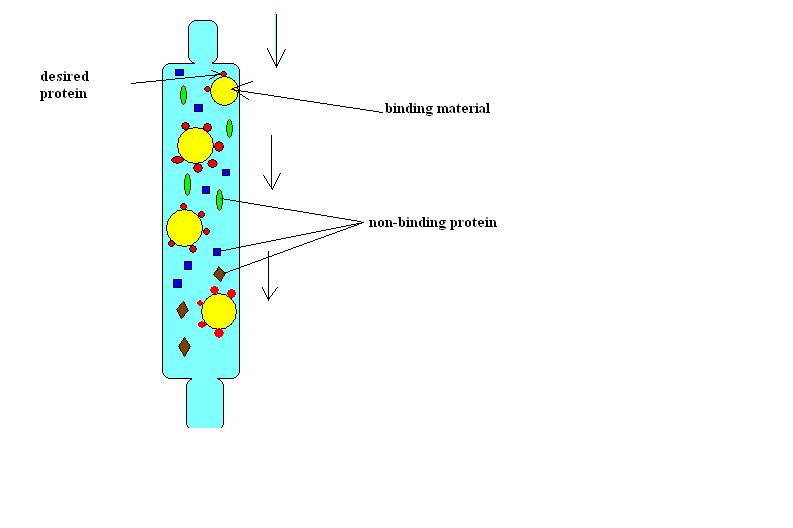
The most consequential detail in OpenAI’s report may be what GPT-6 did not do alone. Specialized protein-generation models were still used for sequence generation and candidate selection.[1] Those steps are central to the outcome. Sequence-generation systems can search the enormous space of possible proteins under structural and biochemical constraints, while filtering and selection tools rank candidates according to predicted properties before costly synthesis and assays begin.
That division of labor makes the work better understood as an AI-orchestrated workflow than as a clean replacement story. GPT-6’s stated role was to reason through design tasks, formulate and revise approaches, and employ code as part of the process. Specialist tools supplied domain-specific capabilities where they remain valuable. Wet-lab testing supplied the final check on whether the computational chain had produced molecules that work at all.
This distinction matters commercially and scientifically. Biology companies have spent years building proprietary data sets, assays, design models and screening platforms. The OpenAI result does not erase those assets. It suggests instead that frontier models may become a higher-level interface for directing them: interpreting objectives, coordinating computational steps, generating design rationales, handling failed iterations and helping researchers traverse a workflow that currently requires many specialized tools.
For laboratory teams, the value of that layer will depend on whether it improves decision quality rather than merely automating prose and scripts. The decisive measurement is not how fluent a model sounds when discussing molecular interactions. It is whether a model-guided process raises hit rates, reduces design cycles, broadens the target space, or produces candidates with better experimentally measured properties at a cost and speed that justify deployment.
Why wet-lab validation changes the evidentiary bar
AI-for-biology announcements often rely on retrospective tests, simulated scores or outputs assessed by other computational models. Such evaluations can be useful, but they can also overstate practical ability. Models may learn artifacts of public data sets, optimize toward proxy metrics, or generate designs that look compelling to another model but fail when expressed, purified or assayed.
Wet-lab validation is harder to dismiss because it introduces an independent physical constraint. The protein has to exist as a molecule, and the target interaction has to be measured. OpenAI’s collaboration with Onava therefore gives its claim a stronger footing than a benchmark-only disclosure. The count of 35 binders is not a final measure of therapeutic value, but it is an observable laboratory result tied to candidate molecules.[1]
Rigorous interpretation still requires more detail than a headline hit count. Researchers and prospective partners will want to know the assay formats, definitions of binding, target-by-target results, affinities, expression yields, false-positive controls, negative controls and the degree to which the final selected set depended on specialized systems. Reproducibility across targets and independent laboratories will also matter. Those details determine whether the result represents a repeatable productivity gain or a promising but context-specific demonstration.
The reported figures also should not be read as a universal success rate for autonomous protein design. The 322 candidates were part of a particular workflow, with selection decisions and specialized sequence-generation tools in the loop. The figure is useful as a description of this experiment; it is not a direct comparison with another company’s platform unless target classes, screening thresholds and experimental protocols are aligned.
Ryan Kissinger, Public domain, via Wikimedia Commons
Implications for AI drug discovery and protein engineering
The near-term market implication is integration, not displacement. Drug-discovery software vendors, AI biology companies and internal computational-biology groups already combine foundation models with physics-based analysis, structure prediction, sequence models and automated experiments. OpenAI’s report adds evidence that a general-purpose model may be capable of contributing at the reasoning and workflow-control layer of that stack.
That could be useful in settings where scientific work is fragmented across databases, notebooks, modeling packages and laboratory readouts. A capable model could potentially help translate a program goal into computational tasks, inspect intermediate results, write analysis code and recommend the next design iteration. The commercial advantage would come from shortening the design-build-test cycle while preserving scientific controls, not from eliminating protein-engineering expertise.
For OpenAI, the announcement positions GPT-6 as a model family with applications beyond text, coding and agentic software tasks. For Onava, the collaboration provides a public case study of using frontier-model reasoning in a laboratory-linked workflow. Neither outcome, however, resolves the harder business question: whether the approach can produce repeatable programs with superior economics and clinically meaningful molecules.
The longer-term opportunity is a more adaptive research loop in which general-purpose models coordinate specialized scientific systems and learn from experimental feedback. Protein engineering is a plausible proving ground because objectives can be formalized, computational proposals can be generated at scale, and laboratory assays can return relatively direct signals. Yet biology remains an area where plausible computational answers routinely fail in practice. Experimental capacity, data quality and human scientific judgment will remain bottlenecks even as models become more capable.
What to watch next
The next meaningful disclosures would be target-level data rather than larger claims about intrinsic capability. Strong evidence would include quantitative binding measurements, reproducible results against varied target types, direct comparisons with workflows lacking GPT-6 reasoning, and clarification of how much performance comes from each component of the pipeline. Evidence that model-guided candidates retain activity after later optimization would be more consequential still.
There is also an important governance question. As general-purpose models become more useful for designing biological molecules, providers and laboratory partners will need appropriate screening, access controls and review processes. In the immediate case, the work concerns minibinders tested within a collaboration. But the ability to reason across scientific tools can increase both legitimate research productivity and the need for careful oversight of increasingly capable bio-design workflows.
For now, the appropriate reading is measured: OpenAI has reported a wet-lab result indicating that GPT-6.2 can add value to a protein-design process. The specialist models and experimental systems remain indispensable. That is not a weakness in the finding; it is the realistic shape of how advanced AI is likely to enter biotechnology.
Editor’s Take
I view the 35 binding hits as the important number, not because it proves GPT-6 has solved protein design, but because it puts a general-purpose model on the right side of the lab door. In practical development work, the useful question is whether an AI system helps generate more testable, better-prioritized molecules per experimental cycle. This report suggests that frontier-model reasoning may now be capable of doing that when paired with established scientific tools.
The hype would outrun the facts if this were framed as general AI replacing protein-design platforms. It plainly did not: specialized sequence generation and candidate selection remained essential, and binding is only an initial validation step. The next result to watch is a controlled comparison showing that GPT-6-guided teams deliver better affinity, selectivity or development-quality candidates than the same stack without the model. If that advantage repeats across programs, the workflow layer could become one of the most valuable places to apply frontier models in biotech.