
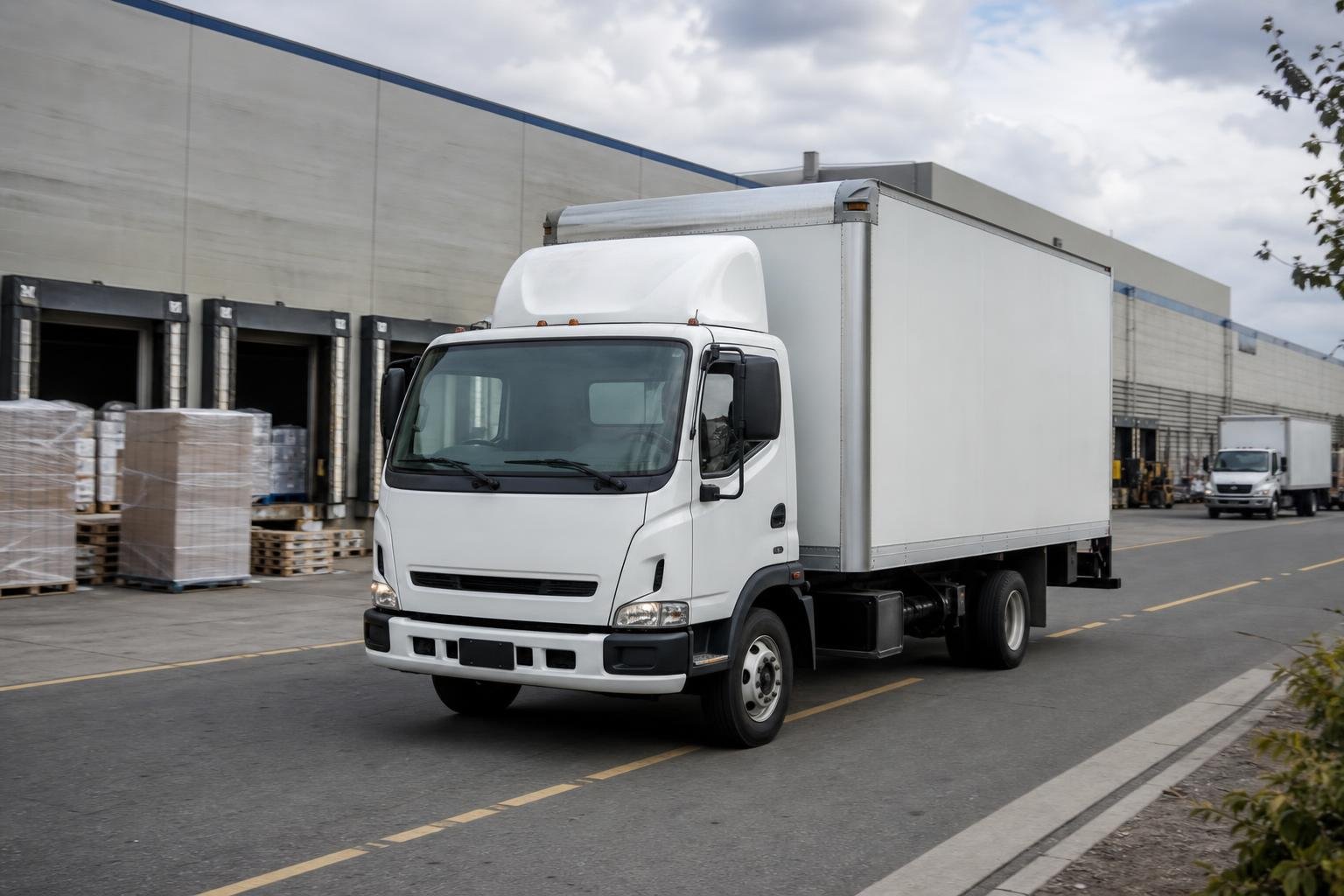
Autonomous trucking company Gatik has raised $200 million in a financing led by Qatar Investment Authority and Koch Disruptive Technologies, adding capital to expand its commercial driverless delivery operations. The company says it now operates driverless trucks in multiple markets and has secured $600 million in contracted revenue, including work moving PepsiCo products.
The more consequential signal is not simply another large autonomous-vehicle round. Gatik’s model is built around repetitive middle-mile freight routes—regular runs between depots, distribution centers, stores and other fixed facilities—where the operating environment can be tightly defined. Its fleet of 41 trucks serving PepsiCo in Dallas, Phoenix and Northwest Arkansas offers a more concrete test of commercial autonomy than a widely announced robotaxi launch: Are vehicles completing useful freight work, for paying customers, on a repeatable operating schedule? [1]
By the numbers
- $200 million: New financing raised by Gatik.
- $600 million: Contracted revenue reported by the company.
- 41 trucks: Vehicles moving PepsiCo products across Dallas, Phoenix and Northwest Arkansas.
- 3 markets: PepsiCo operating areas identified by Gatik.
Why middle-mile routes may be the first durable market
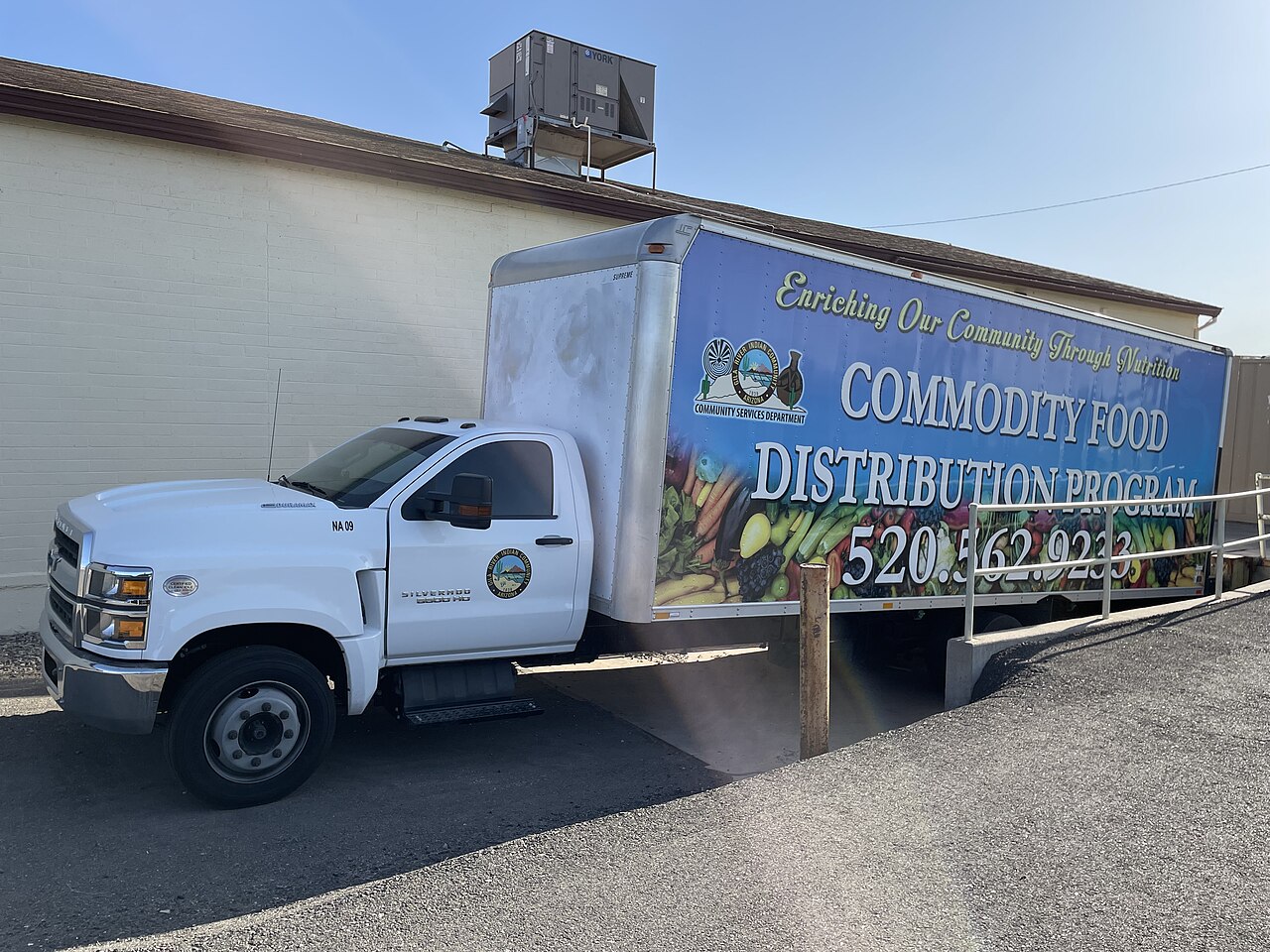
Middle-mile freight sits between long-haul transportation and last-mile delivery. It commonly involves moving pallets, cases and other consolidated loads from a warehouse to a store, from a distribution center to a cross-dock, or between manufacturing and logistics sites. Those routes are economically important but operationally narrower than a general-purpose urban driving service.
That narrowness matters. A carrier can repeatedly map and validate a limited route set, establish geofenced operating domains, work with a small number of shipper facilities, and design pickup and drop-off procedures around the vehicle. Fleet operators can also schedule runs to avoid the hardest conditions where practical, such as particular construction patterns, severe weather or peak traffic periods. The result is not easy autonomy; it is a bounded deployment problem with clearer operational controls than a vehicle expected to carry any passenger to any address in a city.
For retailers and consumer-goods companies, the value proposition is similarly specific. Distribution networks frequently require predictable short and medium distance transfers at regular times. If a driverless fleet can meet service windows, protect cargo, integrate with loading operations and maintain high vehicle utilization, it can become logistics infrastructure rather than a demonstration of automated driving.
Gatik’s disclosed PepsiCo footprint therefore matters more than a broad statement of technical capability. Forty-one trucks across three named markets implies a fleet program that must interface with real freight operations, customer timetables and maintenance cycles. It does not by itself establish profitability or prove that the business can expand indefinitely. But it is evidence of a customer relationship being translated into deployed assets.
Contracted revenue is a useful, but incomplete, yardstick
Gatik’s reported $600 million in contracted revenue is an important commercial metric because it points to customer commitments rather than pilots alone. In autonomous transportation, headline announcements can range from small trials to broad partnerships that contain no minimum operating volume. Contracted revenue, if tied to defined services and terms, is closer to the measure that matters for an operating company: booked demand for freight movement.
It should nevertheless be read carefully. Contracted revenue is not the same as recognized revenue, cash received, gross profit or free cash flow. Its value depends on contract duration, termination provisions, route volumes, pricing, vehicle availability and the cost required to perform the service. A multiyear agreement may make a large figure credible as an indicator of demand while still leaving substantial execution risk.
The next disclosures that would sharpen the picture are straightforward: how many driverless miles are completed in paid service; what portion of the contracted revenue is backed by minimum commitments; how often trucks require remote assistance or on-road intervention; and whether the company can add routes and customers without sharply increasing per-route engineering and operations costs. Those measures would show whether Gatik is building a repeatable network business or accumulating bespoke deployments.
The technical challenge is operational, not just autonomous driving
A commercial driverless truck program requires more than perception software and automated steering. The vehicle must detect and classify road users, track lane geometry and traffic controls, predict the movement of other vehicles, and select a safe trajectory within the conditions covered by its operational design domain. It also needs redundant braking, steering, power and computing capabilities, along with a procedure for safely bringing the truck to a minimal-risk condition when a fault is detected.
For middle-mile fleets, the surrounding operating system is equally important. Dispatchers need to know where the vehicle is authorized to travel. Remote support teams need clear limits on when they can provide information or assistance. Depot staff need procedures for loading, yard movement, inspections and handoffs. Maintenance teams need to keep sensors clean, calibrations current and safety-critical components in service. A dependable product is the combination of truck, software, route design, teleoperations policy, facilities and customer workflow.
That is also why fixed-route freight can be strategically attractive. Each new route still needs validation and operational preparation, but the work can potentially be reused across similar lanes, facilities and customer networks. The central business question is whether that reuse is strong enough to turn a carefully constrained deployment into an efficient rollout process.
Funding buys time—and raises the execution bar
The $200 million round gives Gatik resources to purchase and equip vehicles, expand depot and support capacity, develop software, recruit safety and operations personnel, and meet the working-capital demands of serving major shippers. Qatar Investment Authority and Koch Disruptive Technologies bring deep-pocketed institutional backing at a point when autonomous-vehicle companies face a higher standard from investors than they did during the sector’s earlier wave of pilot announcements. [1]
That capital also raises expectations. The company now needs to demonstrate that new funding converts into additional productive trucks, expanded route density and growing revenue—not merely a larger engineering organization. In freight, route density can matter as much as fleet size: closely located customers and repeat lanes can reduce empty repositioning, simplify service coverage and make utilization more predictable.
The financing may also influence the broader autonomous-trucking market. It supports the view that commercial deployment will emerge first from clearly bounded freight tasks, while more open-ended passenger mobility remains difficult to scale across diverse urban environments. That does not mean robotaxis lack value; it means their public visibility can obscure where the earliest durable unit economics may appear.
Safety, labor and public acceptance remain central
Driverless freight operations will continue to face scrutiny from regulators, road users, professional drivers and labor groups. Safety questions include how trucks behave around vulnerable road users, how companies manage unusual road incidents, what happens during sensor or system failures, and how performance is audited over time. Public concern has also included the potential effect of autonomous technology on driving jobs. [2]
A repetitive middle-mile strategy can help address some of these concerns because it defines where and when vehicles operate. It does not remove them. A truck traveling the same lane every day still encounters emergency vehicles, work zones, aggressive drivers, blocked roads and changing weather. Scale will depend on transparent safety practices, disciplined incident response and the ability to demonstrate safe performance in the real conditions covered by each deployment.
On employment, the near-term outcome may be more complicated than a simple replacement narrative. Autonomous fleets still require technicians, fleet managers, dispatch and remote-support staff, and personnel at shipper facilities. Over a longer horizon, however, successful driverless operations could alter demand for some driving roles, particularly on structured routes. The industry’s credibility will depend partly on whether operators and customers address that transition directly rather than treating it as outside the business case.
What will determine whether this is scale
Gatik has established several indicators that matter: named commercial activity, a meaningful PepsiCo fleet, customer commitments and fresh capital. The next phase is less about proving that a truck can drive autonomously on a selected route and more about proving that a fleet can deliver freight reliably across a growing network.
The clearest signs of progress will be additional paid deployments, higher utilization of existing vehicles, expansion beyond a small set of bespoke routes, and evidence that customers renew or enlarge their commitments. If those indicators follow, Gatik’s middle-mile approach could become a template for how autonomy reaches commercial scale: not through the broadest possible driving problem, but through a valuable and repeatable one.
Editor’s Take
I view the PepsiCo fleet and the $600 million contracted-revenue figure as more important than the $200 million funding headline. Capital is necessary in trucking, but contracts and vehicles carrying real freight are the beginnings of a business. The middle mile is where autonomous driving can earn its keep first because repeat lanes, scheduled departures and controlled facilities let operators build a complete service around the vehicle instead of asking software to solve every road in every city.
What I would watch next is operational evidence, not promotional language: paid driverless miles, truck uptime, route additions, customer renewals and how frequently humans must intervene. Forty-one trucks across three markets is credible progress, but it is not yet proof of network-scale economics. The hype outruns the facts whenever a route demo is treated as a general solution; the opportunity becomes real when a shipper can depend on the service every day and expand it because the numbers work.



_operates_under_a_grocery_store_model_in_Sacaton,_Arizona_on_April_7,_2025_-_7.jpg)
