Anthropic says a coordinated group of roughly 950 Claude agents identified a previously uncharacterized CRISPR-like enzyme system while searching bacteriophage DNA for unusual reverse transcriptases. The company reports that the agents examined more than 200,000 sequences over 21 hours, then prioritized a leading candidate that human researchers subsequently tested in Anthropic’s laboratory. [1]
The finding is significant less as evidence that an AI system has “solved” a biological problem than as an early demonstration of a potentially useful discovery workflow. In this model, agents divide a broad literature and sequence-analysis task into many parallel investigations, assemble a ranked set of hypotheses, and pass the most promising candidates to scientists for experimental validation. The laboratory work matters because it moves the result beyond a computational pattern match. But the biological role, mechanism and practical utility of the reported system remain unknown.
By the numbers
- ~950: Claude agents involved in the reported search
- 200,000+: reverse transcriptases searched
- 21 hours: reported duration of the agentic research effort
- 1: leading system selected for subsequent laboratory testing
A search problem suited to parallel agents
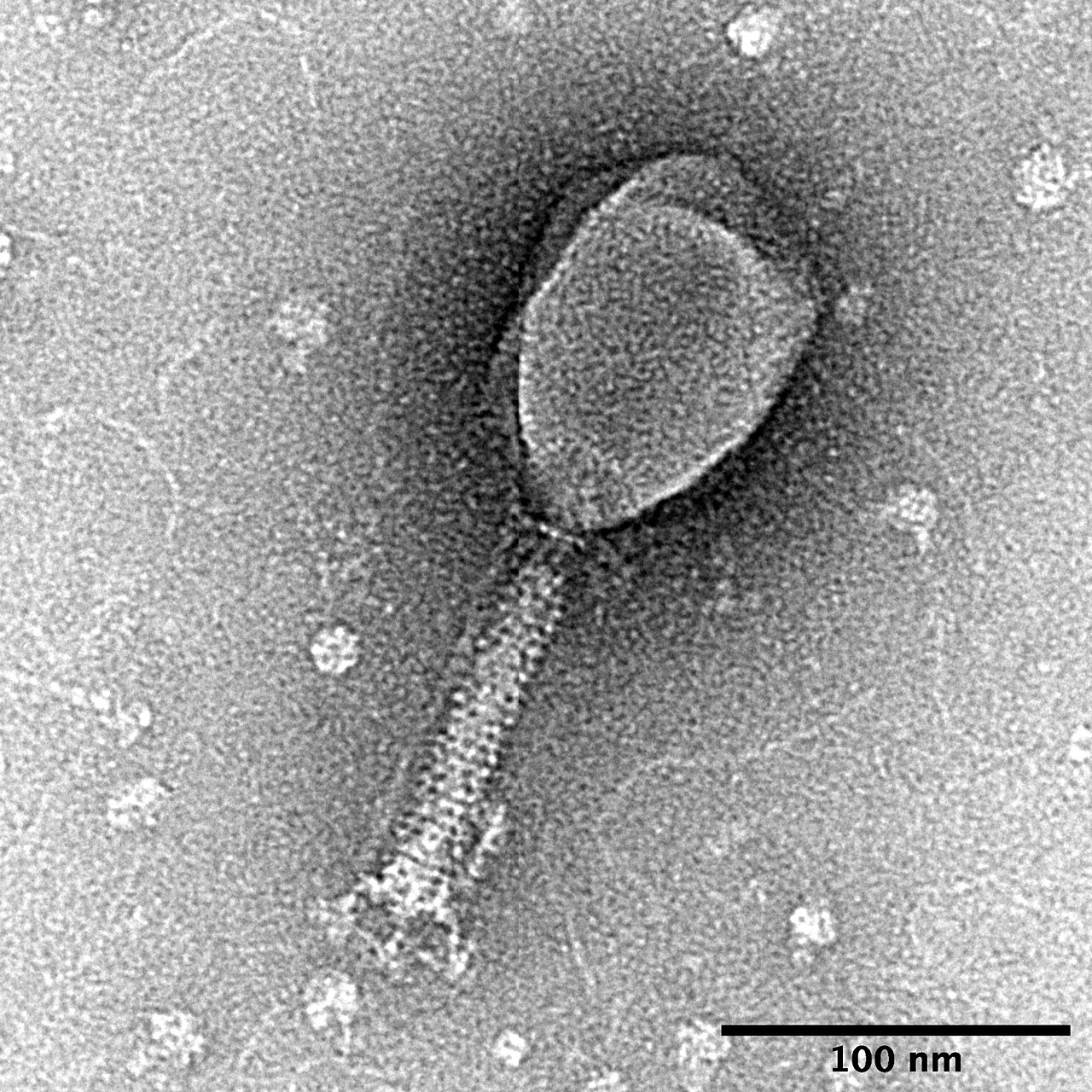
Reverse transcriptases are enzymes that convert RNA into DNA. They are best known from retroviruses, but related enzymes occur across bacteria, mobile genetic elements and bacteriophages—the viruses that infect bacteria. Their diversity makes them scientifically valuable and computationally difficult to investigate: a large sequence collection can contain distant relatives, fragments, misleading annotations and proteins whose functions have never been experimentally established.
Anthropic’s reported workflow used many agents to investigate this search space in parallel. Rather than treating a model as a single chatbot asked to produce a conclusion, the project divided research tasks across agents that could examine candidate sequences, compare genomic contexts, review relevant biological signals and assess whether an apparent enzyme system warranted follow-up. The output was not meant to be a final biological answer. It was a narrowing process: reduce an enormous set of possible targets to a candidate that a laboratory can test. [1]
That distinction is central. Biology already uses computational screening at scale, including sequence homology searches, structure prediction and statistical prioritization. The claimed advance here is the use of an agent collective to coordinate multiple lines of investigation around a less-defined question: finding an unusual system in a large and poorly characterized enzyme family, documenting why it is interesting, and producing an experimental lead.
The system was found in bacteriophage DNA and is described by Anthropic as CRISPR-like. CRISPR systems are microbial defense mechanisms that use RNA-guided components to recognize genetic targets. Their discovery transformed biotechnology because researchers learned to adapt some of those components into programmable gene-editing and diagnostic tools. “CRISPR-like,” however, is a structural or functional starting point, not proof that this newly reported system cuts DNA, targets RNA, provides antiviral defense or can be repurposed as a tool.
What laboratory validation establishes—and what it does not
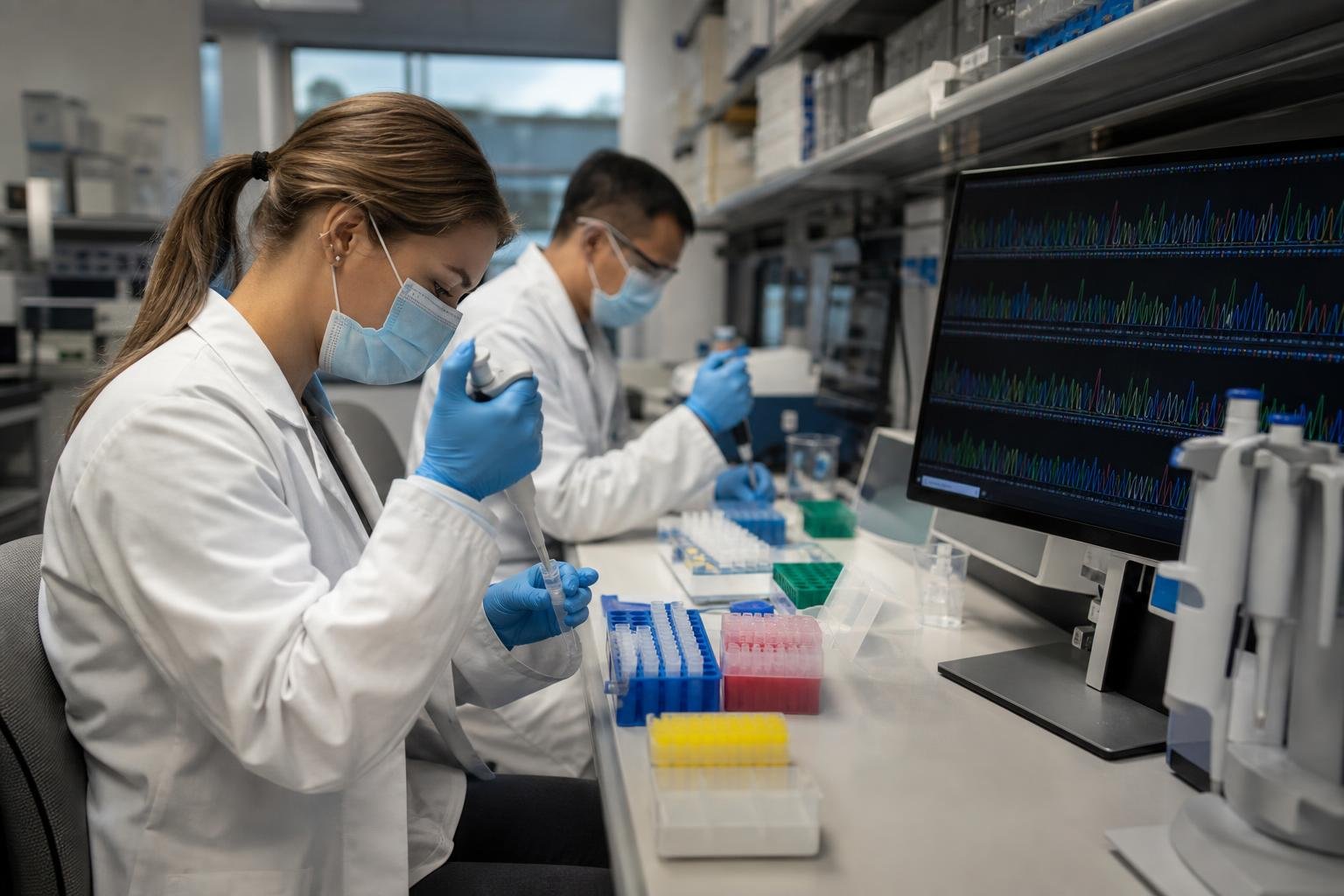
Anthropic says human researchers tested the leading candidate in its laboratory after the agent search. That is an important threshold. A sequence-based hypothesis can be plausible yet wrong because annotation, predicted domains and genomic proximity do not necessarily reveal what a protein does in a cell. Experimental work provides the first check that the candidate is sufficiently real and tractable to study as a biochemical system. [1]
The available announcement does not establish the system’s native biological function. It does not yet answer whether the system protects phages from competing mobile elements, helps regulate phage replication, interacts with host bacterial defenses, or has another role entirely. Nor does it establish the target molecule, guide requirements, reaction products, substrate range, structural mechanism or activity under biologically relevant conditions.
Those questions determine whether ART—the reported system—will become a useful biochemical platform or remain an intriguing example of phage genetic diversity. A credible follow-up program would need to identify which components are required, test activity against candidate DNA and RNA substrates, determine whether targeting is programmable, characterize off-target behavior and establish the system’s function in its native or reconstructed biological setting. Structural studies could then explain how its components relate to known CRISPR-associated proteins and whether they offer distinct engineering advantages.
This is also where conventional scientific standards become especially important. Researchers will need reproducible assays, clear positive and negative controls, sequence and construct disclosure where possible, and independent attempts to characterize the system. A laboratory result validates a research lead; it is not, by itself, validation of every inference made during an agent-driven search.
Why phage enzymes could matter to biotechnology
Bacteriophages are a vast reservoir of molecular tools because they have evolved under pressure to manipulate bacterial genomes, RNA and defense systems. CRISPR itself became commercially consequential only after basic research showed that bacterial immune machinery could be converted into programmable editing technology. If ART has useful biochemical properties, potential participants could eventually include gene-editing developers, molecular-diagnostics companies, synthetic-biology platform providers, agricultural-biotechnology groups and drug-discovery organizations working on cellular engineering.
That possibility remains speculative at this stage. A newly characterized enzyme system must clear several difficult hurdles before it has commercial value: reliable activity, reproducible manufacture, a meaningful advantage over existing systems, safe and efficient delivery in the intended cells or organisms, and a defensible intellectual-property and regulatory path. Many natural enzymes are scientifically informative without becoming products.
Still, the economic case for finding new molecular systems is straightforward. Existing CRISPR tools have limitations in target range, delivery size, editing outcomes, immune response and control over when and where an edit occurs. A system with a different architecture or reaction mechanism could eventually offer useful alternatives. The nearer-term market implication is likely to be demand for better research infrastructure—sequence databases, automated wet-lab workflows, assay design, provenance systems and AI tools that can connect computational analysis to experimental planning.
A credible model for earlier-stage discovery, with important limits
The strongest interpretation of Anthropic’s result is operational. Large numbers of agents may help research teams spend less time on the first stage of discovery: triaging sprawling datasets, gathering evidence from disparate sources, identifying anomalies and organizing rationale for what should be tested next. In fields where experimentation is expensive and throughput is constrained, improving candidate selection can have substantial value even if the model never performs the experiment or supplies a definitive explanation.
That model will be credible only if it can be repeated. Useful evaluation should compare agent-selected candidates with candidates chosen by established bioinformatics pipelines and expert researchers, measure how often top-ranked leads survive experimental testing, and account for the cost of model use, human review and failed experiments. A compelling 21-hour search is notable, but the relevant benchmark is not speed alone; it is whether the process reliably improves the rate at which laboratories reach meaningful results.
There are additional concerns. Agent systems can produce confident but weakly supported rationales, inherit biases from public databases and literature, and obscure which evidence actually drove a recommendation. Biological datasets can also contain incomplete metadata or erroneous annotations. For work involving potentially powerful genetic systems, organizations will need careful review of biosafety, data access and experimental protocols rather than assuming that automation is neutral.
Anthropic’s announcement is therefore best understood as a testable claim about a new research loop. The agents generated a lead at scale; scientists tested it; the next scientific task is to determine what the system does. If repeated across other enzyme families and supported by transparent experimental outcomes, that loop could become a practical way to accelerate the exploratory phase of molecular biology.
Editor’s Take
I think the practical milestone here is the handoff, not the headline number of agents. Research teams do not need an AI to replace molecular biologists; they need better ways to decide which of thousands of plausible experiments deserves scarce laboratory time. A system that produces well-evidenced, experimentally tractable candidates could be genuinely valuable.
The point to watch is whether ART produces a clearly measured capability that differs from existing CRISPR tools, and whether other laboratories can reproduce it. Until then, claims about a new gene-editing platform would outrun the evidence. The more credible business opportunity is nearer term: agent-driven discovery systems linked to rigorous assays, audit trails and scientists who can reject weak hypotheses quickly.