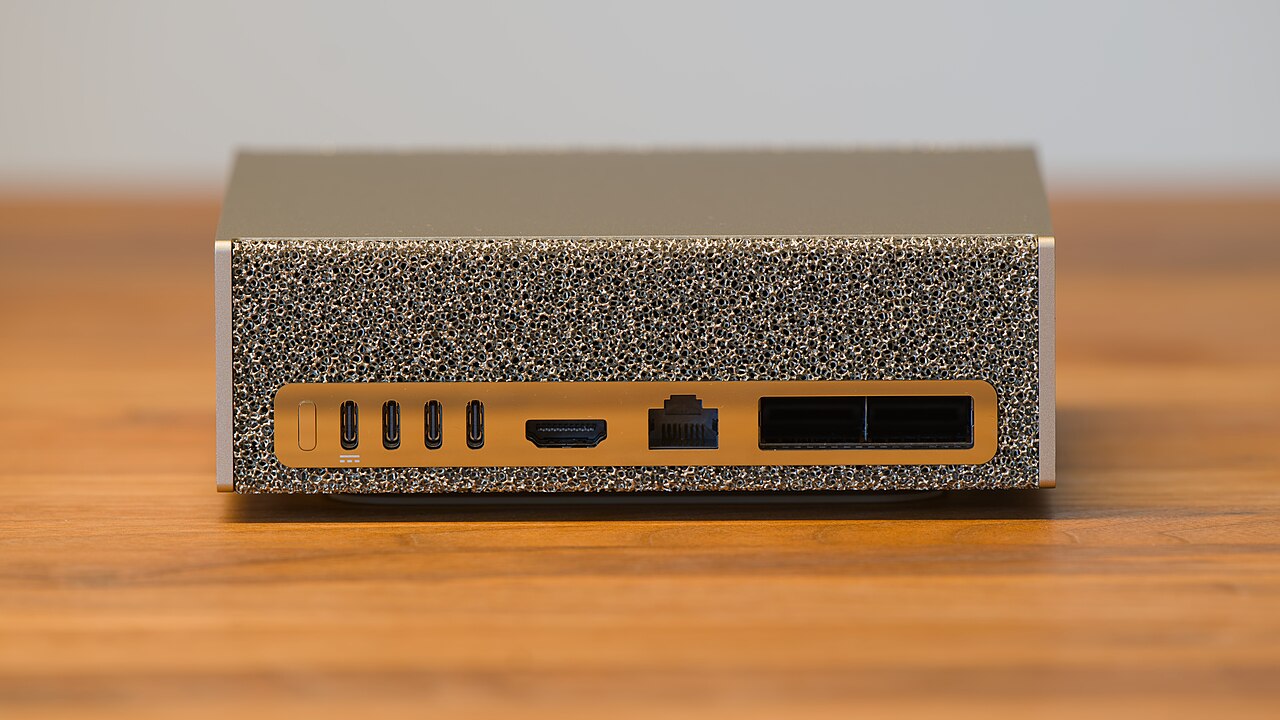
NVIDIA used SC26 to highlight a less glamorous but potentially consequential use of AI agents: maintaining the scientific software that laboratories, universities and national research programs rely on for simulation and analysis. The company said an agent developed at KTH Royal Institute of Technology repaired 81% of broken GROMACS test cases in an overnight run on a single DGX Spark system.
NVIDIA also said its Nsight AI Porting Agent accelerated a routine in the Weather Research and Forecasting (WRF) model by more than five times, after an exercise using roughly 150 million tokens. Those are vendor-reported demonstrations, not independently validated measures of broad developer productivity. Still, they point toward a practical application for coding agents: tending the often underfunded, hardware-sensitive research code that can become a bottleneck for science itself. [1]
By the numbers
- 81%: Share of broken GROMACS test cases NVIDIA said the KTH agent repaired.
- One overnight run: Reported duration for the GROMACS repair exercise.
- One DGX Spark: Hardware NVIDIA said was used for that run.
- More than 5x: Reported speedup for a WRF-model routine using Nsight AI Porting Agent.
- About 150 million tokens: Reported token usage for the WRF porting and optimization exercise.
The maintenance problem behind scientific computing
Scientific software is long-lived infrastructure. Molecular-dynamics packages such as GROMACS and atmospheric systems such as WRF are not disposable scripts; they are substantial codebases developed across years or decades, extended by distributed contributors, and expected to produce repeatable results for large research communities. Their users need them to survive compiler upgrades, operating-system changes, new accelerators, altered dependencies and evolving numerical libraries.
That work is routinely difficult to fund and staff. A research group may have deep expertise in climate physics, chemistry or biology but only limited capacity for systems engineering, continuous integration, performance profiling and GPU-porting work. Even established open-source projects can accumulate test failures and platform-specific defects faster than maintainers can investigate them.
That is why the GROMACS result matters beyond its headline repair rate. A system that can identify a failing test, inspect relevant source files, propose a patch, build the application and rerun validation could reduce the queue of routine maintenance tasks. It does not need to replace a domain scientist or release manager to be useful. If it reliably narrows failures to actionable patches, human maintainers can concentrate on review, numerical correctness and architectural decisions.
What NVIDIA reported at SC26
According to NVIDIA, the KTH Royal Institute of Technology agent repaired 81% of broken GROMACS test cases during an overnight session on one DGX Spark. GROMACS is widely used for molecular-dynamics simulations, where researchers model the movement and interactions of atoms and molecules. Test suites are central to software such as this because a code change that merely compiles can still alter calculations, break a supported configuration or introduce a regression elsewhere.
The company did not present the result as proof that an agent can autonomously maintain GROMACS in production. The published description establishes the reported repair percentage, runtime window and system used, but it does not, by itself, specify the number or kinds of test failures, the patches produced, the human review required, whether repairs generalized beyond the evaluated cases, or the rate of scientifically incorrect but test-passing changes. Those details are essential for assessing whether an agent is ready for day-to-day use in a research software project. [1]
NVIDIA separately described work with its Nsight AI Porting Agent on WRF, a widely used numerical weather-prediction model. The company said the agent accelerated one routine by more than five times while consuming approximately 150 million tokens. Porting and performance work generally requires an iterative loop: understand the code, create a modified implementation, compile it, run tests or representative workloads, profile the result and revise the approach. An agent linked to development and profiling tools can automate portions of that loop rather than simply suggesting code in an editor.
Speedup is meaningful, but its boundaries matter
A more-than-fivefold speedup in a routine can be valuable, particularly when that routine sits on a critical path and executes frequently in a large simulation. But the figure should not be read as a fivefold acceleration of the entire WRF model. Application-level improvement depends on how much total execution time the modified routine represented before optimization, as well as on the workload, hardware, compiler settings, precision requirements and correctness checks used for measurement.
The 150-million-token figure is also important because it shows the difference between a short code-completion interaction and agentic engineering. A large token budget may reflect repeated investigation, code generation, build logs, profiling output and iterative evaluation. The computation behind those interactions, alongside the builds and benchmark runs, has a cost in inference capacity, electricity and engineering infrastructure.
That does not invalidate the exercise. Performance engineers can spend days or weeks establishing a safe optimization, especially in unfamiliar legacy code. The relevant comparison is not token count alone, but the total cost and elapsed time relative to expert labor, the quality of the resulting patch, its reproducibility and its maintenance burden. For research organizations with constrained engineering resources, a costly agent run could still be justified when it unlocks scarce accelerator capacity or eliminates a persistent portability problem.
From code generation to tool-using engineering agents
The demonstrations illustrate a shift in how AI coding systems are being positioned. Early developer tools focused on generating functions, tests or explanations from prompts. The more demanding opportunity is to give agents access to the engineering environment: source repositories, issue reports, compilers, test harnesses, profilers and performance traces. The objective is not merely to write plausible code, but to make a measurable change and verify it against the software’s own constraints.
Scientific applications are a particularly demanding setting for that approach. Correctness cannot be reduced to a successful build. Code may need to preserve numerical stability, reproduce accepted results within defined tolerances, remain portable across architectures and obey assumptions embedded in decades of research use. A patch that clears a unit test but subtly changes a physical model can be worse than no patch at all.
For that reason, the most credible deployment model is likely supervised automation. Agents can triage failures, assemble diagnostic evidence, propose small patches, run broad regression suites and identify promising optimization candidates. Maintainers and domain experts should remain responsible for accepting changes, defining scientific validation and deciding whether a performance gain warrants added complexity. In mature projects, strong automated testing is not an obstacle to agents; it is the feedback system that makes their work testable.
Commercial and research implications
NVIDIA has a clear strategic interest in demonstrating that AI systems can help software move efficiently onto accelerated computing platforms. Better porting and optimized kernels can increase use of GPUs, while DGX systems supply the compute environment for the agents themselves. The company’s SC26 examples therefore serve both a technical narrative and a platform narrative.
For research-software teams, however, the value proposition is broader than a particular hardware vendor. Scientific computing has a maintenance gap: essential software often has fewer dedicated engineers than its importance warrants. Tools that can turn a failing test or slow hotspot into a reviewed, reproducible candidate change could help institutions preserve and improve software that supports many downstream papers and projects.
The next evidence needed is more operational than promotional. Teams will want public patch sets, reproducible benchmarks, descriptions of the failure categories an agent can and cannot handle, measures of human review time, and results across different compilers and architectures. They will also need transparent accounting of compute consumption. A repair rate is useful, but acceptance rate after expert review, regression behavior over time and cost per successful change are stronger measures of practical productivity.
If those metrics hold up, agents could become another layer of research infrastructure: not autonomous scientists, but persistent engineering assistants that keep the software of science runnable, testable and faster on changing hardware.
Editor’s Take
I find the GROMACS result more strategically interesting than another generic coding benchmark because it targets work that is both essential and chronically neglected. A maintainer does not need an agent to redesign a molecular-dynamics engine overnight. They need help reducing a backlog of failures, reproducing bugs across configurations and preparing patches that a qualified human can review quickly. Even partial reliability can create real leverage there.
The WRF claim deserves more scrutiny than celebration until NVIDIA or users publish end-to-end methodology: the original runtime share of the routine, correctness tolerances, hardware configuration, compilation settings and the cost of the 150-million-token search. A fivefold improvement to a true hotspot is excellent; a fivefold improvement to a marginal routine is not transformational. The practical benchmark is whether these systems produce maintainable, independently reproducible improvements at a lower total cost than scarce performance-engineering time.
What I would watch next is whether scientific projects adopt this workflow with review gates and publish the outcomes. If agents can consistently turn build failures and profiling traces into small, validated pull requests, they will earn a role in research computing long before anyone should trust them to maintain critical simulation codes without supervision.
References
- NVIDIA Blog – https://blogs.nvidia.com/blog/ian-buck-sc26/