Zipline has raised $1.5 billion at a $21.5 billion valuation, but the more consequential development is its expanded agreement with Walmart. The companies plan to add 300 U.S. drone-delivery sites, a sharp increase from their current 21 locations. [1]
The commitment turns drone delivery from a limited service experiment into a test of repeatable retail infrastructure. Funding can extend a company’s runway; hundreds of planned sites test whether autonomous aviation can be installed, operated, approved, and used often enough to become part of a major retailer’s normal fulfillment network.
By the numbers
- $1.5 billion: Zipline’s newly reported financing. [1]
- $21.5 billion: Zipline’s reported valuation following the round. [1]
- 300: Additional U.S. drone-delivery sites planned under the Walmart agreement. [1]
- 21: Current Zipline-Walmart locations cited in the announcement. [1]
The Walmart agreement is the real scale test
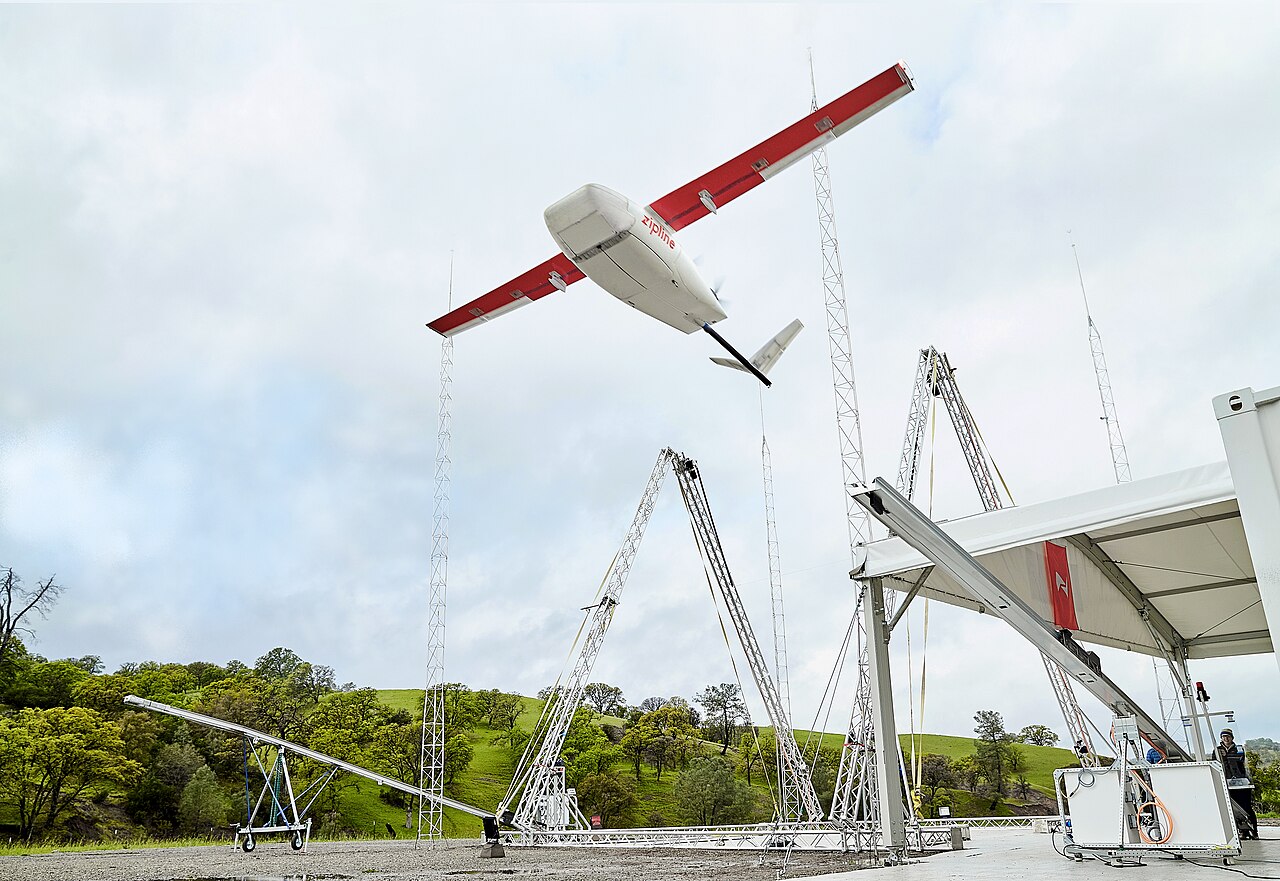
Adding 300 sites would increase the partnership’s site count by more than fourteen times relative to its existing 21 locations, assuming the current footprint remains in place. That distinction matters. Drone delivery has already demonstrated that it can work in selected service areas. The unresolved question is whether the same model can be reproduced hundreds of times with dependable economics and consistent customer service.
For Walmart, the agreement potentially makes drones another fulfillment option alongside in-store shopping, curbside pickup, delivery from stores, and conventional last-mile carriers. The appeal is straightforward: a nearby store already holds inventory, while a small autonomous aircraft may be able to move a compact, urgent order directly to a customer without placing a driver and vehicle on the road for every trip.
But a signed site commitment is not the same as a functioning national network. Each location must be matched to an approved operating area, a suitable launch and loading configuration, trained personnel, local procedures, and a customer base that sees a drone option at checkout often enough to sustain service. The number to watch is therefore not simply planned sites, but how many become live, available during useful hours, and regularly used.
What must work at each store
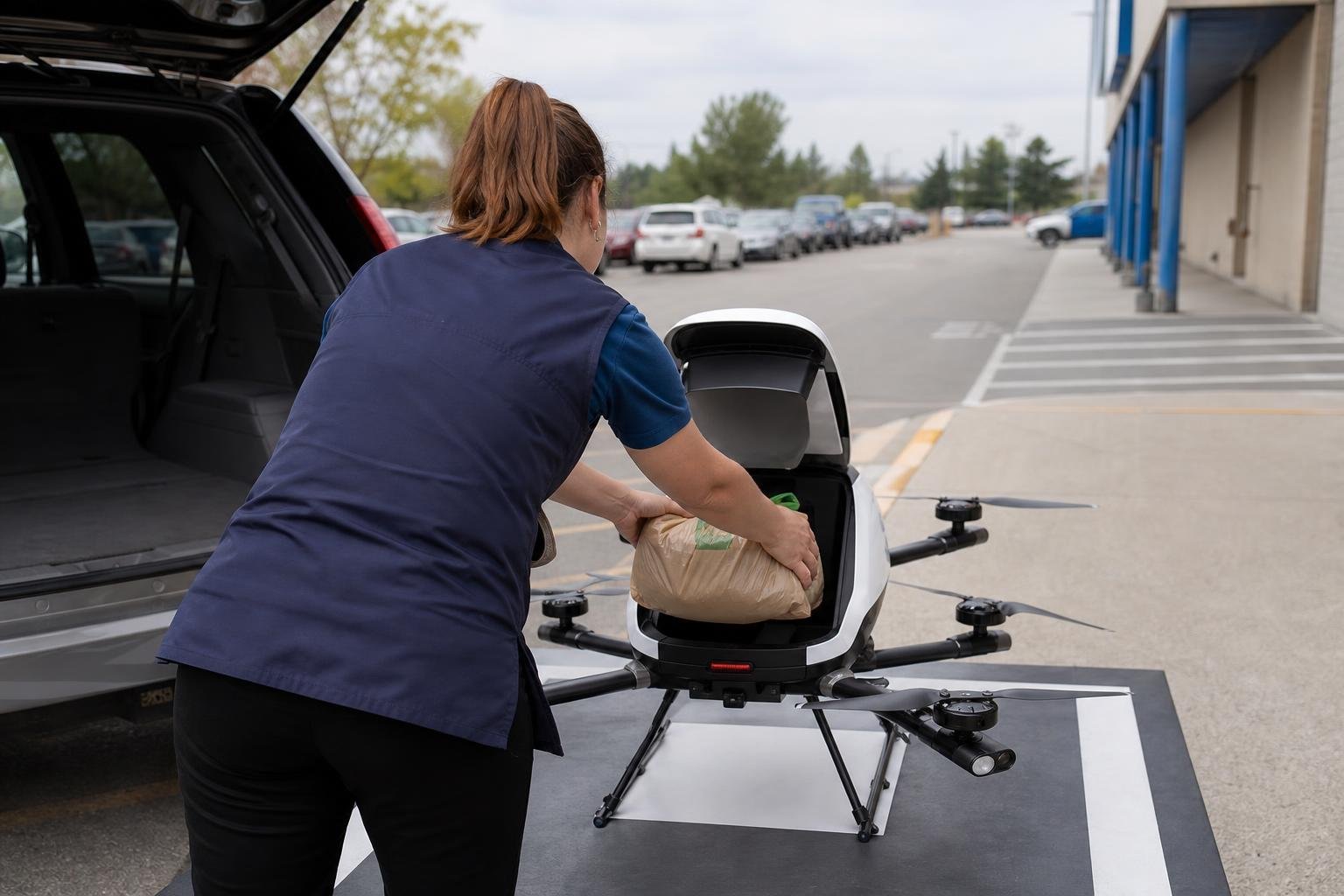
A 300-site rollout is fundamentally an operations program. The aircraft may be autonomous, but the retail system around it is not. A store has to receive an order, confirm that every item is available, pick and bag it, move it to the drone operation, load it correctly, and hand off a package within a delivery promise that is attractive to the customer.
That process raises practical questions that grow more important at scale:
- Store workflow: Associates need a clear process that does not disrupt in-store shoppers, pickup orders, or other delivery services. If drone orders require excessive manual handling, the service can become a labor cost rather than an efficiency gain.
- Inventory accuracy: Fast delivery is valuable only when ordered goods are actually on the shelf. Substitutions, out-of-stocks, and picking delays can erase the advantage of an aircraft’s travel time.
- Package eligibility: The service must reliably identify which baskets fit its payload, handling, and safety limits. Routine household orders often include products that may not be suitable for aerial delivery.
- Exception handling: Retail systems must account for weather interruptions, launch restrictions, failed deliveries, customer cancellations, and items that cannot be loaded or released as planned.
- Service integration: Customers need straightforward pricing, delivery-area information, tracking, and support. A novel delivery method will not win repeat orders if it adds uncertainty at checkout.
These are unglamorous requirements, but they determine whether drones become an occasional premium option or a normal part of local commerce. The strongest sign of maturity would be a process that can be installed at new stores with standardized equipment, predictable training, and little custom operational design.
Regulation and reliability remain the gating factors
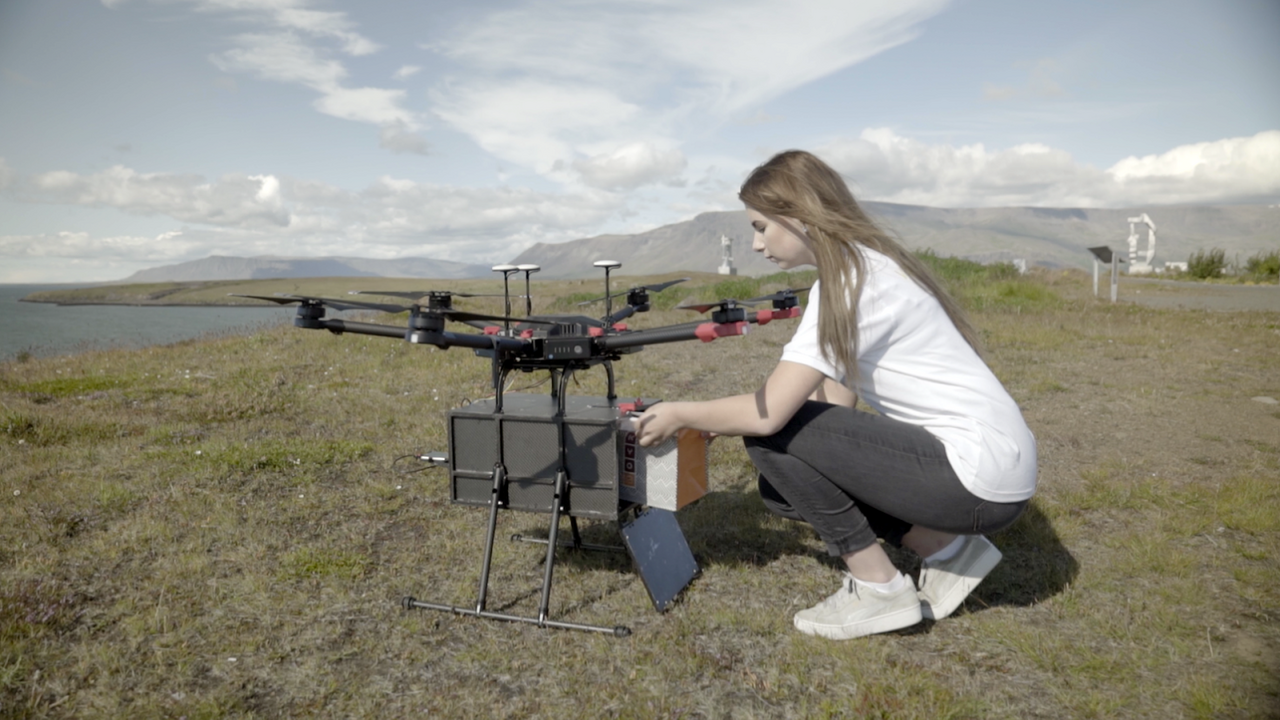
Scaling autonomous delivery requires more than adding drones and store agreements. Commercial operations must fit within the applicable aviation permissions and operating rules, including the conditions that govern flights over communities and beyond an operator’s direct visual observation. A rollout across hundreds of sites will require a regulatory path that is repeatable across varying local environments, not merely approval for a small number of early deployments.
Aircraft reliability also becomes more visible at this scale. A system that performs well at one location has to maintain that performance across changing weather, terrain, radio environments, maintenance schedules, and neighborhood layouts. The relevant benchmark is not a demonstration flight. It is the ability to complete large numbers of ordinary deliveries safely and predictably while handling the cases in which the system should not fly.
Denser markets present a particularly demanding challenge. More people, obstacles, nearby aviation activity, noise sensitivity, restricted airspace, and more complicated pickup and drop-off environments can make operations harder than in lower-density areas. The announced expansion does not by itself show that these barriers have been solved. It does, however, create pressure to prove that the operating model can extend beyond carefully bounded geographies. [1]
Economics will determine whether the network endures
Drone delivery does not need to replace every conventional delivery van to matter commercially. It needs to serve a set of orders where speed and convenience justify the operational cost. That may include small, time-sensitive purchases from nearby stores, especially when a customer would otherwise drive to collect a few items or wait for a scheduled ground-delivery window.
The economic comparison is broader than fuel or electricity. A viable service must cover aircraft, launch infrastructure, maintenance, remote supervision, insurance, store labor, software, customer support, and the cost of disrupted or unsuccessful deliveries. Utilization is central: fixed equipment and operating staff are easier to justify when a site handles a steady stream of eligible orders rather than occasional novelty purchases.
Walmart’s footprint offers a potentially important advantage because its stores can act as local inventory nodes. Yet the large expansion also means operational consistency matters more than bespoke local optimization. The companies will need to show that installation time, staffing needs, maintenance requirements, and compliance processes do not rise disproportionately as they move to more locations.
A signal to the delivery and retail markets
Zipline’s financing and valuation give the company substantial resources to pursue deployment, but Walmart’s 300-site plan is the stronger market signal. It suggests that a retailer with a large physical footprint sees sufficient potential in autonomous local delivery to plan well beyond a small pilot. [1]
That could intensify competition among drone-delivery operators, conventional delivery platforms, retailers, and logistics providers. It also reframes the market: the contest is not only about building an aircraft, but about integrating aviation into retail fulfillment with reliable customer-facing service.
Still, the announcement should be measured against execution rather than its headline size. A wide planned footprint can create learning effects, better procurement, and more standardized deployment. It can also expose bottlenecks that remain hidden in a 21-site network. The practical milestones are live-site launches, dependable availability, repeat use, and evidence that stores can run the service without sacrificing performance elsewhere.
What comes next
The next phase will show whether the partnership can turn a large commitment into ordinary utility. If customers repeatedly choose drones for suitable purchases, store teams can fulfill those orders with limited friction, and operations maintain high reliability, the model could establish a new category of hyperlocal fulfillment.
If site launches are slow, delivery windows are inconsistent, or utilization stays low, the expansion will instead show the limits of deploying an aviation service through retail stores. Either result would be meaningful. This is no longer only a question of whether a drone can deliver a package; it is whether hundreds of stores can make that capability routine.
Editor’s Take
I see the Walmart expansion as more important than Zipline’s valuation because it puts the technology where it has to prove itself: inside a retailer’s daily operating rhythm. Raising $1.5 billion matters, but 300 additional sites force hard answers on picking time, package handoff, maintenance, weather policies, customer support, and utilization. Those are the details that make infrastructure durable.
The hype will outrun the facts if the 300-site figure is treated as 300 active drone hubs today. It is a deployment commitment, not proof of completed service. I would watch the pace at which sites go live, the consistency of availability, and whether customers reorder without large discounts. If those metrics move in the right direction, drone delivery will look less like an aviation demonstration and more like a practical layer in local retail logistics.