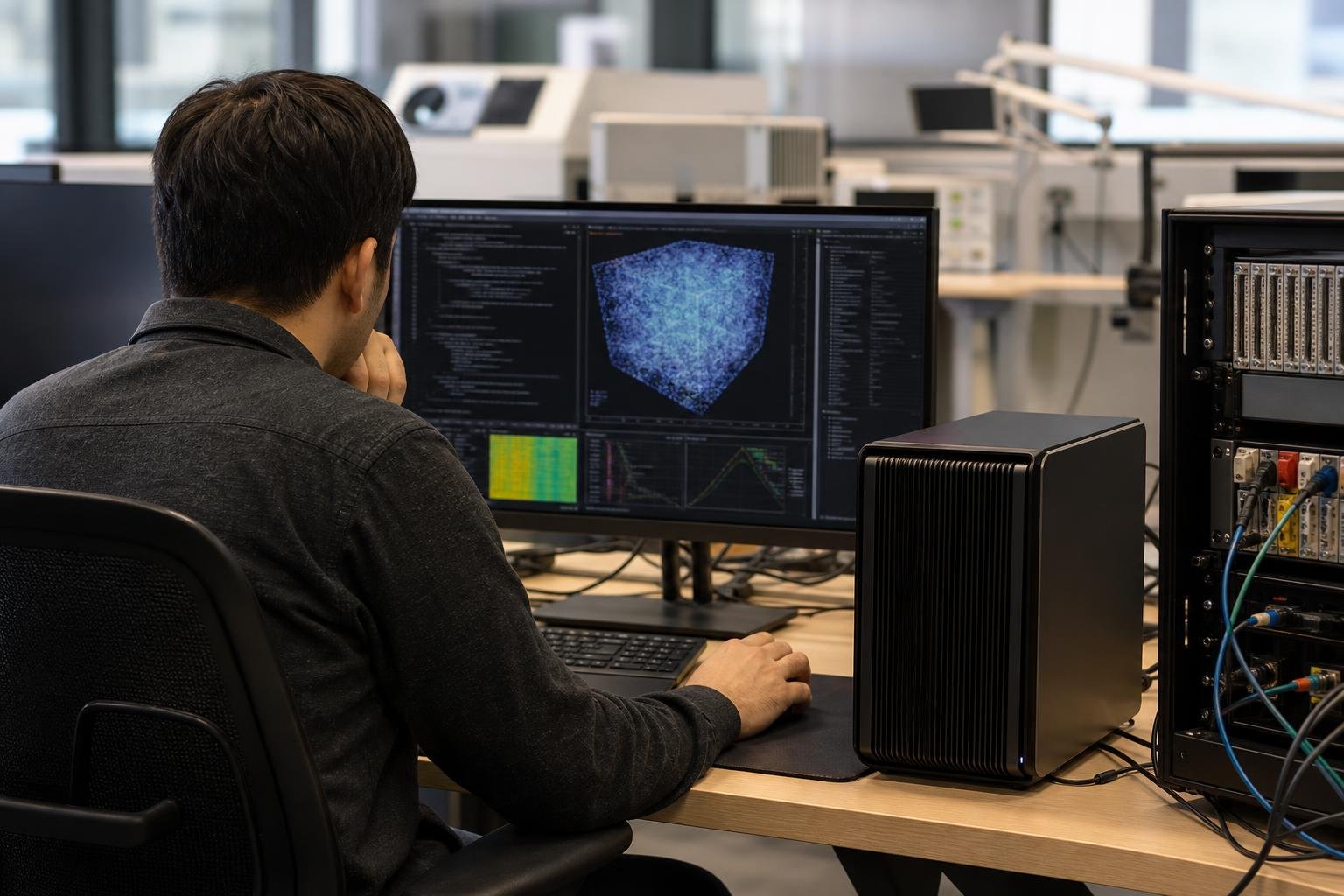
Microsoft Build 2026, held June 2–3 in San Francisco and online, was a statement of intent: Microsoft wants AI agents to become persistent software workers rather than chat interfaces that only respond to a prompt. Its announcements connected enterprise data, identity controls, agent runtimes, coding tools, proprietary models and local AI hardware into a broad platform strategy.[1]
The most consequential launches were Microsoft IQ, a shared organizational-context layer; Scout, an experimental always-on workplace agent; a new family of MAI models; and the Surface RTX Spark Dev Box, a compact desktop designed to run large models locally. The company also expanded GitHub Copilot into a dedicated multi-agent application just as its new usage-based billing system has raised concerns about unpredictable developer costs.
Microsoft IQ and Scout push agents toward continuous work
Microsoft IQ is now generally available across GitHub Copilot, Microsoft Foundry and Copilot Studio. The layer combines Work IQ, Fabric IQ and Foundry IQ to give agents reusable, governed context from an organization’s work and data systems. The objective is to reduce the need for teams to repeatedly build isolated retrieval pipelines and to let agents carry relevant context across Microsoft’s products.[1]
Work IQ, which Microsoft expects to reach general availability during June, is focused on work data and user context. Fabric IQ adds an ontology for describing business data, although that component remains in preview. Foundry IQ brings equivalent grounding concepts to developers building custom AI applications. The approach is central to Microsoft’s pitch: useful enterprise agents need more than a strong model; they need controlled access to current data, business definitions and user permissions.
That foundation supports Microsoft Scout, which Microsoft calls its first “Autopilot” agent. Scout is in an early experimental release for Frontier organizations and is intended to operate continuously across Teams, Outlook, OneDrive, SharePoint and actions on a local device. It uses Work IQ for context and is built on the open-source OpenClaw technology.[1]
Unlike a conventional assistant session, Scout is designed to take action over time. Microsoft says each agent gets a governed Microsoft Entra identity, allowing administrators to assign policies and attribute activity to a particular agent. That identity model is important because an agent acting on mail, files, calendars and enterprise applications introduces risks that go well beyond an incorrect chatbot answer. Permissions, logging, recovery from errors and protection against malicious prompts or tools will determine whether such systems can be trusted in production.
Microsoft also opened early-partner access to Frontier Tuning, which allows organizations to tune models within their own tenant using workflows, policies, decision reviews and validated outcomes. The company says customers retain ownership of the resulting model and learning loop. Meanwhile, Web IQ entered limited access for selected Azure customers, providing APIs to discover, rank, extract and package web, news, image and video information for agents.[1]
New MAI models reduce reliance on any one supplier
Microsoft AI’s Superintelligence Team introduced seven in-house MAI models covering reasoning, coding, image generation and editing, transcription, and voice. The release adds substance to Microsoft’s effort to operate as a multi-model platform, with access to proprietary models alongside offerings from OpenAI, Anthropic and the open-model ecosystem.
The flagship is MAI-Thinking-1, Microsoft AI’s first reasoning model. Microsoft describes it as a 35-billion-active-parameter model with a 256,000-token context window, trained from scratch on clean commercially licensed data and without distillation from third-party frontier models. It is aimed at multi-step reasoning, long-context tasks and code generation, and is available only to selected early partners through Microsoft Foundry private preview.[2]
Microsoft said blind human raters preferred MAI-Thinking-1 over Anthropic’s Sonnet 4.6 and that it matched Anthropic Opus 4.6 on SWE-Bench Pro coding tasks. Those are company-reported results rather than independently reproduced evaluations, and Microsoft has not published enough methodology in its announcement materials to validate the comparisons fully.[2]
The rest of the family is more immediately available. MAI-Code-1-Flash was built for GitHub Copilot and Visual Studio Code, emphasizing lower latency and cost. MAI-Image-2.5 handles text-to-image and image-to-image generation; MAI-Transcribe-1.5 adds entity biasing, with streaming support planned; and MAI-Voice-2 adds more than 10 languages and new voice choices. Microsoft said the image, transcription and voice models are generally available through Microsoft Foundry and MAI Playground.[1]
The model announcements matter less as an attempt to displace every frontier-model provider than as infrastructure for Microsoft’s larger stack. A midsize reasoning model that is cheaper to operate can be useful for persistent agents, where repeated planning and tool use may otherwise make inference costs difficult to control. Axios characterized MAI-Thinking-1 as a cost-oriented midsize model and viewed the launch as evidence of Microsoft’s ability to compete more directly in AI beyond its OpenAI relationship.[6]
Surface RTX Spark Dev Box targets local AI development
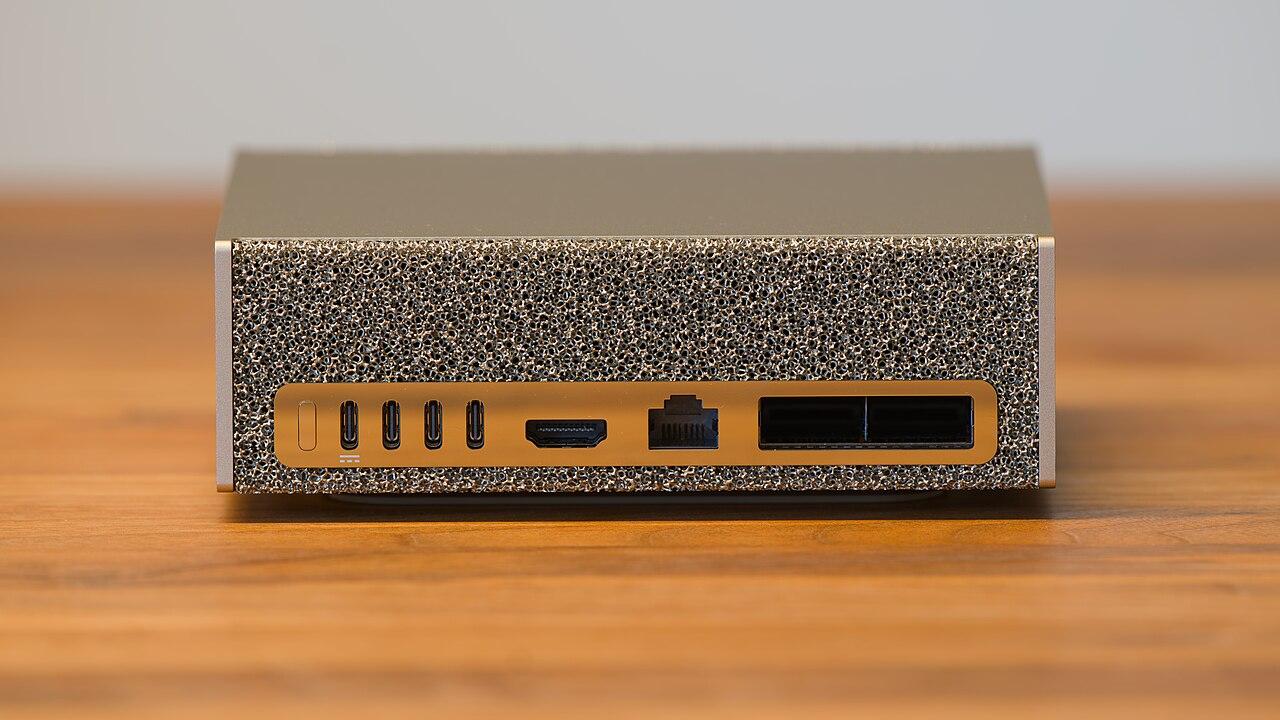
Microsoft and NVIDIA also introduced the Surface RTX Spark Dev Box, a compact Windows desktop for developers who want to prototype, fine-tune and run AI pipelines locally. It uses NVIDIA’s RTX Spark superchip, which combines a Blackwell RTX GPU and Grace CPU, and comes with 128 GB of unified memory.[3]
Microsoft says the machine can provide up to one petaflop of AI compute and run models with 120 billion or more parameters, with context windows as large as 1 million tokens. Those figures need careful reading: the one-petaflop specification is theoretical FP4 performance using sparsity, not a sustained general-purpose performance measurement. Independent benchmarks, power-use figures and real-world model throughput have not yet been released.[3]
The Dev Box runs Windows 11 Pro and includes WSL 2, native GPU passthrough and CUDA support. Visual Studio Code, GitHub Copilot, Git, Python and Node.js are preinstalled, while Windows ML, TensorRT, Windows Copilot Runtime, Microsoft Foundry and AI Toolkit for VS Code are integrated into the developer workflow. Microsoft is also emphasizing enterprise management, including secured-core PC architecture, BitLocker, Defender, Entra ID and Intune support.[3]
U.S. availability is planned later in 2026 exclusively through Microsoft.com, but Microsoft had not disclosed pricing or a firm shipment date as of June 6. That omission leaves the central question unresolved: whether the upfront cost of a local high-memory AI workstation can compete with cloud GPUs and NVIDIA’s own developer systems. Still, the product reflects growing demand for private local inference and development, particularly where proprietary data cannot easily be sent to external cloud services.
GitHub Copilot becomes a multi-agent workspace
GitHub’s new Copilot app entered expanded technical preview on June 2 for existing Copilot Pro, Pro+, Business and Enterprise customers on Windows, macOS and Linux. Availability for Copilot Free users and new subscribers remains forthcoming.[4]
The app is built around managing several agent sessions at once. A developer can begin from an issue, pull request, prompt or earlier session, then assign work to separate agents. Each session has its own Git worktree, branch, files, conversation and task state, a design intended to prevent parallel efforts from colliding in the same working directory.
Developers can inspect plans and diffs, validate output through an integrated terminal and browser, and open pull requests. GitHub’s Agent Merge can respond to review comments, address failing checks and merge changes within repository rules. The app also supports per-session model selection, Model Context Protocol server connections, cloud sessions, scheduled cloud automations, Copilot CLI synchronization, agentic browsing and structured “canvases” for reviewing work objects. Voice conversations use on-device speech-to-text, and GitHub says audio does not leave the device.[4]
The workflow makes Copilot less like an autocomplete feature and more like an orchestration interface for supervised coding agents. GitHub’s stated model is that agents manage execution while developers retain responsibility for review, validation, continuous integration and merge decisions. Whether teams embrace that workflow may depend partly on its economics.
On June 1, GitHub moved Copilot to usage-based billing. Plans now receive monthly GitHub AI Credits, while consumption is calculated from input, output and cached tokens using model-specific rates. Monthly Pro and Pro+ subscriptions include $10 and $39 in credits, respectively; Business and Enterprise retain per-user monthly pricing with promotional higher credit allocations through August.[5] Developers have criticized the change as a source of cost volatility, especially because long-running agent tasks can consume substantially more tokens than ordinary code completion. TechCrunch reported individual user claims of monthly costs rising from roughly $29 to hundreds of dollars, though those reports were not audited bills.[7]
The rest of Microsoft’s agent platform
Build’s supporting announcements fill in the deployment layer beneath its agents. Microsoft Agent Framework 1.0 is the supported convergence of AutoGen and Semantic Kernel for .NET and Python. It includes tools, MCP integrations, context providers, middleware and multi-step workflows.[8] Hosted Agents in Foundry Agent Service add per-session sandboxes, persistent state and elastic scaling, with Microsoft targeting sub-100-millisecond cold starts and zero idle cost when generally available.[1]
Microsoft Execution Containers, or MXC, entered preview as a Windows operating-system policy layer for sandboxing agent activity around code execution, files and network access. NVIDIA’s OpenShell autonomous-agent runtime is being integrated with MXC to add policy management, inference routing and personally identifiable information obfuscation. The tools are intended to improve containment, but their practical resilience against prompt injection, compromised tools and credential misuse remains to be established publicly.[1]
For agents that must interact with browser-based or legacy enterprise software, Windows 365 for Agents offers managed Cloud PCs joined to Entra and controlled through Intune. Microsoft also previewed Rayfin, an open-source SDK and CLI that generates typed backends and deploys them as managed services on Fabric, with data landing in OneLake by default. Replit is partnering with Microsoft to move natural-language-generated applications into governed Fabric environments.[1]
Together, the releases show Microsoft pursuing a full-stack agent strategy across Windows, Azure, Microsoft 365, GitHub, Surface hardware and enterprise identity. The company’s challenge now is to demonstrate that the security boundaries, model claims and cost controls work as promised outside launch presentations and limited previews.
Editor’s Take
The important Build theme is not any single model benchmark; it is Microsoft trying to make agents operational inside the systems where work already happens. IQ, Entra-backed agent identities and isolated GitHub worktrees address the unglamorous but decisive issues: grounding, permissions, attribution and collision avoidance. If those controls work cleanly, persistent agents can become useful teammates for bounded workflows rather than expensive chatbots with broad access.
I am especially interested in the economics. A smaller reasoning model and local high-memory hardware could make repeated agent planning and private inference more practical, but Microsoft still has to disclose real Dev Box pricing, power draw and throughput. Likewise, multi-agent coding is compelling only if usage-based Copilot billing remains predictable enough for teams to let agents run continuously. Watch for independent MAI evaluations, security results from Scout pilots, and whether developers see measurable cycle-time gains after reviewing all the agent-generated code.
References
- Microsoft News – https://news.microsoft.com/build-2026-live-blog/
- Microsoft Blog – https://blogs.microsoft.com/blog/2026/06/02/microsoft-build-2026-be-yourself-at-work/
- Windows Blog – https://blogs.windows.com/devices/2026/06/02/building-the-next-generation-of-devices-for-developers-surface-rtx-spark-dev-box/
- GitHub Changelog – https://github.blog/changelog/2026-06-02-expanded-technical-preview-availability-for-the-github-copilot-app/
- GitHub Blog – https://github.blog/news-insights/company-news/github-copilot-is-moving-to-usage-based-billing/
- Axios – https://www.axios.com/2026/06/02/microsoft-debuts-scout-agent-homegrown-reasoning-model
- TechCrunch – https://techcrunch.com/2026/05/30/what-a-joke-github-copilots-new-token-based-billing-spurs-consternation-among-devs/
- Microsoft Developer Blogs – https://devblogs.microsoft.com/agent-framework/microsoft-agent-framework-at-build-2026-announce/