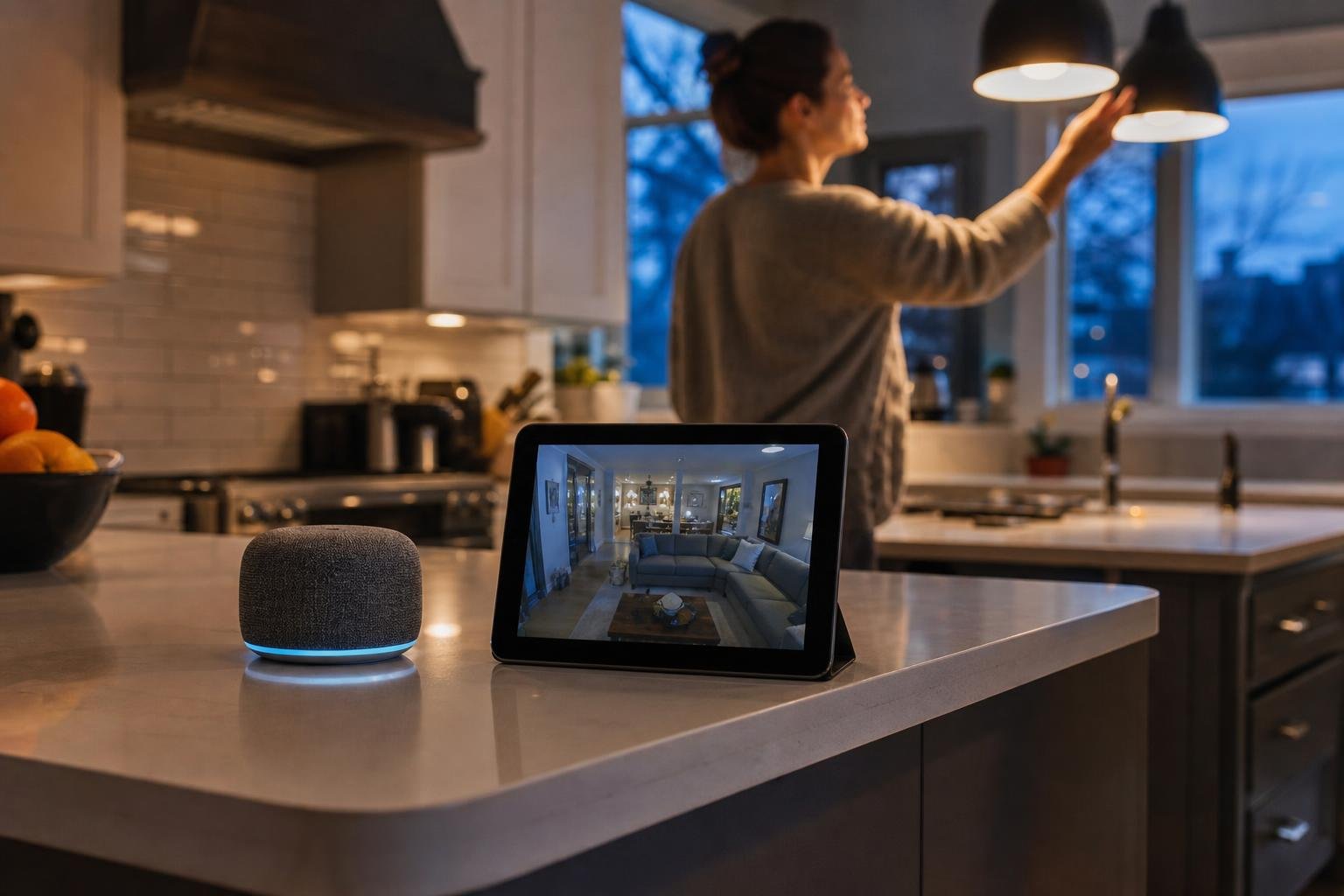
Google’s new $99.99 Google Home Speaker reaches stores June 25 as the most visible part of a much larger shift: Google Home is becoming a Gemini-centered platform rather than a collection of Google Assistant-controlled devices. The company’s rollout combines conversational voice control, camera interpretation, household summaries, partner APIs and a subscription tier for its most advanced features.[1][2]
The speaker itself is a compact, conventional-looking smart speaker. The more consequential development is Google’s attempt to make Gemini the intelligence layer across a home’s speakers, displays, cameras, doorbells, locks, thermostats and automations. That puts Google in a renewed contest with Amazon’s Alexa ecosystem and Apple’s Siri and HomePod platform—not only for smart-speaker sales, but for control of the home’s data, services and recurring subscription revenue.
1. Voice control becomes conversational rather than command-based
Gemini for Home is designed to replace the rigid phrasing historically associated with voice assistants. Instead of delivering a sequence of carefully worded commands, users can combine actions, make exclusions, correct themselves while speaking and ask follow-up questions that depend on short-term context.
A household member can, for example, ask to turn off every light except one, then amend the request without starting over. The system is also intended to reason across multiple steps and retain enough context for a follow-up request. Google’s Continued Conversation feature keeps microphones active briefly after a response, reducing the need to repeat the wake phrase for every exchange.[1]
That may sound incremental, but it addresses a central limitation of earlier smart-home interfaces. Google Assistant was often effective when a request matched a known command pattern. A conversational system instead attempts to determine intent, resolve ambiguity and map that intent to a set of devices, rooms and actions.
Google says recent Gemini for Home updates improve device targeting across rooms, multiple homes, unassigned devices and categories. A request such as “turn off the kitchen” is meant to identify the appropriate lights rather than indiscriminately switching every device assigned to that room. The company has also expanded language support and improved its detection of background “side-talk,” which is intended to reduce accidental responses to conversations not directed at the speaker.[4]
The new Google Home Speaker offers 10 natural-sounding voices and is Google’s first audio device built specifically around Gemini. Yet the transition remains a rollout rather than a finished replacement: Google’s own release notes show continuing work on responsiveness, media control, notes, lists and device targeting.[4]
2. Cameras shift from alerts to semantic household answers
The most significant expansion beyond voice is Gemini’s use of visual and sensor information. Conventional smart-home cameras generally report narrow events: motion, a person, a package or a door opening. Gemini for Home is intended to interpret what happened in those events and answer questions about them.
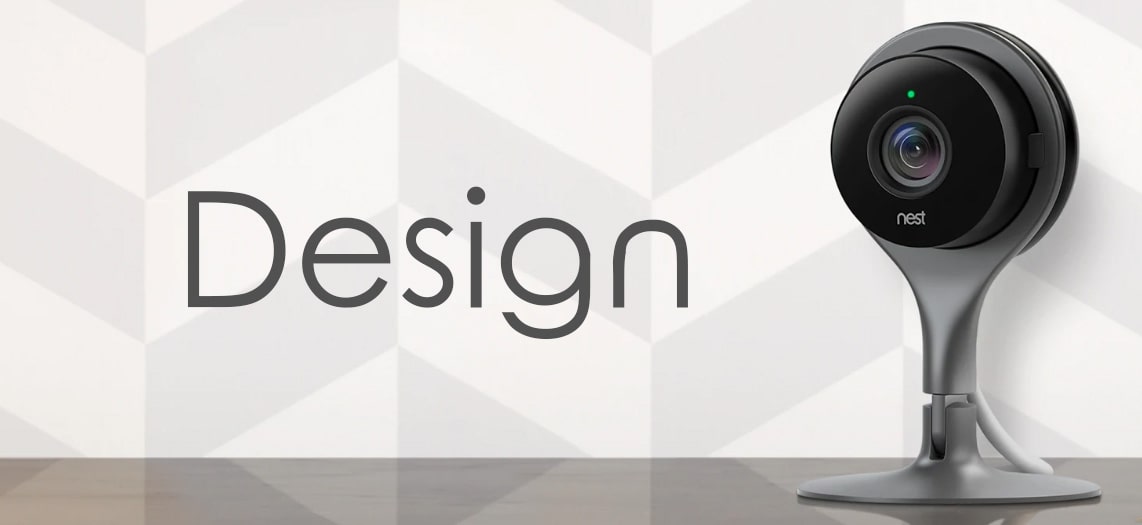
Google describes camera intelligence that can generate more specific event descriptions, while its Ask Home feature lets users make natural-language queries about their own homes. Its examples include asking whether a gate is open, whether a pet got onto a couch or whether a dog damaged an object. Home Brief, meanwhile, is designed to condense hours of camera and sensor activity into a summary of what took place while the household was away.[2]
This is a meaningful change in the smart-home model. Rather than forcing a user to review a timeline of clips and alerts, the platform seeks to act as a searchable and summarizing layer over household activity. It could make a camera system more useful, especially in homes with multiple devices and frequent notifications.
It also creates a substantially greater privacy burden. Answering whether a pet was on furniture or summarizing a day’s activity requires the system to process video and sensor information at a richer semantic level than a basic motion alert. Google highlights the speaker’s physical microphone-mute switch, but its public product materials do not provide a complete technical breakdown of local versus cloud processing for every Gemini for Home capability.[1] Consumers will need to weigh the value of contextual answers against the sensitivity of the data that makes them possible.
3. Google is opening Gemini for Home to partners
At Google I/O in May, Google positioned Gemini for Home as a full-stack platform for service providers and hardware makers, not merely a Nest feature. The company is opening Home APIs that it says connect to hundreds of millions of devices, alongside Gemini capabilities, reference designs and validated hardware configurations.[2]
The program includes a Camera Reference Design and a Speaker Reference Design, as well as work with Amlogic, SEI Robotics and Apical. The goal is to give manufacturers and service providers a faster route to products that can connect to Google’s home-control and AI infrastructure.
For Google, this is strategically important. A carrier, internet provider or security company can build a branded product while relying on Google’s device model, automations and Gemini-driven interpretation. AT&T is an early example: it is using Google Home APIs to combine Gemini camera intelligence with its Connected Life application and LTE-backed security services.[2]
This approach gives Google a chance to become infrastructure for the smart home, even when the customer does not buy a Google-branded camera or speaker. It also broadens the competitive stakes. Amazon and Apple compete through their own assistant and hardware ecosystems, but Google is explicitly courting third parties that may want an AI home layer without building all of the underlying software themselves.
4. The new speaker is Gemini-native, but not an audio revolution
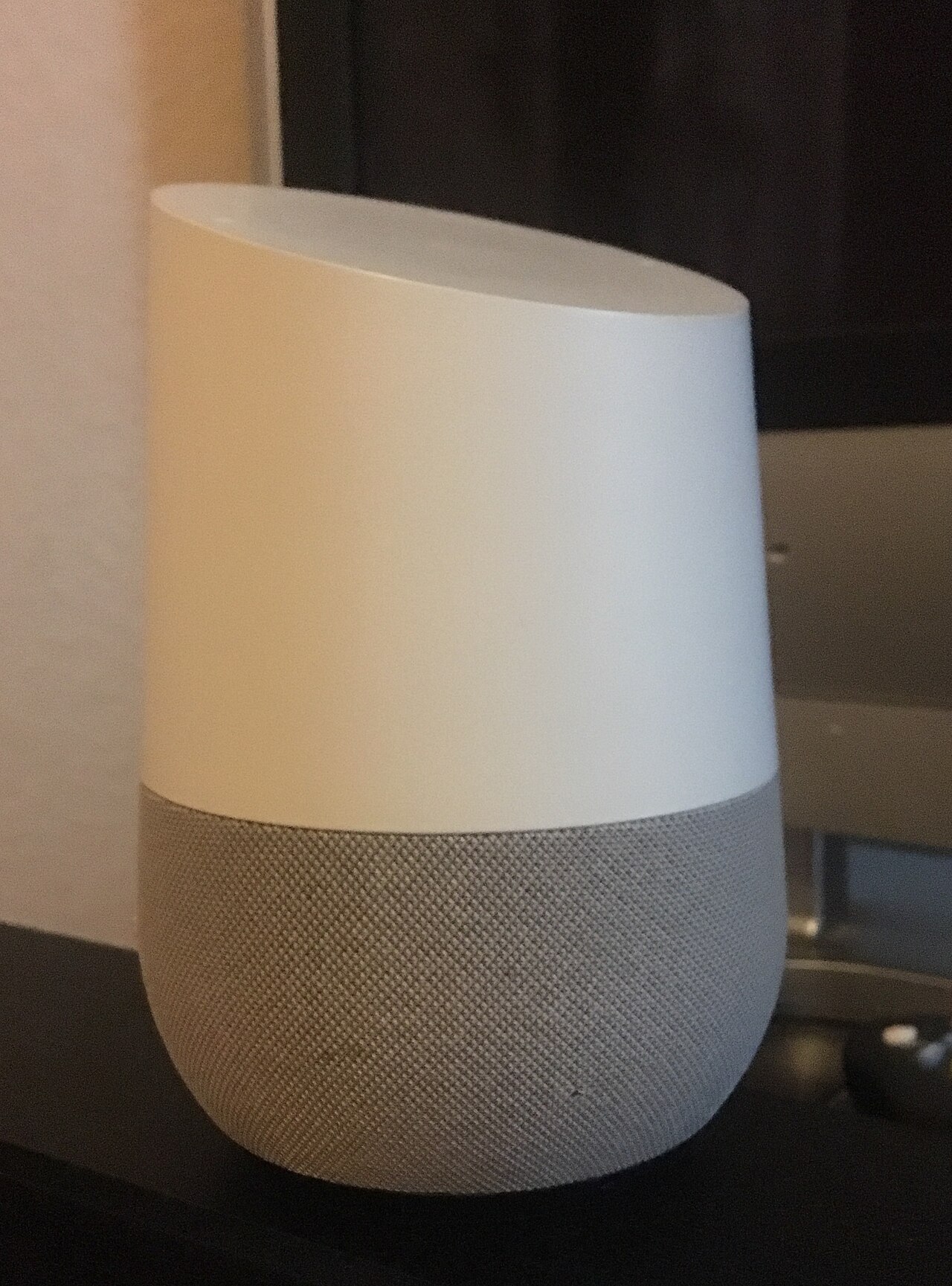
The Google Home Speaker is the flagship device for this transition, replacing and consolidating roles previously served by Nest Audio and Nest Mini. It costs $99.99 in the U.S. and comes in Hazel and Porcelain, plus U.S.-exclusive Jade and Berry finishes.[1]
Its hardware centers on 360-degree audio from a single 58-millimeter driver, adaptive microphone processing, Wi-Fi 6 and an underglow light ring that indicates listening, processing and response states. A physical switch disconnects the microphones. Owners can pair up to two speakers with a Google TV Streamer for spatial-surround home-theater audio.[1]
The device is more a vehicle for the new software than a major acoustic leap. The older Nest Audio used a 75mm woofer and a 19mm tweeter, while the new model uses a single 58mm driver. Reviews have generally praised the compact design, sound and improved conversational interaction, but have been less impressed with the audio hardware relative to the Apple HomePod mini and Amazon Echo Dot Max.[5][6][7]
Reviewers have also noted the absence of sensors available in some competing devices, including temperature, humidity, ambient-light and presence sensors.[5] Google has not publicly provided a complete processor specification for the consumer speaker, and claims that it runs a full Gemini model locally should not be treated as established fact. The published materials emphasize the experience and platform integration rather than detailed on-device AI architecture.
5. Advanced home intelligence is becoming a subscription product
Google Home Premium is the commercial layer beneath the Gemini upgrade. The Standard plan costs $10 per month or $100 annually and includes Gemini Live, Ask Home assistance for automations, intelligent camera alerts, camera-history functions and 30 days of video history. The service is also included with Google AI Pro and Ultra subscriptions, while the new speaker comes with a six-month Home Premium trial.[1][8]
Gemini Live is particularly important because it enables more free-flowing back-and-forth interaction without repeatedly using a wake phrase. Home Brief and deeper camera-history search also sit among the advanced capabilities tied to Premium. Google is therefore not simply selling a speaker with a better assistant; it is selling access to an evolving AI service.
That strategy could create dependable revenue in a category where hardware margins are difficult, but it is also the most persistent criticism of the launch. Features that many buyers may associate with a modern voice assistant are partially gated behind a recurring fee. Reviews from Engadget and WIRED both praised Gemini’s more natural interaction while questioning the cost of subscription-dependent features.[6][7]
Google’s wager is that more capable voice interaction, camera interpretation and automation will make the subscription worthwhile. The risk is that the $99.99 speaker is seen as an entry point to an increasingly paywalled assistant, especially while the platform is still addressing bugs, latency and reliability issues.
What Google’s Gemini home push means
Google’s June speaker launch should not be viewed as a standalone hardware refresh. Its importance lies in the architecture surrounding it: Gemini can interpret natural-language requests, connect those requests to household devices, draw on camera and sensor information, and extend that capability through partner products and paid services.
The strongest early case for the platform is reducing friction. A home assistant that can understand corrections, follow-ups and compound requests is more useful than one that only recognizes fixed commands. Camera summaries and household questions could likewise cut through alert overload. But those benefits depend on reliability, consumer trust and Google’s ability to explain how sensitive household data is processed.
As of June 25, Gemini for Home is a notable step toward an agentic smart-home platform, but it is still an evolving one. The hardware is modest; the ambition is not. Google is trying to make the home a place where Gemini does not merely answer questions, but interprets context and coordinates action across an entire connected environment.
Editor’s Take
Google’s strongest move here is not the new $99.99 speaker; it is treating the home as an AI context layer. A useful assistant should understand that “turn off the kitchen, but leave the island on” is one request, not a programming exercise. If Gemini can reliably resolve rooms, devices, corrections and follow-up questions, it removes the friction that has kept many smart homes feeling like a collection of brittle voice commands.
The camera features are the higher-value—and higher-risk—bet. Searchable household history and concise daily summaries can genuinely save time for families, security users and property managers, but only if event descriptions are accurate and privacy controls are unusually clear. I would watch for independent testing of false alerts, multi-user permissions, retention policies and exactly which functions work locally versus in the cloud. The partner API strategy could make Google the underlying intelligence platform for third-party security and broadband providers, but recurring subscription costs may limit adoption unless the Premium features prove materially better than ordinary notifications and automations.
References
- Google Blog – https://blog.google/products-and-platforms/devices/google-nest/google-home-speaker-gemini-features/
- Google Developers Blog – https://developers.googleblog.com/empowering-service-providers-and-hardware-partners-with-gemini-for-home/
- Google Blog – https://blog.google/products-and-platforms/devices/google-nest/next-era-gemini-google-home-launch/
- Google Home Help – https://support.google.com/googlehome/answer/15962877?hl=en
- Tom’s Guide – https://www.tomsguide.com/audio/smart-speakers/google-home-speaker-review
- WIRED – https://www.wired.com/review/google-home-speaker-2026/
- Engadget – https://www.engadget.com/2200116/google-home-speaker-review/
- Google Store – https://store.google.com/us/product/google_home_speaker_specs?hl=en-US