
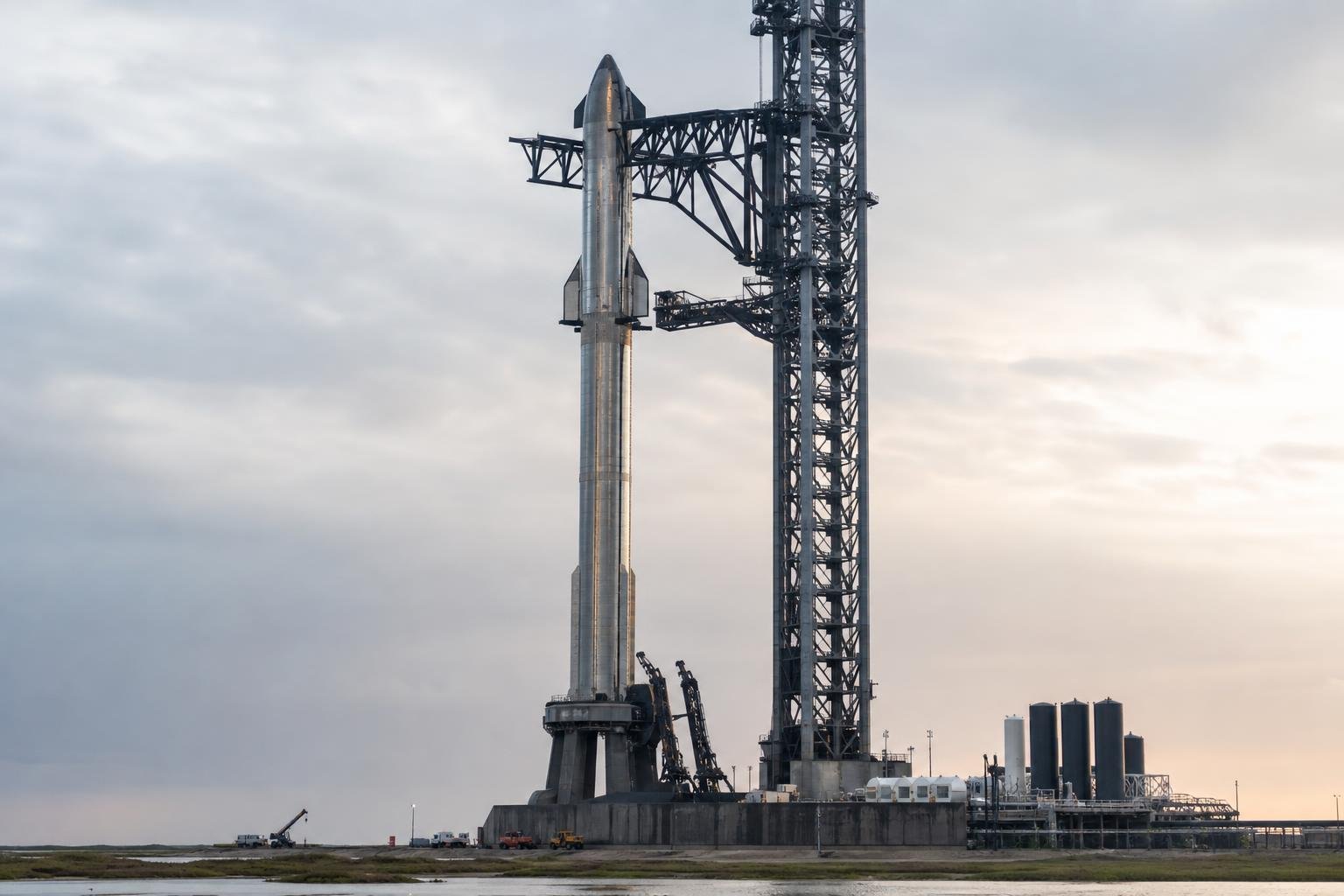
SpaceX wants to fly its next Starship mission in August and attempt another launch-tower catch of the returning Super Heavy booster, Elon Musk said during the company’s first earnings call since its historic initial public offering. The update, reported by Space.com, puts a near-term operational milestone at the center of SpaceX’s first public-market test: whether Starship’s fully reusable launch architecture can move from dramatic flight demonstrations toward a repeatable transportation system.[1]
The proposed mission matters beyond a single launch. Starship is intended to be the vehicle that expands SpaceX’s launch capacity, supports future Starlink deployment and enables lunar and eventual Mars missions. A successful booster recovery at the launch tower would reinforce the central premise of the program: the largest and most expensive stage of the system should return quickly enough to be reused rather than discarded at sea.
By the numbers
- August 2026: SpaceX’s stated target month for the next Starship launch.
- First: The earnings call was described as SpaceX’s first since its historic IPO.
- Two major operations: The stated objective combines a Starship launch with a Super Heavy tower-catch attempt.
A near-term flight target with a higher operational bar
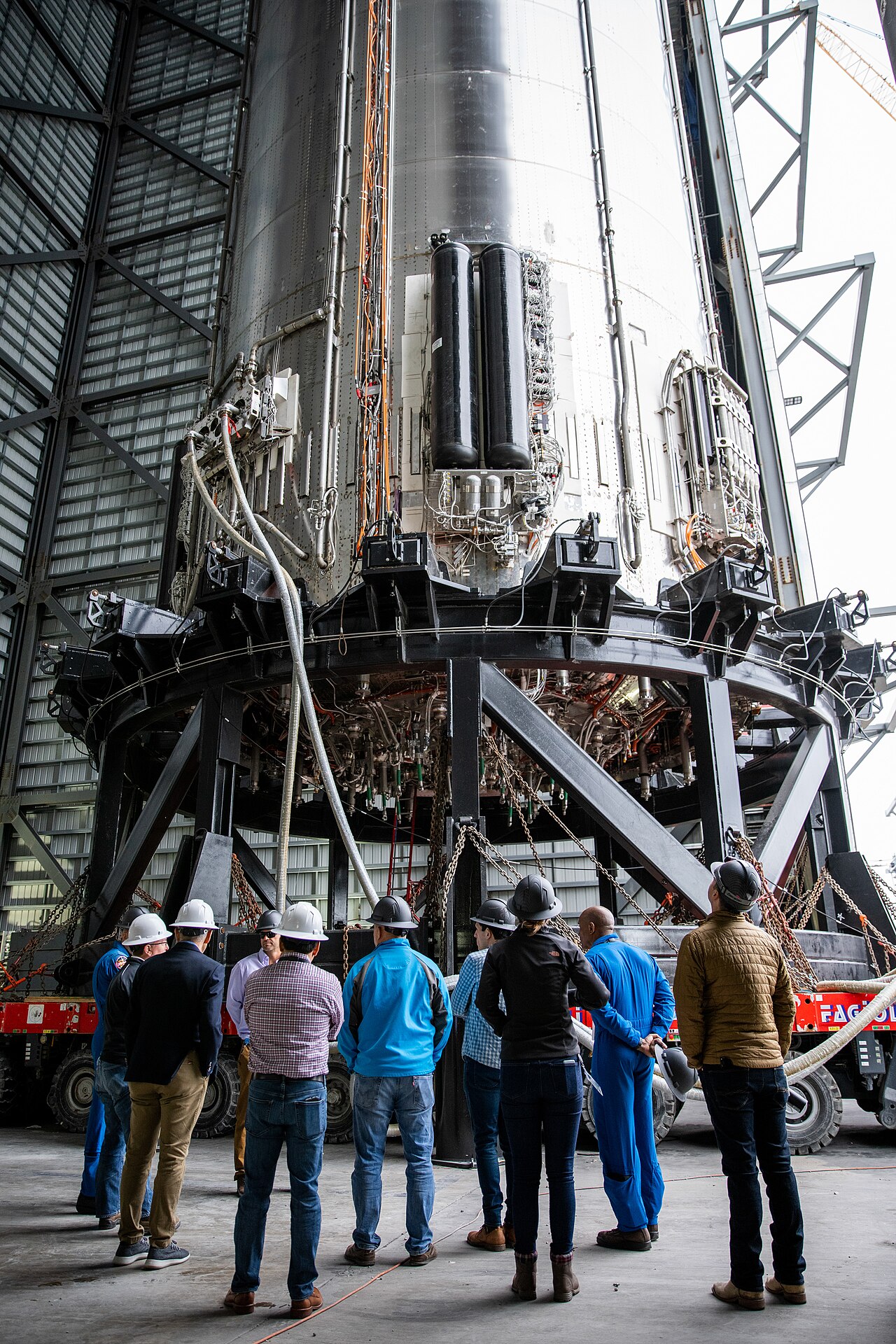
Musk’s August target is significant because a Starship test campaign is not governed by vehicle readiness alone. A flight requires coordination among the launch vehicle, ground infrastructure, range safety systems, regulatory approvals and recovery planning. A schedule announced during an earnings call is therefore a target rather than a guarantee; the final date can shift as hardware inspections, static-fire tests, weather and mission approvals dictate.
The stated plan also raises the difficulty beyond simply getting a vehicle off the pad. Starship missions use a two-stage architecture: the Super Heavy first-stage booster provides the initial ascent thrust, while the upper-stage Starship continues toward its mission trajectory. The catch objective conventionally concerns Super Heavy’s return to the launch site. It does not mean the upper-stage spacecraft is expected to be caught by the tower.
A booster catch requires the returning stage to execute a controlled descent, manage its remaining propellant, align with the launch tower and place its load-bearing catch points into the tower’s mechanical arms. Unlike a conventional landing on deployable legs, this approach is designed to eliminate landing hardware and allow the booster to be secured directly at the site where it could eventually be prepared for another flight. It is a demanding maneuver with little tolerance for navigation, propulsion or ground-system faults.
Why the tower catch is central to Starship’s economics
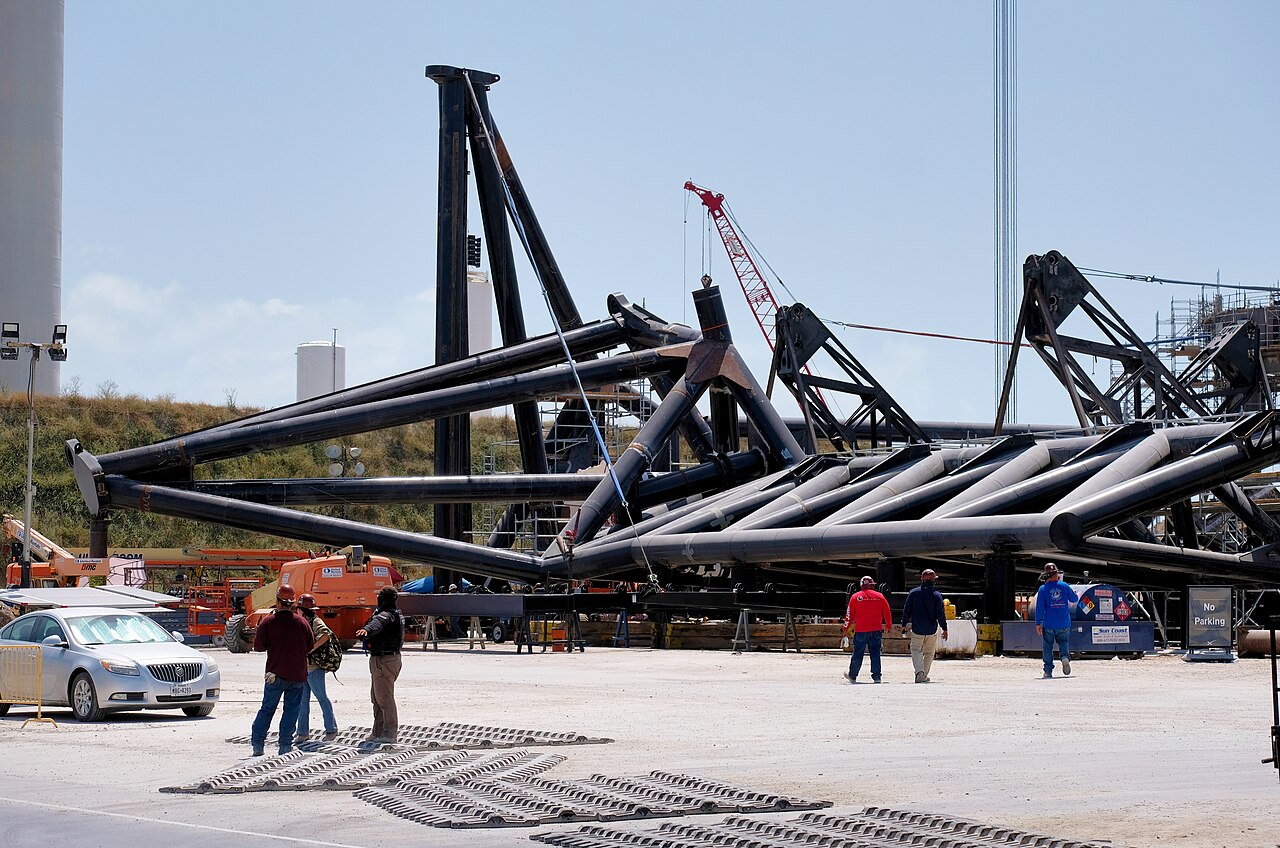
SpaceX’s reusability strategy has already been demonstrated at scale with the Falcon 9 program, whose first stages land on ground pads or drone ships. Starship takes the concept further. The company’s long-term design calls for both major stages to be reusable, and for the Super Heavy booster to return to the launch tower rather than require a separate landing zone and a lengthy transport process.
The practical value is turnaround time. If the booster can be recovered at the pad, inspected, refueled and returned to service with limited refurbishment, SpaceX could reduce the labor and infrastructure required per mission. That is particularly relevant to Starlink, where the company needs substantial launch capacity, and to any future missions that require repeated tanker flights to refuel spacecraft in orbit.
But a catch is only one part of the system’s economics. A credible reusable architecture also needs durable engines, rapid inspection procedures, reliable upper-stage recovery and a cadence that spreads fixed costs over many launches. A single successful recovery can validate important hardware and operations, but it cannot by itself establish routine reusability or a commercial cost per flight.
IPO scrutiny changes the Starship conversation
The earnings-call setting is as important as the launch target. As a public company, SpaceX will face a more regular cycle of investor questions about capital spending, development schedules, launch performance, Starlink economics and the path from experimental flights to revenue-producing operations. The company’s historically ambitious engineering timelines will now be assessed alongside disclosures and expectations associated with public markets.
That does not make a difficult test program less valuable. Large launch vehicles are infrastructure projects as much as aerospace products: they require launch sites, factories, engines, ground systems, range access and a steady mission manifest. Public investors may increasingly evaluate Starship as a capital-intensive infrastructure program rather than merely an engineering project. The relevant questions will include how much capital it consumes, what capabilities it unlocks, how quickly those capabilities can be sold and whether the system can achieve dependable flight cadence.
For SpaceX, the most immediate business case is likely internal as well as external. A high-capacity reusable vehicle could give Starlink more deployment flexibility and reduce dependence on constrained launch slots. Over time, it could also reshape competition in commercial launch, satellite deployment, in-space logistics and government exploration contracts. Those outcomes remain contingent on demonstrated operational reliability, not only successful test flights.
Key players and the limits of the August schedule
Musk remains the central public voice on Starship’s timeline, while SpaceX is responsible for vehicle production, flight operations and the launch-site systems needed for recovery. The company’s Starbase operations in South Texas are central to the program because the site combines manufacturing, testing, launch and the tower infrastructure required for catch attempts. U.S. regulators and range-safety authorities also play a consequential role in determining when a mission can proceed.
The engineering challenge is broad. Super Heavy must perform through ascent, staging, boostback, descent and final capture while its engines and control systems operate across sharply changing aerodynamic and propellant conditions. The upper-stage Starship has its own separate technical agenda, including orbital operations, atmospheric reentry, thermal protection and ultimately recovery. Progress on one stage does not automatically resolve risks in the other.
Critics of the program’s schedule have long argued that Starship development targets can be too aggressive, particularly when they combine flight testing with new recovery procedures. That concern is reasonable: experimental launch systems often reveal issues only under full mission loads and environments that cannot be duplicated completely on the ground. The appropriate measure of progress is not whether every target date holds, but whether each flight retires defined technical risks and produces hardware or operational improvements for the next attempt.
What to watch in the next mission
The clearest indicators will be more specific than the launch date. SpaceX will need to show that the booster’s return trajectory and tower interface work as a coordinated system, that ground teams can safely manage the recovered vehicle, and that the mission delivers useful data across both stages. Any public flight plan should clarify the intended path of the upper stage, the recovery profile for Super Heavy and the objectives SpaceX considers necessary for success.
The longer-term question is cadence. A successful catch would be an important technical event, but Starship’s market value will depend on whether SpaceX can repeat the process with increasingly flight-proven hardware and limited turnaround work. That is the difference between a spectacular demonstration and launch infrastructure capable of changing the supply curve for access to space.
Editor’s Take
I think the booster catch is the right metric to watch because it tests whether Starship is becoming an operating system rather than just a very large rocket. Returning a booster to the launch tower is useful only if the company can make the recovered hardware safe to inspect, quick to service and practical to fly again. That operational loop is where the cost advantage will be won or lost.
The August target should be treated as a useful forcing function, not a promise that deserves to be judged in isolation. The hype outruns the facts when a catch is presented as proof of full reusability or a near-term interplanetary transport network. The facts will be stronger if SpaceX shows disciplined test objectives, transparent evidence of hardware learning and, eventually, repeat recoveries on a measurable cadence. Public investors should reward that kind of compounding operational progress more than a single headline-grabbing date.



.jpg)