
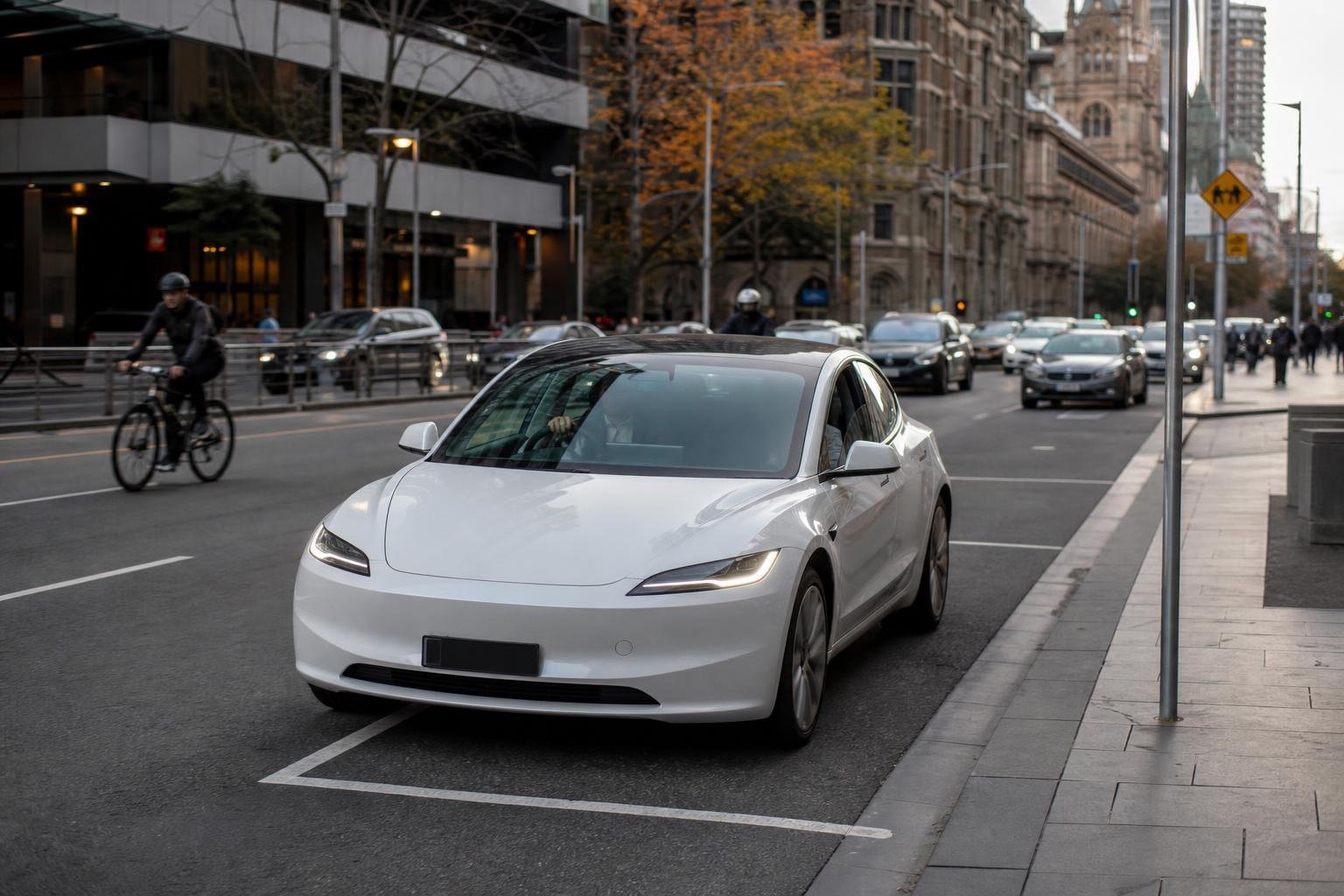
Tesla is preparing to expand Grok from an in-car conversational assistant into a voice interface for Full Self-Driving (Supervised), potentially letting drivers describe where they want the vehicle to stop, turn or park. Elon Musk said on June 18 that the capability could arrive in roughly three months, pointing to September 2026. It has not been released, and Tesla has not detailed the safeguards, technical design or regulatory pathway for the proposed feature.[1]
The plan arrives as Tesla begins deploying FSD (Supervised) v14.3.3 in Australia, its first v14 rollout in a right-hand-drive market, while U.S. safety regulators investigate a fatal June 19 crash in Katy, Texas. The juxtaposition highlights a central challenge for Tesla: adding a more natural, chauffeur-like interface to a system that remains Level 2 driver assistance and requires continuous human supervision.
Grok would become an intent layer for FSD
Tesla’s current Grok vehicle integration is materially narrower than the feature Musk described. In Australia, Tesla says Grok can be used hands-free for conversation and navigation-related tasks, including setting destinations, rerouting and finding points of interest. Navigation support requires software version 2026.2.6 or newer, an AMD infotainment processor, and either Premium Connectivity or Wi-Fi.[2]
Grok remains a beta feature, and Tesla’s support documentation says it does not control ordinary vehicle functions such as climate settings or media. That distinction matters: nothing publicly available as of June 30 indicates that Grok can command FSD driving behavior.
The proposed update would place Grok above the driving stack as an intent or command interface. Instead of selecting a destination or interacting with a conventional navigation menu, a driver might make a conversational request for a particular drop-off point, turn, stopping location or parking area. FSD would still be the system executing the driving task.
How much authority the language model would have remains unclear. Tesla has not said whether Grok would be limited to routing and destination preferences, or whether it could influence tactical choices such as lane selection, speed, curbside stopping and parking. Nor has the company disclosed how it would handle ambiguous, contradictory or unsafe requests; how commands would be constrained by traffic rules and road conditions; or what validation would support deployment in a safety-critical setting.
Those unanswered questions are important because conversational systems are designed to interpret flexible human language, while driving automation needs tightly bounded, predictable behavior. A request such as “drop me off at the entrance” can require the system to distinguish legal stopping areas from bus lanes, bike lanes, active traffic lanes and no-stopping zones. The safety case will depend not merely on speech recognition, but on how reliably the system rejects or modifies requests that cannot be carried out safely or legally.
Australia receives FSD v14.3.3
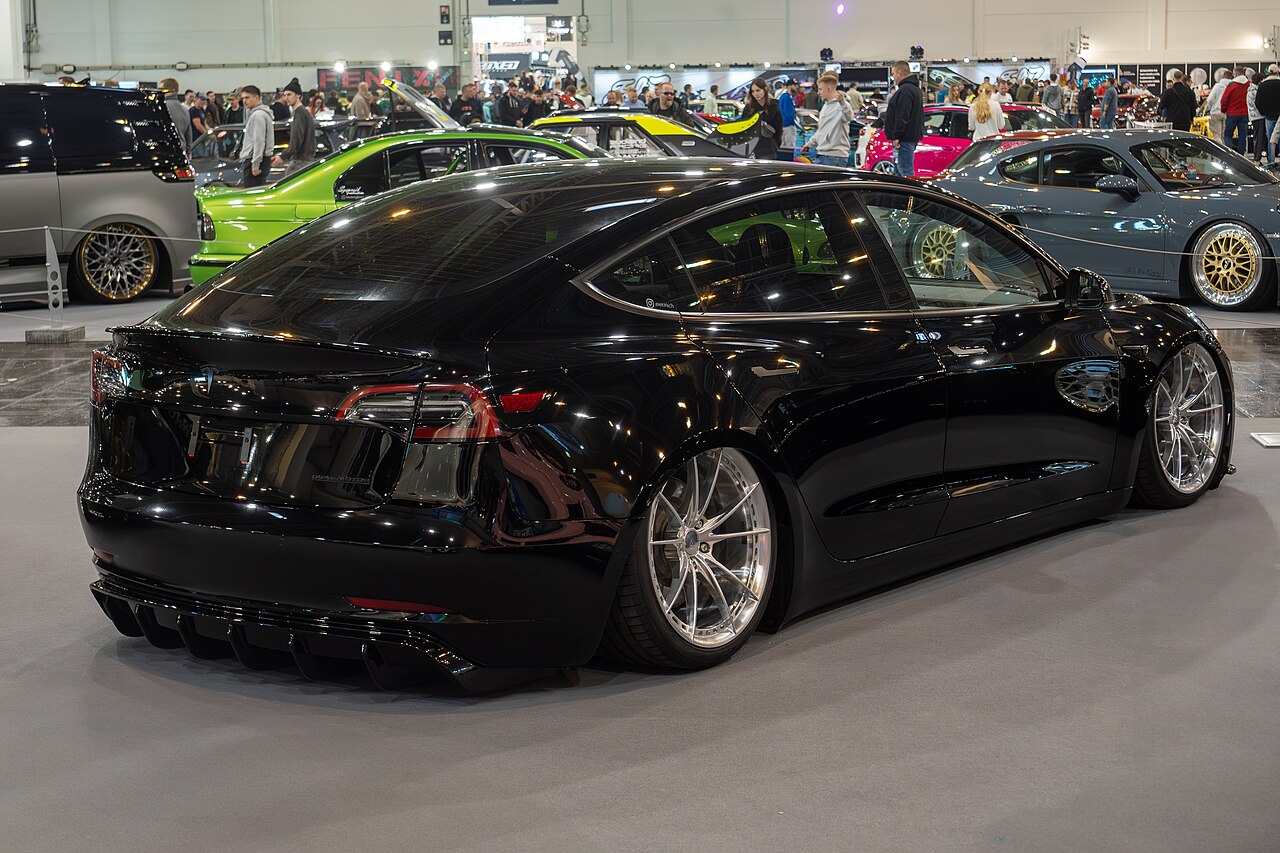
Tesla began distributing FSD (Supervised) v14.3.3 in Australia around June 19 as part of software build 2026.16.6. The release is initially for compatible Hardware 4 Model 3 and Model Y vehicles and marks the first v14-generation deployment in a right-hand-drive market.[3]
According to Tesla’s stated release improvements, v14.3.3 adds an upgraded reinforcement-learning training stage and a revised neural-network encoder. Tesla also claims 20% faster reaction time, improved traffic-sign interpretation, fewer unnecessary lane changes, stronger handling of complex intersections, roadworks and emergency vehicles, and better recognition of small animals. The update includes a new “Sloth” speed profile, intended to be slower and more conservative than the existing “Chill” setting.[3]
FSD first became available in Australia in September 2025, initially for HW4-equipped vehicles. Tesla describes the product as a Level 2 advanced driver-assistance system that can steer, make turns, change lanes and follow a navigation route, but does not make the vehicle autonomous. Drivers must remain attentive, monitor the roadway and be ready to intervene at all times.[3][4]
The Australian offering is subscription-only at A$149 a month. Tesla says availability depends on vehicle configuration, software, region and regulatory approval, and it has not provided an activation date for HW3 vehicles in its Australian support materials.[4]
The rollout gives Tesla access to a large potential audience in a major right-hand-drive market. The Model Y was reported as Australia’s best-selling vehicle across all powertrains in May, ahead of the Ford Ranger, Toyota HiLux and Toyota RAV4.[3] But the expansion also tests FSD on local road design, traffic behavior and infrastructure that can differ substantially from the U.S. conditions in which Tesla has accumulated much of its development experience.
Supervision remains the regulatory and human-factors issue
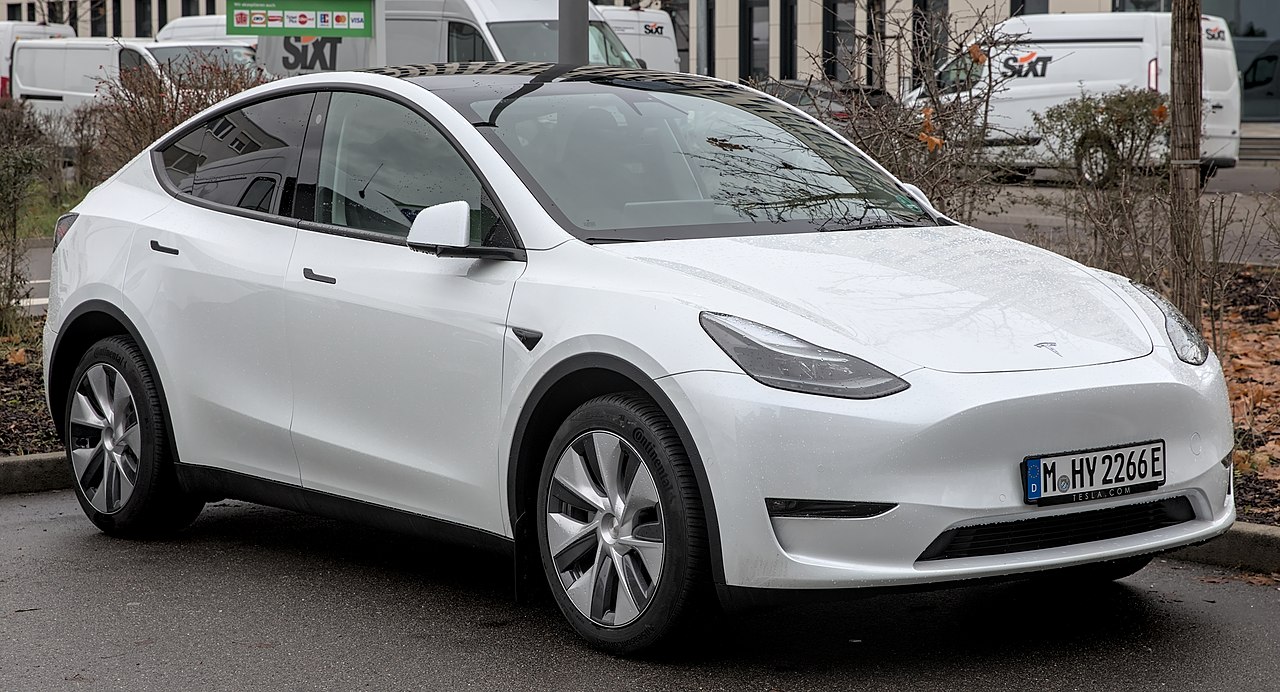
Australian government material has explicitly identified the risk that drivers may mistake FSD (Supervised) for a fully autonomous system. A Department of Infrastructure document said the technology requires continuous attention and warned that misunderstanding the “FSD-S” label could lead to inattentiveness or complacency. It also cited uncertainty in adapting the system to Australian infrastructure, traffic patterns and the right-hand-drive environment.[5]
A Grok command layer could make that risk more acute if drivers interpret conversational control as evidence that the vehicle can operate like a human chauffeur. A car that responds naturally to requests such as “park near the entrance” may feel more autonomous even when the underlying system is still legally and operationally a supervised Level 2 feature.
The issue is not whether voice controls are inherently unsafe. Hands-free voice interaction can reduce the need to manipulate a screen while driving. The question is whether Tesla can present the capability in a way that preserves the driver’s understanding that they remain responsible for monitoring the system and taking over immediately when needed.
That concern has also surfaced in the U.S. policy debate. In a June 16 letter to the National Highway Traffic Safety Administration, Senators Edward Markey and Richard Blumenthal challenged Tesla’s public safety comparisons for FSD, arguing that methodological choices could overstate its apparent advantage over human driving. The senators called for more complete reporting on exposure, crash severity, operating conditions, near misses, traffic violations and non-crash incidents.[6]
NHTSA examines fatal Texas crash
On June 22, NHTSA opened a Special Crash Investigation into a June 19 crash in Katy, Texas, where a Tesla Model 3 struck a home at high speed, killing 76-year-old Martha Avila. Reporting identified the driver as Michael Butler, who told local authorities that an automated driving feature was engaged. As of June 30, the precise role of any driver-assistance system had not been established.[7]
Tesla AI chief Ashok Elluswamy said the company’s vehicle data showed that the driver pressed the accelerator to 100%, overriding the automated system, and that the car reached 73 mph. That is Tesla’s account during an early-stage inquiry, not an NHTSA conclusion on causation.[7]
The special investigation is separate from broader NHTSA scrutiny of Tesla’s driver-assistance technology. In March, the agency opened Engineering Analysis EA26002, covering an estimated 3.2 million Tesla vehicles. The investigation examines whether FSD’s system for detecting degraded conditions provides adequate warning when camera visibility is reduced by glare or airborne obscurants. NHTSA identified nine incidents, including one fatality, and said the reviewed crashes involved alleged failures to detect or adequately warn of impaired camera visibility and, in some cases, failures to detect a lead vehicle.[8]
NHTSA is also examining alleged traffic-safety violations while FSD was engaged through a separate probe opened in October 2025. AP reported that the agency had opened 46 special crash investigations involving Tesla driver-assistance or self-driving technology over the preceding decade, with fatalities in more than a dozen. That figure counts investigations; it does not establish that Tesla systems caused every crash under review.[7]
Expansion without a released safety case
There is no indication that the planned Grok-to-FSD capability was involved in the Katy crash, deployed in Australia, or approved by a regulator as of June 30. It remains a forward-looking product statement rather than a shipping feature.
Still, the proposal is a meaningful change in direction. Tesla is not simply adding another infotainment feature; it is proposing to connect generative-AI language interpretation with a system responsible for steering, braking and accelerating under driver supervision. The practical value could be substantial if it makes navigation, drop-offs and parking requests easier to express. Its safety implications will depend on the limits Tesla builds around those requests—and on whether the interface reinforces, rather than erodes, the driver’s obligation to stay engaged.
Editor’s Take
I like the direction of conversational navigation: saying “drop me near the entrance” is a far better interface than poking through a map while moving. But connecting that request to a Level 2 driving system is not a cosmetic upgrade. The hard engineering is not speech recognition; it is building a deterministic safety boundary between an inherently flexible language model and the vehicle’s constrained planner. Every ambiguous request needs a safe interpretation, a clear confirmation when needed, and a refusal path that does not turn into an unsafe curb stop or last-second maneuver.
Tesla’s Australian v14 rollout is the more concrete development here. A right-hand-drive deployment gives the company valuable operating exposure, but it also raises the bar on local-road behavior and driver messaging. The next evidence to watch is not another launch promise: it is Tesla publishing what Grok can and cannot command, how the system communicates rejected requests, and whether the interface measurably preserves driver attention. Until then, “voice commands for FSD” is an intriguing product concept, not a demonstrated safety capability.
References
- Not a Tesla App – https://www.notateslaapp.com/news/4316/musk-tesla-fsd-to-get-grok-voice-controls-this-fall
- Tesla Australia, Grok Support – https://www.tesla.com/en_au/support/grok
- CarExpert – https://www.carexpert.com.au/car-news/teslas-updated-full-self-driving-system-arrives-in-australia
- Tesla Australia, Full Self-Driving (Supervised) Support – https://www.tesla.com/en_au/support/fsd
- Australian Department of Infrastructure – https://www.infrastructure.gov.au/sites/default/files/documents/foi26-084-documents-released.pdf
- Office of Senator Edward Markey – https://www.markey.senate.gov/imo/media/doc/tesla_data_nhtsa_letter.pdf
- Associated Press – https://apnews.com/article/tesla-selfdriving-robotaxis-crash-investigation-musk-d0a9a3fbe237b6d7f9b6d33be618e946
- NHTSA Engineering Analysis EA26002 – https://business.cch.com/plsd/EA26002open032026.pdf

.jpg)
