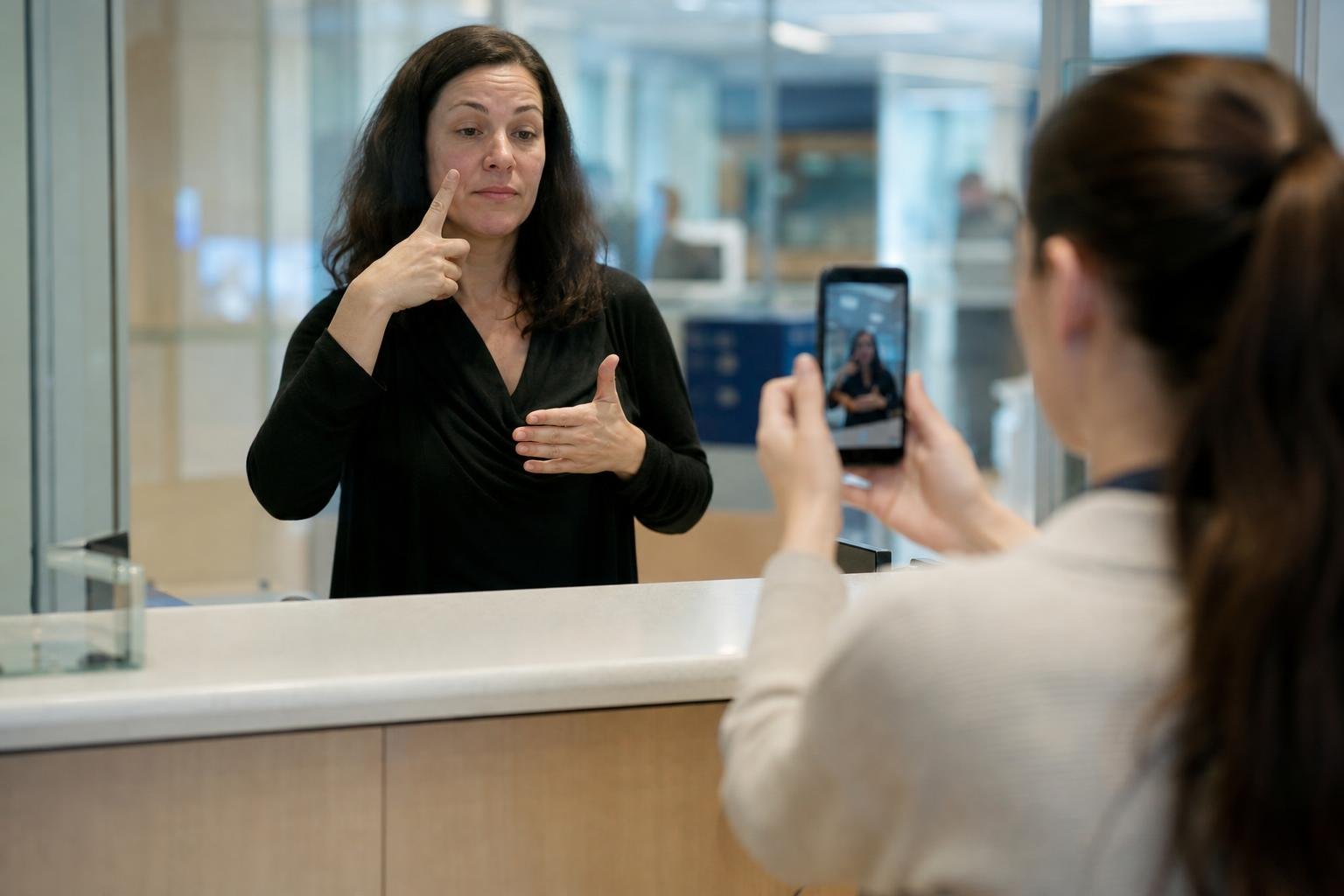
Google has announced an expansion of Live Transcribe for Pixel devices that uses the phone’s camera to translate American Sign Language (ASL) into text. The company disclosed the feature at its Made by Google event alongside new voice-input capabilities intended to handle filler words, run-on sentences and other less structured forms of speech more naturally.[1]
The announcement matters because it moves multimodal AI toward a practical accessibility task: reducing routine communication friction when a signer and a non-signer need to exchange basic information. A camera-facing translation interface could be useful in brief, spontaneous encounters. But its value will depend on a far harder question than simple gesture recognition: whether the system can interpret ASL accurately enough across real signing styles, contexts and environments without implying that a text output is a complete substitute for a human ASL interpreter.
What Google Announced
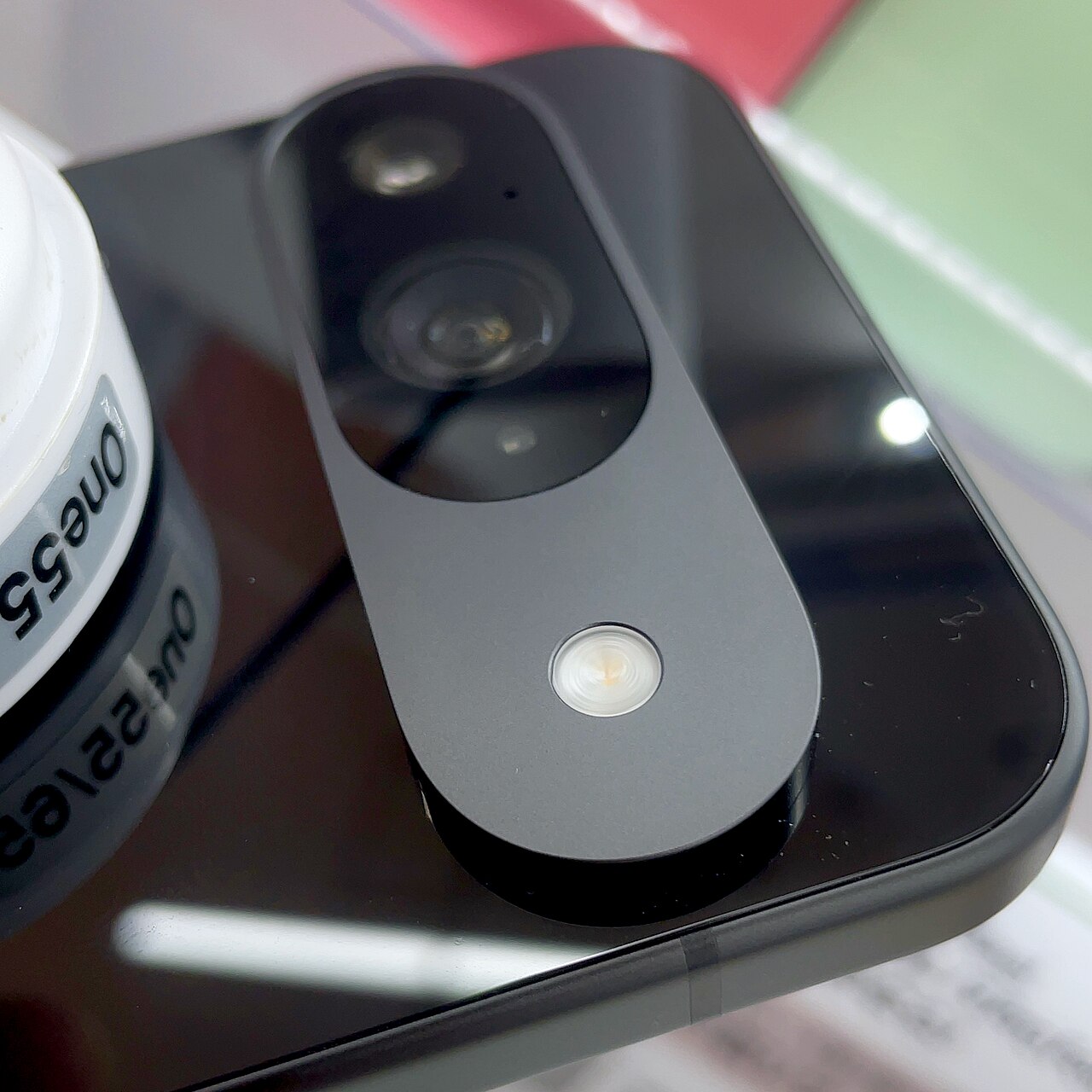
Google said Live Transcribe will use the Pixel Camera to translate ASL into text. Live Transcribe has historically been associated with converting spoken audio into on-screen text; the new capability extends the accessibility interface from an audio input to a visual one. The result is a product that must connect three distinct steps: detecting a person in the camera feed, interpreting signed language, and producing readable text quickly enough to support a conversation.[1]
Google also announced voice input designed for the way people actually speak rather than the way they dictate. In particular, it is intended to understand filler words, run-on phrasing and speech that is not carefully structured. That work addresses a parallel accessibility and usability problem: conventional speech-recognition systems have often performed best when users pause cleanly, use relatively direct wording and self-edit as they talk.
Both features fit a broader product direction in which a phone is not merely transcribing one stream of data. It is expected to process visual, spoken and textual signals through a single interface. For accessibility, that shift can matter more than a generic AI demonstration because the immediate output is actionable: readable text during an interaction, rather than a generated summary after it.
Translation Is Not the Same as Sign Recognition
The most important limitation is linguistic. ASL is a complete natural language, not a word-for-word visual encoding of English. Its grammar, word order and meanings differ from English, and a faithful ASL-to-English system must do more than identify individual hand shapes or map signs to a fixed dictionary.
Meaning in ASL also depends on information that a simplistic hand-tracking model can miss. Facial expression, eyebrow position, head movement, body posture, signing space, movement direction and timing can carry grammatical or semantic weight. A question, negation, emphasis, conditional statement or shift in perspective may be conveyed partly through these non-manual signals. Regional usage, personal signing styles, fingerspelling, rapid movement, camera angle, lighting and occlusion can add further difficulty.
That means the product should be assessed as a translation aid, not as proof that a phone has solved ASL interpretation. A useful system may perform well on short, common expressions in a stable, well-lit camera view while remaining less dependable during nuanced discussion, technical communication, emotionally sensitive conversations or high-stakes exchanges. Google’s announcement establishes the intended function, but the reporting did not detail accuracy benchmarks, the range of ASL the feature handles, language-pair behavior, latency, privacy architecture or how the tool signals uncertainty.[1]
Where a Camera-Based Tool Could Help
The strongest near-term use case is not replacing a professional interpreter. It is helping with brief, informal interactions where no interpreter is available and where an imperfect text bridge is better than no bridge at all. That could include introductions, simple service requests, quick questions in a shared workspace, casual conversation or situations in which a signer wants to make a basic message legible to a hearing person.
A smartphone has practical advantages over dedicated assistive hardware. It is already carried by the user, includes a camera and display, and can present the output directly to another person. If the interface is responsive, it can make the interaction feel less like a handoff to a specialized device and more like an ordinary communication tool.
The voice-input announcement broadens that premise. People with speech differences, people speaking conversationally rather than dictating, and users who simply do not want to reshape their speech around a machine may benefit when a system better tolerates verbal disfluencies. In both cases, the useful design principle is accommodation: the interface should adapt to the person, rather than requiring the person to communicate in a constrained machine-friendly format.
The Technical Test: Multimodal AI at Conversation Speed
For ASL translation, the technical challenge begins with computer vision but does not end there. A robust system needs to track hands, arms, face and upper-body motion over time; distinguish intentional signs from transitional movement; preserve spatial relationships; and infer language-level meaning from a sequence of visual signals. The text generator then needs to produce an intelligible English rendering without silently overstating confidence in ambiguous input.
Camera placement is central. A rear camera may provide higher image quality but makes it harder for the signer to monitor framing; a front-facing camera enables self-framing but can introduce different resolution, mirroring and field-of-view constraints. The product also has to work under familiar mobile conditions: uneven lighting, busy backgrounds, movement, partial visibility and limited battery.
Google has not publicly specified in the announcement whether the translation model runs entirely on the device, partly in the cloud, or through a hybrid design.[1] That distinction will shape the feature’s real accessibility value. On-device processing can improve responsiveness, work without a network connection and keep sensitive camera data local. Cloud processing can support larger models and faster iteration, but may introduce connectivity limits, data-handling questions and delay. Google will need to clarify this before users can make informed decisions about using the tool in private settings.
Accessibility Requires Trust, Not Just Availability
Google’s choice to place the capability in a mainstream Pixel interface is significant. Accessibility features are often most useful when they are integrated into a familiar device rather than sold as niche technology. It also raises the standard for testing. A system designed with and evaluated by Deaf ASL users should be tested across age groups, regional variants, signing speeds, skin tones, clothing backgrounds, camera conditions and communication settings.
Clear boundaries are equally important. The interface should make it obvious that output is machine-generated, provide a simple way to correct or repeat a translation, and avoid presenting uncertain text as authoritative. The consequences of a mistranslation are not equal in every context. A tool suitable for casual conversation may be inappropriate for medical consent, legal proceedings, emergency response, education assessments or employment decisions. In those settings, qualified human interpreters and established accessibility processes remain essential.
There is also a risk in framing the feature as universal translation. Deaf people use diverse communication preferences, including ASL, other sign languages, written communication, speech, lipreading and interpreters. A camera tool can add an option; it should not become an excuse for organizations to reduce human accessibility support or shift the burden of communication onto Deaf users.
Competitive and Market Implications
The feature gives Google a concrete way to argue that multimodal AI belongs in device software, not only in chatbots and image-generation services. Pixel’s hardware can serve as the capture point, while Live Transcribe provides an established accessibility destination for the output. That combination is strategically more defensible than a standalone demo because it is tied to an existing mobile workflow.
It also puts pressure on smartphone makers to demonstrate that AI features can solve specific interaction problems. The industry has spent much of the current AI cycle promoting assistants, rewriting tools and photo editing. Accessibility functions are a more demanding category: they require reliability, low friction, careful privacy choices and sustained support after launch.
For Google, the next measure of success will be evidence rather than announcement language. Useful disclosures would include supported Pixel models, availability by market, supported languages and dialects, offline behavior, latency, accuracy evaluation, feedback mechanisms and the role Deaf organizations played in development and testing. Those details will determine whether the feature becomes dependable communication infrastructure or remains a promising but narrow demonstration.
Editor’s Take
I see the strongest case for this feature in the small interactions that happen constantly and are easy for product teams to dismiss: a quick question at a counter, a short exchange with a colleague, a first conversation with someone who does not know ASL. A camera and a text screen will not make those exchanges perfect, but removing even a few recurring barriers is meaningful progress when the tool is immediately available on a phone.
The hype would outrun the facts if Google presents ASL as a collection of hand movements that can be cleanly converted into English. The product needs visible uncertainty, fast correction and candid limits. I will be watching for offline operation, real-world latency and, most importantly, testing led by Deaf signers across varied signing styles. If those fundamentals are strong, this is the kind of multimodal AI feature that can earn a permanent place in everyday device software.