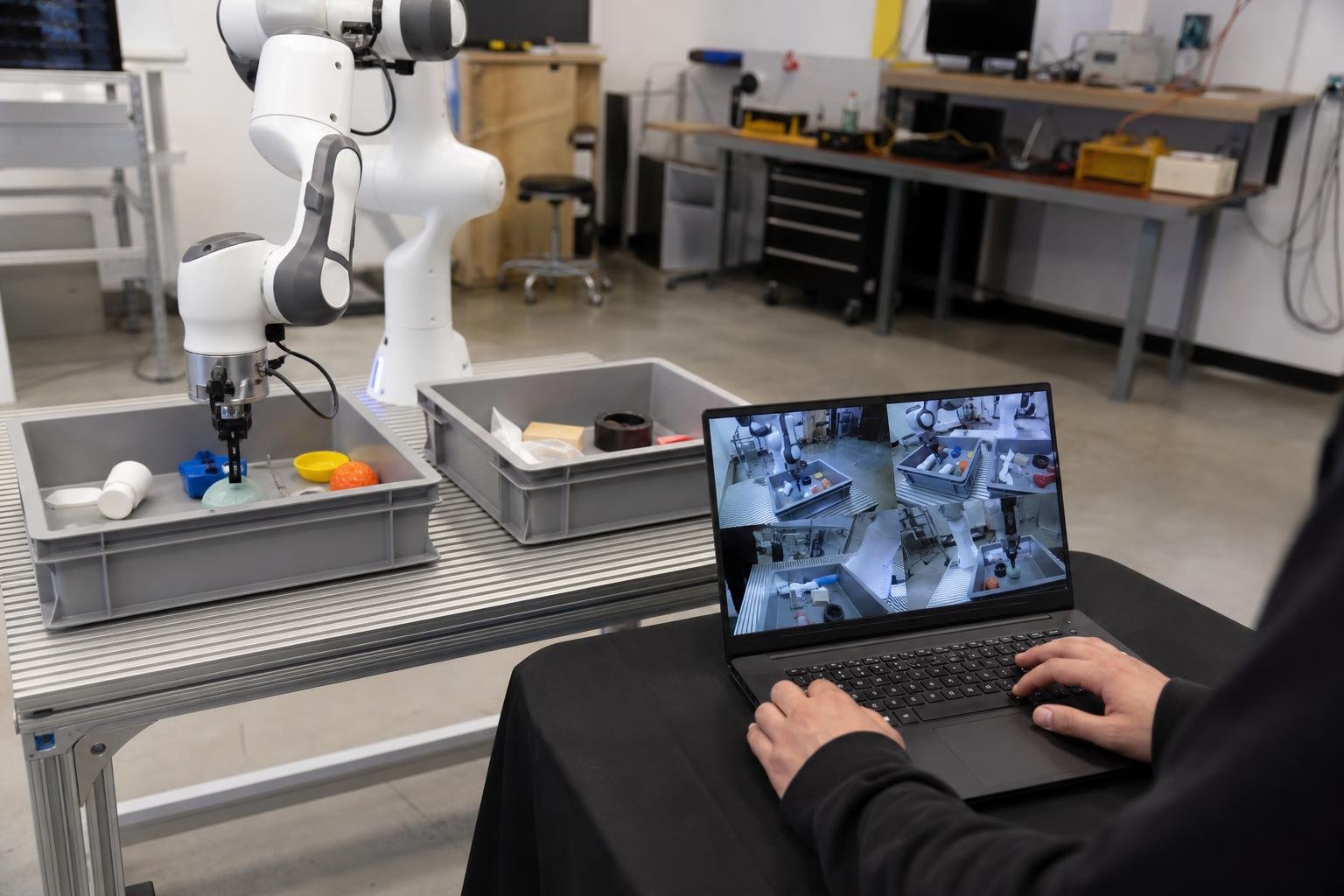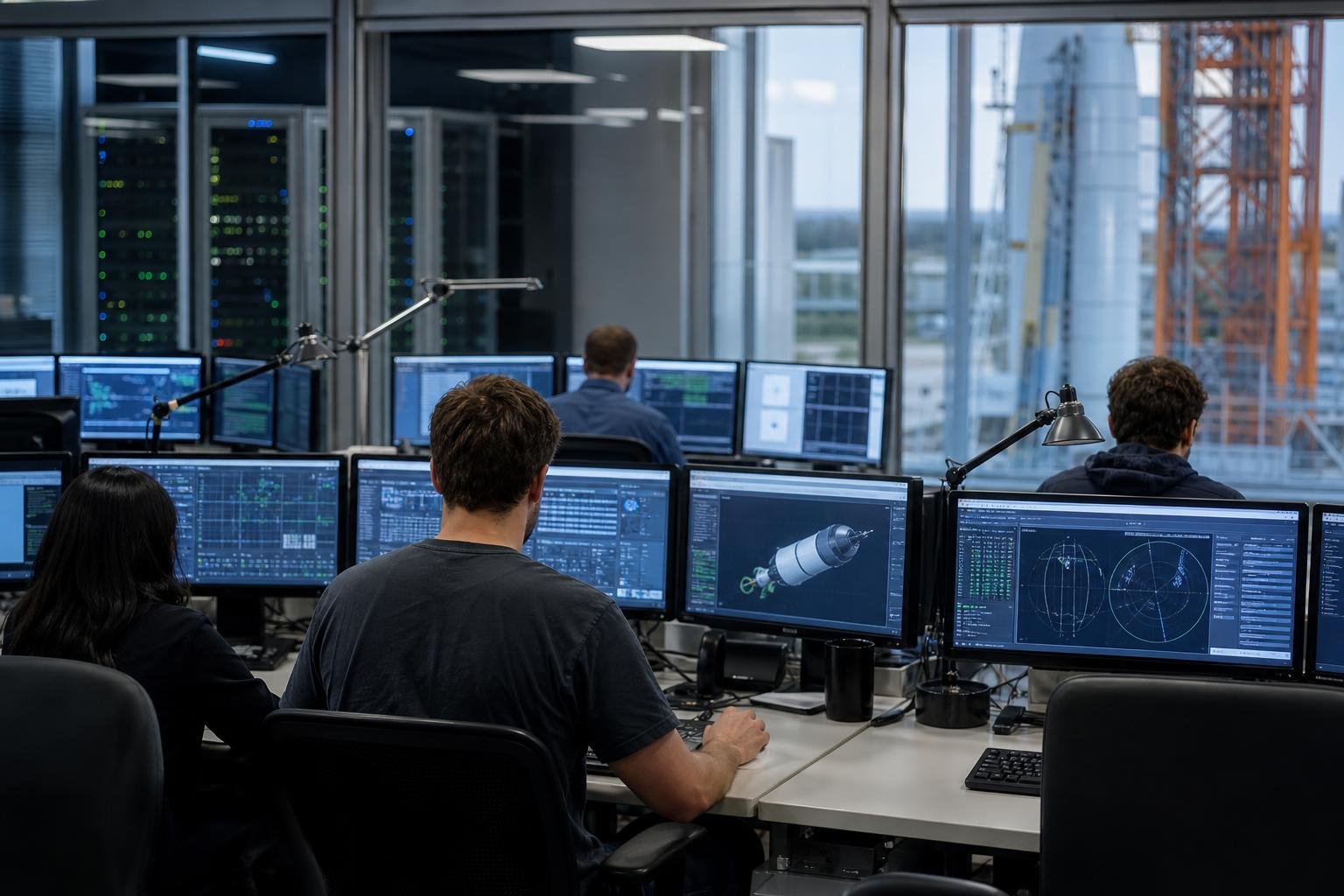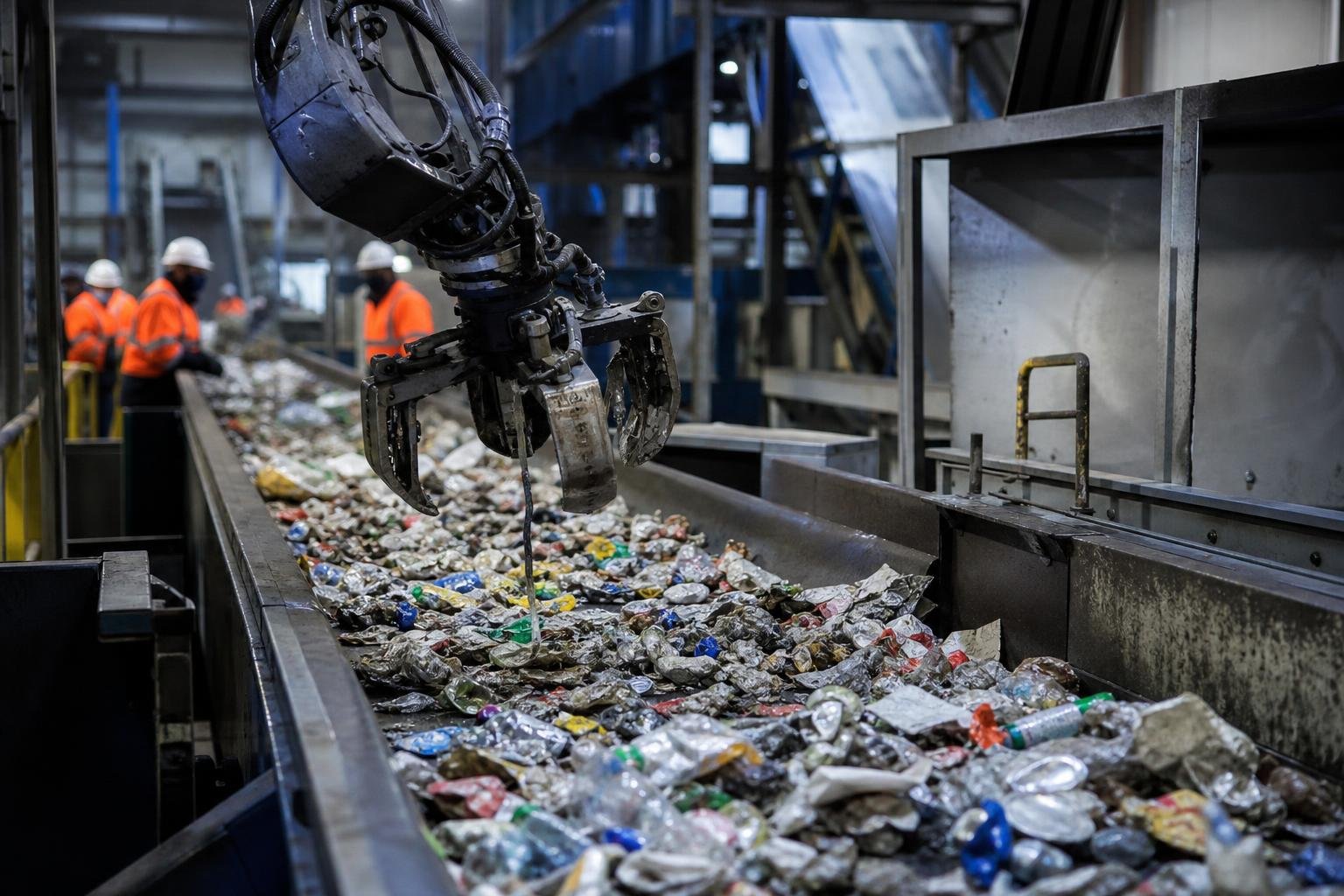
The UK government has announced a £40 million programme to create eight regional robotics adoption hubs, intended to help businesses and public services test, integrate and deploy robots in real operating environments. The hubs will cover applications including robotic surgery, fruit picking, autonomous vehicles, industrial automation, and waste and recycling systems.[1]
The significance is less about a new robot being invented than about the infrastructure required to make existing and emerging machines useful at scale. Hospitals, farms, manufacturers and local authorities often face the same gap between a promising demonstration and a dependable service: proving safety and performance, adapting workflows, training staff, linking equipment to existing systems, and buying technology through workable procurement processes. The new hubs are designed to provide a route through that gap.
By the numbers
- £40 million: Government funding announced for the robotics adoption programme.
- Eight: Regional hubs to be created.
- Five named application areas: Robotic surgery, fruit picking, autonomous vehicles, industrial automation, and waste and recycling.
Deployment infrastructure, not simply research funding
Robotics development has historically concentrated on technical capability: better perception, more reliable grasping, improved navigation, safer manipulation and more autonomous decision-making. Those remain difficult engineering problems. But a robot that works in a controlled trial is not automatically ready for a hospital ward, an orchard, a production line or a municipal recycling facility.
Deployment requires a broader set of capabilities. A surgical system must fit clinical pathways, operating-theatre schedules and patient-safety governance. A fruit-picking robot must deal with changing weather, crop varieties, uneven terrain and the economics of a short harvest window. Factory automation has to work alongside legacy machinery and production targets. Waste systems must handle highly variable material streams while meeting safety and reliability requirements.
The government’s hub model addresses this operational layer. Rather than expecting every adopter to build its own test environment and specialist team, shared regional facilities can offer sites for validation, technical expertise and implementation support. In principle, that makes adoption less dependent on a single vendor pilot or the internal resources of a large organisation.
The approach also gives robot suppliers a place to demonstrate systems against real user requirements. For smaller robotics companies, access to representative facilities and customers can be as important as access to laboratory equipment. A machine builder may be able to develop a capable product, yet still struggle to obtain the operational data, safety evidence and reference deployments that purchasers need before committing to a larger rollout.
Why the named sectors matter
The selection of use cases spans both public services and industries facing persistent labour, productivity and safety pressures. Robotic surgery is positioned as a route to faster recovery, according to the government announcement, reflecting the potential for minimally invasive and digitally assisted procedures when they are clinically appropriate.[1] The practical challenge is not simply acquiring surgical hardware; it is ensuring that teams can use it consistently and that hospitals can support it within established care pathways.
In agriculture, fruit picking is a prominent test case because harvesting is labour-intensive and highly time-sensitive. Robotic picking remains demanding: fruit can be delicate, partly obscured by foliage and variable in size and ripeness. A hub can help assess performance under local growing conditions, rather than treating laboratory success as evidence of farm-level viability.
Autonomous vehicles introduce a different set of requirements, involving safe operation in changing environments and integration with physical infrastructure and human operators. Industrial automation is more established, but many manufacturers still need assistance applying robotics beyond highly repetitive, fixed tasks. Waste and recycling systems are another high-value target because sorting is hazardous and materials are inconsistent; improved automation could support worker safety and more effective recovery of materials.
These are not interchangeable markets. Their common need is a credible adoption pathway: testing technology where it will actually be used, identifying the human and systems changes required, and creating evidence that can support a purchase decision.
From isolated pilots to repeatable services
The strongest case for the hubs is that they could turn one-off demonstrations into repeatable deployment playbooks. A successful installation should produce more than a robot in one location. It should establish practical knowledge about site preparation, system integration, maintenance, operator training, safety procedures, performance measurement and commercial models. That knowledge can reduce the cost and risk of the next deployment.
For public-sector adopters in particular, shared expertise may matter as much as physical test space. Hospitals and councils do not all have dedicated robotics engineering teams or procurement specialists familiar with fast-changing autonomous systems. A regional hub could help translate technical claims into specifications, trial plans and operational requirements that public buyers can use.
Procurement is a central, if less visible, part of the programme’s potential. Robotics projects can stall when buyers are forced to write requirements before they understand what the technology can reliably do, or when suppliers cannot navigate lengthy and fragmented purchasing processes. Hubs that connect testing to procurement pathways could give buyers better evidence and give suppliers clearer routes to market.
The government announcement therefore signals an industrial-policy shift toward adoption capacity. The value of the £40 million programme will depend on whether it builds durable local capability rather than funding a series of disconnected showcases.[1]
What success will require
The announcement establishes the scale and broad scope of the initiative, but funding alone will not resolve the hard work of deployment. Each hub will need clear measures of success. Useful indicators would include the number of systems tested in real settings, the number that progress into sustained operation, operational uptime, safety outcomes, workforce training completed, and evidence of productivity or service-quality improvements.
Governance will be especially important in healthcare and autonomous systems. Testing must not become a shortcut around clinical, safety or regulatory obligations. In farming, manufacturing and waste handling, the key questions will be equally concrete: whether machines can operate through normal variability, whether local staff can maintain them, and whether the total cost of ownership works beyond a subsidised trial.
There is also a risk of fragmentation. Eight hubs can create useful regional access, but only if their lessons, technical standards and procurement knowledge are shared. If every site develops incompatible processes or repeats the same early-stage pilots, the programme will have limited national impact. A coordinated network should allow a solution validated in one region or sector to inform similar deployments elsewhere while still accounting for local conditions.
Another concern is the tendency to judge robotics by eye-catching demonstrations. The relevant test is not whether a machine completes a task once, but whether it can do so safely, reliably and economically over months of real operation. The programme’s credibility will rest on transparent evidence of that transition.
Market implications for UK robotics
For the UK robotics market, the hubs could create a more reliable bridge between research, product development and customers. Robotics firms often face a long sales cycle because prospective users need proof that a system works in their particular setting. Shared testbeds can shorten the path to that proof, while giving adopters a lower-risk way to evaluate competing approaches.
The programme may also benefit systems integrators, service providers, component suppliers and training organisations. In most real deployments, value comes from the complete system: robot hardware, sensors, software, site changes, maintenance, data handling and skilled operators. That broader ecosystem is necessary if robotics is to become an ordinary operational tool rather than a specialist capital project.
The longer-term opportunity is to establish repeatable public and industrial services around robotics. In surgery, that means technology embedded in clinical delivery rather than limited to specialist centres. In agriculture, it means equipment that can be deployed during commercially critical harvest periods. In manufacturing and waste, it means automation designed around throughput, maintenance and worker safety. The hubs will be judged by how effectively they make those outcomes routine.
Editor’s Take
I see the eight hubs as a sensible recognition that the robotics bottleneck has moved downstream. The difficult question for most customers is no longer whether a robot can perform an impressive task. It is whether that machine can survive a messy operating environment, fit a shift pattern, be maintained by the available team and justify its cost without grant support.
What I would watch next is the quality of the deployment evidence: uptime, training burden, safety results, cost per task and the number of trials that become continuing contracts. A fruit picker in an orchard, a sorting robot in a recycling plant or a surgical system in a hospital only matters when the organisation can run it repeatedly. The hype will outrun the facts if the hubs report demonstrations rather than durable services; the programme will be valuable if it makes the second deployment substantially easier than the first.