SpaceX has made public its IPO registration statement, turning a long-anticipated listing into a detailed pitch for a company that now spans rockets, satellite broadband, social media, frontier AI and prospective orbital data centers. The filing, released May 20 after a confidential April submission, proposes a Nasdaq listing under the ticker SPCX; it does not mean the IPO has been completed or finally priced. [1]
The scale under discussion is extraordinary. Preliminary materials describe 555.6 million primary Class A shares and an indicative price of $135 per share, with a 15% overallotment option. Reports have put the potential raise at roughly $75 billion to $80 billion and the company’s prospective valuation near $1.75 trillion. Those figures remain targets or market estimates as of May 21, not final terms. If achieved, the offering would eclipse Saudi Aramco’s 2019 IPO by proceeds. [1][2]
A space company recast as AI infrastructure
The filing divides SpaceX into three businesses: Space, covering Falcon, Dragon and Starship; Connectivity, led by Starlink; and AI, incorporating xAI, X, Grok and AI-compute infrastructure. That structure reflects the February 2 acquisition of xAI, including X, which placed Musk’s AI and social-media operations inside SpaceX ahead of the planned listing. [1]
The reorganization matters because the IPO is not being sold solely as a bet on launches or Mars. SpaceX presents artificial intelligence infrastructure as a principal growth engine, with plans to expand terrestrial compute capacity, sell unused capacity to outside customers, develop proprietary AI chips, scale Grok and X monetization, and ultimately deploy AI compute in orbit. [1]
Management’s total addressable market estimate reaches $28.5 trillion, including $26.5 trillion attributed to AI, $1.6 trillion to connectivity and $370 billion to space-enabled services. Those are company estimates rather than independently validated market forecasts, but they show how central AI is to the valuation narrative. [1]
Stephen Sopko, a semiconductor and deep-tech analyst at HyperFrame Research, characterized the company as becoming a compute, communications and AI business supported by launch infrastructure. Sameh Boujelbene of Dell’Oro Group similarly argued that AI competition is increasingly determined by physical infrastructure, including power, networking and capacity, rather than models and accelerators alone. [7]
Starlink funds the present; AI absorbs the investment
Starlink remains the company’s largest operating business. SpaceX reported about 10.3 million subscribers, more than 9,600 satellites in orbit, service across roughly 164 countries or markets, and coverage reaching more than 3.3 billion people as of March 31. [1]
For 2025, SpaceX reported $18.7 billion in revenue and a $4.937 billion net loss. Connectivity produced about $11.4 billion of revenue, compared with $4.1 billion for Space and $3.2 billion for AI. The company spent approximately $20.7 billion on capital expenditures during the year: $11.2 billion in Connectivity, $5.1 billion in AI and $4.4 billion in Space. [1]
The spending intensity increased into 2026. SpaceX reported a $4.276 billion net loss for the quarter ended March 31 and an accumulated deficit of about $41.3 billion. Reuters reported that the AI segment brought in roughly $818 million in first-quarter revenue but posted an operating loss of around $2.5 billion, while accounting for about three-quarters of quarterly capital spending. [2]
There is a substantial near-term commercial case for that investment. The filing disclosed cloud-services agreements under which Anthropic is expected to pay SpaceX about $1.25 billion per month for compute capacity through May 2029. The capacity is expected to involve the company’s Colossus and Colossus II terrestrial training clusters, which support xAI’s model-development work as well as external demand. [3]
Still, the contrast is clear: Starlink is the financial engine today, while AI is consuming capital at a far faster rate than it is generating profit. Reuters Breakingviews columnist Robert Cyran described the setup as a world-leading rocket company attached to a weakly performing AI business, questioning whether the claimed AI opportunity justifies its dominant share of investment. [8]
The orbital-compute proposition depends on Starship
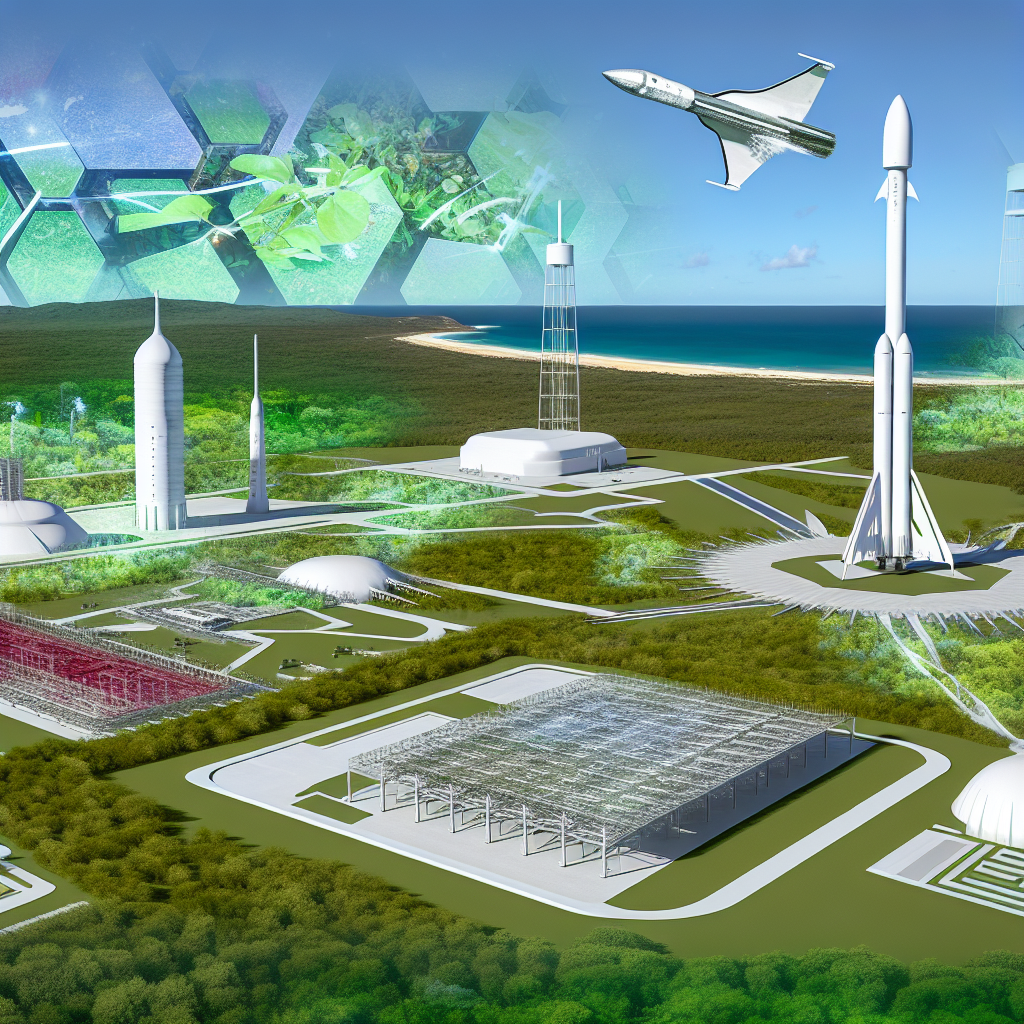
SpaceX’s most ambitious proposal is to place AI computing infrastructure in orbit at scale. The company says it could deploy its first orbital AI-compute satellites as early as 2028, while stressing that the technology is unproven, capital intensive and subject to further technical development and regulatory approvals. [1]
The theoretical appeal is straightforward. Satellite-based systems could draw on solar energy in orbit, shed heat through radiative cooling and use Starlink for communications and routing between compute clusters and users on Earth. SpaceX also argues that its vertically integrated satellite production, launch capability and prospective AI-hardware development could lower deployment costs and let it replace or upgrade hardware regularly. [1]
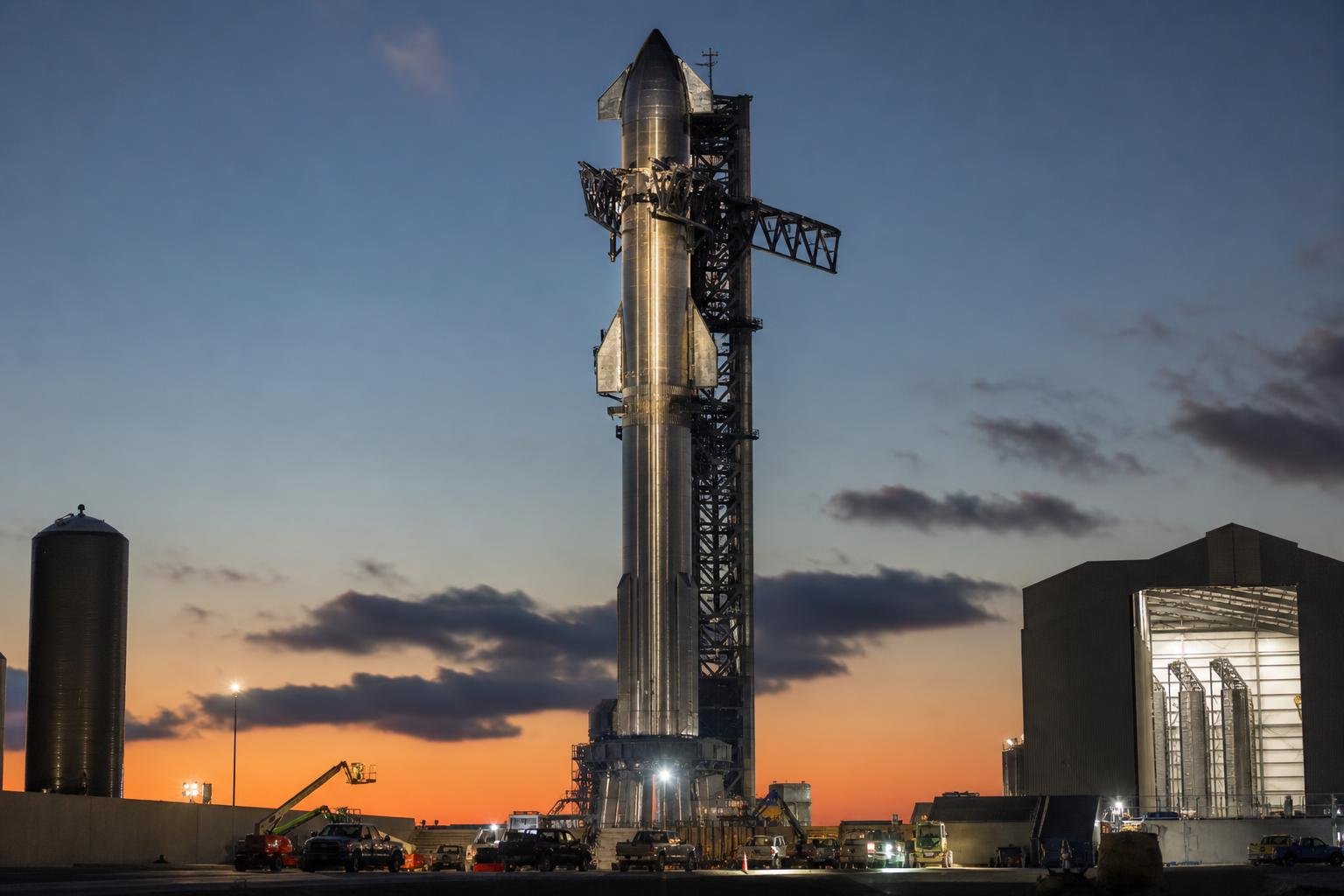
But the model relies on Starship reaching a level of operational performance it has not yet demonstrated. SpaceX describes Starship as designed to carry roughly 100 metric tons to low Earth orbit, with potential uses ranging from Starlink V3 and mobile satellites to AI-compute payloads and interplanetary missions. The company expects payload delivery to orbit to begin in the second half of 2026, subject to successful testing and regulatory approval. [1]
For orbital computing to become economical, Starship would need full reusability and a rapid, reliable launch cadence. SpaceX acknowledges that those conditions remain unproven. So do commercial-scale orbital data centers themselves. The filing lists radiation exposure, micrometeoroids, orbital debris, limited repair options, satellite life spans, component shortages, power constraints and regulatory approvals among the risks. [1]
That distinction is important for investors. The offering proceeds are earmarked broadly for AI-compute infrastructure, launch infrastructure and vehicles, satellite constellations, and general corporate purposes. SpaceX has not said the capital will be dedicated exclusively to orbital computing. [1]

Chips, factories and a much longer horizon
SpaceX also disclosed a strategic collaboration with Tesla around Terafab, a proposed vertically integrated chip-manufacturing project. The effort is at an early stage, and its financial terms, intellectual-property arrangements and other key details have not been finalized. [1]
Beyond that, the company’s roadmap ranges across lunar transport and manufacturing, in-orbit manufacturing, point-to-point transportation on Earth, Mars settlement, asteroid mining and human augmentation. SpaceX explicitly cautions that many of those markets do not currently exist and may never become commercially viable. [6]
Musk’s proposed compensation plan underscores the long-term nature of the vision. It includes performance milestones linked to market capitalization and the completion of non-Earth-based data centers capable of delivering 100 terawatts of compute per year. That is a compensation benchmark, not a current capability or a stated operating capacity. [1]
An unprecedented IPO, with unusually concentrated control
The planned transaction combines assets and risks that are rarely found in a single public company: government-linked aerospace programs, a global broadband network, a social platform, AI model development, data-center infrastructure and speculative space industrialization. That mix may attract retail investors drawn to Musk’s following and the company’s Mars-and-AI narrative, but it also makes SpaceX an unusual indicator of the broader IPO market. [4]
Governance will be another central consideration. Musk is set to remain SpaceX’s chief executive officer, chief technology officer and board chairman. The filing showed him with approximately 85.1% of voting power before the offering, with control expected to stay above 50% afterward through the proposed dual-class structure. Governance scholars Lucian Bebchuk and Kobi Kastiel have criticized structures that give founders durable voting control while limiting public shareholders’ ability to challenge management. [5][6]
SpaceX’s filing therefore presents two stories at once. One is an established, fast-growing connectivity and launch company with a massive capital base and an increasingly material AI-compute customer business. The other is a far more speculative effort to make compute infrastructure a space-based utility. The public markets will soon be asked to assign a price to both—before Starship proves the cadence required for the second story, and before orbital AI systems have operated commercially at any meaningful scale.
Editor’s Take
The investable core of this story is not orbital data centers; it is Starlink’s cash-generating connectivity network combined with SpaceX’s unmatched launch and satellite-manufacturing machine. Adding terrestrial AI capacity and an external customer such as Anthropic gives the company a plausible near-term compute business. But the numbers also make the trade-off plain: AI is taking an outsized share of capital spending before it has demonstrated operating leverage.
I would watch Starship’s delivered payload cadence, not presentation slides about space compute. Cheap, frequent, reliable and reusable heavy-lift launches are the gating input for any serious orbital-compute economics. Until that is proven, orbital AI should be valued as a long-dated option rather than a present revenue stream. The other practical issue is capital discipline: public investors should demand clarity on how much spending goes to scalable terrestrial compute and Starlink expansion versus ambitious projects whose customers, maintenance model and regulatory path remain undefined.
References
- U.S. Securities and Exchange Commission, SpaceX preliminary offering materials – https://www.sec.gov/Archives/edgar/data/1181412/000162828026040610/spacexfwp.htm
- Reuters, via Investing.com, SpaceX IPO filing, losses and Musk control – https://www.investing.com/news/stock-market-news/bound-for-mars-elon-musks-spacex-unveils-filing-for-blockbuster-ipo-4702463
- Reuters, via Investing.com, Anthropic compute agreement – https://www.investing.com/news/stock-market-news/anthropic-nears-first-quarterly-profit-agrees-to-pay-spacex-125-billion-monthly-for-computing-power-4702825?utm_source=openai
- Reuters, via Investing.com, IPO-market context – https://www.investing.com/news/stock-market-news/analysiswhy-spacexs-mega-ipo-may-not-signal-a-broader-rebound-in-listings-4703918?utm_source=openai
- Harvard Law School Forum on Corporate Governance, Top IPO Weak Governance – https://corpgov.law.harvard.edu/2026/05/19/top-ipo-weak-governance/
- TechCrunch, The SpaceX IPO filing, AI bets and Starship dreams – https://techcrunch.com/2026/05/20/the-spacex-ipo-filing-ai-bets-starship-dreams-elon-musk/
- Data Center Knowledge, SpaceX IPO filing recasts company as AI infrastructure giant – https://www.datacenterknowledge.com/build-design/spacex-ipo-filing-recasts-company-as-ai-infrastructure-giant
- Reuters Breakingviews, SpaceX orbits an AI black hole – https://www.breakingviews.com/columns/breaking-view/spacex-orbits-an-ai-black-hole-2026-05-21/?utm_source=openai