
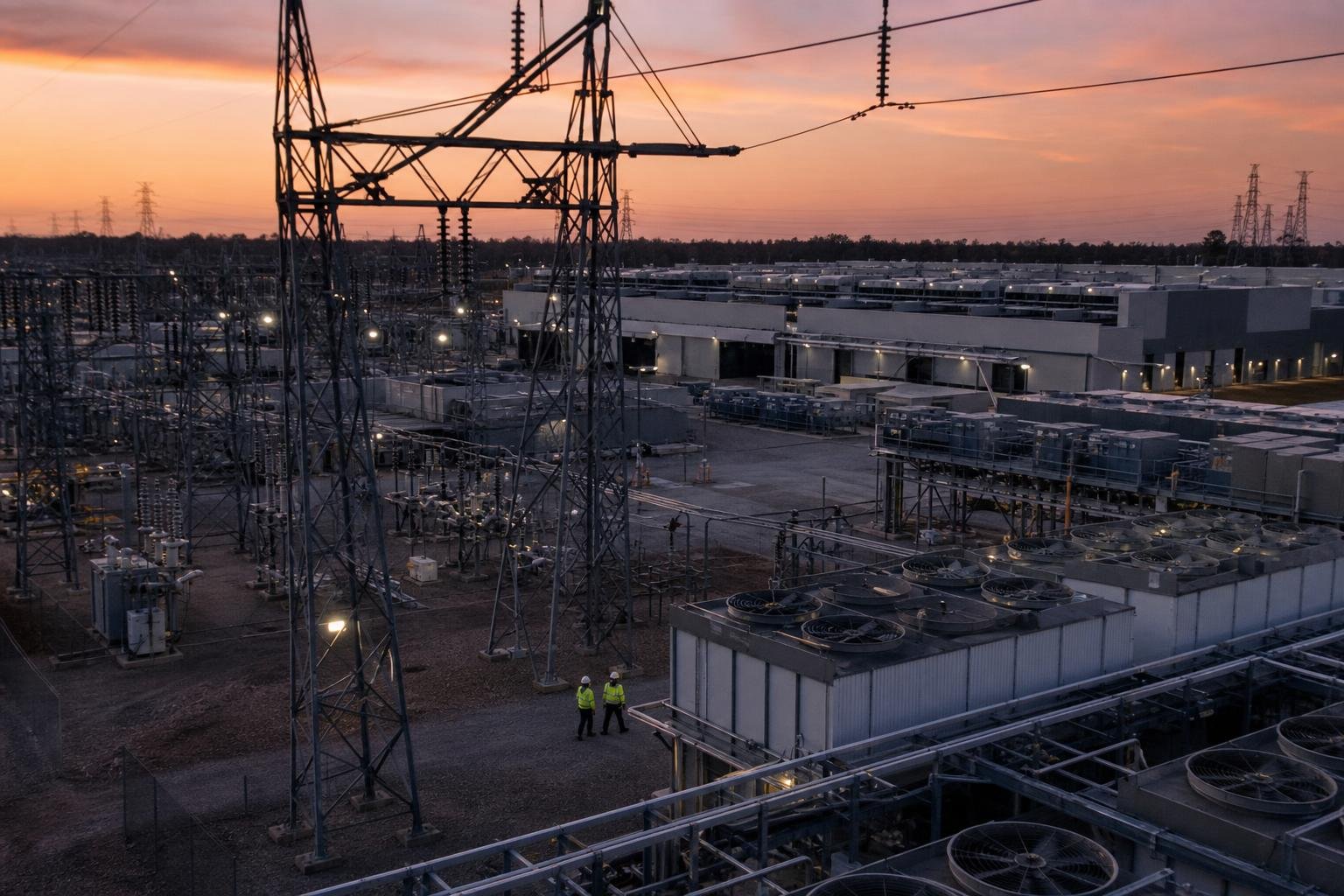
Anthropic’s agreement to take all of the capacity at SpaceXAI’s Colossus 1 facility in Memphis is more than a large GPU rental. It is a sign that frontier AI infrastructure is becoming a product that can be built, financed and sold independently of the models running on it.
Announced May 6, the deal gives Anthropic access to more than 300 megawatts of additional capacity and more than 220,000 Nvidia GPUs within a month. Anthropic says it will use the capacity principally to improve availability for Claude Pro and Claude Max users while raising Claude Code and API limits.[1] For SpaceXAI, the arrangement turns a cluster built to support its own AI ambitions into a major external infrastructure business.
The commercial stakes became sharper in SpaceX’s May 20 IPO filing. Reporting on the filing said Anthropic is committed to pay roughly $1.25 billion per month through May 2029, subject to lower payments during the May-June ramp period. Either side can reportedly end the agreement with 90 days’ notice.[4] At full run rate, that is about $15 billion a year for reserved compute capacity—a measure of how much the AI industry is willing to spend to secure power, accelerators and operating capacity in advance.
Colossus Is a Cluster, Not Just a Building
Colossus 1 is best understood as an integrated AI supercomputer rather than a conventional data-center campus full of independently rented servers. Its value depends on how efficiently a vast number of accelerators can work together on a single training or inference job.
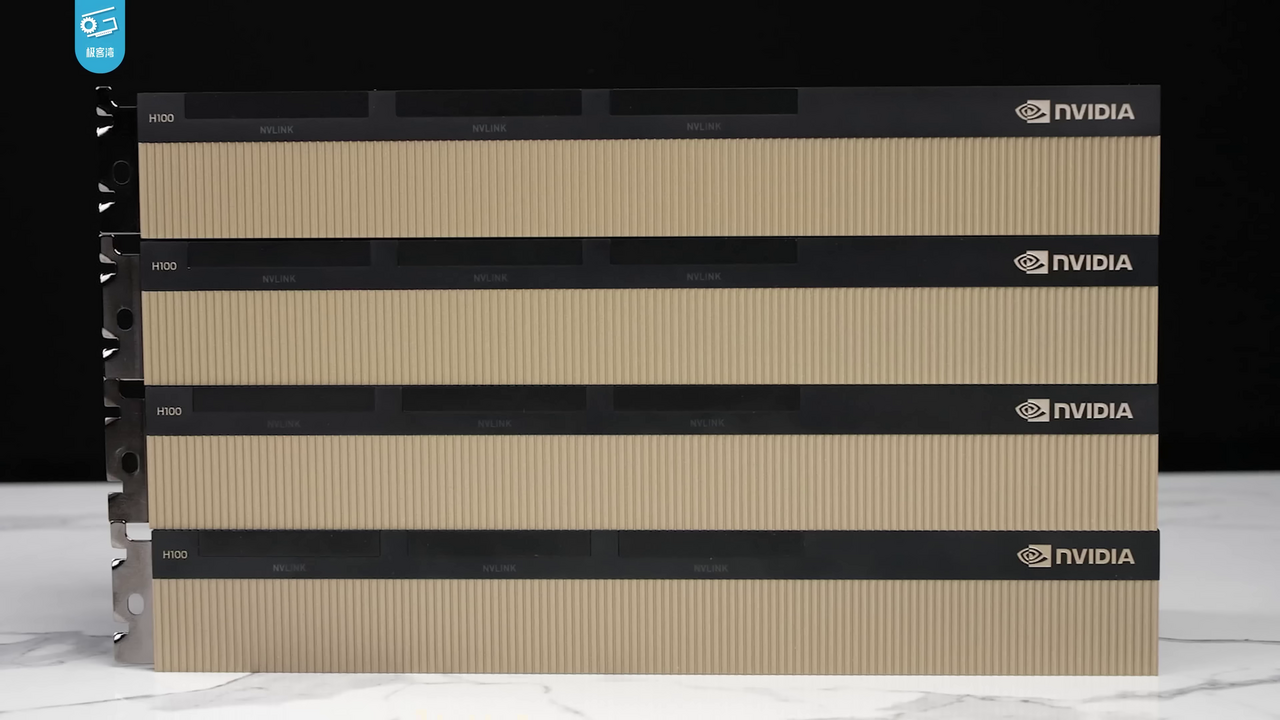
SpaceXAI has said the initial Memphis system was built in 122 days by repurposing an existing industrial site, rather than following the longer timeline of a greenfield hyperscale build. It has separately described Colossus as having grown to roughly 200,000 Nvidia H100 GPUs.[3] The Anthropic partnership announcement gives a broader figure of more than 220,000 Nvidia GPUs, including H100, H200 and GB200 systems.[2]
Those figures are company-reported and should not be treated as a rack-by-rack inventory. The apparent difference likely reflects different points in time, hardware mixes or counting methods. Neither company has released an independently verified benchmark or a complete system bill of materials.
Still, the published specifications illustrate the engineering target. SpaceXAI cites approximately 170 petabytes per second of aggregate memory bandwidth, 2.8 terabits per second of network bandwidth per server, and more than 0.5 exabytes of storage for training data and model checkpoints.[3] These metrics matter because training a frontier model requires repeated collective communication among many GPUs. If networking, storage or synchronization falls behind, expensive accelerators spend time waiting rather than computing.
The system is intended to support pretraining, fine-tuning, reinforcement learning, multimodal workloads, large-scale inference and scientific computing.[2] Anthropic has not disclosed how its reserved capacity will be divided among training, inference, model evaluations, redundancy and checkpointing. Its public emphasis is on higher service capacity, which suggests that serving existing Claude products is an immediate priority alongside future model development.
Compute Has Become a Supply Chain Problem
The agreement underscores a shift in the AI race. Access to Nvidia chips remains critical, but chips alone do not create usable frontier-model capacity. Operators also need generation and grid interconnection, substations and transmission, cooling, land, networking, storage, specialized construction, and engineers capable of operating a tightly coupled system at scale.
A cluster with more than 300 megawatts of capacity is therefore as much a power-delivery and thermal-management project as a hardware purchase. Anthropic’s figure does not provide a full allocation among IT equipment, cooling, networking, backup power and other facility loads. But it conveys the scale: this is infrastructure measured in the output of a power plant, not simply in server racks.
That constraint explains why a model developer would make such a large commitment to a facility controlled by another AI competitor. Building a comparable cluster can take years once power procurement, permitting, construction and equipment delivery are included. Leasing a dedicated, already-operating cluster offers a faster route to capacity, even if it means relying on infrastructure owned by Elon Musk’s broader SpaceXAI organization and used for Grok-related work.
Anthropic has framed Colossus as one component of a diversified compute strategy, not a replacement for cloud providers. Its portfolio also includes agreements involving Amazon, Google and Broadcom, Microsoft and Nvidia, and Fluidstack, spanning AWS Trainium, Google TPUs and Nvidia GPUs.[1] The practical lesson is that no single supplier is likely to satisfy the capacity requirements of a leading AI lab. Compute procurement increasingly resembles long-term industrial sourcing rather than ordinary cloud consumption.
A New Revenue Model for SpaceXAI
For SpaceXAI, the Anthropic contract validates a potentially consequential model: build an unusually large vertically integrated AI cluster for internal use, then sell available capacity to other frontier labs. That approach can monetize assets that would otherwise sit idle or be underused between internal training runs.
The strategy also gives the combined SpaceX organization another growth engine alongside launch services and Starlink. SpaceX’s IPO disclosures describe Colossus and Colossus II as providing about 1 gigawatt of combined compute power, with a further roughly 400 megawatts of Colossus II expansion anticipated when fully operational.[5] Those numbers place data-center development among the company’s major capital-intensive businesses.
The Anthropic relationship is unusual because customer and supplier are also AI rivals. Anthropic competes with Musk’s Grok business, while Musk has publicly criticized Anthropic and other competing AI developers. The deal nevertheless reflects a hard commercial reality: scarce, operational compute can be more valuable in the near term than keeping all capacity exclusive to a single model developer.
It also changes what “AI infrastructure” can mean in the market. The traditional cloud model packages compute as a broadly shared service. Colossus points toward purpose-built, highly concentrated clusters that can be reserved by a single customer under multiyear commitments. The economics look closer to industrial capacity reservation than to pay-as-you-go cloud billing.
The Power Cost Is Also a Community Cost
Colossus’s rapid buildout has brought environmental and regulatory scrutiny in Memphis and the surrounding area. The facilities have relied in part on methane-fueled turbines to supplement available grid power, prompting disputes over air permitting, emissions and the impacts on nearby predominantly Black communities.
In January, the Environmental Protection Agency reportedly rejected arguments that portable or temporary turbines associated with Colossus could avoid air-permitting requirements.[6] On April 14, the NAACP sued xAI and a subsidiary over the alleged operation of 27 unpermitted methane turbines at a Southaven, Mississippi, site linked to Colossus 2.[7]
Earthjustice and the Southern Environmental Law Center, representing the plaintiffs, alleged the turbines could emit more than 1,700 tons of nitrogen oxides annually, as well as particulate matter, carbon monoxide and formaldehyde.[7] Those claims are allegations in litigation, not adjudicated findings. But the dispute exposes a central tension in the rush to build AI capacity: accelerated deployment can shift environmental and public-health costs onto communities close to the infrastructure.
That issue is unlikely to be confined to Memphis. As AI clusters grow from tens to hundreds of megawatts and beyond, local acceptance, clean-power availability, water use and permitting timelines will shape where facilities can be built—and whether their business cases hold.
Orbital Compute Remains an Ambition, Not an Operating Plan
The partnership carries an additional SpaceX-specific dimension. Anthropic and SpaceXAI said they had expressed interest in working together on multiple gigawatts of orbital AI-compute capacity.[1][2] As of May 22, that is an exploratory expression of interest, not an announced deployment, launch schedule or operational system.
The long-term rationale is straightforward in theory. SpaceXAI argues that orbit could eventually offer abundant solar power and benefit from Starlink communications infrastructure, while avoiding some terrestrial constraints involving land and grid connections. Yet the engineering and economics remain highly uncertain.
Useful orbital AI compute would require launching and replacing immense amounts of hardware, managing radiation exposure, moving data to and from Earth, and removing waste heat in vacuum through radiators rather than conventional cooling systems. Operators would also need a credible plan for maintenance, upgrades, debris risk, reliability and the rapid obsolescence of AI accelerators. SpaceX’s own disclosures warn that orbital AI initiatives are early-stage, technically complex and may not prove commercially viable.[5]
For now, Colossus’s importance is terrestrial. The facility shows that the immediate bottleneck in AI is not only model design or chip supply. It is the ability to assemble electricity, cooling, networks, capital and hardware into a working supercomputer quickly enough to meet demand. Anthropic’s reservation of all Colossus 1 capacity is a powerful indication that this capability has become a strategic asset in its own right.
Editor’s Take
This is the clearest sign yet that frontier compute is becoming an industrial product, not merely a cloud-service SKU. A multiyear reservation of this scale rewards the operator that can secure power, accelerators, networking and construction capacity before a model lab needs them. For AI builders, the practical implication is diversification: even the best-funded labs cannot safely assume one cloud, chip vendor or data-center developer will deliver enough capacity on time.
I would watch the ramp rather than the headline GPU count. The useful measure is sustained, available compute after network contention, failures, cooling limits, maintenance and inference demand are accounted for—not the largest published accelerator total. The commercial model is credible, but the claims around rapid deployment and eventual orbital compute should be treated separately: terrestrial power interconnection, permits and community impacts are immediate execution constraints, while orbital AI remains a long-range research ambition rather than deployable infrastructure.
References
- Anthropic – https://www.anthropic.com/news/higher-limits-spacex
- SpaceXAI/xAI, “New Compute Partnership with Anthropic” – https://x.ai/news/anthropic-compute-partnership
- SpaceXAI/xAI, “Colossus: The World’s Largest AI Supercomputer” – https://x.ai/colossus
- Axios, “Anthropic is paying SpaceX $15 billion per year” – https://www.axios.com/2026/05/20/anthropic-spacex-compute
- U.S. Securities and Exchange Commission, SpaceX Form S-1 filing – https://www.sec.gov/Archives/edgar/data/1181412/000162828026036936/spaceexplorationtechnologi.htm
- The Guardian – https://www.theguardian.com/technology/2026/jan/15/elon-musk-xai-datacenter-memphis
- Earthjustice, “NAACP Sues xAI for Illegal Pollution from Data Center Power Plant” – https://earthjustice.org/press/2026/xai-sued-for-illegal-power-plant


_024.png)