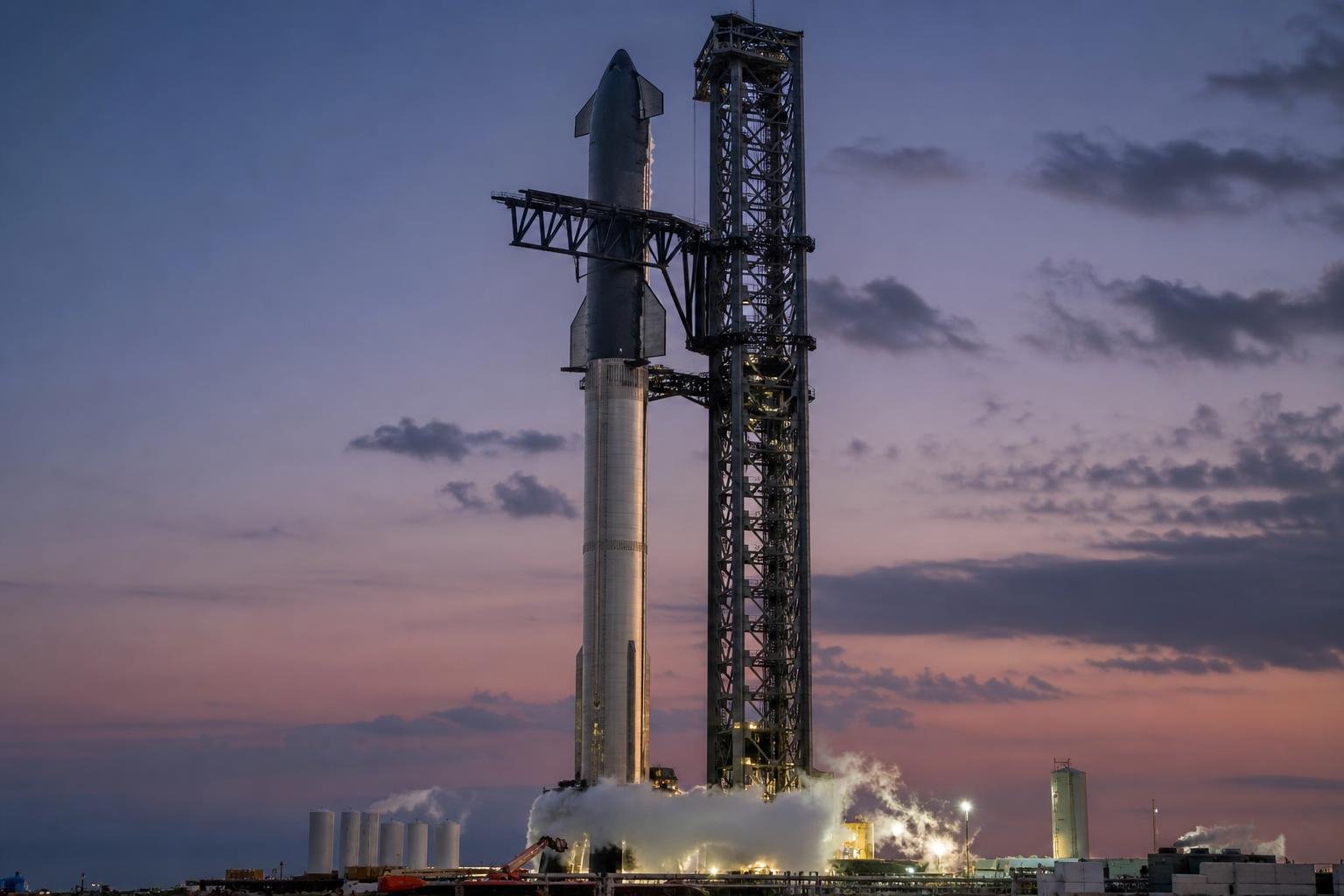
SpaceX is targeting Tuesday, May 19, for the first launch of its substantially redesigned Starship Version 3 system, a test that will introduce a new upper stage, a new Super Heavy booster, Raptor 3 engines and a new launch pad in a single flight. The 90-minute window for Starship Flight 12 is scheduled to open at 6:30 p.m. EDT (2230 UTC) from Starbase, Texas. [1]
The mission is a pivotal but deliberately limited test of SpaceX’s reusable heavy-lift strategy. Neither stage is planned to return to Starbase for a tower catch; instead, Super Heavy Booster 19 is expected to splash down in the Gulf of Mexico, while Ship 39 is set to continue on a suborbital path to the Indian Ocean. The test is intended to validate redesigned hardware and operations before SpaceX attempts to prove the rapid, routine reuse that underpins Starship’s business case. [1]
A new vehicle and a new pad
At about 407 feet (124 meters) tall when stacked, Starship V3 is roughly 1.5 meters taller than earlier versions and remains the largest rocket ever built. Its Super Heavy first stage retains 33 engines, but all are the latest Raptor 3 design. SpaceX says the vehicle produces more than 18 million pounds of thrust at liftoff. [3]
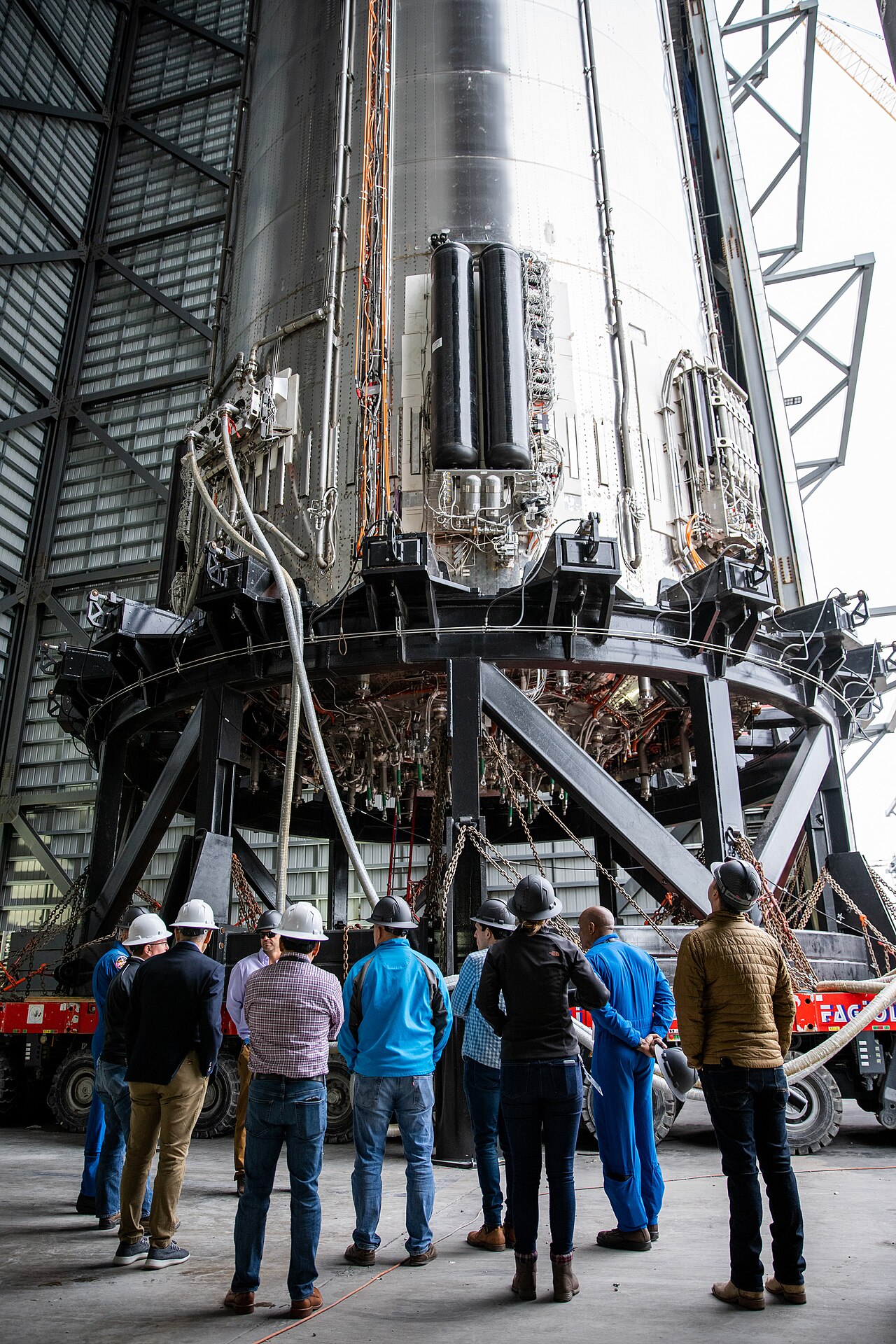
Raptor 3 is intended to be lighter, more compact and easier to integrate than the previous engine generation while delivering greater performance. The booster’s internal propellant-transfer hardware has also been reworked. Its transfer tube is roughly comparable in size to a Falcon 9 first stage, according to reporting on the vehicle, and is designed to improve the reliability of simultaneous startup across all 33 engines and of the booster’s flip maneuvers. [4]
The redesign extends beyond propulsion. V3 uses three grid fins rather than four; each is reported to be about 50% larger and stronger. The fins sit lower on the booster, reducing their exposure to the exhaust plume produced during hot staging—the maneuver in which Starship engines begin firing before the two stages fully separate. [4]
SpaceX has integrated the hot-stage ring into the booster instead of flying a separate interstage component that is discarded during ascent. The company also added shielding, including a non-structural steel layer around the forward propellant tank, to protect the booster’s methane tank from hot-staging exhaust. [1]
Flight 12 is also the first Starship mission planned from Starbase Launch Pad 2. The facility has greater propellant-storage capacity, additional pumps for faster loading and modified tower arms intended to shorten future booster-capture operations. Those changes matter because Starship is not designed merely as a larger rocket; it is intended as a high-cadence transportation system in which both stages are recovered, refurbished quickly and flown again. [4]
What Flight 12 is designed to test
SpaceX completed a full-stack fueling rehearsal on May 11, loading more than 5,000 metric tons, or more than 11 million pounds, of liquid methane and liquid oxygen into the vehicle. [1] If the launch proceeds as planned, Booster 19 will separate from Ship 39 and conduct a controlled descent to a Gulf of Mexico splashdown area roughly seven minutes after liftoff.
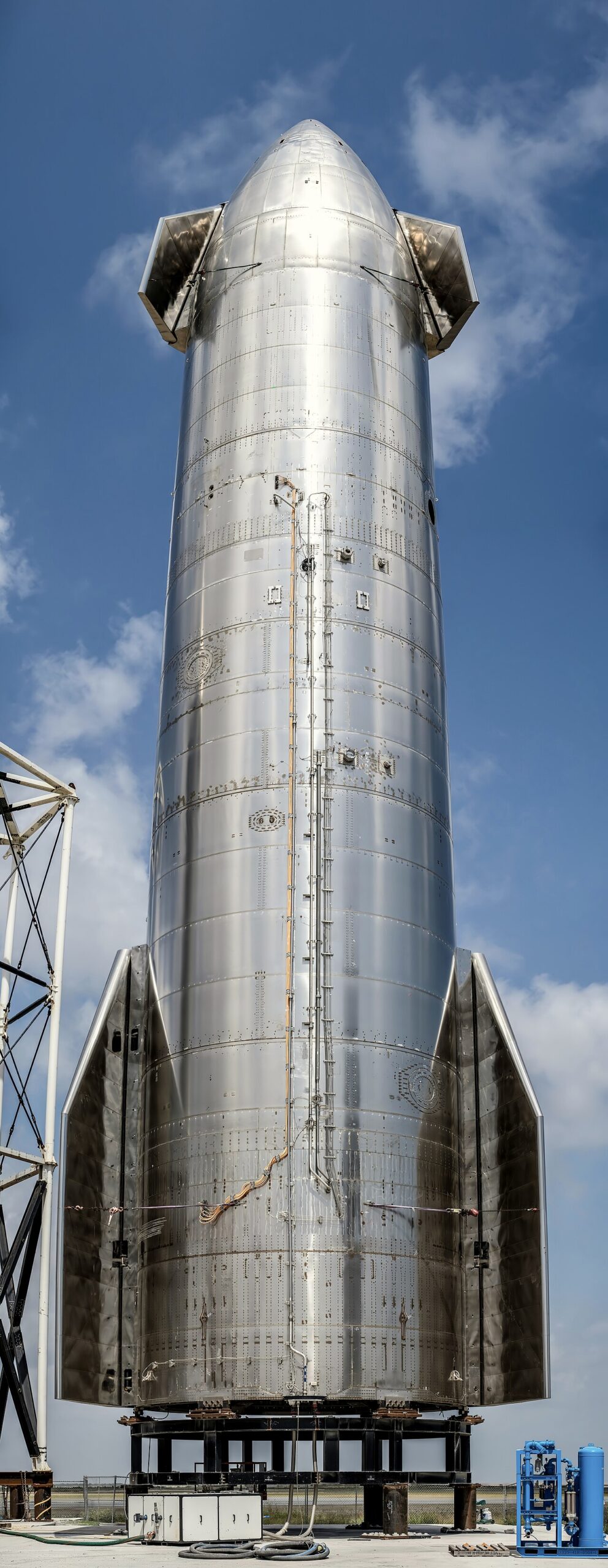
Ship 39 is expected to travel east on a suborbital trajectory. About 17.5 minutes after launch, it is scheduled to deploy 22 Starlink simulator satellites, relight one of its six Raptor engines in space, then attempt a controlled splashdown in the Indian Ocean approximately 60 to 65 minutes after liftoff. [1]
The payload deployment is more than a simple mass demonstration. Twenty objects are Starlink-like mass simulators. The other two are modified satellites intended to photograph Starship’s heat shield during flight and send the imagery to ground teams. SpaceX also plans to paint selected heat-shield tiles white to simulate missing tiles and assess how localized tile loss affects reentry conditions. [1]
That experiment addresses one of Starship’s most consequential unresolved challenges: whether its thermal-protection system can survive repeated atmospheric entries with little inspection or repair. A successful splashdown and collection of imagery would be useful data, but it would not establish that the heat shield can support operational reuse.
V3 moves Starship toward orbital refueling
The upper stage is a more comprehensive redesign than its exterior might suggest. SpaceX has changed the propulsion architecture and Raptor startup method, increased tank volume, improved reaction-control hardware for in-space maneuvering, and reworked plumbing and electrical layouts. The company also reduced aft-end spaces that could collect leaking propellant and added systems intended to manage cryogenic fluids in microgravity. [4]
Most important for missions beyond Earth orbit, V3 includes four docking ports and propellant-transfer hardware. SpaceX’s lunar and Mars plans require a Starship departing low Earth orbit with far more propellant than it can carry through launch. Under the company’s concept, tanker Starships would repeatedly transfer liquid methane and oxygen to a mission vehicle in orbit before it heads to the Moon or Mars. [4]
That capability remains unproven. Hans Koenigsmann, a former SpaceX vice president of flight reliability, described orbital refueling as the program’s “last big challenge” before the larger system can become operationally viable. [6] Flight 12 is not an orbital refueling mission, but the V3 hardware is a step toward the docking and propellant-management capabilities that such operations require.
Commercial and lunar stakes
Starship is central to SpaceX’s effort to lower launch costs through full reusability, deploy larger batches of next-generation Starlink satellites and support prospective markets such as orbital data centers. Its enlarged payload capability is meant to accommodate heavier Starlink V3 satellites, with next-generation Starlink launches projected to begin in the second half of 2026. [5]
The program’s financial importance is as large as its technical ambition. Reuters reported that SpaceX has spent more than $15 billion on Starship, compared with roughly $400 million to develop Falcon 9, and directed about $3 billion of its 2025 space-segment research and development spending toward the project. [6] Franco Granda, a senior research analyst at PitchBook, called the V3 debut the “single most important pre-IPO catalyst” remaining on SpaceX’s calendar. [5]
NASA also has substantial exposure to the vehicle’s progress. SpaceX holds a contract worth more than $3 billion, awarded in 2021, to develop a Starship-derived Human Landing System for Artemis lunar missions. [5] Under NASA’s revised Artemis planning, Artemis III is intended to test rendezvous and lander operations in low Earth orbit around 2027, while Artemis IV is associated with a crewed lunar landing no earlier than 2028. [7]
Those dates still depend on milestones that have not occurred, including repeated on-orbit cryogenic transfer, an uncrewed lunar Starship mission and crew-rated lander qualification. Clayton Swope of the Center for Strategic and International Studies has said that the revised architecture reduces some risk but does not settle the core question of whether the Starship lander will be ready on schedule. [7]
Progress is not yet proof of reusability
SpaceX has made meaningful progress across earlier Starship test flights, including booster-catch demonstrations, but the program has also experienced in-flight losses, pad incidents and lengthy development pauses. Chris Quilty, president of Quilty Space, said SpaceX appears close to achieving its goals but stressed that repeatability has not been established. [5]
That distinction is central to Flight 12. The mission will test a new rocket, new engines and new ground infrastructure at once, so even a strong result would be an early validation rather than evidence of airline-like operations. The flight plan’s splashdowns, rather than recovery attempts, reflect the experimental status of both vehicles.
Ground operations are another constraint. FAA figures cited in reporting indicate that a single Starship launch can require natural-gas supply equivalent to roughly 244 tanker trucks and about one million gallons of water for acoustic suppression. [6] Scaling from occasional test launches to a frequent, reusable launch service will require not only reliable vehicles but also equally reliable propellant, water, pad and recovery systems.
For now, the May 19 attempt is best understood as the debut of a new Starship generation rather than the arrival of a mature reusable launcher. A successful test would advance SpaceX’s path toward high-cadence heavy lift, orbital refueling and lunar missions. The harder work—demonstrating that those capabilities can be repeated economically and safely—would still lie ahead.
Editor’s Take
Starship V3 matters less because it is taller or more powerful than its predecessor and more because SpaceX is finally integrating the changes needed for a transportation system rather than a spectacular test vehicle. Raptor 3 integration, the redesigned booster, Pad 2 throughput and propellant-management hardware are all prerequisites for lowering turnaround time. But putting all of them on a first flight also concentrates risk: a clean splashdown would be encouraging engineering evidence, not proof that the system can fly frequently or cheaply.
I’ll be watching the mundane telemetry as closely as the launch video: 33-engine startup behavior, hot-staging loads, booster descent control, in-space relight, payload deployment and the heat-shield imagery. Orbital propellant transfer remains the commercial and lunar gating item, while thermal-protection durability is the reuse gating item. The headline promise of Mars-scale payloads is compelling, but the near-term market test is whether SpaceX can turn these one-off demonstrations into repeatable pad, vehicle and recovery operations without treating every launch as a bespoke campaign.
References
- Spaceflight Now – https://spaceflightnow.com/2026/05/12/spacex-targets-may-19-for-debut-of-starship-super-heavy-version-3-launch-pad-2/
- SpaceX, Starship Flight 12 mission page – https://www.spacex.com/launches/starship-flight-12
- Space.com, The world’s biggest rocket: How Starship V3 differs from its predecessors – https://www.space.com/space-exploration/launches-spacecraft/the-worlds-biggest-rocket-how-spacexs-new-starship-v3-differs-from-its-predecessors
- Space.com, Starship V3 megarocket debut launch date – https://www.space.com/space-exploration/launches-spacecraft/spacexs-starship-v3-megarocket-finally-has-a-debut-launch-date-heres-when-it-will-fly
- Reuters via Investing.com, SpaceX’s upgraded Starship V3 ready for debut launch ahead of IPO – https://www.investing.com/news/stock-market-news/spacexs-upgraded-starship-v3-ready-for-debut-launch-ahead-of-ipo-4697882
- Reuters via Investing.com, SpaceX spending on Starship tops $15 billion – https://www.investing.com/news/stock-market-news/exclusivespacex-spending-on-starship-tops-15-billion-in-rush-for-airlinelike-rocketry-4652343
- Center for Strategic and International Studies, What Comes Next for Artemis? – https://www.csis.org/analysis/what-comes-next-artemis