Neuralink has begun building a formal federal lobbying presence as it prepares for the regulatory, reimbursement and privacy questions that will determine whether implantable brain-computer interfaces can become a viable medical business. The company retained health-policy firm Jeffrey J. Kimbell & Associates and law and government-affairs firm Arnold & Porter Kaye Scholer in late April, according to federal disclosure records and reporting published June 1. [1][2]
The disclosed goals are direct but broad: work on issues involving the development and commercialization of brain-computer interfaces, as well as coverage of medical devices. Neuralink has not identified a specific bill, agency action, reimbursement proposal or lobbying budget. Still, the registrations mark a significant expansion beyond its clinical-trial and engineering work, bringing the Elon Musk-owned company into Washington debates over how implanted BCIs should be approved, paid for and governed. [1][2]
A Policy Push for Commercialization
Jeffrey J. Kimbell & Associates registered on behalf of Neuralink effective April 22, with the filing signed May 29. The registration identifies Neuralink, based in Del Valle, Texas, as a medical-device company. Listed lobbyists include firm founder Jeffrey Kimbell; John Herzog, a former Senate health aide and White House legislative-affairs official; Keith Studdard, a former legislative director to Rep. Marsha Blackburn; Laura Kemper, who previously worked for Sen. John Cornyn and at the Department of Health and Human Services; and Kenneth Hodge. [1]
Bloomberg Government also reported that Arnold & Porter began representing Neuralink in late April and that former Democratic Rep. Ron Kind of Wisconsin is part of the broader advocacy team. Kind served on the House Ways and Means Committee, a key congressional committee for Medicare and other health-payment policy. Public reporting available through June 15 does not establish which firm formally employs Kind on the Neuralink account. [2]
Lobbying by a medical-device developer is not unusual. What distinguishes Neuralink’s filing is its explicit connection to BCI commercialization and device coverage at a point when implantable brain interfaces remain an emerging clinical technology rather than an established medical market. Neuralink had not publicly announced the lobbying work by June 15 and did not respond to a request for comment on its plans, according to reporting cited by Bloomberg Law. [2]
FDA Review Is Only One Step
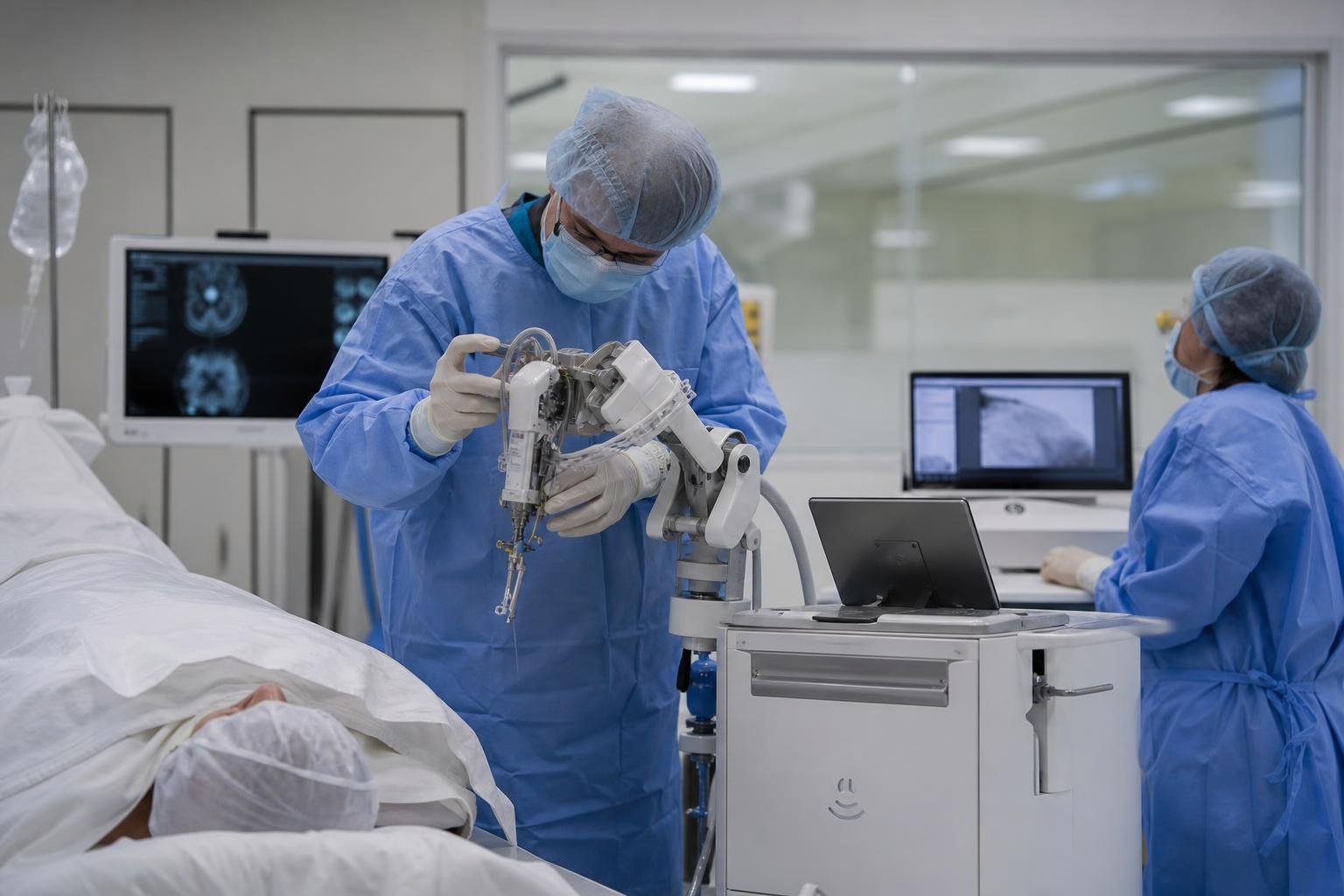
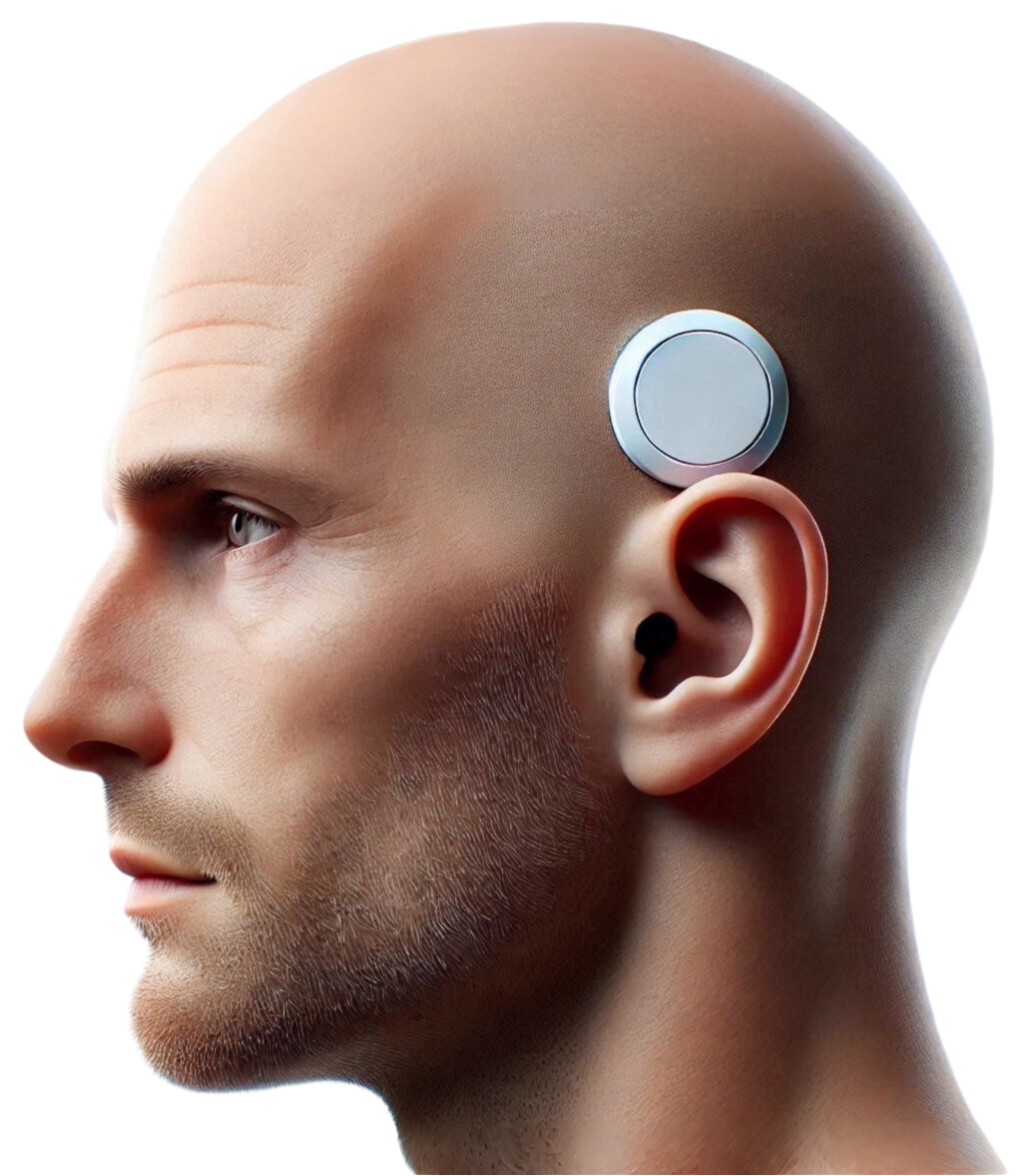
Neuralink’s principal platform is the N1, a wireless implanted BCI that uses flexible electrode threads placed into the brain by a surgical robot. The company has publicly described the implant as having 1,024 electrodes and as initially intended to help people with paralysis or severe speech impairment control computers and communicate. Its early public demonstrations have focused on cursor control, typing and other computer interactions. [6][7]
The system records neural activity and sends signals wirelessly to an external computer, where software attempts to decode intended movement or communication. The robot is designed to place the threads with submillimeter precision while avoiding blood vessels. That combination of implanted hardware, specialized surgery, decoding software and ongoing wireless data transmission makes commercialization more complex than simply obtaining clearance for a conventional device.
Neuralink’s PRIME study is its foundational human clinical program, and the company is also pursuing a speech-restoration program. The speech-restoration device has received FDA Breakthrough Device designation, which can provide additional interaction with the agency and support an expedited development and review process. The designation is not marketing authorization, however. [6][8]
As of June 15, the public record does not show that Neuralink has received FDA marketing authorization for its implant or that it has a commercial product available in the United States. Before any broad deployment, the company would need to establish safety and effectiveness for particular clinical indications while meeting requirements involving manufacturing controls, clinical evidence and long-term follow-up. Important technical questions include electrode stability over years, tissue response, surgical and explantation risks, wireless power and cybersecurity, software updates, device maintenance and whether results can be reproduced across patients.
Coverage May Determine Patient Access
The reference to “coverage of medical devices” in Neuralink’s lobbying disclosure points to a second, equally consequential policy track: payment. FDA authorization alone does not ensure that patients can receive an expensive implanted system. Developers must also navigate coding, coverage and payment decisions at Medicare, Medicaid and private insurers.
The Government Accountability Office has identified reimbursement as a central obstacle for BCIs. Its assessment found that the Centers for Medicare & Medicaid Services’ processes for coverage, coding and payment can be difficult for developers to navigate, while private insurers and other public programs may look to Medicare decisions as a guide. [4] For Neuralink, the challenge could include not just the implant and surgery, but also payment for follow-up care, replacement components, software support and the specialized clinical teams needed to manage patients over time.
The near-term market for invasive BCIs is likely to center on severe medical conditions, including paralysis, spinal-cord injury, ALS and profound speech impairment, rather than consumer enhancement. Estimates of the wider BCI market vary substantially because they often combine invasive implants with noninvasive EEG systems, research platforms and consumer neurotechnology. A roughly $400 million sector estimate cited by the Washington Post should therefore not be read as a direct estimate of Neuralink’s near-term revenue opportunity. [3]
Neuralink is entering a competitive field where companies are pursuing sharply different tradeoffs. Synchron’s Stentrode is delivered through blood vessels rather than open-skull surgery. Precision Neuroscience is developing a thin-film cortical interface designed for less invasive placement. Paradromics is focused on high-bandwidth intracortical communication, while Blackrock Neurotech has extensive experience with research-grade implanted interfaces. The competition is not reducible to electrode counts: surgical complexity, signal quality, durability, evidence quality, patient support and reimbursement prospects may all matter. [4]
Privacy and Long-Term Support Remain Unsettled
The policy work also arrives as lawmakers and regulators confront gaps in the treatment of neural data. A networked BCI can collect highly sensitive brain-signal information over time. Depending on the system and the data-processing methods used, those signals may be associated with movement intention, communication, cognitive patterns, emotional states or health conditions.
GAO’s expert interviews identified unresolved questions about who owns and controls neural data, whether users adequately understand how it is collected and used, and what happens when a clinical trial ends or a device developer exits the market. The agency also highlighted challenges around interoperability, maintenance and the risk that proprietary hardware and software could make repair, upgrades or migration difficult. [4]
Federal privacy protections may not consistently cover this information. Arnold & Porter’s analysis notes that HIPAA generally applies to neural information only when it is held by a covered health-care entity or its business associate. Meanwhile, states have begun creating a patchwork of more specific neural-data protections. Colorado and California had enacted such protections by 2024, while other states were considering rules involving consent, deletion rights, use limitations and mental privacy. [5]
That creates a difficult policy balance. Companies developing BCI systems may need data to improve decoding algorithms, monitor device performance and support clinical care. Policymakers and privacy advocates, meanwhile, are concerned that sensitive neural information could be retained, shared or used in ways patients do not anticipate. Several senators urged the Federal Trade Commission in 2025 to address potential exploitation or sale of neural data. [5]
What the Disclosures Do—and Do Not—Show
Neuralink’s registrations provide evidence that the company is preparing to engage in federal policy discussions as its clinical programs advance. They do not reveal the company’s preferred legislative language, whether it is seeking changes to FDA rules, what Medicare coverage approach it supports, or whether it is advocating for particular limits or exemptions in neural-data regulation.
Those details matter because the central BCI policy questions are interconnected. A device needs evidence and regulatory authorization, but it also needs a durable payment pathway. Patients need access to useful technology, but also assurances that implants, software and clinical support will not disappear after a trial or corporate restructuring. And developers need workable data rules, while patients need meaningful control over information that may be among the most sensitive they generate.
Neuralink’s move into federal lobbying suggests those questions are becoming part of the company’s commercialization strategy—not merely issues for regulators and academic ethicists to resolve after the technology reaches market.
Editor’s Take
Neuralink hiring Washington lobbyists is less a signal that brain implants are ready for mass adoption than an acknowledgement that FDA authorization is only the opening gate. For an invasive BCI, the commercial product is the entire care pathway: implantation, trained surgical teams, decoding software, secure updates, repair, rehabilitation, long-term monitoring and a payer willing to cover all of it. The most important policy work may therefore happen around Medicare coding and evidence standards, not headline-grabbing arguments about consumer telepathy.
I’m encouraged that the company is engaging early, because reimbursement and patient-support obligations are difficult to bolt on after a device design is frozen. But lobbying should not become a substitute for the evidence needed to support durable, reproducible benefit in clearly defined patient groups. Watch for concrete asks: a coverage-with-evidence-development pathway, standards for post-trial support and explantation, cybersecurity requirements for wireless implants, and enforceable rules on neural-data access, retention and portability. Until those specifics emerge, claims about a broad BCI market still outrun the demonstrated medical business.
References
- U.S. Senate Lobbying Disclosure Act Database – https://lda.senate.gov/filings/public/filing/733ca373-6776-4f87-ae72-cb71b0740d77/print/
- Bloomberg Law / Bloomberg Government – https://news.bloomberglaw.com/bloomberg-government-news/musks-neuralink-brain-implant-company-hires-federal-lobbyists
- The Washington Post – https://www.washingtonpost.com/wp-intelligence/health-brief/2026/06/01/plus-phrma-loses-another-c-suite-executive-amid-leadership-shuffle/
- U.S. Government Accountability Office – https://www.gao.gov/products/gao-25-106952
- Arnold & Porter – https://www.arnoldporter.com/en/perspectives/advisories/2025/07/neural-data-privacy-regulation
- Neuralink, Speech Restoration Trial – https://neuralink.com/trials/speech-restoration/
- Neuralink, Clinical Trials – https://neuralink.com/trials/
- Neuralink, Breakthrough Device Designation for Speech – https://neuralink.com/updates/neuralink-receives-breakthrough-device-designation-for-speech/