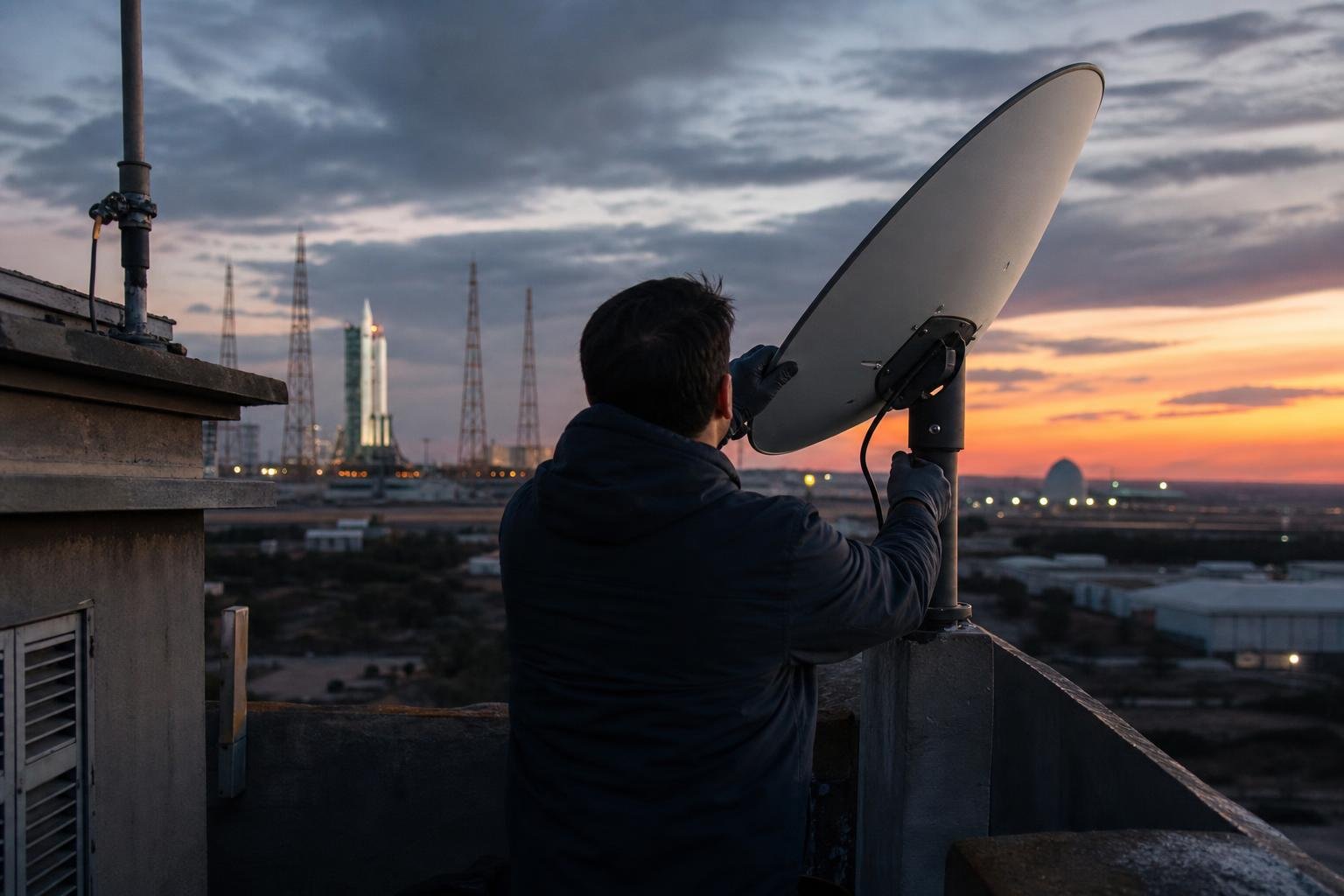
Technology’s biggest stories this week converged on a common issue: control of critical digital infrastructure. SpaceX entered public markets with an unprecedented $85.7 billion offering to fund satellite, launch and AI ambitions; Washington moved to restrict global access to Anthropic’s most capable models; and Apple finally detailed its rebuilt, generative-AI Siri.
Elsewhere, Fox moved to buy Roku for about $22 billion, seeking a stronger position in connected-TV distribution and advertising, while the U.K. proposed a broad under-16 social-media ban. Together, the developments show capital, governments and platform owners competing to shape who can build, distribute and use the systems increasingly central to online life.
1. SpaceX closes the largest IPO in history
SpaceX began trading on Nasdaq under the ticker SPCX on June 12 after pricing its initial public offering at $135 a share. The base deal included 555,555,555 newly issued Class A shares, raising roughly $75 billion and implying a valuation near $1.77 trillion. Underwriters exercised their full 83,333,333-share overallotment option, lifting total shares sold to 638,888,888 and total gross proceeds to approximately $85.7 billion when the offering closed June 15. [1]
The deal gives SpaceX funding on a scale that is unusual even for the largest technology companies. Founder and CEO Elon Musk retains effective control through the company’s dual-class share structure, while his shares are subject to a 366-day lock-up. [1]
SpaceX’s offering materials frame the company as a space, connectivity and AI business, not merely a launch provider. As of March 31, it reported more than 9,600 Starlink satellites, about 10.3 million subscribers, service in 164 countries or markets, and coverage reaching more than 3.3 billion people. The company also cited roughly 650 launches and said it had placed more than 80% of global mass sent to orbit since 2023. [2]
The prospective uses of the IPO proceeds explain the scale of investor interest and the risk. SpaceX plans to invest in AI-compute infrastructure, launch vehicles and facilities, expanded satellite constellations and general corporate purposes. Its materials explicitly discuss orbital AI-compute satellites, tying the valuation to future businesses beyond Starlink broadband, Falcon launches and Starship development. [2]
That makes the public-market debut a referendum on whether SpaceX can turn its lead in reusable launch and satellite connectivity into a broader AI-infrastructure platform. Starlink offers a growing commercial base, but Starship, larger constellations and orbital computing remain capital-intensive projects with less established returns.

2. U.S. order puts frontier-model access under export control pressure
The Commerce Department directed Anthropic to suspend access to Fable 5 and Mythos 5 for all foreign nationals, including those located inside the United States. Anthropic received the directive June 12 and took the systems offline to comply. Fable 5 had been broadly available, while Mythos 5 was subject to tighter controls because of reported cybersecurity capabilities. [3]
Commerce Secretary Howard Lutnick said the government was concerned that the models could be diverted to military or intelligence users in China, Russia and other countries of concern. The directive reportedly applied worldwide, creating a difficult compliance problem for a cloud service built and used by international teams rather than distributed as a conventional physical export. [4]
The distinction matters. Export rules have traditionally focused on hardware, software transfers and destinations. This action instead treats access to a frontier AI service as the controlled item, and nationality as a key restriction. Such a policy could affect employees, contractors, safety researchers and enterprise customers who need access from multiple countries.
Anthropic has disputed the process, saying the order did not identify the specific national-security concerns that justified the action. CEO Dario Amodei and senior technical staff met Commerce officials in Washington on June 15 to seek a resolution. [3][4]
Mythos is at the center of the policy concern because it was described as capable of identifying, and potentially helping exploit, software vulnerabilities at scale. The immediate dispute therefore goes beyond one company: it could establish whether U.S. officials can impose nationality-based controls on access to advanced models before a clear statutory and technical framework is in place.

3. Apple introduces iOS 27 and a more capable Siri
Apple used WWDC26 to unveil iOS 27 and updated versions of iPadOS, macOS, watchOS, visionOS and tvOS. The central announcement was Siri AI, a rebuilt assistant based on Apple’s next-generation foundation models and intended to deliver capabilities the company first previewed in 2024. [5]
Apple says Siri AI can understand on-screen context, work across files and applications, answer questions through Spotlight and system menus, and maintain interactions across iPhone, Apple Watch, CarPlay, AirPods, Mac and Vision Pro. The assistant can search the web, help draft or transform text, find local files and carry out actions through Apple’s system orchestrator on supported devices. [6]
The company is emphasizing architecture as much as features. Siri AI uses on-device Apple Foundation Models when possible and Private Cloud Compute for more demanding requests. Apple says information processed through Private Cloud Compute is not stored or accessible to Apple, while local system indexes, including Spotlight and the App Toolbox, remain on the device. [6]
Availability will not be universal. Apple lists support beginning with iPhone 16 models and later, plus the iPhone 15 Pro and Pro Max; eligible iPads need an M-series chip or the A17 Pro in the iPad mini, and Macs require M-series silicon. Some of the most demanding functions, including expressive voices and advanced dictation, require at least 12 GB of unified memory. [6]
Regional limits are also significant. Siri AI is not initially available on iPhone, iPad or Apple Watch in the European Union, though Apple says supported Mac and Vision Pro users in the EU can access it. The company is also withholding the features in China pending regulatory work. [5][6] The release gives Apple a clearer answer to competing generative assistants, but its device and market restrictions mean it is not yet a platform-wide upgrade.
4. Fox targets connected-TV control with Roku acquisition
Fox Corporation agreed June 15 to acquire Roku in a transaction valued at approximately $22 billion in enterprise value. Roku shareholders would receive $96 in cash and 0.9693 shares of Fox Class A stock for each Roku share, valuing the consideration at $160 per share. Fox has obtained a $12 billion bridge-financing commitment, and the companies expect the deal to close in the first half of 2027, subject to shareholder and regulatory approvals. [7]
The strategic value is Roku’s position between viewers and streaming services. Its operating system, home-screen placement, advertising technology and viewing data reach more than 100 million global streaming households. Combining those assets with Fox’s broadcast, news, sports and entertainment operations—and pairing Tubi with The Roku Channel—would create what the companies describe as the third-largest U.S. television player by share of viewing. [7]
Fox expects about $400 million in cost savings, but the more consequential question is neutrality. Roku has long operated as a distribution platform for a broad set of streaming rivals and television manufacturers. Ownership by a major programmer could raise concerns that Tubi, Fox content or Fox advertising products receive preferential treatment in search, promotion, measurement or inventory allocation.
The transaction reflects a streaming market in which control over discovery, first-party audience data and advertising infrastructure may be more valuable than launching another standalone subscription service.
5. U.K. proposes social-media ban for under-16s
The U.K. government announced plans to prevent social-media platforms from offering accounts to users under 16. The government expects to introduce legislation before the end of 2026, with implementation targeted for spring 2027. The proposal would cover services including Snapchat, TikTok, YouTube, Instagram, Facebook and X, while encrypted messaging services such as WhatsApp and Signal would fall outside the government’s stated definition. [8]
The plan places compliance responsibility on platforms rather than on children or parents. Ofcom will develop the detailed rules and age-assurance expectations, with the government saying existing age checks and child-protection measures do not go far enough. [8]
It would also extend protections from livestreaming and unsolicited contact by strangers across a broader range of services, including gaming sites. The government proposes that those safeguards be active by default for 16- and 17-year-olds, and that AI romantic-companion chatbots simulating sexual or intimate relationships carry a minimum age of 18. [8]
The proposal’s success will depend on systems that can establish age without simply relying on a date-of-birth field. Identity credentials, facial-age estimation, device signals and third-party verification may all be considered, but each introduces trade-offs around privacy, biometric information, false positives, accessibility, anonymity and circumvention. The government has not yet set the final technical standard.
Supporters see the plan as a response to addictive product design, grooming and harmful material. Critics question whether age gates can be enforced effectively and whether they address the recommendation systems and engagement incentives that contribute to the underlying harms. The coming Ofcom rulemaking will determine how sweeping the policy becomes in practice.
Editor’s Take
I see the week’s events as a fight over chokepoints rather than a simple AI-product race. Compute, satellite capacity, operating systems, app distribution, television home screens and model access are all becoming strategic control layers. SpaceX’s proposed capital scale is especially striking because it frames connectivity and launch infrastructure as inputs to future AI capacity—not merely as telecom or aerospace businesses.
The practical constraint is that none of these strategies succeeds on announcements alone. Apple still has hardware, memory and regional limits; frontier-model controls need rules that work for multinational engineering teams; and a Fox-Roku combination would have to prove that a formerly neutral platform remains fair to competing services. I would watch implementation details: eligibility rules for AI access, actual Siri reliability on cross-app tasks, platform-ranking commitments, and whether age-assurance rules protect children without creating a permanent identity checkpoint for everyone else.
References
- U.S. Securities and Exchange Commission, Space Exploration Technologies Corp. IPO filing – https://www.sec.gov/Archives/edgar/data/1181412/000162828026042466/spaceexplorationtechnologi.htm
- U.S. Securities and Exchange Commission, SpaceX IPO roadshow/prospectus materials – https://www.sec.gov/Archives/edgar/data/1181412/000162828026040610/spacexfwp.htm
- Associated Press, report on Anthropic directive – https://apnews.com/article/anthropic-artificial-intelligence-trump-fable-mythos-d9cc7df5c02e93837d0f0bfb24d5cfd2
- Reuters via Investing.com, report on Anthropic and U.S. officials – https://www.investing.com/news/stock-market-news/anthropic-and-us-officials-meeting-monday-to-resolve-dispute-over-export-curbs–administration-official-says-4742693
- Apple Newsroom, WWDC26 announcement – https://www.apple.com/newsroom/2026/06/apple-unveils-next-generation-of-apple-intelligence-siri-ai-and-more/
- Apple Newsroom, Siri AI technical details – https://www.apple.com/newsroom/2026/06/apple-introduces-siri-ai-a-profoundly-more-capable-and-personal-assistant/
- U.S. Securities and Exchange Commission, Fox-Roku transaction announcement – https://www.sec.gov/Archives/edgar/data/1754301/000119312526270285/d151410dex991.htm
- U.K. Government, under-16 social-media proposal – https://www.gov.uk/government/news/social-media-to-be-banned-for-under-16s-in-landmark-government-move-to-givekids-their-childhood-back