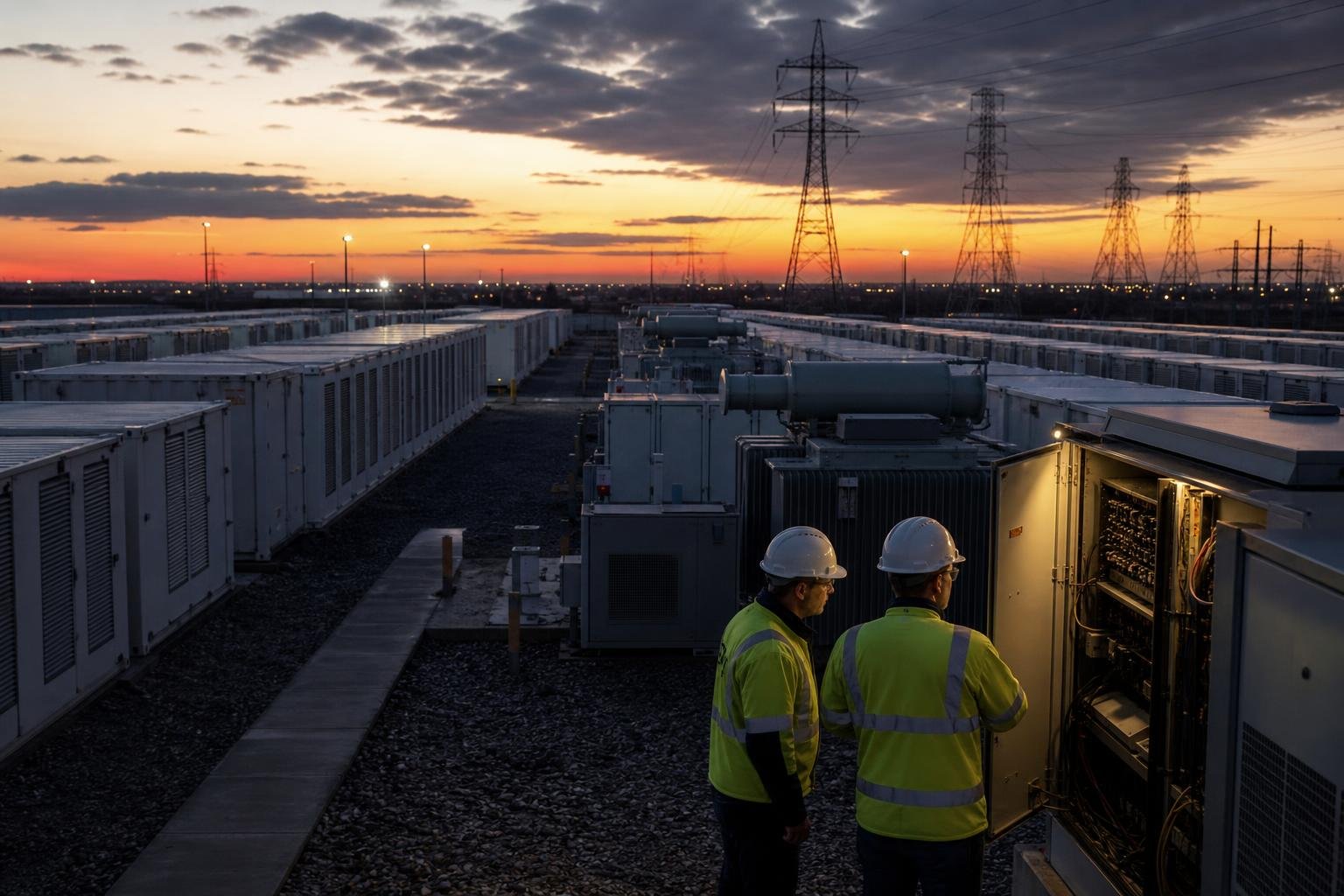
Tesla deployed 13.5 GWh of energy-storage products in the second quarter of 2026, its second-highest quarterly total on record and a sharp rebound from the prior quarter. The result, disclosed July 2 in Tesla’s production, deliveries and deployments update, was up about 41% from 9.6 GWh a year earlier and about 53% from 8.8 GWh in the first quarter. It fell just short of the company’s 14.2-GWh record set in the fourth quarter of 2025.[1][4]
The figure reinforces stationary storage as an increasingly important Tesla growth business as the company navigates a more difficult automotive market. But the headline deployment total does not yet answer the financial questions investors will be watching when Tesla reports second-quarter results after market close on July 22: how much revenue the deployments produced, whether margins held up, and how much volume came from utility-scale Megapacks rather than residential Powerwalls.[1][2]
A near-record quarter, with important limits
Tesla’s 13.5-GWh result brings first-half energy-storage deployments to about 22.3 GWh. The company reports Megapack and Powerwall deployments together, however, and has not provided a geographic, customer or product-level breakdown for the quarter.[1][4]
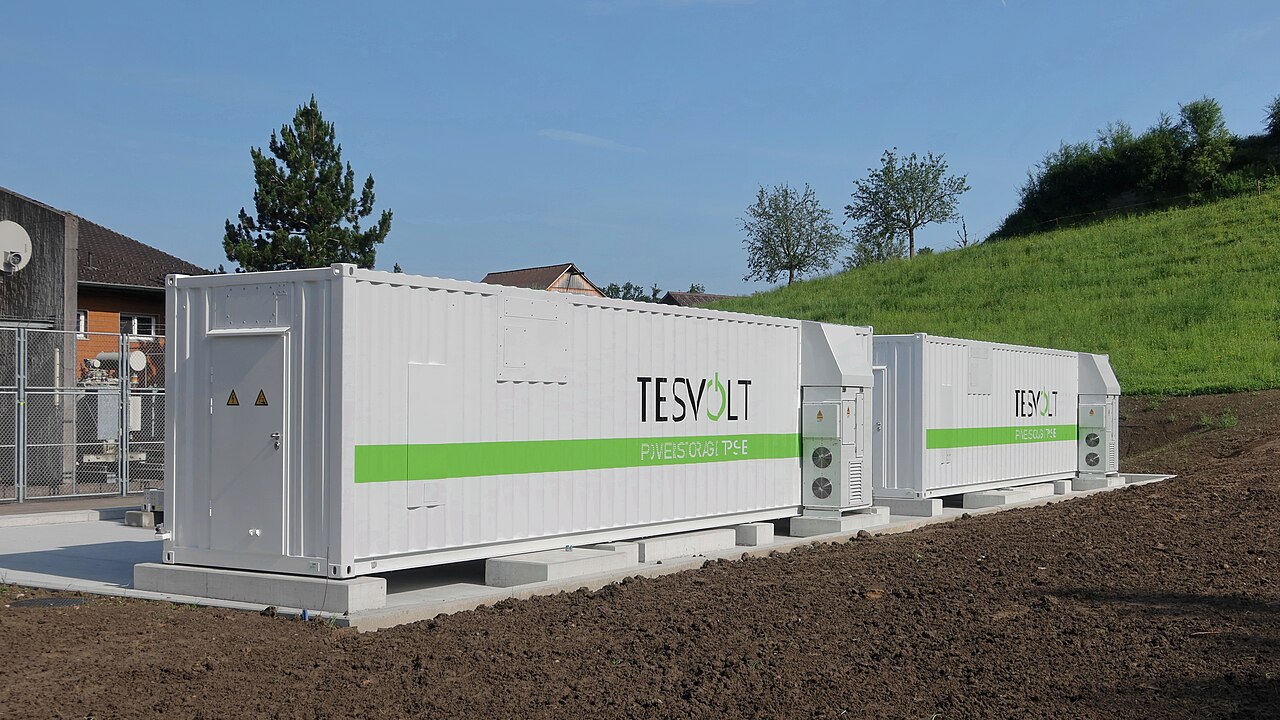
That distinction matters. Megapack is Tesla’s containerized utility-scale storage system, designed for grid-scale projects and incorporating power-conversion hardware, controls, factory assembly and software support. Powerwall serves homes and smaller distributed-energy applications. A quarterly total can rise because of a small number of large utility projects, broad residential demand, or a combination of both; Tesla’s operating update does not reveal which factor drove the Q2 increase.[7]
The 13.5-GWh measure also describes energy capacity, not power output. It does not show the systems’ instantaneous megawatt output, duration, utilization, cycling profile, revenue per kilowatt-hour or the number of projects completed. It therefore should not be interpreted as Tesla’s global energy-storage market share or directly compared with industry datasets that may count shipments, commissioned projects, cells or systems under different definitions.
Contemporaneous analyst expectations had generally placed quarterly deployments around 13.4 GWh to 13.8 GWh. The result was consequently a strong sequential recovery, while landing near the lower end of those expectations rather than materially surpassing them.[10]
Why storage demand is expanding
Tesla’s result arrives as battery storage moves from a supporting role in power systems toward core grid infrastructure. Storage can shift solar and wind generation to higher-demand periods, reduce congestion, provide capacity during peaks and help utilities respond to shortages. Growing electricity demand from data centers and AI infrastructure is adding another potential source of demand for flexible power resources.
BloombergNEF estimates that global energy-storage additions, excluding pumped hydro, reached 112 GW and 307 GWh in 2025, with additions forecast to reach 158 GW in 2026. China accounted for 54% of 2025 additions and the United States for 16%, underscoring both the size of the addressable market and the intensity of international competition.[6]
The International Energy Agency separately estimated 108 GW of new battery-storage capacity in 2025, about 80% of it utility-scale. Its figure uses a different methodology from BloombergNEF’s estimate, but points to the same broad trend: large batteries are being deployed rapidly. The IEA said lithium iron phosphate, or LFP, chemistry accounted for roughly 90% of deployments, reflecting its cost and cycling advantages in stationary applications.[5]
Tesla is also pursuing a role in distributed resources, not only centralized projects. In June, Tesla, Sunrun and Renew Home announced a framework intended to aggregate more than 16 GW of flexible capacity from home batteries, solar, smart thermostats and other equipment for utilities, hyperscalers and large loads. The initiative illustrates how Powerwalls and related controls could participate in virtual power plants alongside Megapack installations on the grid.[8]
Manufacturing scale supports growth, but does not guarantee it
Tesla has built a substantial disclosed manufacturing footprint for energy storage. Its Lathrop, California, Megafactory has 40 GWh of installed annual Megapack capacity, or roughly 10,000 units annually. Tesla’s Shanghai Megafactory, which began production in February 2025, was also listed with 40 GWh of installed annual capacity in the company’s Q4 2025 materials. Nevada Powerwall capacity exceeded 6 GWh annually.[3]
Installed capacity is not the same as realized output. Tesla has cautioned that production depends on equipment uptime, components, factory ramp conditions and other constraints. Cell availability, project timing, grid interconnections and customer procurement decisions can all limit deployments even where nominal factory capacity is available.[3]
The next product and factory ramps will be central to Tesla’s longer-term storage strategy. The company previously said it expected Megapack 3 and Megablock production at a planned Houston Megafactory in 2026. Tesla has positioned those products as a way to increase energy density, simplify site construction and support larger deployments, but it had not supplied Q2-specific production volumes or ramp details as of July 17.[3]
The financial test comes July 22
Higher deployment volume is operationally encouraging, but it is not sufficient to establish the quality of Tesla’s energy-business growth. In the first quarter, Energy Generation and Storage revenue declined 12% year over year to about $2.85 billion as Megapack and Powerwall deployments fell. Segment gross margin, however, increased to 39.5% from 28.8%, which Tesla attributed to lower material costs and tariff-related one-time benefits.[4]
That combination makes the upcoming report especially consequential. Tesla’s company-compiled consensus as of July 17 showed an average expectation of about $3.77 billion in Q2 Energy Generation and Storage revenue, with a $3.65 billion median across 23 analyst inputs. Those are estimates, not reported results.[2]
Investors will be looking for evidence that Q2’s deployment recovery translates into revenue growth without a substantial deterioration in margins. They will also be seeking clarity on Megapack-versus-Powerwall mix, backlog, pricing and the effect of tariffs. Morgan Stanley analysts have warned that price competition and delays in passing through higher tariff costs could pressure energy margins, even if deployment volumes continue to grow.[11]
Competitive pressure and a volatile growth path
Tesla benefits from scale, a recognizable product platform and integrated software and controls. Yet the company is competing in a market where hardware prices are declining and Chinese battery makers and system integrators are expanding quickly. China’s dominance in 2025 additions and the widespread use of lower-cost LFP systems highlight the pressure on suppliers to maintain both cost competitiveness and project execution.[5][6]
Quarterly storage figures can also be uneven. Matt Britzman, senior equity analyst at Hargreaves Lansdown, cautioned ahead of the Q2 report that storage is a “lumpy” business and that a single quarter offers limited basis for broad conclusions without additional detail.[11] Large projects can move between quarters because of construction schedules, commissioning milestones and grid approvals.
For now, Tesla’s 13.5-GWh quarter supports the view that stationary storage is becoming a larger growth engine for the company. The July 22 earnings release will determine whether that operational momentum is accompanied by durable revenue and profit growth—and whether Tesla can convert its expanding manufacturing capacity into a sustained advantage in an increasingly crowded global storage market.
Editor’s Take
Thirteen and a half GWh is a meaningful operating result because it demonstrates that Tesla can move grid-storage equipment at industrial scale, not simply announce factory capacity. The more important read-through is that stationary batteries are becoming essential infrastructure for solar-heavy grids, peak-demand management and rapidly growing data-center loads. A storage supplier that can reliably deliver systems, controls and commissioning support has a valuable position even as hardware becomes more commoditized.
I would avoid treating this deployment number as proof of market-share dominance or a direct earnings win. Storage projects are inherently lumpy, and GWh alone tells us little about project mix, realized pricing, service revenue or gross profit. The July 22 report needs to show that the rebound translates into Energy Generation and Storage revenue while preserving margins after tariffs and competitive pricing. Details on Megapack versus Powerwall mix, backlog conversion and the Houston ramp will matter far more than a single near-record quarter.
References
- Tesla, Second Quarter 2026 Production, Deliveries and Deployments – https://ir.tesla.com/press-release/tesla-second-quarter-2026-production-deliveries-and-deployments
- Tesla, Earnings Consensus for Second Quarter 2026 – https://ir.tesla.com/press-release/earnings-consensus-second-quarter-2026
- Tesla, Q4 2025 Update and Manufacturing-Capacity Disclosures – https://ir.tesla.com/_flysystem/s3/sec/000162828026003837/tsla-20260128-gen.pdf
- Tesla, Q1 2026 Form 10-Q – https://www.sec.gov/Archives/edgar/data/1318605/000162828026026673/tsla-20260331.htm
- International Energy Agency, Global Energy Review 2026: Battery Storage – https://www.iea.org/reports/global-energy-review-2026/technology-battery-storage
- BloombergNEF, Energy Storage Enters the 100-Gigawatt Era – https://about.bnef.com/insights/clean-energy/energy-storage-enters-the-100-gigawatt-era-three-things-to-know/
- Tesla Megapack – https://www.tesla.com/megapack
- Sunrun, Renew Home and Tesla Flexible-Capacity Announcement – https://www.globenewswire.com/news-release/2026/06/24/3316793/0/en/sunrun-renew-home-and-tesla-team-up-to-deliver-more-than-16-gigawatts-of-fast-flexible-power-for-data-centers-and-large-loads.html
- S&P Global, Energy Transition Highlights – https://www.spglobal.com/energy/en/news-research/blog/energy-transition/070826-et-highlights-tesla-electric-vehicles-battery-gas-supply-article6-singapore-indonesia?utm_source=openai
- TipRanks, UBS and Baird Q2 Tesla Expectations – https://www.tipranks.com/news/heres-what-ubs-and-baird-expect-from-teslas-q2-deliveries?utm_source=openai
- Investing.com, Tesla Energy Storage Margin and Deployment Commentary – https://www.investing.com/news/stock-market-news/teslas-energy-storage-division-to-pick-up-slack-as-car-margins-drop-and-credits-fade-4622751