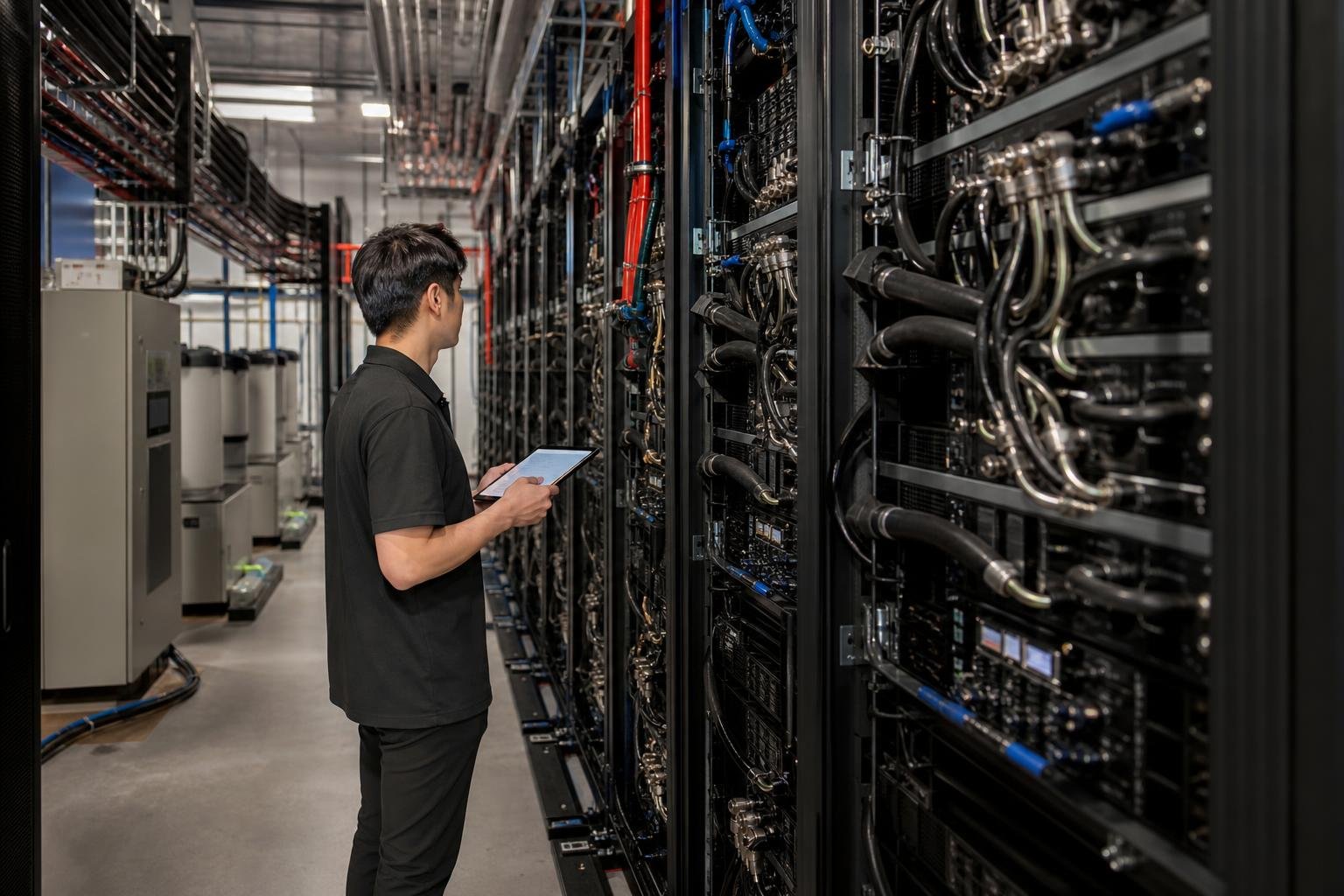
SpaceX has agreed to supply Google with a vast block of AI-computing infrastructure under a contract that reaches $920 million a month at its full rate. The agreement, disclosed in a June 5 filing tied to SpaceX’s initial public offering, covers access to roughly 110,000 NVIDIA GPUs plus CPUs, memory and related infrastructure. Full-rate payments are scheduled to begin in October 2026 and continue through June 2029.[1]
The arrangement is striking not only for its potential $30.36 billion headline value over those 33 full-rate months, but also because Google operates one of the industry’s largest AI infrastructure estates. Google said it needs temporary bridge capacity after demand for Gemini Enterprise, its enterprise agent platform, exceeded expectations. For SpaceX, the deal is a major test of its effort to turn xAI-derived data-center assets into a large third-party compute business.[1][2]
A reserved-capacity deal, not a conventional cloud launch
The public filing describes a Cloud Service Agreement between Space Exploration Technologies Corp. and Google LLC. In practical terms, it is best understood as a reserved-capacity agreement: Google is paying for access to a specified pool of computing hardware and associated infrastructure, rather than announcing a new general-purpose Google Cloud service or a broader cloud-platform partnership.
SpaceX is required to make the committed GPU quantity available by September 30, 2026. Capacity is expected to ramp through September at a reduced fee, before the $920 million monthly rate takes effect in October. Should SpaceX miss the September deadline, Google receives a one-month grace period. It can then terminate the agreement or accept a smaller allocation in return for proportionally lower fees.[1]
The contract also gives either party a significant escape route. After December 31, 2026, either side may terminate with 90 days’ notice. That means the approximately $30.36 billion figure is a maximum implied value at the stated full rate, not revenue SpaceX can treat as guaranteed through mid-2029. It excludes the reduced-fee ramp period as well.[1]
Google retains ownership of, and intellectual-property rights in, its content, AI models and associated data. That provision reinforces the basic division of responsibility: SpaceX is providing infrastructure, while Google retains control of its software and model assets.[1]
What the filing does and does not disclose
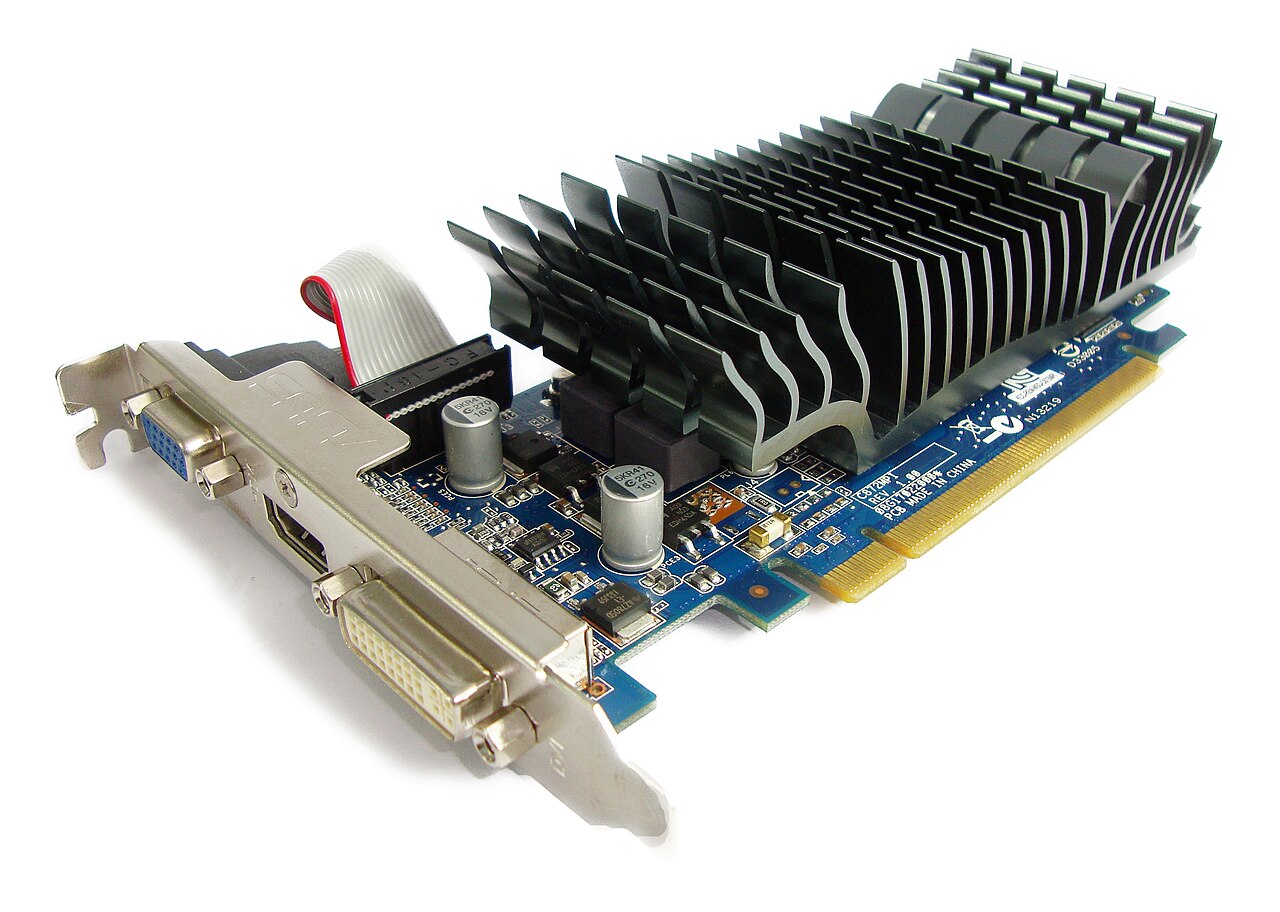
The agreement commits approximately 110,000 NVIDIA GPUs, alongside CPUs, system memory and other components. It does not identify the GPU generation. There is no basis in the filing to conclude that Google’s allocation consists of H100s, H200s, GB200s, GB300s or any particular mix of accelerators.[1]
Other operational details remain undisclosed. SpaceX has not publicly named the data center that will host the capacity, the geographic deployment, network design, interconnect arrangement, service-level commitments, utilization guarantees or the control plane Google will use. Nor does the filing specify whether the capacity will be dedicated mainly to training, inference, or both.
Those omissions matter because a large GPU count alone does not define usable AI capacity. Frontier-scale training and high-volume inference depend on networking, storage, power availability, system software and the ability to schedule workloads efficiently across clusters. The deal establishes that Google will buy infrastructure access from SpaceX; it does not establish how, or whether, that capacity will appear in Google Cloud products or become available to ordinary Google Cloud customers.
SpaceX’s expanding AI infrastructure business
The Google agreement follows an even larger disclosed arrangement with Anthropic. SpaceX’s filings described Anthropic as paying $1.25 billion per month through May 2029 for AI capacity, following an initial ramp period. Reporting identified that deployment with the Colossus facilities and approximately 325,000 NVIDIA GPUs.[2]
At their stated full rates, the Google and Anthropic agreements together represent more than $2 billion in potential monthly revenue. Both, however, include termination provisions, so they should not be read as equivalent to fixed, unbreakable multiyear backlog.
SpaceX acquired Musk’s AI company xAI in February 2026, bringing Grok and the company’s large data-center operations into the combined business. SpaceX’s IPO materials describe high-density AI data centers in the Memphis, Tennessee, and Southaven, Mississippi, area, including the Colossus campus and Colossus II facilities. The company says those assets support both training and inference for frontier models.[3]
A June 10 report from Globlex characterized the wider combined Colossus and Colossus II footprint as roughly one gigawatt and cited a broader mix of H100, GB200 and newer GB300 capacity. Those estimates describe SpaceX and xAI infrastructure overall, rather than the hardware specifically promised to Google.[6]
The timing has amplified the transaction’s importance. SpaceX priced its IPO at $135 per share on June 11 and began trading on Nasdaq on June 12. Its offering materials identified further AI-compute expansion as a use of proceeds, making the Google contract both an operating agreement and a prominent demonstration of the company’s revenue ambitions for its new infrastructure arm.[4]
Why Google is looking outside its own infrastructure
Google’s purchase is notable because Alphabet has extensive in-house infrastructure, including internally designed TPU systems and one of the world’s largest cloud footprints. Alphabet had also outlined more than $180 billion in 2026 capital expenditures, with spending expected to rise significantly in 2027.[2]
Yet access to operational AI clusters has become a bottleneck even for companies with deep engineering resources and capital budgets. Advanced accelerators, electrical power, construction capacity and high-performance networking all remain constrained. Google’s description of the SpaceX allocation as bridge capacity suggests that deploying available compute quickly can be as strategically important as building a company-owned facility over a longer timetable.
The deal also provides a clearer commercial rationale for SpaceX’s terrestrial AI infrastructure. Its IPO narrative has highlighted longer-term ambitions involving space-based data centers, but this contract concerns terrestrial capacity. It should not be interpreted as an orbital data-center deployment or as evidence that Google has committed to SpaceX’s broader orbital-AI plans.
Execution, governance and revenue questions
SpaceX still has to deliver the promised GPU allocation on schedule. The September 30 milestone, the grace period and Google’s termination option make that risk explicit in the agreement. Reported operational issues add context: Bloomberg reported that SpaceX encountered latency and network-infrastructure problems connecting Colossus 1 with two data-center sites more than 10 miles away. According to people familiar with the matter, those difficulties contributed to the decision to lease Colossus 1 capacity to Anthropic after problems using it for Grok development.[5]
That reporting concerned the Anthropic-related deployment, not a disclosed fault in Google’s allocation. Still, it illustrates the difference between procuring accelerators and delivering a stable, integrated cluster at scale. SpaceX’s ability to operate, network and expand these installations will be central to whether its compute business becomes durable.
The transaction also invites scrutiny because Alphabet is an existing SpaceX investor. Contemporary reporting placed Alphabet’s stake at roughly 6% as SpaceX approached its IPO.[2] The public documents do not establish that the deal was improperly priced or noncommercial, but the overlap between a significant shareholder and a major customer creates obvious governance and optics questions.
For now, the agreement gives SpaceX a substantial prospective revenue stream and gives Google an option to address an immediate capacity shortfall. Its long-term significance will depend on delivery by the fall, the durability of Google’s demand after 2026, and whether SpaceX can convert its xAI-era facilities into a reliable infrastructure service for customers beyond its own AI operations.
Editor’s Take
I see this less as Google conceding an infrastructure advantage and more as a rational capacity hedge. When enterprise demand arrives faster than power delivery, construction schedules and accelerator supply can support, renting an already-operational cluster can be worth far more than waiting for a perfectly integrated internal build. The practical value is not the headline GPU count; it is whether SpaceX can deliver a stable, well-networked, schedulable 110,000-GPU environment by the September deadline.
The $920 million monthly number is eye-catching, but I would not treat it as durable contracted revenue yet. The 90-day termination right after 2026 and the delivery remedies make this a high-value option with serious execution conditions, not the same thing as locked-in backlog. What I will watch is cluster reliability, network performance, power expansion and whether Google keeps the capacity once its own buildout catches up. If SpaceX proves it can operate these systems for demanding external customers, its terrestrial compute business becomes much more credible than any orbital-data-center narrative.
References
- U.S. Securities and Exchange Commission – https://www.sec.gov/Archives/edgar/data/1181412/000162828026041150/spacexagreementfwp.htm
- TechCrunch – https://techcrunch.com/2026/06/05/google-will-pay-spacex-920m-per-month-for-compute/
- SpaceX European Prospectus – https://content.spacex.com/cms-assets/FINAL_Documents%20and%20Updates/SpaceX%20-%20EU%20Prospectus%20%28Approved%20by%20Bafin%29%20-%20June%205%2C%202026.pdf
- SpaceX Investor Relations – https://ir.spacex.com/updates/releases-details/2026/Space-Exploration-Technologies-Corp–Announces-Pricing-of-Initial-Public-Offering/default.aspx?utm_source=openai
- Bloomberg Law – https://news.bloomberglaw.com/artificial-intelligence/spacex-rented-out-computing-after-own-teams-had-trouble-using-it
- Globlex Research – https://www.globlex.co.th/research/research_35627_1_20260610%20SpaceX_EN.pdf