SpaceX’s public IPO filing, a mixed first test of its V3 Starship system, and a proposal for an orbital computing constellation have put Elon Musk’s technology businesses at the center of a far broader infrastructure bet. The common thread is an effort to connect launch services, satellite broadband, AI computing and, eventually, access to the advanced chips required to run it all.
As of May 31, the most consequential developments are grounded in regulatory filings and early-stage products rather than finished systems. SpaceX has begun the process of going public, xAI is expanding Grok and developer tools, Starship has entered a new vehicle generation, and governments are spending heavily to make chip supply chains less vulnerable to geopolitical and industrial disruption.
1. SpaceX’s IPO filing reveals an AI-and-space conglomerate
Space Exploration Technologies Corp. filed a public Form S-1 registration statement with the U.S. Securities and Exchange Commission on May 20, beginning the formal process for a proposed Nasdaq listing under the ticker SPCX. The filing did not set a final share price, share count or valuation. Contemporary reports put potential valuation expectations at roughly $1.5 trillion to $1.75 trillion, with a possible $75 billion to $80 billion capital raise, but those figures remained targets rather than final offering terms as of the dateline.[1][2]
The filing makes clear that SpaceX is no longer presenting itself simply as a launch provider. It spans Falcon launch services, Starlink broadband, government and defense work, Starship development, terrestrial AI infrastructure and prospective orbital computing. Starlink was its largest revenue source, generating about $11.4 billion of the company’s approximately $18.67 billion in 2025 revenue. Yet SpaceX also reported a 2025 net loss of roughly $4.9 billion, illustrating the cost of its capital-intensive expansion.[1]
Starship research and development alone reportedly accounted for about $3 billion in 2025 and approximately $930 million in the first quarter of 2026. The investment case therefore depends on Falcon 9’s established reuse economics and Starlink’s recurring revenue helping finance businesses that remain far more speculative, including Starship’s eventual high-volume launch capability and orbital AI infrastructure.[1]
Governance is another central issue. The proposed dual-class structure gives Class B shares 10 votes each, compared with one vote for public Class A shares. Musk was disclosed as retaining approximately 85.1% of combined voting power after the offering, according to reporting on the filing. Critics have argued that the structure and shareholder protections give public investors limited practical influence over a company whose most ambitious markets do not yet exist at commercial scale.[3]
2. xAI is shipping Grok tools and building compute capacity
xAI’s current product story is about Grok, coding agents and infrastructure—not an unverified model called “Prometheus 3.0.” Public announcements through May 31 include Grok 4.3, new voice, speech-to-text, text-to-speech and image-generation APIs, and Grok Build, an AI coding agent introduced in beta on May 14 and added to the xAI API public beta on May 29.[4]
Grok Build places xAI in direct competition with agentic software-development products from Anthropic, OpenAI and other AI companies. The tool is being integrated with developer environments including OpenCode, OpenClaw and Kilo Code. Its importance lies less in a disclosed breakthrough architecture than in xAI’s attempt to turn large models into tools that can execute multistep software tasks inside existing workflows.
xAI’s infrastructure strategy has expanded alongside its product lineup. SpaceX acquired xAI in April, bringing Grok and its AI infrastructure under the SpaceX corporate structure. On May 15, SpaceXAI also announced a compute partnership with Anthropic that provides access to Colossus computing infrastructure. The arrangement highlights a notable tension: the combined company is building proprietary AI products while also seeking to supply compute to another frontier-model developer.[4]
xAI’s potential advantages include access to real-time information from X, large dedicated GPU clusters and a possible future connection to Starlink and SpaceX launch systems. Its risks are equally substantial: limited independent benchmarking against leading competitors, questions around training-data governance and moderation, and the expense of running frontier-scale AI infrastructure. Adoption and reliability of Grok Build remain unproven at this early stage.
3. Starship Flight 12 advances the V3 program, but not reusability
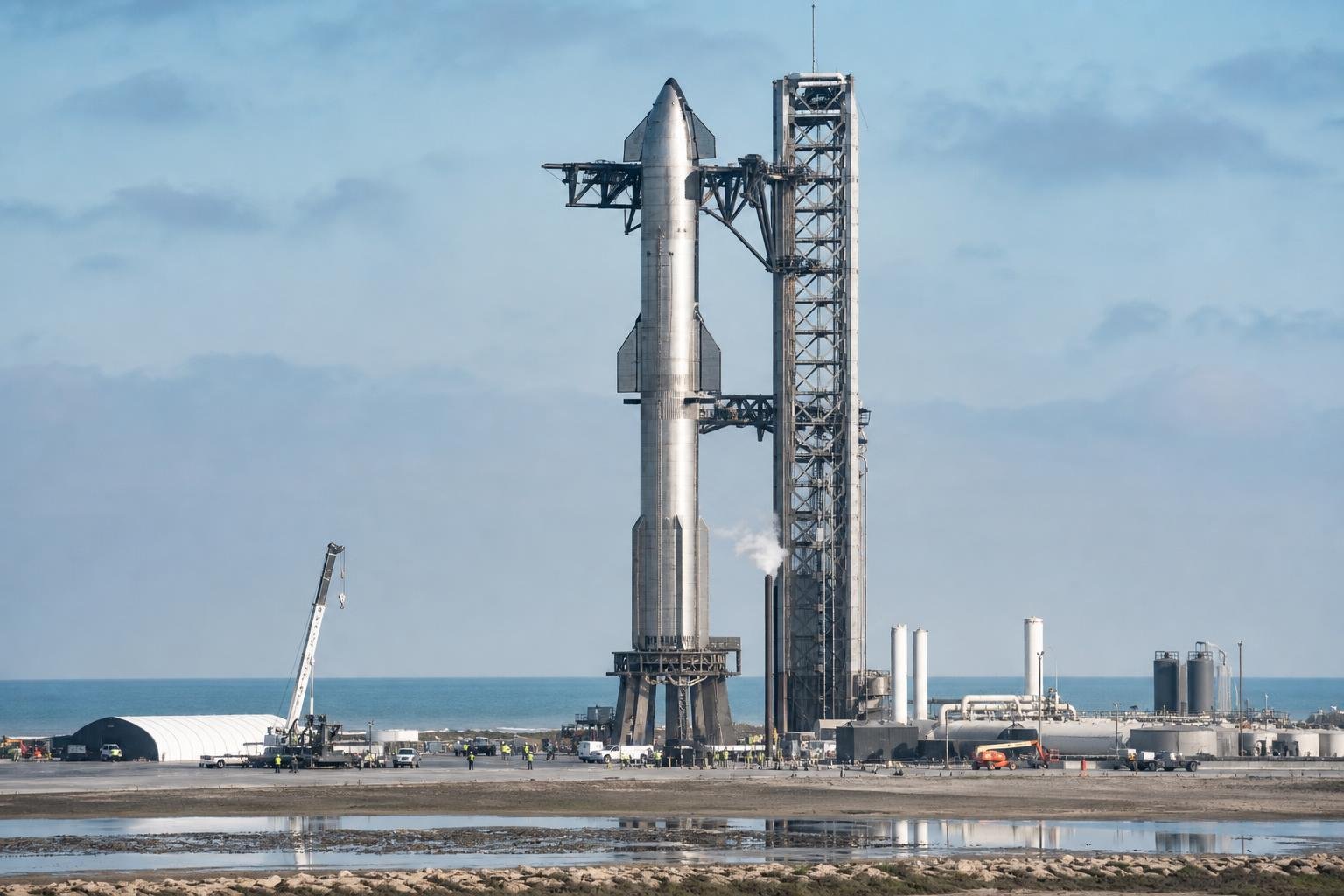
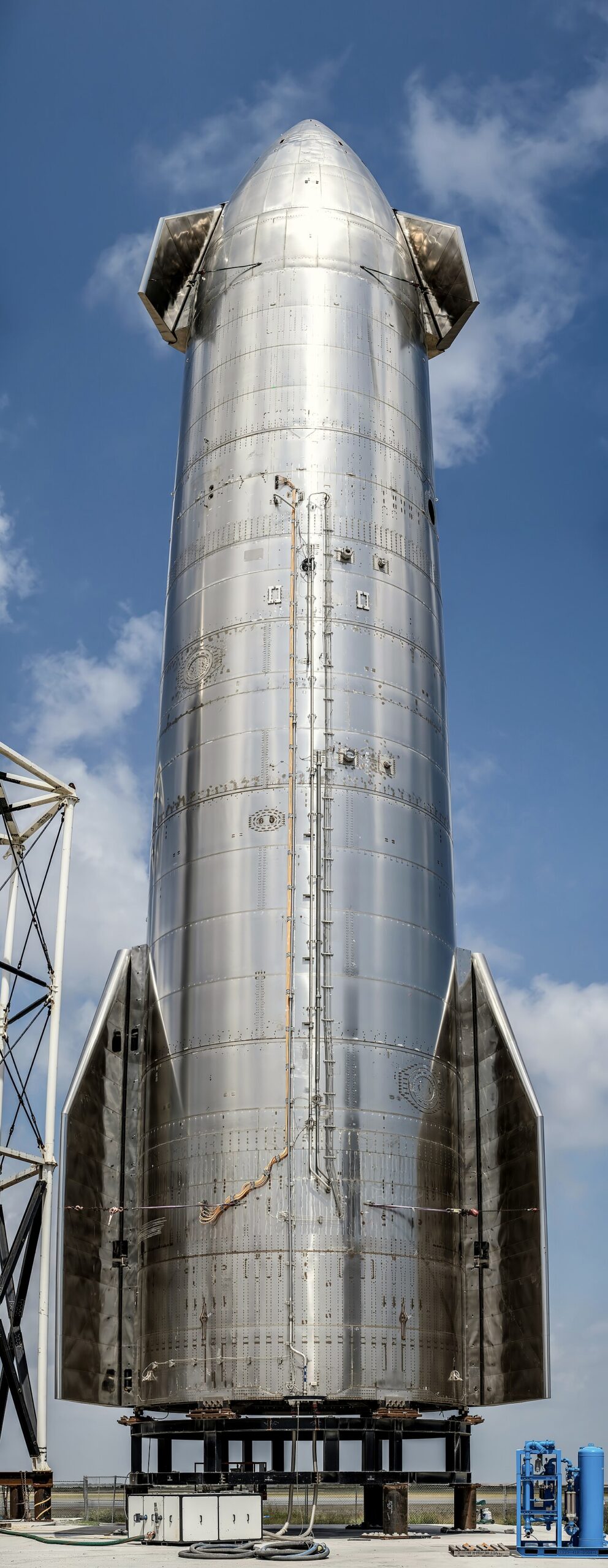
Starship Flight 12 launched from Starbase, Texas, on May 22 at 5:30 p.m. Central Time. It was the first mission using the V3 Starship and Super Heavy vehicles, Raptor 3 engines and Pad 2. The test also carried modified Starlink satellites intended to image the vehicle during flight.[5]
The mission used 33 Raptor 3 engines on Super Heavy and six Raptor engines on the upper stage. After hot staging, the upper stage continued to space, but the booster did not complete its planned return. SpaceX said Super Heavy could not start all of the engines required for its boostback burn, completed only a partial burn and later made a hard splashdown in the Gulf of America. One Raptor engine also shut down during ascent.[5]
The result was meaningful progress, but not a fully successful reusable two-stage flight. Flight 12 tested a new vehicle configuration, propulsion system, launch pad and demanding return maneuvers. It also underscored how far SpaceX remains from demonstrating rapid, routine recovery of a vehicle that is central to next-generation Starlink deployment, NASA’s Artemis lunar plans and future orbital-refueling missions.
On May 27, the Federal Aviation Administration classified the event as a mishap and required a SpaceX-led investigation under FAA oversight. The agency said there were no reports of public injuries or property damage. A return to flight will depend on the FAA’s assessment of the causes and corrective actions affecting public safety.[6]

4. The orbital data-center proposal is vast—and still only a proposal
In January, SpaceX filed an application with the Federal Communications Commission for an Orbital Data Center System that could include up to one million non-geostationary satellites. The FCC Space Bureau accepted the application for filing on February 4, opening it to public comment. It is not an approved or operational deployment program.[7]
The proposed network would operate in orbital shells from roughly 500 to 2,000 kilometers above Earth. It would rely on optical inter-satellite links, connections to existing Starlink systems, radio links to authorized ground stations and a large laser-based mesh for routing traffic. SpaceX described the plan as an initial step toward using orbital infrastructure for large-scale computing and energy collection.[7]
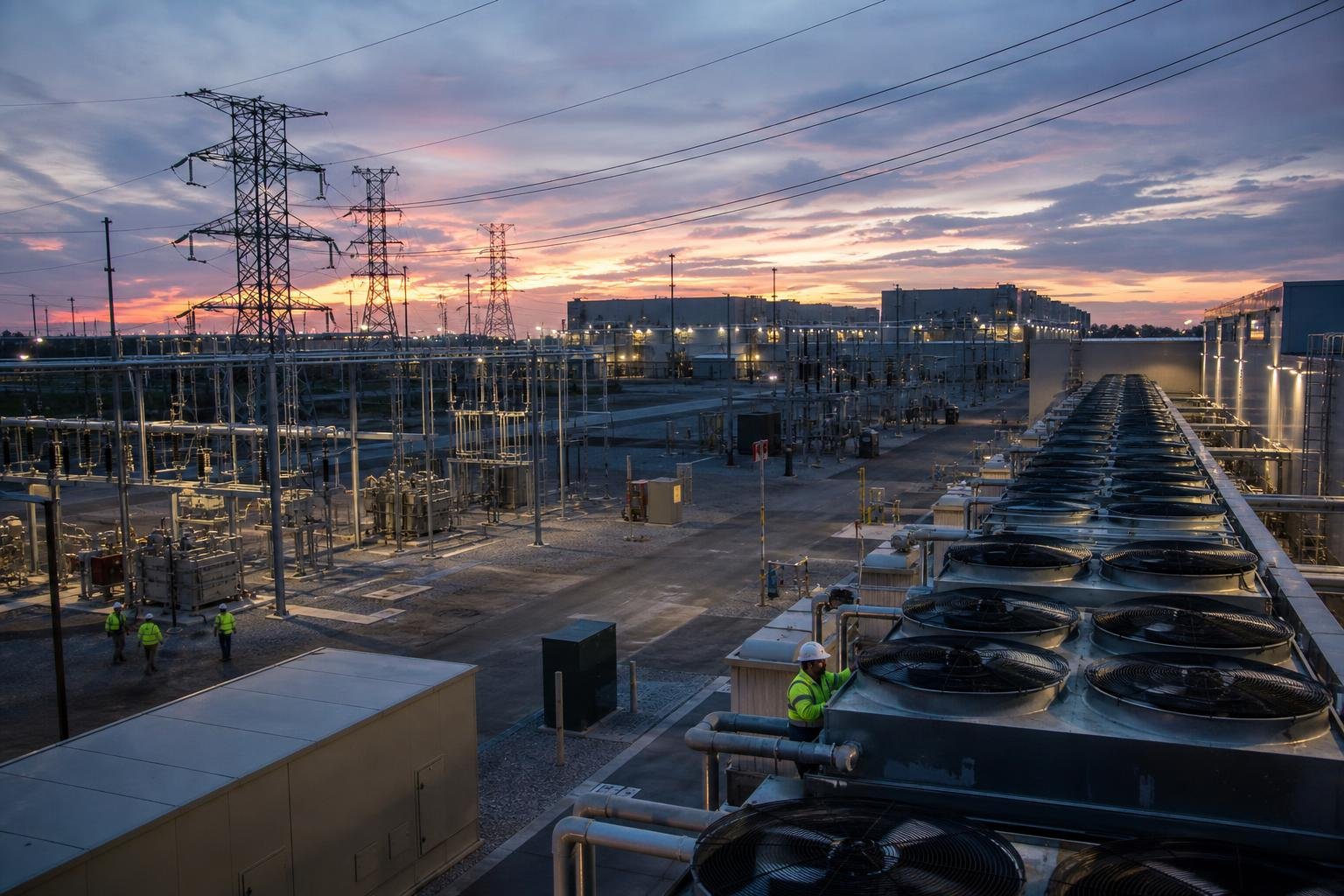
The engineering challenge is formidable. Solar generation in orbit is plentiful but interrupted by eclipses, requiring energy storage. Vacuum makes conventional convective cooling impossible, so AI hardware would need radiators capable of rejecting substantial heat. Radiation tolerance, shielding, error correction, maintenance, hardware replacement and precise laser-link pointing are additional problems. A constellation approaching one million spacecraft would also raise unprecedented concerns around orbital congestion, debris, collision avoidance, spectrum coordination, astronomy and reentry effects.
The economic case is also unresolved. Orbital computing would have to compete with terrestrial hyperscale data centers that benefit from mature power, cooling, networking and maintenance systems. Its viability depends heavily on launch costs, satellite longevity and the availability of advanced AI accelerators. SpaceX’s own IPO disclosures identify chip supply and fab-capacity constraints as material risks to its terrestrial and orbital AI ambitions.[1][7]
5. Semiconductor “independence” is becoming a resilience strategy
The drive for semiconductor independence is shaping industrial policy in the United States, Europe and India, but full national self-sufficiency remains unrealistic. Modern chips depend on a tightly specialized global system: Taiwan and South Korea for advanced logic manufacturing, the Netherlands for leading lithography equipment, Japan for critical materials and equipment, and multiple regions for design software, packaging, memory and chemicals.
In the United States, the CHIPS and Science Act’s roughly $52.7 billion in manufacturing, research and workforce support is aimed at reducing exposure to concentrated production in East Asia. The objective is better described as diversification and resilience than autarky. That distinction matters for companies such as SpaceX, whose AI plans depend on large volumes of advanced GPUs and other accelerators that cannot be sourced from a single domestic supply chain overnight.
Europe is pursuing a similar goal through the Chips Act and preparations for a possible Chips Act 2.0. The EU has targeted a 20% share of global semiconductor production by 2030 while seeking to strengthen its position in research, design, packaging and manufacturing. Europe retains major strengths in equipment, particularly ASML’s lithography systems, as well as automotive, industrial and power chips. It remains dependent, however, on the U.S. and Asia for much of the leading-edge logic used in AI systems.[8]
India’s May 16 partnership between Tata Electronics and ASML illustrates both the opportunity and the limits of localization. The companies are supporting Tata’s planned $11 billion, 300-millimeter fab in Dholera, Gujarat, expected to produce chips on 28 nm through 110 nm process technologies for automotive, mobile, AI and other markets. ASML will provide lithography tools, technical support, training and ecosystem assistance, while Taiwan’s Powerchip Semiconductor Manufacturing Corp. is among the technology partners.[9]
The fab would be a major step toward domestic Indian production, but it will initially focus on mature and specialty nodes rather than the most advanced AI processors. It will also depend on imported equipment, materials and process expertise. That is the broader lesson of the global chip push: building a fab matters, but a durable semiconductor ecosystem also requires packaging, design tools, customers, skilled engineers, water, power, logistics and decades of accumulated manufacturing know-how.
These five stories are connected by a single strategic contest over infrastructure. SpaceX is seeking capital for a vertically integrated system that could link rockets, broadband, satellites and AI compute. Governments and manufacturers, meanwhile, are trying to ensure that the chips powering that system are not dependent on one geography or one fragile set of suppliers. The ambition is clear; the technical, financial and regulatory work is still substantial.
Editor’s Take
The important story is not the headline valuation; it is whether SpaceX can turn a highly effective launch-and-connectivity business into a capital engine for much riskier bets. Starlink revenue and Falcon reuse give the company real operating leverage, but Starship recovery, orbital computing and frontier AI clusters are not interchangeable milestones. Each has a different failure mode, regulatory path and cash requirement.
I would watch the next Starship investigation outcome, demonstrated V3 recovery performance and the first hard evidence that Grok Build earns repeat developer use. The orbital data-center concept is technically fascinating, but the economics remain far behind the rhetoric: launching hardware does not eliminate cooling, radiation, replacement, networking or chip-supply constraints. For now, terrestrial data centers remain the benchmark SpaceX has to beat, not merely bypass.
References
- U.S. Securities and Exchange Commission, SpaceX Form S-1 registration statement – https://www.sec.gov/Archives/edgar/data/1181412/000162828026036936/spaceexplorationtechnologi.htm
- TechCrunch, analysis of SpaceX’s IPO filing – https://techcrunch.com/2026/05/20/the-spacex-ipo-filing-ai-bets-starship-dreams-elon-musk/
- Ars Technica, report on SpaceX IPO governance provisions – https://arstechnica.com/tech-policy/2026/05/report-spacex-ipo-gives-musk-unchecked-power-and-forbids-investor-lawsuits/
- xAI, product and company announcements – https://x.ai/news
- SpaceX, Starship Flight 12 mission information – https://www.spacex.com/launches/starship-flight-12
- Federal Aviation Administration, Starship Flight 12 mishap statements – https://www.faa.gov/newsroom/statements/general-statements
- Federal Communications Commission, Orbital Data Center System application notice – https://docs.fcc.gov/public/attachments/DA-26-113A1.pdf
- Agence Europe, European technology sovereignty and Chips Act developments – https://agenceurope.eu/en/bulletin/article/13877/4/european-commission-seeks-to-harness-open-source-in-its-tech-sovereignty-strategy-and-develop-european-alternatives
- ASML, Tata Electronics strategic partnership – https://www.asml.com/en/news/press-releases/2026/tata-electronics-and-asml-announce-strategic-partnership