J.P. Morgan has upgraded Tesla to Neutral from Underweight and raised its price target to $475 from $145, a dramatic shift that reflects a new view of the company as an autonomy, AI and robotics platform rather than primarily an electric-vehicle manufacturer. The change, announced June 5, was led by analyst Rajat Gupta after he assumed coverage from longtime Tesla skeptic Ryan Brinkman.[1]
The $330 increase in the target price does not amount to a straightforward bullish call. J.P. Morgan’s Neutral rating signals that the bank does not consider Tesla shares clearly undervalued at current levels. Instead, the revision highlights how much Tesla’s long-term valuation increasingly depends on businesses that remain unproven at commercial scale: robotaxis, AI software and infrastructure, and the Optimus humanoid robot.[1]
A new valuation framework for Tesla
J.P. Morgan’s prior Tesla case was more closely tied to the economics of the company’s established businesses, particularly vehicle deliveries, automotive margins and energy storage. Gupta’s framework gives substantially more weight to the potential for Tesla to reuse its AI, computing, manufacturing and software capabilities across several markets.
Those markets include conventional EVs and energy storage, but also autonomous ride-hailing, humanoid robots and licensing or services connected to AI hardware and software. The underlying argument is that Tesla’s vertically integrated approach could eventually create recurring, higher-margin revenue streams that are less dependent on one-time vehicle sales.[2]
That framework produced a markedly larger long-range opportunity set. J.P. Morgan estimated a combined addressable market of roughly $3.9 trillion by 2035 across automotive, energy storage, robotaxis, humanoid robots and infrastructure licensing. Its model projected Tesla revenue rising from about $95 billion in 2025 to roughly $203 billion in 2030, with services and newer businesses contributing nearly half of that increase.[1]
The bank also estimated adjusted earnings per share of about $1.95 for 2026 and approximately $7.50 by 2030. The target price was described in circulated commentary as a December 2027 target, rather than a conventional 12-month target, underscoring the extent to which the thesis rests on longer-term execution.[1]
Autonomy is central, but FSD remains supervised
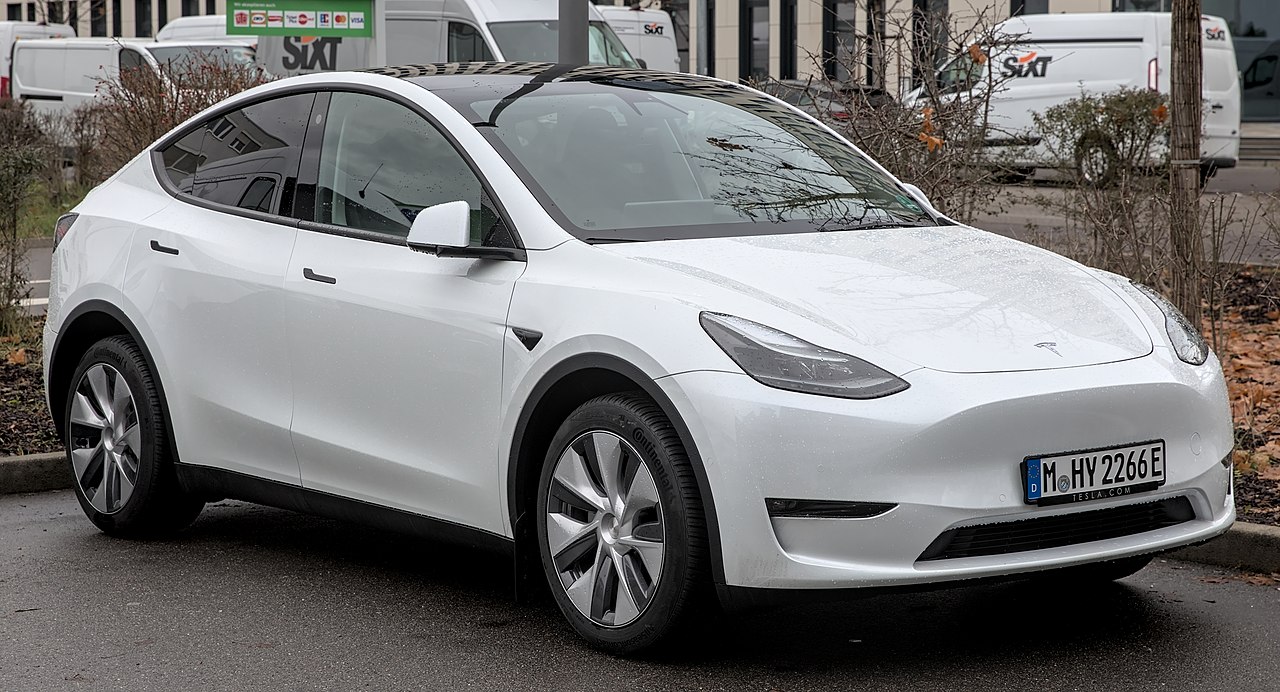
The largest question in the new Tesla valuation is whether the company can turn its work on vehicle AI into a scalable autonomous service. Tesla is developing the same broad technology stack for Full Self-Driving (Supervised), Robotaxi and future autonomous products. Its approach relies heavily on camera-based perception, neural-network software, custom computing and data collected from its large customer fleet.[3]
That strategy differs from many established robotaxi developers, which generally operate within tightly geofenced service areas and use dedicated sensor suites that often include lidar and other layers of redundancy. Tesla’s potential advantage is scale: if its architecture can safely support autonomous operation across a broad vehicle fleet, it could have a large installed base and comparatively low deployment costs.
But the distinction between Tesla’s present product and a driverless service is essential. Tesla states that FSD (Supervised) requires an attentive driver and does not make a vehicle fully autonomous.[4] The National Highway Traffic Safety Administration likewise distinguishes current driver-assistance systems from fully automated driving technologies.[5]
For investors, that gap is not semantic. Robotaxi economics require vehicles to operate without a human driver in a manner that satisfies safety, insurance and regulatory requirements while achieving high utilization. A supervised driver-assistance product may generate software revenue and valuable driving data, but it does not by itself establish the economics assumed for a driverless fleet.
Optimus expands the opportunity—and the uncertainty
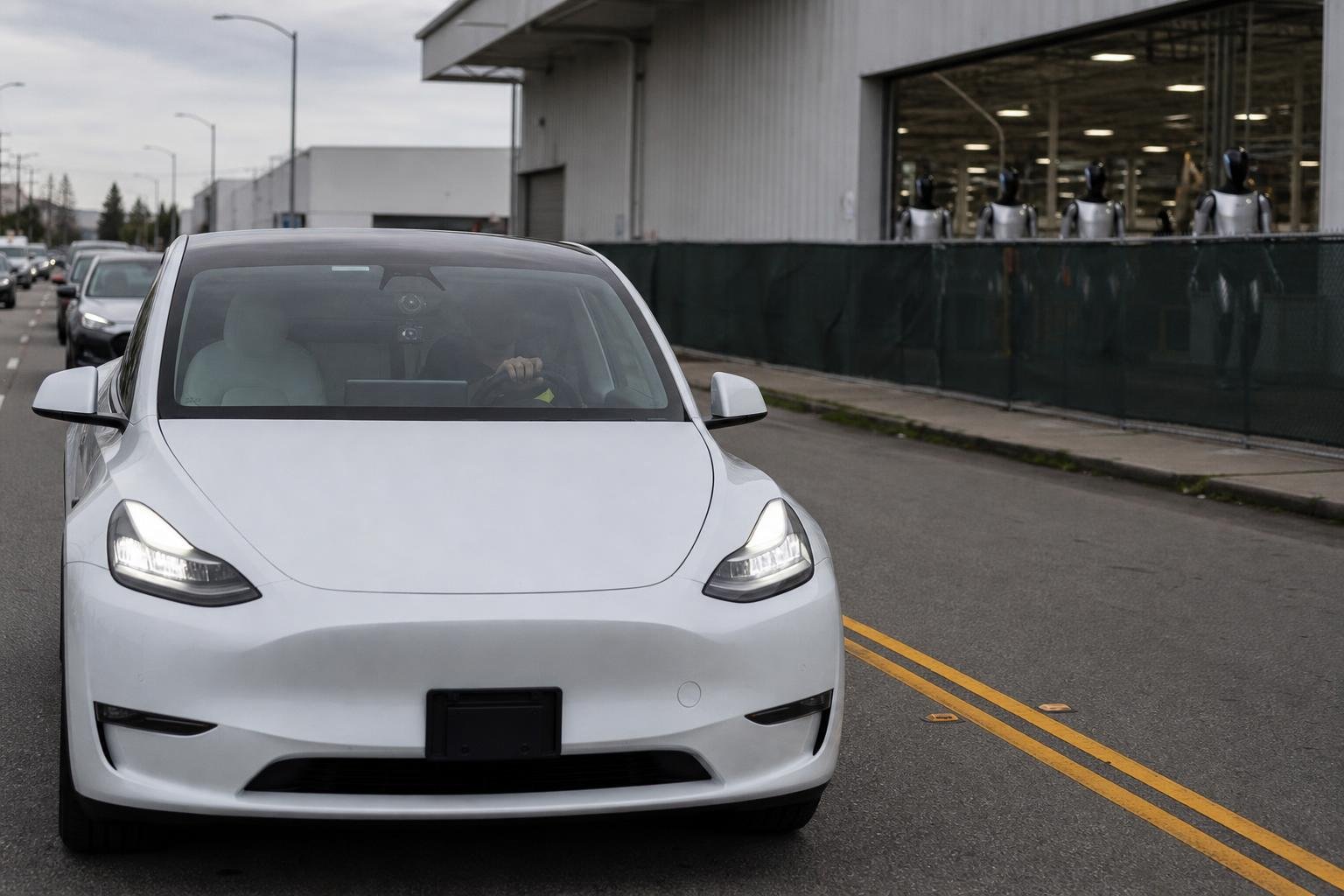
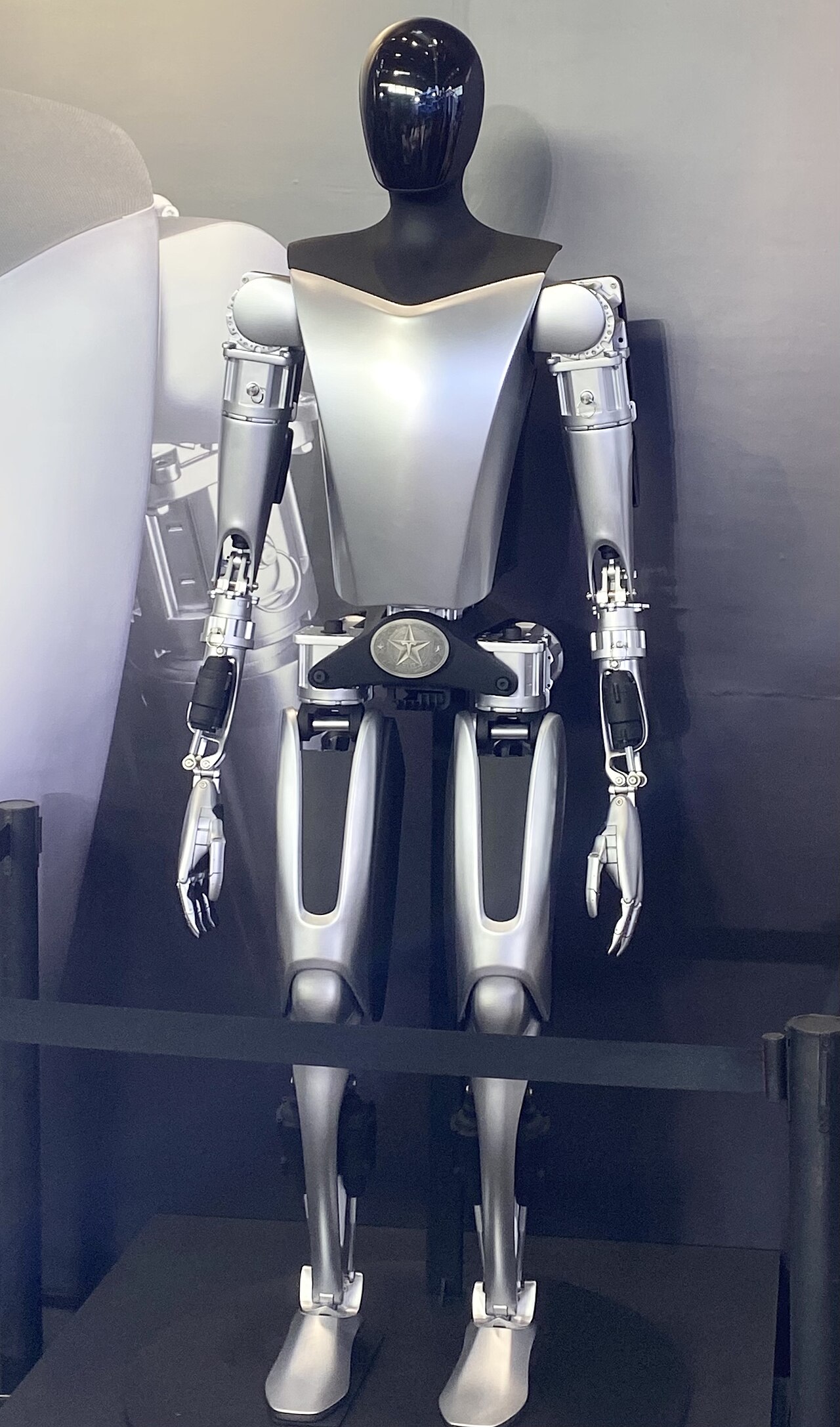
J.P. Morgan’s revised outlook also places greater value on Optimus, Tesla’s general-purpose humanoid robot program. Tesla describes Optimus as a bipedal autonomous robot intended for unsafe, repetitive or monotonous tasks. The company has said it is preparing for larger-scale production, while also making clear in its public disclosures that the program remains part of a broader development and commercialization effort.[3]
The potential market is substantial if humanoid robots become reliable, affordable and useful across factories, warehouses, logistics operations and other workplaces. J.P. Morgan estimated a potential market of roughly 5 million humanoid robots in the United States and 30 million globally by 2040.[1]
Yet those figures represent a long-term market assumption, not current demand or Tesla revenue. Humanoid robotics combines difficult challenges in perception, mobility, manipulation, battery life, reliability, safety and cost. Producing demonstrations or limited internal deployments is materially different from manufacturing, servicing and selling a general-purpose robot at a scale that supports a meaningful profit pool.
Tesla’s bull case is that its work in vision systems, neural networks, actuators, batteries, custom chips and high-volume manufacturing can be applied to both cars and robots. Its bear case is that the technical and commercial gaps between those products prove larger, more expensive or slower to close than valuation models anticipate.
Why the upgrade did not produce an immediate surge
Tesla shares were reported slightly lower in premarket trading after the upgrade, despite the unusually large increase in J.P. Morgan’s target. The reaction reflected the important difference between a target-price reset and an outright Buy or Overweight recommendation.[6]
It also reflected uncertainty around timing. Tesla’s established EV business continues to face competitive and margin pressure, while the newer businesses carrying more of the long-term valuation have yet to deliver mature, recurring revenue at scale. In its first-quarter 2026 filing, Tesla said future production growth depends on advances in autonomy, new products and manufacturing improvements, while identifying FSD (Supervised), Robotaxi and Optimus as key AI priorities.[3]
The sharp change in J.P. Morgan’s position also came with an analyst transition. Brinkman had maintained a notably cautious Tesla stance and a $145 price target shortly before leaving coverage. Gupta’s model assigns more value to autonomy, robotics and the company’s integrated technology stack, helping explain why the bank’s published target changed so substantially.[6]
Execution and regulation remain the deciding factors
J.P. Morgan’s upgrade is not evidence that Tesla has secured approval for driverless operation or demonstrated mass-market humanoid robotics. The bank identified significant risks around safety validation, regulation, technological scaling and the timeline for profitable robotaxi deployment.[2]
The core test for Tesla is whether its existing advantages can become commercially defensible products. For robotaxis, that means proving reliable autonomous performance, gaining regulatory acceptance and operating a service with enough utilization to justify the capital investment. For Optimus, it means moving from development into dependable production systems with clear customer value.
As of June 10, Tesla’s valuation debate has therefore moved beyond quarterly vehicle deliveries alone. J.P. Morgan’s new target recognizes the possibility that Tesla could become a larger AI, mobility and robotics business. Its Neutral rating recognizes the equally important fact that the company still must prove those future businesses can operate safely, legally and profitably at scale.
Editor’s Take
I read this upgrade less as a verdict on Tesla’s current business than as an admission that conventional auto valuation models no longer capture the upside—or the risk. Moving a target from $145 to $475 while retaining Neutral is unusually candid: the potential value is enormous, but much of it sits behind technical, regulatory and operational gates that have not yet been cleared. A supervised driver-assistance product, however sophisticated, is not a robotaxi business.
The next evidence I would watch is operational rather than promotional: independently verifiable driverless miles, defined service areas, safety reporting, permits, utilization rates and unit economics. For Optimus, the meaningful milestones are repeatable work tasks, uptime, serviceability, cost and paying external customers—not increasingly polished demonstrations. Tesla has unusually relevant assets in vision, compute, manufacturing and fleet data, but robotics revenue will only deserve platform-style multiples once those assets become reliable products deployed at scale.
References
- Reuters – https://www.reuters.com/business/media-telecom/jp-morgan-upgrades-tesla-neutral-sees-robotics-driving-long-term-growth-2026-06-05/
- MarketScreener – https://www.marketscreener.com/news/jp-morgan-upgrades-tesla-to-neutral-sees-robotics-driving-long-term-growth-ce7f5ddddc8df622
- Tesla Form 10-Q, first quarter 2026 – https://www.sec.gov/Archives/edgar/data/1318605/000162828026026673/tsla-20260331.htm
- Tesla Support, Full Self-Driving (Supervised) – https://www.tesla.com/support/fsd
- NHTSA, Automated Vehicles for Safety – https://www.nhtsa.gov/vehicle-safety/automated-vehicles-safety
- Yahoo Finance – https://finance.yahoo.com/markets/stocks/articles/jp-morgan-upgrades-tesla-neutral-142303379.html