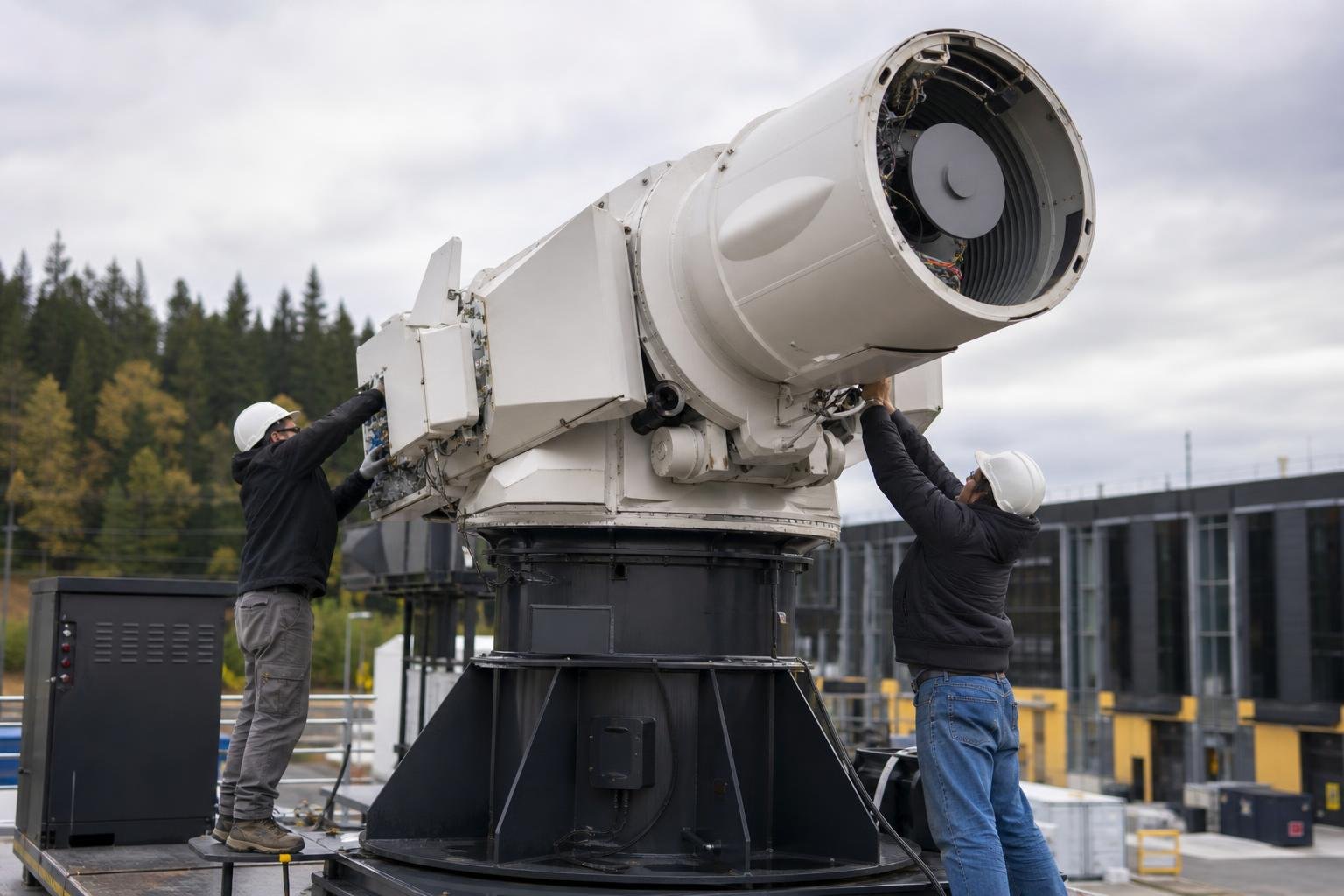
Endeavor Optical Networks, or EON, has emerged from stealth with $10.75 million in seed funding to develop satellites equipped with laser communications systems for moving data between data centers on different continents. The company’s long-term target is 2.4 terabits per second of throughput, with ground testing planned before an on-orbit demonstration satellite targeted for around the end of 2027.[1]
The announcement matters less as a near-term challenge to submarine cable systems than as evidence of a changing infrastructure problem. AI training, inference, replication and distributed cloud operations are increasing the need to move large datasets among geographically separated computing clusters. EON is betting that optical links in orbit could become a selectively useful layer for rapidly provisioned, high-capacity international routes and for resilience when terrestrial or subsea networks are constrained.
By the numbers
- $10.75 million: EON’s announced seed financing.
- 2.4 Tbps: The startup’s eventual stated throughput target.
- Late 2027: EON’s target timeframe for a demonstration satellite.

Why AI changes the inter-data-center network question
Large-scale AI infrastructure is often discussed in terms of accelerators, power generation and data-center construction. The network connecting those facilities is becoming comparably important. Training systems may require data to be staged across regions, model checkpoints to be replicated, and capacity to be balanced among clusters as electricity, cooling and available GPUs vary by location.
Today, long-distance traffic overwhelmingly travels through terrestrial fiber and subsea cable networks. Those systems remain the benchmark on capacity, maturity and cost per bit. They are not easily displaced: modern cable routes connect the world’s major landing points and are supported by decades of investment in repeaters, cable ships, landing stations, metro networks and operational expertise.
But adding a new terrestrial route or a new subsea cable is a slow, capital-intensive process involving rights of way, cable-landing approvals, construction and long procurement cycles. That creates an opening for a system designed not to replace the fiber backbone, but to provide another path when operators need capacity between locations faster than a conventional build can be completed.
EON’s proposed architecture addresses that narrow but potentially valuable problem. Satellites could relay traffic between optical ground stations and across orbital laser links, creating a route that does not depend on a single undersea corridor or terrestrial right of way. For cloud providers, AI labs, network operators and enterprises with unusually expensive downtime, route diversity itself can have material value.
What a laser-relay network would need to do
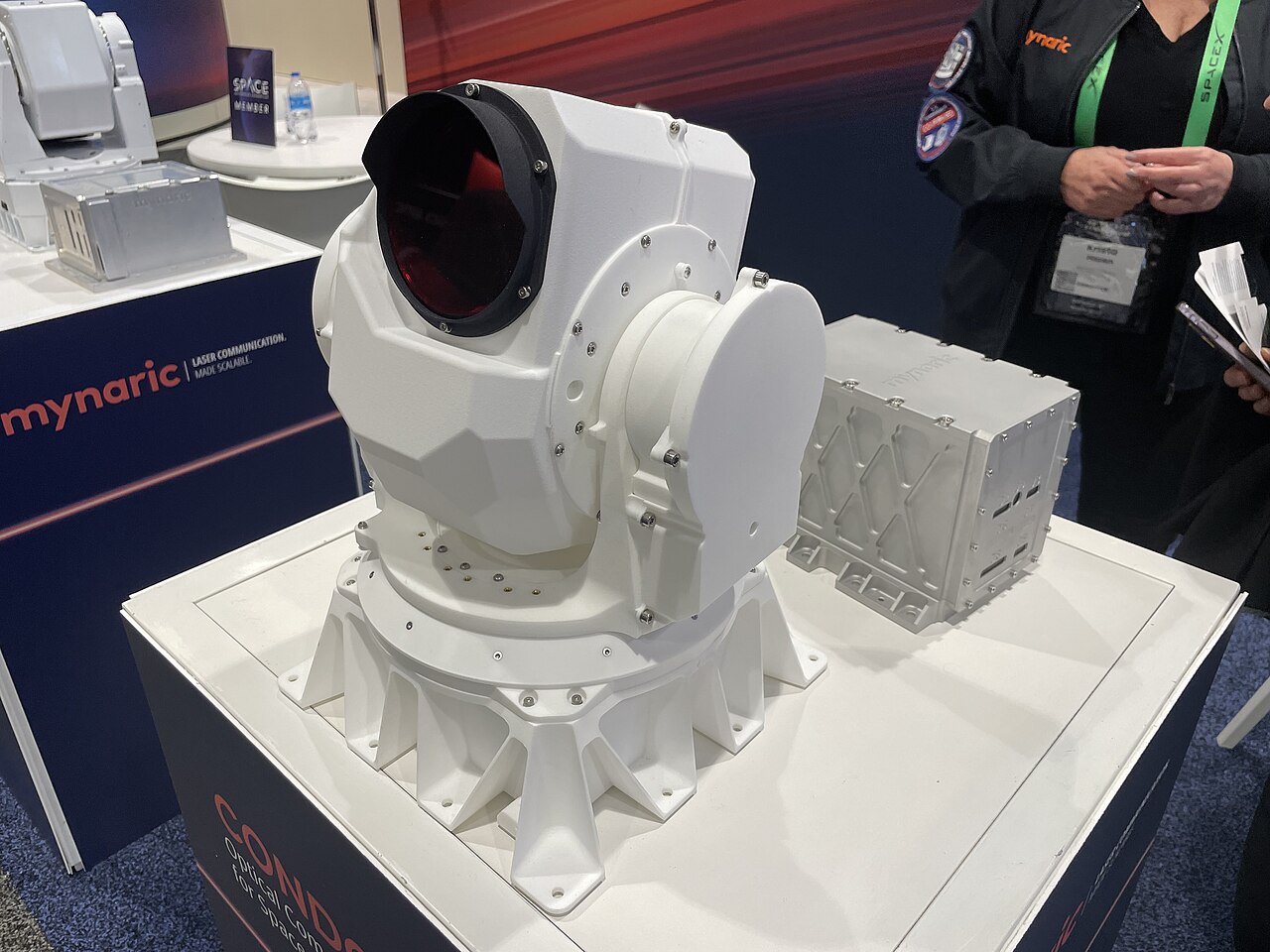
Laser communications, also called free-space optical communications, transmit data by modulating a laser beam rather than sending electrical signals over copper or light through a glass fiber. In an orbital relay network, a ground terminal would point a laser at a satellite. The satellite would then pass the signal to another satellite through an inter-satellite laser link, or downlink it to another ground terminal closer to the destination.
The technical attraction is straightforward: optical systems can carry very large amounts of data using narrow beams and without relying on radio-frequency spectrum in the same way as conventional satellite links. A narrow beam can also reduce interference and make interception more difficult than with broad radio transmissions, although it does not eliminate cybersecurity requirements at the network, terminal and encryption layers.
For EON, the difficult work is not simply putting a laser on a satellite. Each terminal must acquire, point and maintain a lock on another terminal moving at orbital velocity while compensating for vibration, thermal changes and orbital geometry. The beam must remain sufficiently stable to preserve the optical link budget and achieve low error rates. The network must also hand traffic between satellites as they move, manage route selection and integrate with terrestrial optical and Ethernet networks at data-center endpoints.
The stated 2.4 Tbps goal is significant, but the practical meaning will depend on how EON defines it: whether it refers to an individual optical link, a satellite’s aggregate switching capacity, a constellation-wide figure, or delivered capacity after redundancy and network overhead. Those are materially different measures. The company’s ground tests and planned demonstration will need to establish not only a peak data rate, but link availability, switching behavior, error performance and usable end-to-end capacity.[1]
Potential advantages: speed of deployment, route diversity and latency
A space-based network could have three main advantages in specific circumstances. The first is provisioning speed. Once satellites and compatible ground stations are available, a customer may be able to establish a new long-distance route without waiting for a cable to be laid across an ocean or for a new land corridor to be built.
The second is resilience. Subsea cable failures are routine enough to be an operational reality, whether caused by anchors, fishing activity, earthquakes or other damage. Multiple independent paths are already a core feature of serious network design. An orbital route would not eliminate the need for diverse terrestrial and subsea connectivity, but it could add geographic separation from physical cable corridors and landing sites.
The third is latency on selected routes. Light moves faster in vacuum than it does through optical fiber. On a sufficiently long route, especially one that follows an indirect terrestrial or subsea path, a relatively direct orbital path could reduce propagation delay. That advantage is highly route-dependent. Satellite relays add distance, hops and processing, while fiber routes are often already optimized and have enormous capacity. The relevant metric is therefore measured end-to-end latency and availability between real data centers, not a theoretical comparison between light in vacuum and light in glass.
The constraints are as important as the opportunity
Atmospheric conditions are one of the central constraints of optical ground links. Clouds, fog, rain, turbulence and other atmospheric effects can weaken or interrupt a laser connection. A commercially reliable system would likely require multiple geographically separated ground stations, intelligent routing and enough spare capacity to maintain service when weather affects a particular site. That ground network is a major part of the business, not a peripheral installation detail.
Economics are another challenge. Satellites have finite power, thermal-management capacity, pointing precision and useful lives. A high-throughput service also needs ground terminals, network operations, spectrum and regulatory coordination where applicable, launches, replacements and insurance. Subsea cables are expensive to build, but their capacity is shared across huge volumes of traffic and their operating model is well understood. EON will need to demonstrate that its service can command a premium for speed, redundancy, performance or route availability rather than compete solely on the lowest cost per transmitted bit.
Constellation scale will determine whether the company can offer consistently useful routes. A single demonstration satellite can validate hardware and portions of the communications stack, but it cannot establish persistent global coverage or demonstrate the operational handoffs required for a broad service. The late-2027 mission is therefore an important technical milestone, not proof that a commercial data-center backbone is ready.[1]
There is also a fundamental market-design question. AI operators may need burst capacity and geographically diverse routes, but their largest sustained traffic flows are likely to remain on fiber because of its scale and economics. The strongest early use case for EON may be a high-value overlay: connecting a limited number of major facilities, supporting disaster recovery, accelerating capacity activation on underserved routes, or providing a backup path for workloads where interruption is more expensive than premium network transport.
A high-risk infrastructure bet with a defined test path
EON’s seed round gives it capital to advance from concept toward the ground tests and satellite demonstration described in its launch announcement.[1] The company’s progress should be judged against concrete engineering milestones: stable optical links, measured throughput, successful acquisition and tracking, weather-tolerant ground operations, network handoffs, and credible plans for constellation deployment and customer terminals.
The broader implication is that AI is making network topology a strategic design choice again. For years, computing capacity could often be placed where real estate, electricity and fiber were available. AI clusters increasingly force operators to think about how separate pools of compute act as one system. That does not make orbital networking inevitable. It does make a new class of network architecture worth testing, particularly where time to deploy and physical-route diversity carry more value than commodity bandwidth pricing.
Editor’s Take
I see the most credible version of EON’s business as premium network infrastructure, not a wholesale replacement for ocean fiber. A network operator will pay attention if an orbital route can be activated quickly, avoids a congested or fragile corridor, and delivers predictable performance between a few strategically important data centers. That is a meaningful product even if it serves only a fraction of global traffic.
The 2.4 Tbps target is attention-grabbing, but the next numbers that matter are availability, delivered capacity during adverse weather, end-to-end latency, and the cost of deploying enough optical ground stations and satellites to make the service dependable. The 2027 demonstration should be treated as a hardware and operations test, not as evidence that the economics have been solved. If EON can prove repeatable optical links and build a clear path from one satellite to a resilient network, it will have earned serious attention from AI infrastructure buyers.