
Mistral has released the weights for Mistral Large 4, a trillion-parameter model aimed at cybersecurity work and agentic coding. The release is significant less because it adds another high-scoring foundation model to the market than because it gives organizations a path to run a frontier-scale system within infrastructure they control.
That deployment option matters to governments, critical-infrastructure operators and enterprises that cannot freely transmit proprietary source code, vulnerability reports, incident telemetry or classified information to a third-party AI service. Mistral is framing the model around “sovereign” cyber defense and continuity of access: customers can obtain the model weights and operate the system inside their own security boundary rather than depend entirely on an external API. [1]
By the numbers
- 1 trillion parameters: Mistral Large 4’s reported model scale.
- 47% fewer tokens per task: Mistral’s comparison with GLM-5.3.
- No. 1: Mistral’s reported position among open models on Artificial Analysis’s Coding Agent Index.
What open weights change for sensitive environments
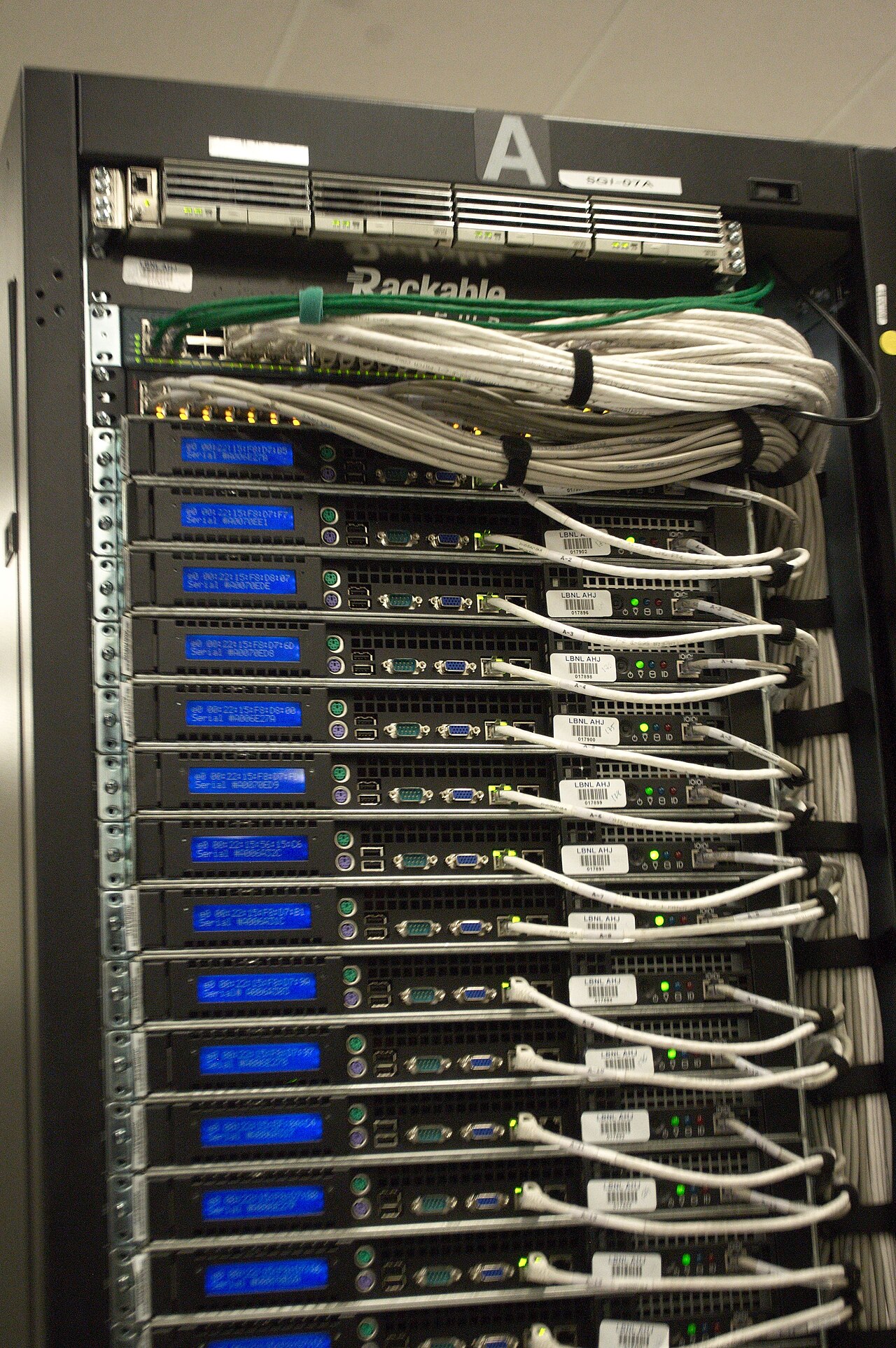
Open weights do not mean a model is simple or inexpensive to operate. A trillion-parameter system still requires substantial computing capacity, specialized infrastructure and experienced teams to deploy, tune and monitor it. But weights availability changes the control model.
An organization can host the model in its own data center, a restricted cloud tenancy or another controlled environment. It can set network egress rules, govern access through its own identity systems, keep prompts and outputs within established logging and retention policies, and decide when to update the model. Those capabilities are particularly relevant where a coding assistant may need to inspect a private codebase, correlate security alerts with internal system documentation, or help analysts work through sensitive incident evidence.
For a public-sector customer, that can reduce reliance on cross-border data transfer or on an external provider’s service availability. For an enterprise, it can make AI-assisted software maintenance and security operations more feasible in highly regulated units that have previously prohibited public AI tools. Mistral has explicitly positioned the release around sovereign cyber defense and continuity of access. [1]
The distinction is practical. An externally hosted coding assistant may offer fast adoption, managed upgrades and broad tooling, but it requires an organization to accept the provider’s data-processing model and operational dependency. A self-hosted model shifts more responsibility to the customer, while potentially offering more direct control over where sensitive inputs, generated code and audit records reside.
Cybersecurity use cases carry dual-use constraints
Cybersecurity is an attractive application for capable coding models because much defensive work is code- and text-intensive. Security teams write detection rules, review patches, triage findings, summarize logs, map software dependencies and investigate whether known flaws affect their environment. A model that can use tools and pursue multi-step coding tasks could accelerate parts of that workflow.
It could, for example, help engineers trace a vulnerable library through a large repository, draft tests for a remediation, explain an unfamiliar service’s authentication flow, or turn analyst notes into a repeatable investigation procedure. In a controlled setting, keeping that context local may be as valuable as the model’s raw benchmark performance.
However, the same capabilities can be misused. Models able to reason over source code, automation scripts and system configurations may also lower the effort required to discover weaknesses or create harmful tooling. Open weights give defenders more deployment autonomy, but they also reduce the degree to which a central API operator can monitor use or apply platform-level controls. Organizations deploying such systems need their own safeguards: role-based access, isolated execution environments, strict tool permissions, output review for high-risk actions and detailed audit trails.
That is especially important for agentic systems. A model that only suggests code creates one category of risk; a system that can call development tools, execute commands or alter tickets and repositories creates another. Enterprises will need to treat the latter as a privileged automation component, not as a conventional chat interface.
Efficiency and benchmark leadership need careful reading
Mistral says Large 4 uses 47% fewer tokens per task than GLM-5.3. If that result holds across representative production workloads, it could matter materially. Token use affects inference cost, latency and the amount of context an agent can consume while completing a task. For coding agents that repeatedly inspect files, run tools and revise their plans, token efficiency can determine whether a workflow is economically viable at scale.
But the figure is a company comparison, not a universal measure of operating cost. Token counts depend on the task set, prompts, tool definitions, agent framework, stopping criteria and the quality threshold used to decide that a task is complete. Fewer tokens are useful only if the model reaches a comparable or better result. Hardware utilization, quantization, context length, inference serving design and licensing terms also affect a customer’s real cost.
Mistral also says Large 4 ranks first among open models on Artificial Analysis’s Coding Agent Index. That is a meaningful signal because agent benchmarks attempt to assess systems on tasks closer to real software work than single-turn code generation. Yet a ranking remains bounded by an evaluator’s methodology, supported tools and test corpus. It is not proof that a model will be best for every enterprise stack, language mix or security workflow. The reported ranking and efficiency comparison should therefore be read as performance claims that warrant reproducible testing, rather than as a complete procurement case. [1]
A sharper challenge to closed-model providers
The release intensifies competition between providers of proprietary hosted models and companies pursuing open-weight or deployable models. Closed services retain advantages in managed infrastructure, rapid model iteration and integrated safety and developer tooling. They can be easier for teams that want results without operating complex AI systems themselves.
Open-weight releases compete on a different axis: control. The strongest demand may come from customers willing to bear operational complexity in exchange for data locality, customization and reduced exposure to a single service provider. A capable model in this category could also support specialized deployments, including versions connected to internal code search, security data lakes and approved development tools.
For Mistral, the cybersecurity focus may help distinguish Large 4 in a crowded market where general-purpose benchmark scores alone are becoming less decisive. The critical buying question is likely to be whether the model performs reliably within an organization’s actual toolchain and governance constraints, not whether it leads a single public index.
The next test is deployment, not release day
The immediate challenge for prospective users is to establish what “inside the security boundary” means in operational terms. Model weights may be locally controlled while telemetry, package downloads, management interfaces or connected agent tools still introduce external dependencies. Security teams will need to evaluate the full deployment path, including supply-chain provenance, access controls, model-serving software, logging and patching procedures.
They will also need to test the model against their own repositories and incidents. Useful evaluations should measure more than task completion: the quality of generated patches, false confidence in security explanations, susceptibility to prompt injection through untrusted code or documents, and the behavior of connected tools under restricted permissions. A model that scores well on a coding-agent benchmark may still require substantial adaptation before it can safely support production incident response.
Even so, the strategic direction is clear. Frontier-scale AI is moving beyond a model in someone else’s cloud and toward an asset that some customers can operate under their own technical, legal and security controls. Mistral’s release does not eliminate the cost or risk of advanced AI deployment. It gives security-conscious organizations a more credible option to manage those trade-offs themselves.
Editor’s Take
I think the important product here is not merely a trillion-parameter model; it is the ability to put a high-capability coding and cyber assistant next to the systems it must understand. Security teams cannot get much value from an AI that is barred from seeing the repository, vulnerability history and operational context that define the problem. Local or tightly controlled deployment can make that use case practical.
The 47% token claim and the No. 1 benchmark position are worth watching, but neither should decide a purchase on its own. I would want to see a deployment run against a real private repository with read-only tools first, followed by measured patch-review and triage workflows. The winners will be the vendors and customers that pair strong models with disciplined permissions, evaluation and auditability—not those that treat an agent benchmark as a security architecture.