
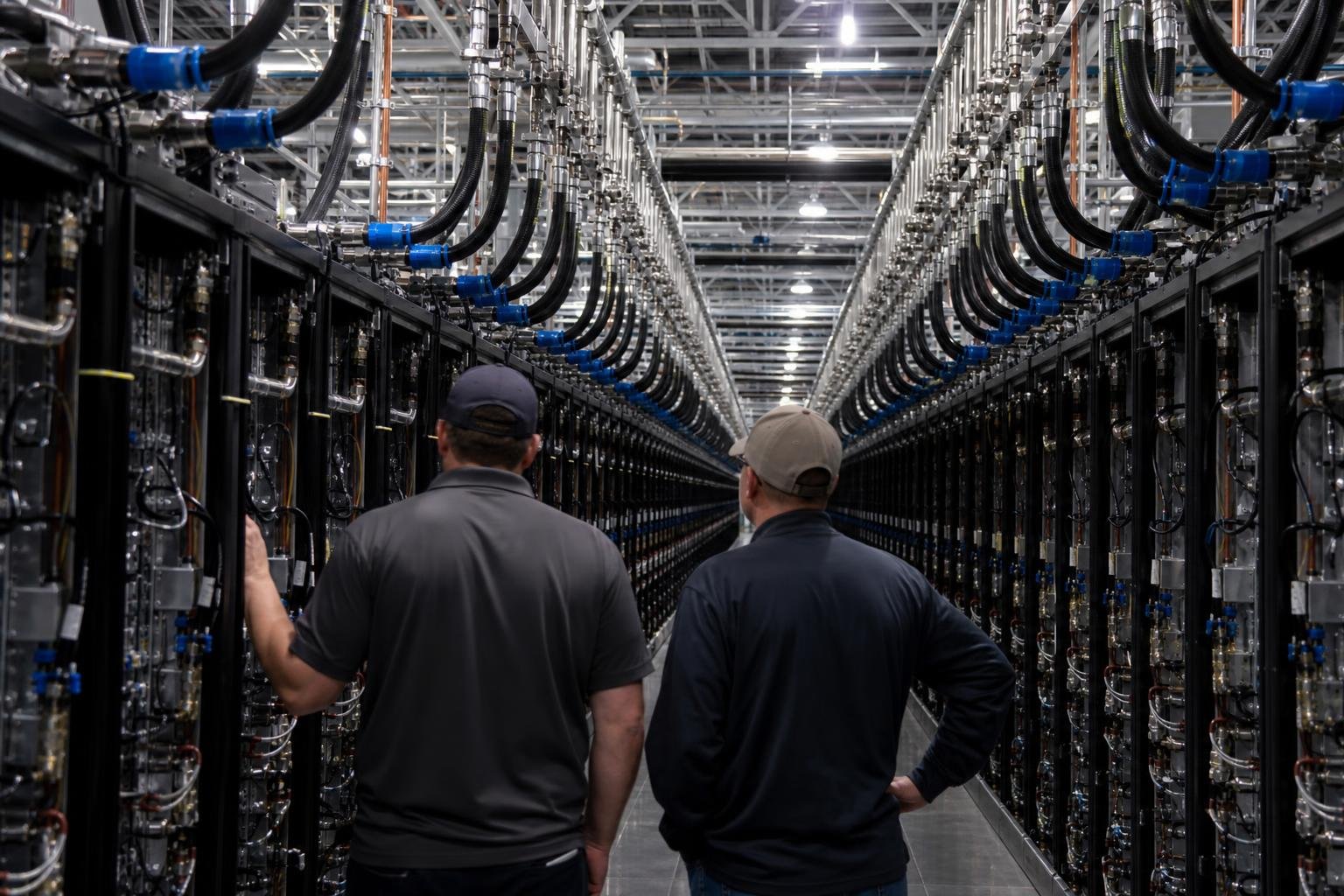
Anthropic has struck an agreement with SpaceX to use the full compute capacity of Colossus 1, the large AI data center in Memphis, Tennessee. Announced May 6 at Anthropic’s Code with Claude developer event in San Francisco, the arrangement is expected to add more than 300 megawatts of capacity and more than 220,000 NVIDIA GPUs within a month.[1]
The deal is significant less for a newly disclosed model benchmark than for what it says about the AI industry’s immediate constraint: access to power, accelerators and deployable data-center infrastructure. Anthropic is using the capacity to ease limits and expand availability for Claude Code, the Claude API, and Claude Pro and Max subscribers. For SpaceX, meanwhile, the agreement gives its integrated AI-infrastructure operation a prominent outside customer beyond Elon Musk’s own xAI work.[1][2]
A full-facility compute arrangement
Anthropic product head Ami Vora described the agreement as a partnership under which Anthropic would use the full capacity of Colossus 1.[3] The companies have not publicly released the deal’s price, duration, minimum-spend commitment, service-level terms, or details on whether Anthropic has legally exclusive control of the site for a specified period.
That lack of commercial detail matters. “Full capacity” describes the operational scope presented by Anthropic, but it does not by itself establish the ownership structure, a permanent allocation, or the exact workloads the company will run at the Memphis facility.
Colossus was originally built for xAI, Musk’s AI operation. By the time of the announcement, xAI-related AI infrastructure had been incorporated into the broader SpaceX organization. Reuters reported that Musk approved the lease after meeting Anthropic executives and becoming satisfied with the company’s approach to making Claude “good for humanity,” a notable shift after his earlier public criticism of Anthropic and its models.[2]
The customer relationship is strategically useful for both parties. Anthropic gains near-term capacity at a scale that would be difficult to build from scratch in a month. SpaceX gains a marquee external tenant for infrastructure that had been closely associated with Musk’s internal AI ambitions, while broadening the company’s case as a technology and infrastructure business alongside launch services and Starlink.[2]
What 220,000 GPUs and 300 MW actually mean
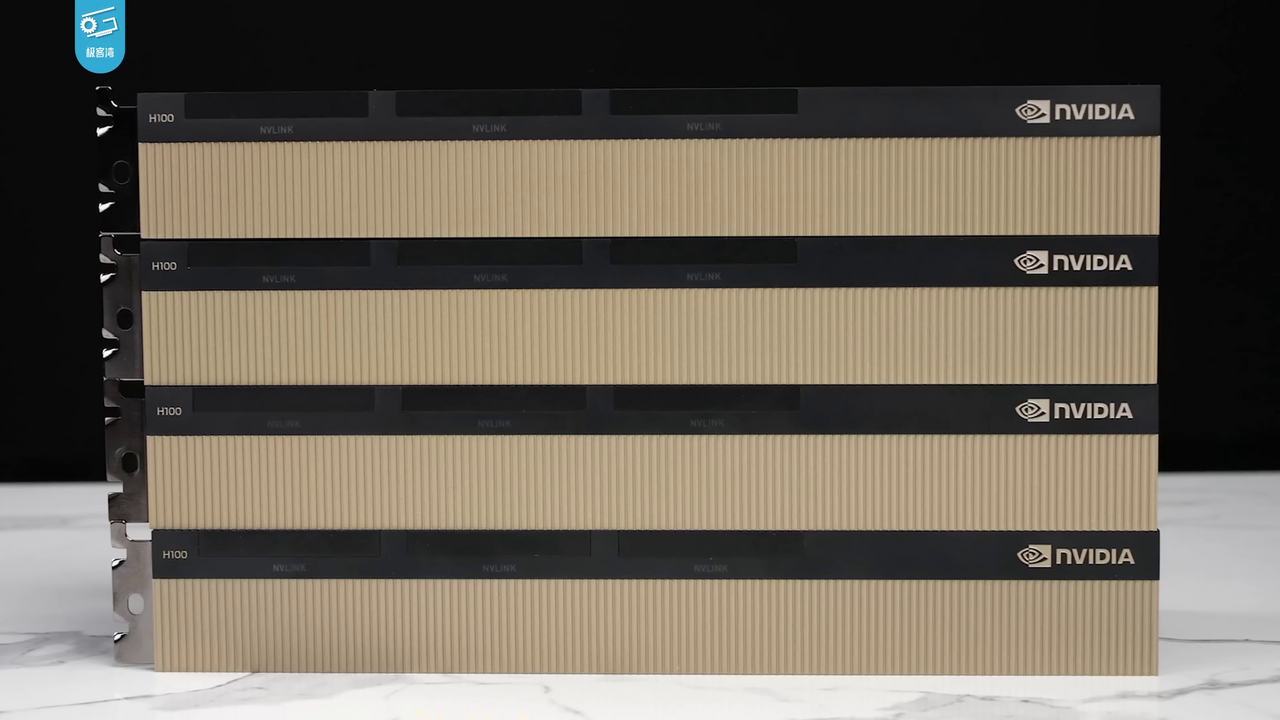
The stated figures are enormous, but they should be interpreted carefully. More than 220,000 NVIDIA GPUs and more than 300 MW describe available installed capacity, not a published measure of training performance, model quality, or floating-point operations per second. A data center’s usable AI output depends on the accelerator mix, networking, storage, power-delivery design, cooling, software stack and the efficiency of the jobs assigned to it.[1]
Coverage following the announcement reported that the expanded installation includes NVIDIA H100, H200 and GB200-class accelerators, though Anthropic did not provide an official chip-by-chip inventory.[4] That distinction is important because those generations have materially different memory, networking and performance characteristics.
NVIDIA previously described the original 100,000-GPU Colossus cluster as using its Spectrum-X Ethernet platform, including Spectrum switches and BlueField-3 SuperNICs, to support remote direct memory access networking for distributed AI workloads.[5] Supermicro has described direct-to-chip liquid cooling, coolant-distribution manifolds and cooling units used in the facility’s high-density GPU environment.[6]
Those earlier disclosures provide useful context, but they are not a complete architectural specification for the larger May 2026 installation. At this scale, moving model parameters and training data between accelerators can be as consequential as the chips themselves. Likewise, supplying hundreds of megawatts reliably and rejecting the resulting heat are core operating challenges rather than background facilities concerns.
Immediate effect: higher Claude service limits
Anthropic tied the SpaceX capacity directly to customer-facing changes. Effective May 6, the company doubled Claude Code’s five-hour rate limits for Pro, Max, Team and seat-based Enterprise plans. It also removed peak-hour limit reductions for Pro and Max users and significantly increased API rate limits for Claude Opus models.[1]
Claude Code head Boris Cherny presented the developer-product updates at the San Francisco event, where the company framed added infrastructure as a response to rising usage of coding agents and developer tools.[2] The practical implication is that Anthropic is prioritizing service availability and throughput for paid users and API customers rather than treating Colossus solely as a long-horizon training cluster.
Anthropic has not disclosed how it will divide the facility’s capacity among pretraining, post-training, fine-tuning and inference. That allocation could change over time. Training frontier models requires long, tightly coordinated runs, while serving interactive products demands low latency, robust scheduling and enough spare capacity to absorb demand spikes. The same physical infrastructure can support both categories, but the tradeoffs are operationally meaningful.
Part of a deliberately diversified infrastructure strategy
The Colossus agreement is one component of a much broader buildout. Anthropic has previously announced up to 5 GW of capacity with Amazon, with nearly 1 GW expected by the end of 2026; a 5-GW agreement with Google and Broadcom beginning to come online in 2027; a Microsoft-NVIDIA partnership involving $30 billion of Azure capacity; and a stated $50 billion investment in U.S. AI infrastructure with Fluidstack.[1]
Rather than relying on one cloud provider or processor family, Anthropic says it runs Claude across AWS Trainium, Google TPUs and NVIDIA GPUs.[1] The SpaceX deal extends that multi-provider strategy while adding access to an already-built, high-density NVIDIA deployment.
That diversity can reduce exposure to a single supplier’s hardware roadmap, power constraints or deployment delays. It also adds complexity. Models, compilers, distributed-training systems and inference services must work efficiently across different accelerator architectures and networking environments. For an AI company operating at Anthropic’s scale, infrastructure flexibility is now a product and business requirement, not simply a procurement preference.
Orbital AI remains an exploration, not a deployment
Anthropic also said it had expressed interest in working with SpaceX on multiple gigawatts of orbital AI-compute capacity.[1] As of May 14, that is an expression of interest, not an announced construction contract, funded program, launch schedule or operating space-based data center.
The idea has strategic appeal: orbital systems could eventually draw continuous solar power above the atmosphere and potentially reduce dependence on constrained terrestrial grids. But the engineering and economics remain highly uncertain. A 2026 Government Accountability Office assessment said large orbital data centers designed for AI training would require substantial additional development, including solar arrays larger than any launched and assembled in space as of April 2026. It also identified unresolved questions around radiation, communications, collision risk and hardware reliability.[7]
AI training poses particularly difficult systems problems in orbit. Frontier workloads rely on high-bandwidth, low-latency communication among large numbers of accelerators. Splitting computation across satellites risks turning inter-satellite links into a bottleneck. Heat removal is also fundamentally different in space, where systems cannot use convection and must radiate heat away. Launch mass, radiation-tolerant hardware, maintenance, replacement and the economics of deploying large radiator and solar-array systems remain open challenges.[7]
For now, the concrete development is terrestrial: Anthropic has obtained a major new source of NVIDIA-based compute in Memphis and is using it to loosen product constraints. The orbital discussions point to the industry’s search for power at an unprecedented scale, but they should not be mistaken for a deployed AI-in-space program.
Editor’s Take
This is a useful reminder that the AI bottleneck is no longer just model research; it is energized, cooled, networked hardware that can be put to work now. Anthropic’s immediate decision to raise Claude Code and API limits is the practical signal here. Compute capacity matters most when it translates into fewer throttles, more reliable agent runs and enough inference headroom for developers to build against a service with confidence.
I would watch the operating details rather than the headline GPU count. A 220,000-GPU installation can be extraordinarily valuable, but its real output depends on accelerator mix, interconnect performance, storage, cooling reliability and how much of the cluster is allocated to latency-sensitive serving versus long training jobs. The larger strategic story is Anthropic’s willingness to run across NVIDIA, TPUs and Trainium: that is difficult engineering, but it is also smart supply-chain insurance.
Orbital compute is the portion where excitement currently outruns execution. Solar availability is appealing, but high-bandwidth distributed training, thermal radiation, launch mass and hardware replacement make terrestrial capacity the only near-term business reality. Memphis compute that improves Claude availability this quarter is consequential; multi-gigawatt AI platforms in orbit remain a research and infrastructure thesis.
References
- Anthropic – https://www.anthropic.com/news/higher-limits-spacex
- Reuters via Investing.com – https://www.investing.com/news/stock-market-news/anthropic-unveils-dreaming-feature-to-help-its-ai-agents-selfimprove-4664442
- Axios – https://www.axios.com/2026/05/06/anthropic-spacex-elon-musk-compute
- Tom’s Hardware – https://www.tomshardware.com/tech-industry/artificial-intelligence/musks-spacex-has-rented-out-access-to-its-supercomputers-220-000-nvidia-gpus-and-300-megawatts-of-ai-compute-power-to-rival-anthropic-musk-says-no-one-set-off-my-evil-detector-antrhropic-also-interested-in-orbital-data-centers?utm_source=openai
- NVIDIA Newsroom – https://nvidianews.nvidia.com/news/spectrum-x-ethernet-networking-xai-colossus
- Supermicro – https://www.supermicro.com/en/featured/xai-colossus
- U.S. Government Accountability Office – https://www.gao.gov/products/gao-26-109012



_024.png)
