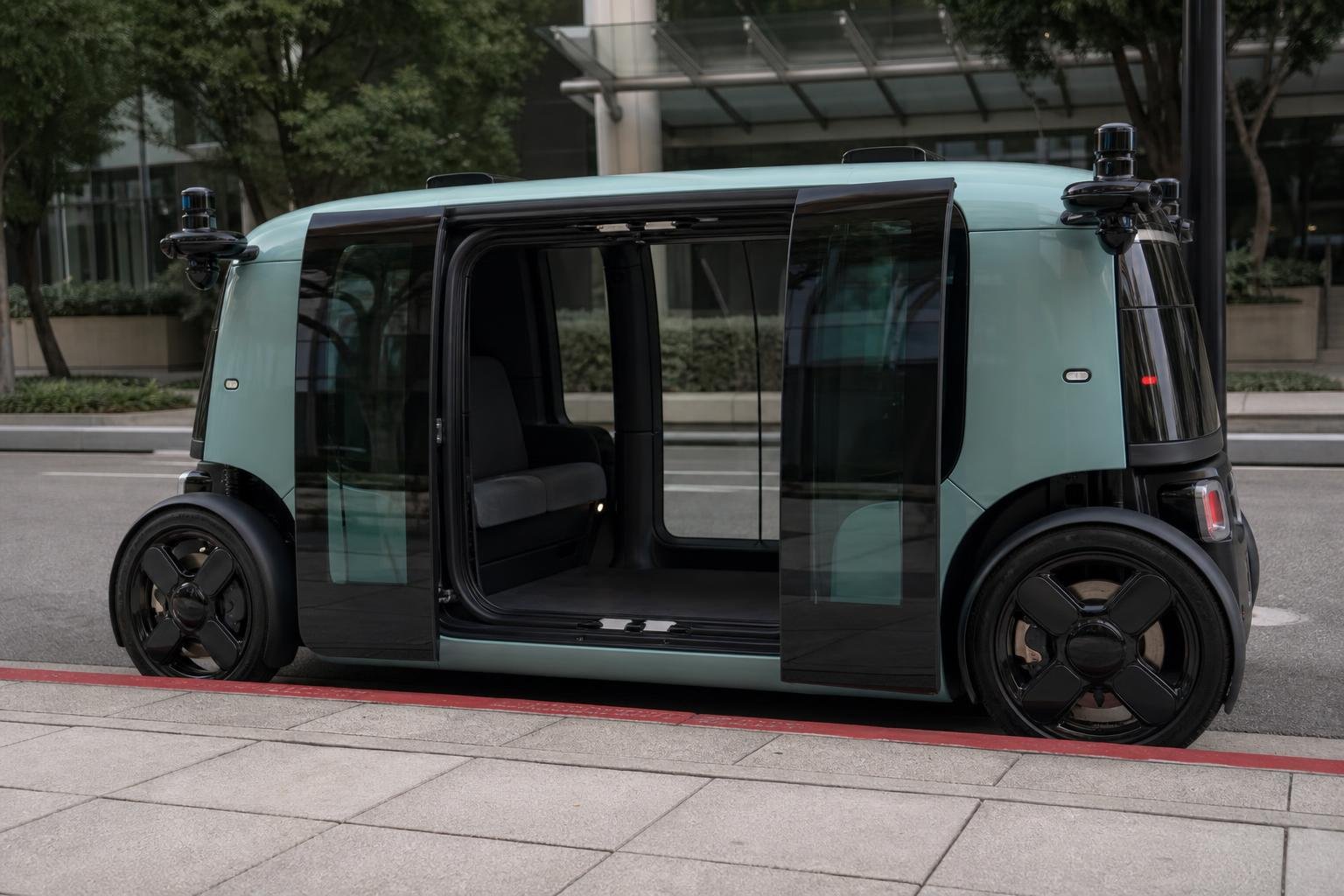
Amazon-owned Zoox has cleared the final federal regulatory hurdle it needed to begin charging for robotaxi trips in its purpose-built autonomous vehicle, according to TechCrunch [1]. The decision is significant because Zoox is not seeking to commercialize a conventional car with an automated-driving system added to it. Its vehicle was designed from the ground up to operate without a steering wheel, pedals, or a human driver.
That makes the development a consequential regulatory test for the robotaxi industry. Waymo has built the largest U.S. paid autonomous ride-hailing operation using modified production vehicles, while Tesla is pursuing a different approach centered on its driver-assistance software and future dedicated vehicles. Zoox now has a path to test whether a compact, bidirectional shuttle designed exclusively for autonomous service can move from controlled demonstrations into a regulated commercial transportation business.
By the numbers
- 4 passengers: Capacity of Zoox’s cabin-oriented robotaxi design.
- 0 conventional driving controls: No steering wheel or pedals for a human driver.
- 2 travel directions: The vehicle is designed to operate bidirectionally, with front-and-rear symmetry rather than a conventional single front end.
- 1 federal clearance: The approval reported by TechCrunch removes the remaining federal barrier to charging riders for service in the vehicle. [1]
What the federal clearance enables
The federal action clears Zoox to proceed toward paid service with a vehicle that does not fit the assumptions embedded in many U.S. motor-vehicle rules. Federal safety standards were largely written for vehicles with a driver’s seat, steering controls, mirrors positioned for a human operator, and other equipment intended to support manual driving. A robotaxi that has none of those features requires regulators to determine how the relevant safety objectives are met through an alternative design.
For Zoox, that is the central value of the clearance. It is not simply permission to run autonomous-driving software on public roads; it addresses the legal status of the vehicle itself for commercial use. The company can now move beyond unpaid employee rides, demonstrations, or other constrained programs and prepare to collect fares, subject to the operational approvals and conditions that still apply where it serves riders. [1]
The distinction matters. A company can be technologically capable of driving autonomously and still be unable to deploy a paid service at scale if its vehicle does not conform to applicable vehicle rules or lacks a valid path to operate under an exemption or other federal authorization. Zoox’s approval reduces that product-level uncertainty for its unconventional vehicle architecture.
Why a clean-sheet robotaxi design matters
Zoox’s vehicle is built around robotaxi use rather than private ownership. Its cabin places four riders facing one another, and its symmetric, bidirectional layout is intended to let the vehicle travel in either direction without turning around. Four-wheel steering supports a small turning footprint, an advantage in dense pickup zones, hotel driveways, and urban streets.
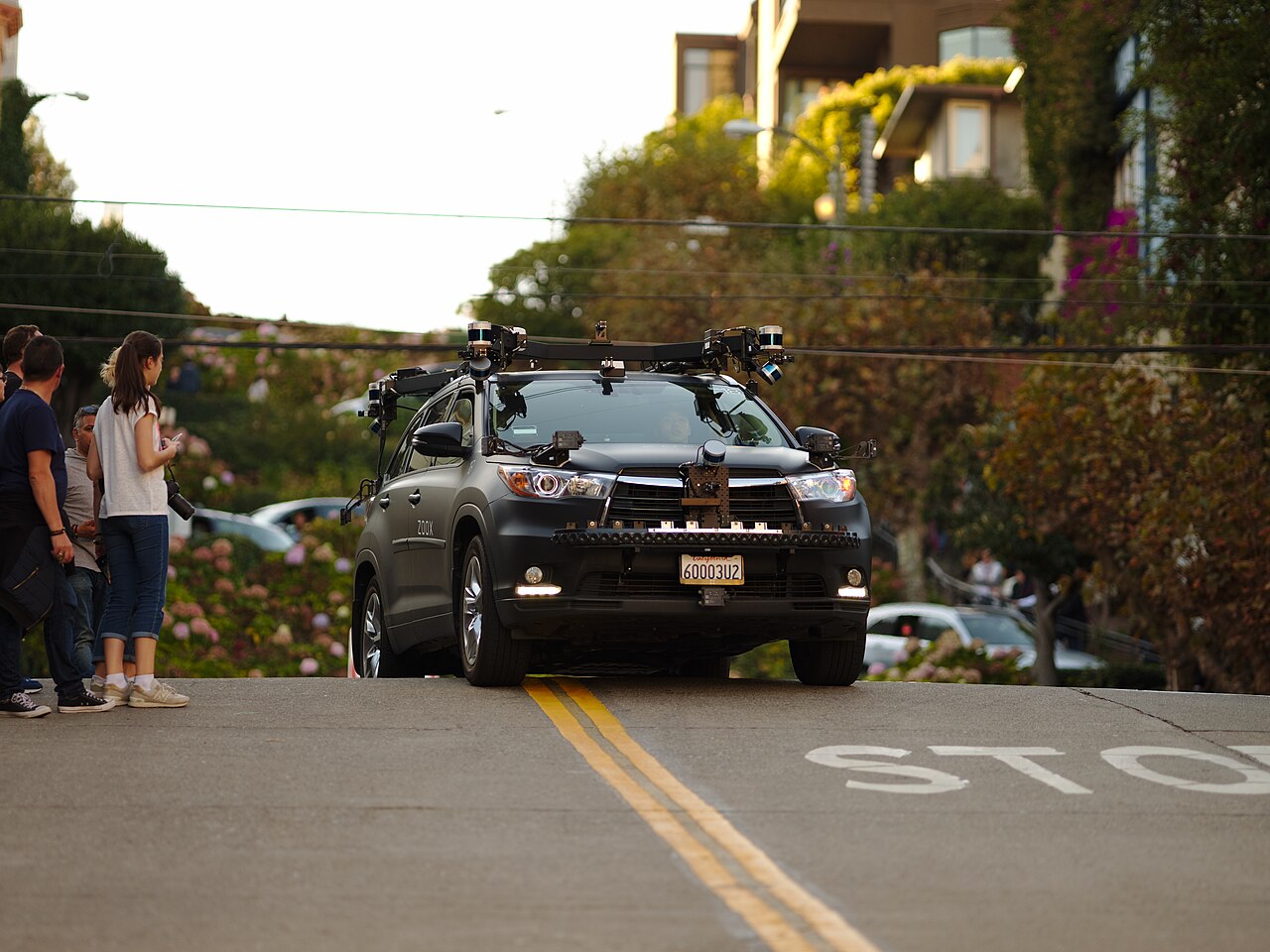
Those choices are harder to make in a retrofitted passenger vehicle. Retrofitting a production SUV gives an autonomous-driving company a mature manufacturing platform, established crashworthiness engineering, and familiar parts and service systems. But it also preserves packaging compromises: a front-facing cabin, a driver’s position that will sit unused, and an exterior shape designed around human operation.
A dedicated design can instead prioritize passenger ingress, cabin space, sensor placement, fleet durability, and low-speed maneuverability. It may also improve the economics of a high-utilization service by removing components needed only for human driving. The trade-off is that every departure from conventional vehicle architecture creates a more demanding validation and regulatory burden. Zoox has had to show that eliminating controls does not eliminate the safety functions those controls historically supported.
The practical question is whether those design advantages translate into better service: easier pickups, less time spent repositioning, more usable interior space, and lower operating costs over a vehicle’s fleet life. Federal clearance permits Zoox to begin answering that question with fare-paying riders rather than only through engineering claims.
Federal approval is not the same as broad public availability
The reported federal milestone does not mean a nationwide Zoox service will appear immediately. Robotaxi deployment remains geographically specific. Companies must obtain and maintain the relevant state and local permissions, comply with insurance and reporting obligations, establish rider-support processes, and operate within the conditions of their validated operational design domain.
That domain includes concrete limits: the streets mapped and validated for service, weather conditions, road configurations, speeds, construction scenarios, emergency-response interactions, pickup and drop-off rules, and procedures for a vehicle that encounters an edge case. A commercial launch also requires fleet operations that are less visible than the vehicle itself: remote assistance, maintenance, cleaning, charging, incident response, customer support, and accessibility accommodations.
Zoox will therefore likely expand in stages rather than flip a national switch. The meaningful indicators will be where paid rides begin, whether ordinary members of the public can request them, the hours and service area offered, how frequently vehicles need remote support, and whether the fleet can sustain reliable operations as coverage grows.
A sharper competitive test for Waymo and Tesla
Zoox enters a market in which the leading competitors are making fundamentally different bets. Waymo has pursued commercial expansion with autonomous systems deployed in adapted production vehicles, an approach that has enabled it to build operating experience while using vehicles with conventional controls. Zoox is betting that a purpose-built vehicle will ultimately be the better robotaxi product once regulation permits it.
Tesla’s position is different again. Its autonomous ambitions are tied to a vast installed base of consumer vehicles, while its future robotaxi strategy has included the prospect of dedicated vehicles. Zoox’s clearance gives the industry a nearer-term example of the regulatory work required when a company removes the human driver entirely from the vehicle design.
Amazon’s ownership gives Zoox unusually deep financial backing and experience managing large physical networks. That does not solve the core challenge of autonomous driving, but it can matter in the unglamorous parts of commercial deployment: fleet logistics, maintenance systems, customer operations, and the willingness to build service slowly while costs remain high.
Safety evidence remains the industry’s unresolved issue
The approval is an important regulatory decision, but it should not be treated as a simple, universal verdict on robotaxi safety. The Insurance Institute for Highway Safety has warned that the public lacks consistent data for comparing autonomous-vehicle safety. In particular, companies do not uniformly disclose exposure data such as miles driven, and the definition of a reportable incident can be unclear. [2]
That makes raw incident counts a weak measure. A company that reports a large number of minor contacts or unusual events may be disclosing more completely than a rival, not necessarily operating less safely. Conversely, without enough information about autonomous miles, operating environments, and the severity of crashes, analysts cannot reliably calculate and compare crash rates.
For Zoox, the next phase should bring pressure for more useful operational disclosure. Meaningful reporting would separate autonomous from manually driven miles where relevant, identify the conditions under which service operates, distinguish injuries and property damage from minor contacts, and explain whether a remote operator or on-site human intervention was needed. Those details matter more than promotional ride totals.
The regulator’s decision and a company’s internal safety case are necessary foundations, but repeatable public evidence is what will determine whether steering-wheel-free robotaxis earn durable trust. The strongest result for Zoox would be not merely a successful launch, but transparent evidence that its dedicated platform can provide safe, dependable trips at commercially useful utilization.
What comes next
Zoox’s immediate task is execution: convert federal clearance into a tightly managed paid launch, then demonstrate that the service can expand without losing reliability or creating excessive operational overhead. Early markets will be especially important because they will reveal how the vehicle handles rider behavior, curb access, complex urban traffic, and the constant disruptions of real streets.
For regulators, the case may help establish a more practical precedent for vehicles designed without manual controls. If Zoox operates successfully, other developers could gain a clearer picture of the evidence and vehicle-design features needed to enter commercial service. If problems emerge, the same launch will reinforce arguments for more prescriptive rules and stronger reporting requirements.
The larger industry shift is from proving that a vehicle can drive itself on a route to proving that an autonomous fleet can function as transportation infrastructure. Zoox has cleared an important gate in that transition. It has not cleared the harder commercial test yet.
Editor’s Take
I see this as a more meaningful milestone than another geofenced robotaxi pilot because the vehicle itself is now part of the commercial proposition. Removing the steering wheel is not a styling exercise: it forces the company to make the cabin, redundancy, remote-support model, maintenance process, and regulatory case work as one system. If Zoox can operate this design reliably, the result could be a better shared-ride vehicle than a converted SUV.
The next evidence I would watch is mundane but decisive: public access, service hours, pickup reliability, intervention frequency, and transparent incident data tied to miles and operating conditions. Federal clearance is real progress, but it is not proof of scalable economics or superior safety. The hype outruns the facts whenever a regulatory approval is portrayed as a nationwide launch; the facts will arrive one operational city block at a time.