Carnegie Mellon University, Argonne National Laboratory and Lawrence Livermore National Laboratory have received Genesis Mission funding for a project intended to connect autonomous scientific laboratories through AI agents. The effort combines agent software, digital twins and laboratory robotics so that experiments at separate facilities can be planned, executed and assessed as parts of a coordinated workflow rather than as isolated automated tasks. [1]
The important technical ambition is not simply to give researchers another generative-AI interface. It is to close the loop between a machine-generated hypothesis and reproducible physical evidence across geographically distributed instruments. That requires far more than a capable model: laboratories must exchange usable data, represent the state of real equipment accurately, run robotic procedures reliably, and preserve enough provenance for scientists to validate every result.
By the numbers
- 3: core institutions in the announced collaboration.
- 2: participating U.S. national laboratories: Argonne and Lawrence Livermore.
- 1: participating university: Carnegie Mellon.
From autonomous instruments to a coordinated experimental system
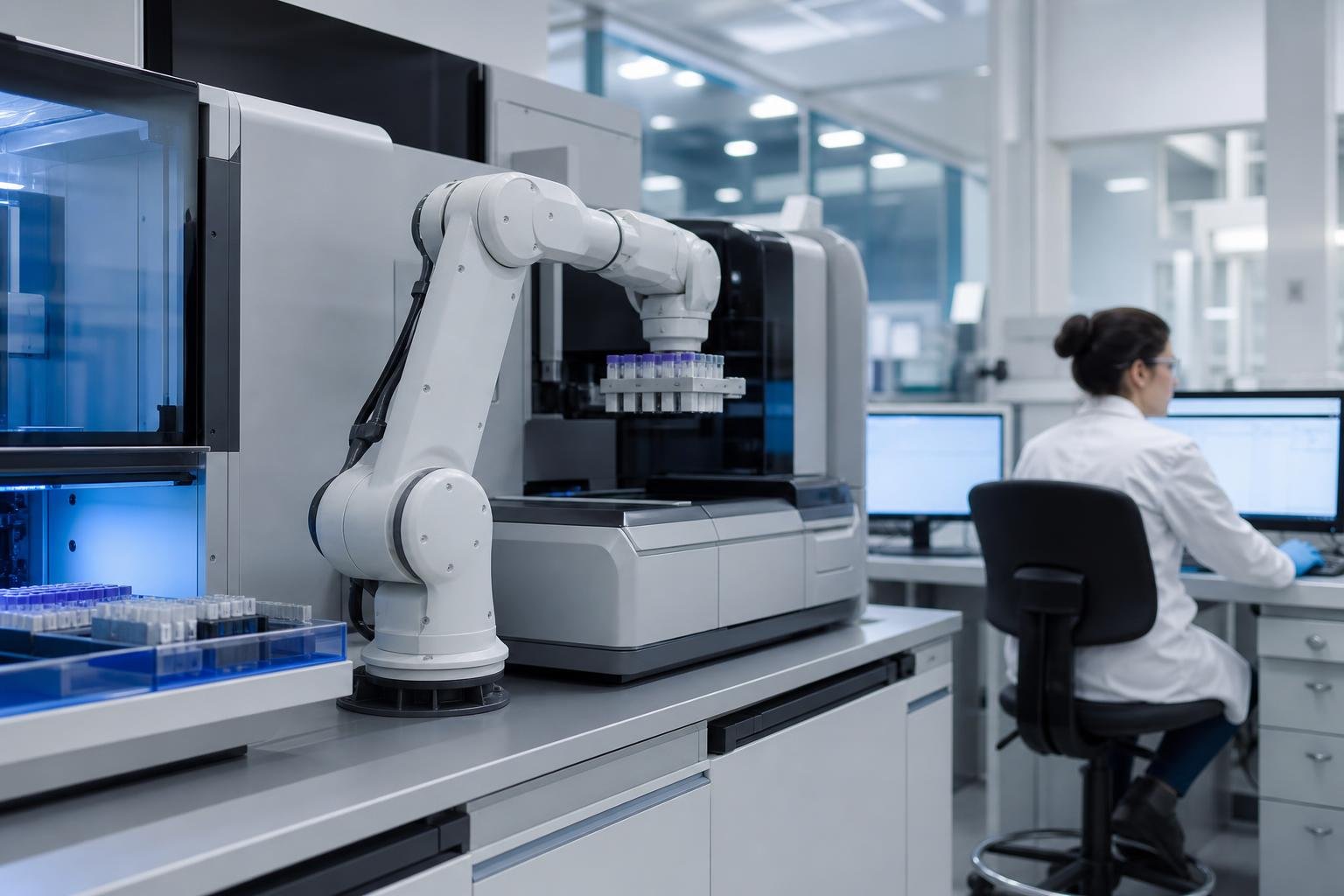
Automation is already common in individual laboratories. Liquid handlers dispense samples, robotic arms move plates or containers, and instrument-control software collects measurements. In a well-designed autonomous laboratory, software can also choose the next experiment from a bounded set of options. The CMU-led project addresses a harder systems problem: how to make separate laboratories contribute to a single scientific campaign.
That distinction matters when a research question crosses capabilities that no one facility has in full. One laboratory may prepare materials or biological samples, another may perform specialized characterization, and a third may run high-performance simulations or analyze the resulting measurements. A coordinating agent would need to translate a scientific objective into a sequence of requests, determine where each task should run, account for available instruments and materials, and revise the plan when observed results contradict predictions.
CMU describes the proposed architecture as a combination of AI agents, digital twins and laboratory robotics. In practical terms, the agents would act as workflow coordinators: consuming data, proposing experiments, dispatching work and deciding what information is needed next. Digital twins would provide machine-readable models of laboratory resources and processes. Robotics and instruments would provide the physical execution layer. [1]
The resulting system should not be confused with a fully unsupervised scientific enterprise. Its near-term value is more likely to be better experimental throughput, fewer handoffs between facilities, and faster iteration on tightly defined research problems. Scientists still need to define objectives, establish acceptable operating boundaries and decide when an apparent finding is sufficiently robust to support a scientific claim.
The technical foundations that have to work
Shared data and experiment semantics
Distributed laboratory coordination begins with a deceptively basic requirement: each participant must be able to interpret the others’ data. A measurement is not useful merely because it is stored in a file or exposed through an API. Its meaning depends on sample identity, composition, preparation history, instrument configuration, calibration, environmental conditions, software version, units, uncertainty and quality-control status.
For AI agents to hand work from one laboratory to another, these details must be represented in structured, interoperable forms. A request such as “measure stability” is too vague for automation. A usable request must specify the sample, protocol, apparatus constraints, measurement range, acceptance criteria and required metadata. The same applies to results: an agent needs to distinguish a valid negative result from an instrument fault, an incomplete run or a measurement made under incompatible conditions.
This makes data standards and provenance central rather than administrative. Without them, cross-lab AI can create the appearance of a continuous workflow while quietly combining incomparable datasets. The project’s success will depend in part on whether its interfaces can preserve scientific context across organizations, not just transmit commands.
Digital twins must model operational reality
A digital twin is often described loosely as a virtual copy of a physical system. For autonomous labs, the useful version is more demanding. It needs to represent what equipment can do, what it is currently doing, what materials are available, which procedures are validated, and what constraints could make a proposed run unsafe or invalid.
A lab twin might include an instrument’s operating envelope, maintenance state, queued experiments, consumable inventory, known sources of error and robotic work-cell layout. It may also encode procedural dependencies: a sample must be cured before characterization, a container type is compatible with one robot but not another, or a calibration must precede a high-precision measurement.
The gap between a digital model and physical reality is a major risk. Instruments drift, consumables run out, robotic grippers misplace objects and sample properties vary. A coordinating system therefore needs frequent state updates and explicit uncertainty handling. A stale twin can make an apparently rational AI plan operationally impossible.
Robotics needs reliable, auditable execution
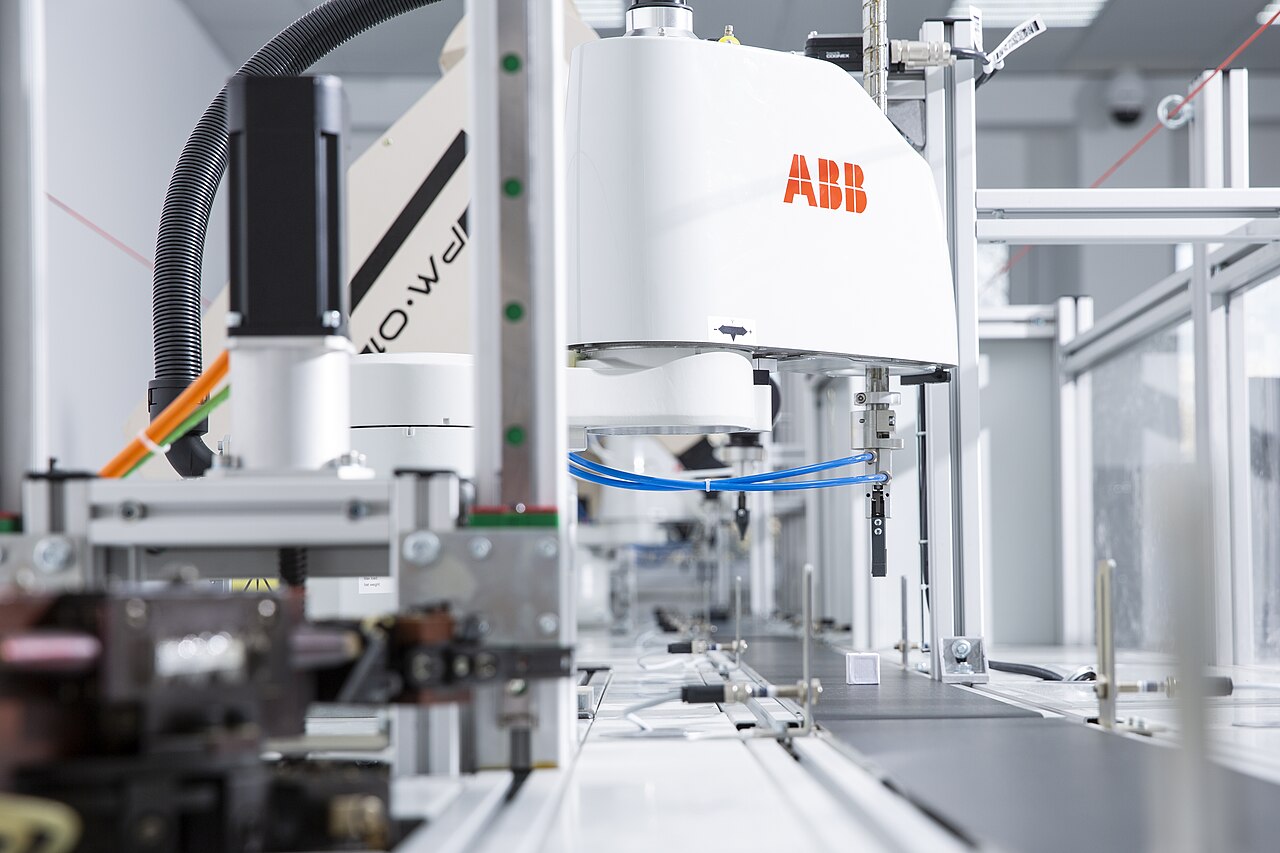
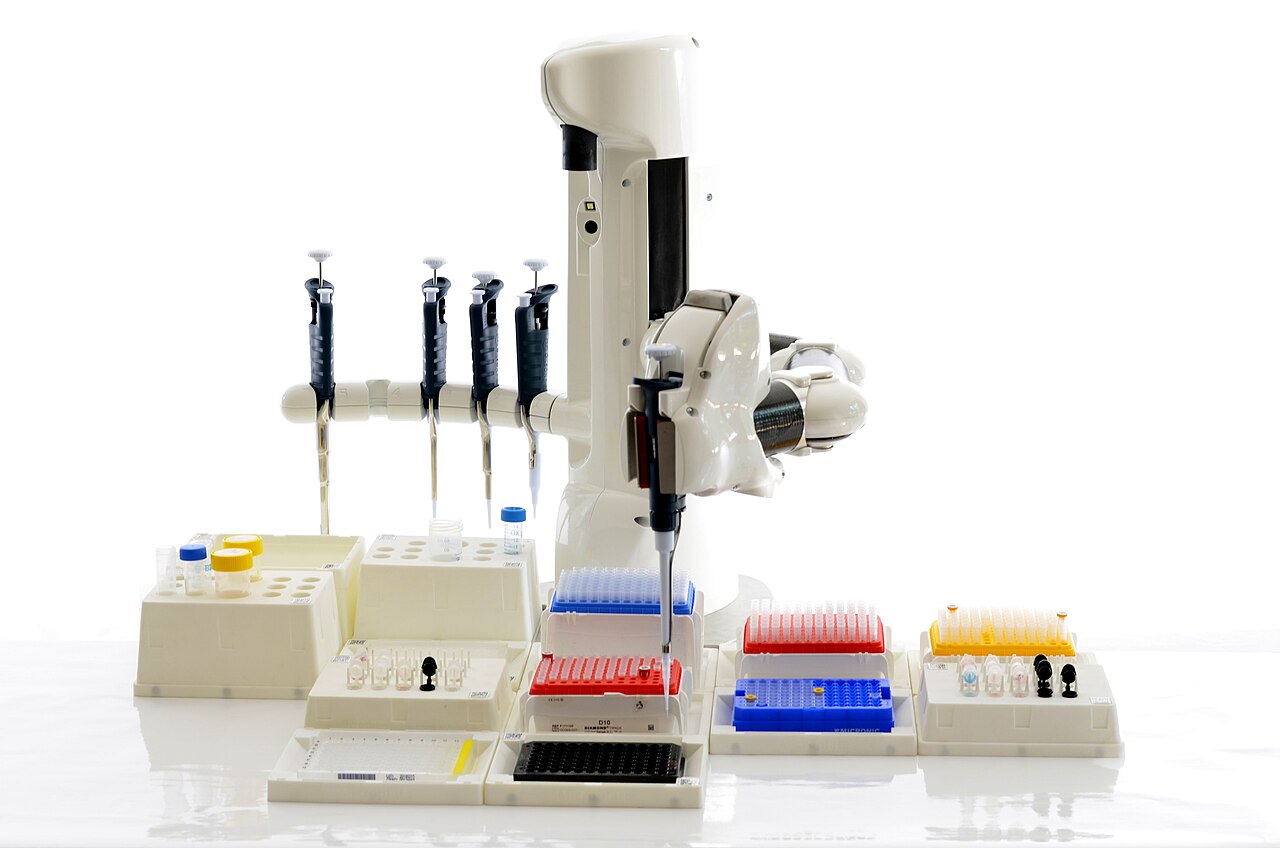
Laboratory robotics is the physical bottleneck in any closed-loop system. AI can propose hundreds of candidate experiments in seconds, but each candidate must be translated into executable protocols, scheduled around real equipment and completed without contaminating or damaging samples. The practical challenge is not only robotic dexterity; it is dependable integration among instruments, sample tracking, safety systems and laboratory information management software.
Reliable execution also demands recovery paths. If a run fails midway, the system must record where it failed, identify whether the sample remains usable, and prevent invalid partial data from being treated as a completed experiment. In a multi-lab setting, those exceptions need to be visible to every downstream participant. Otherwise, a later lab can make decisions based on assumptions that were invalidated upstream.
Validation and human oversight determine scientific value
The most consequential test of this project will be whether it improves the quality of experimental evidence, not merely the number of automated runs. AI agents can be useful at searching a large design space, prioritizing experiments or recognizing patterns in heterogeneous results. They can also amplify biases in training data, select a narrow region of an experimental space, or generate a plausible but scientifically weak rationale for a proposed experiment.
For that reason, a credible autonomous-lab workflow needs layered validation. At the experimental level, it should include controls, calibration checks, repeated measurements and uncertainty estimates. At the software level, it needs permission boundaries, simulation or dry-run stages, versioned protocols and logs that connect every action to the agent decision and source data that produced it. At the scientific level, researchers need the ability to inspect why a particular experiment was selected and to override the system before it consumes scarce materials or instrument time.
Human oversight is also necessary for governance. Participating facilities may have different safety requirements, access controls, intellectual-property rules and standards for data release. An agent that can schedule work across sites must operate within those policies, including deciding which datasets it may access and which actions require approval. The announcement establishes the collaboration’s direction, but the practical design of these controls will be a defining implementation question. [1]
Why the effort matters to research infrastructure and industry
If the approach works, it could alter how scientific infrastructure is used. Rather than forcing every research group to build a complete automated stack, specialized facilities could expose defined capabilities to a common orchestration layer. That could make expensive instruments more productive and allow experimental campaigns to use expertise and equipment distributed across institutions.
The near-term commercial implications extend beyond AI models. The opportunity spans laboratory information management systems, instrument-control software, robotics integration, scientific data infrastructure, digital-twin platforms, workflow security and validation tooling. Suppliers that can expose well-documented, machine-actionable interfaces may be better positioned than those selling automation as a closed appliance.
There is also a procurement reality. National laboratories and research institutions will require systems that are traceable, secure and interoperable over long equipment lifecycles. A visually persuasive AI demonstration is not enough. The systems likely to gain durable adoption will be those that can document sample custody, reproduce a protocol months later, accommodate instrument upgrades and show exactly how an agent’s recommendation became a physical result.
That may slow deployment compared with consumer AI products, but it is appropriate for scientific workflows. The highest-value outcome is not maximum autonomy. It is a trustworthy experimental network that makes capable researchers faster while retaining the evidence needed to challenge its conclusions.
What to watch next
The announcement does not, in the supplied material, specify an award amount, deployment schedule, target scientific domain or a public benchmark for the system. Those details will be important indicators of progress. A meaningful demonstration would show an agent coordinating a complete multi-site loop: selecting an experiment, verifying it against digital-twin constraints, executing it through robotics, transferring results with full metadata, and using those results to select the next validated experiment.
Observers should also look for evidence that the platform can cope with ordinary laboratory failure modes rather than only idealized demonstrations. Useful measures would include reproducibility across runs and sites, successful detection of bad data, time saved in handoffs, protocol reuse, and the frequency with which researchers must intervene. The broader promise of connected autonomous labs rests on those operational details.
Editor’s Take
I see the most valuable part of this effort as the orchestration layer between real laboratories, not the AI agent itself. Research organizations already own sophisticated instruments and automation, but too much of the workflow between them still moves through email, manually reformatted files and informal judgment. A system that can carry sample context, constraints and provenance from one facility to the next could remove a meaningful source of delay and error.
The hype will outrun the facts if “autonomous” is taken to mean that scientists can stop scrutinizing experiments. They cannot. The practical milestone is narrower and more important: prove that an agent can coordinate a multi-site experimental loop while preserving safety, metadata and reproducibility. If CMU, Argonne and LLNL can show that under real operating conditions, the work could become a useful template for how shared scientific infrastructure is run.