
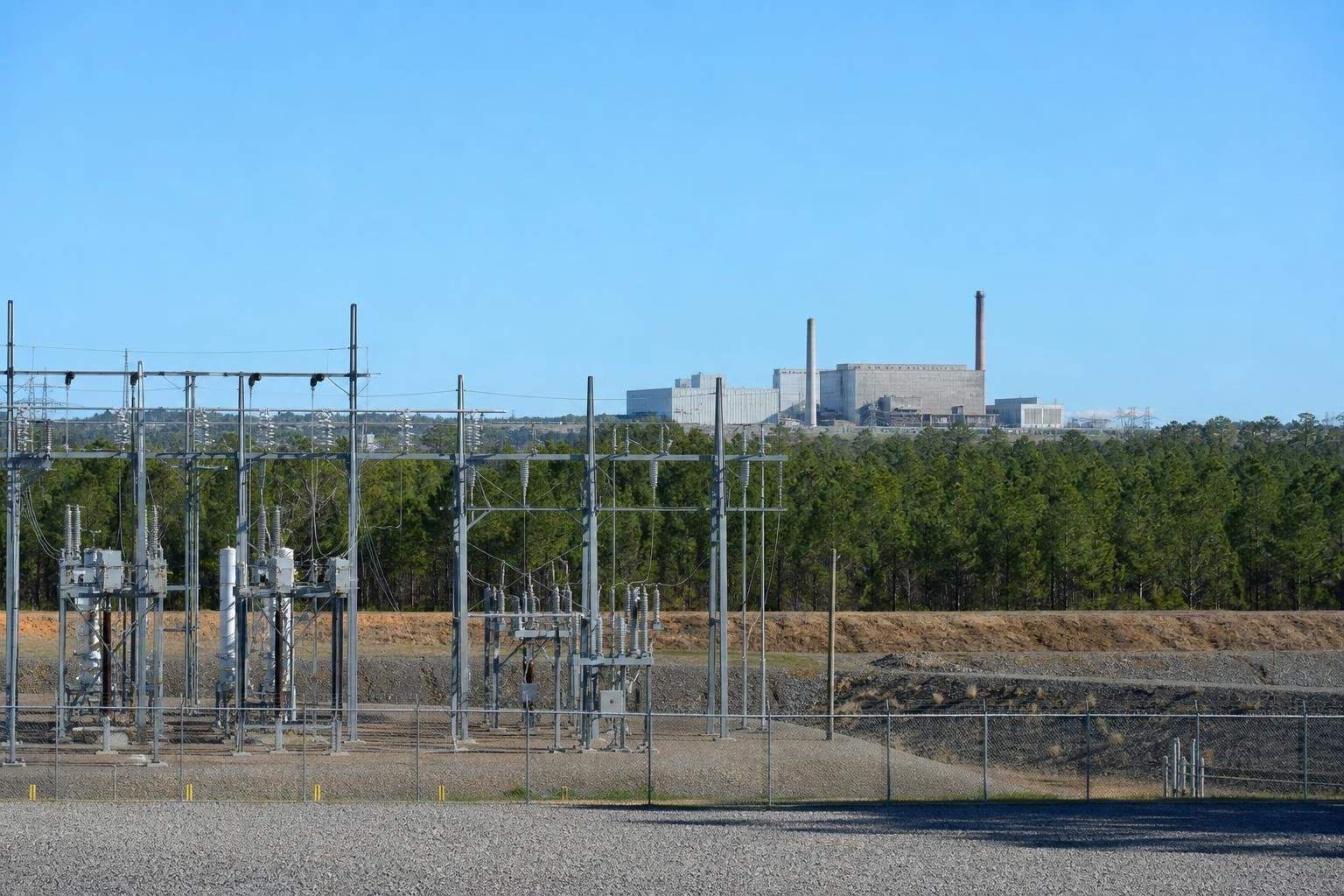
The U.S. Department of Energy’s National Nuclear Security Administration has selected Amentum to negotiate a phased lease for a proposed artificial-intelligence data center and energy project at the Savannah River Site in South Carolina. The concept pairs a data center described as capable of reaching 1 gigawatt with dedicated on-site energy generation, under a public-private development model.[1]
The selection is significant less as a completed construction project than as a signal of how federal policymakers may approach the power demands of frontier AI computing. Rather than placing a very large new load directly onto an already contested regional grid, the proposed arrangement would seek to develop compute capacity alongside purpose-built generation on federally controlled land. That approach remains conditional: lease negotiations, project design, power-generation choices, permits, financing and construction still have to be resolved.
By the numbers
- 1 gigawatt: Proposed AI data-center scale cited by NNSA.
- 1,000 megawatts: The same proposed scale expressed in the unit commonly used for utility-scale generation and grid planning.
- 1 billion watts: The proposed facility’s electrical scale expressed in watts, illustrating why dedicated supply is central to the development concept.
A lease negotiation, not a final build commitment
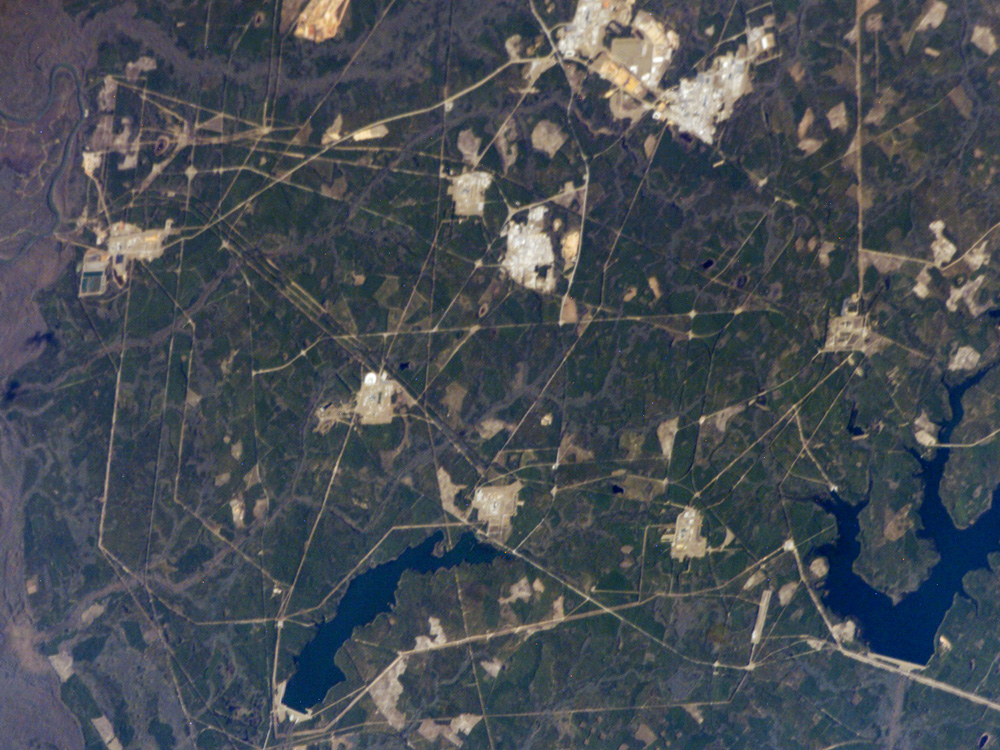
NNSA’s action selects Amentum for negotiations over a phased lease; it does not announce a signed lease, a completed data center, an operating power plant or a final construction schedule.[1] That distinction matters because a project at this scale involves a series of separate decisions that are often compressed into a single headline.
A phased structure can allow the government and developer to sequence land access, site preparation, utility and generation development, data-hall construction, and later expansion. It also gives both sides opportunities to test whether milestones are being met before committing to the full site buildout. For an AI campus, that can be more practical than attempting to commission all computing capacity and all generation in one step.
The public announcement does not specify the generation technology, its capacity, the precise data-center architecture, expected customers, financing structure, lease duration, construction timeline or final operating configuration.[1] Those omissions are consequential. “Dedicated on-site generation” could encompass different technologies and commercial arrangements, each with distinct reliability, permitting, fuel, environmental and interconnection implications. It should not be read as confirmation of a particular energy technology.
Why co-locating compute and power changes the equation
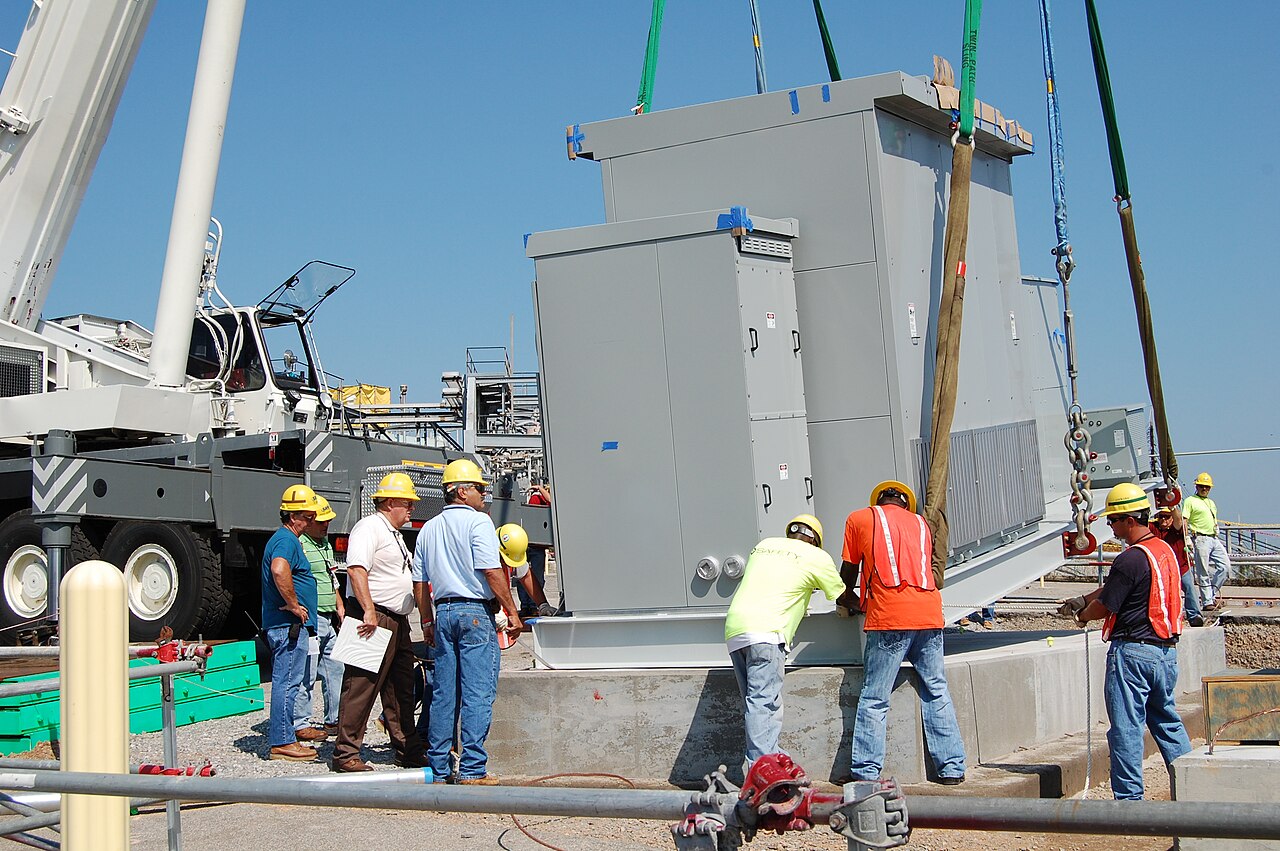
A 1-gigawatt data center is an industrial-scale electrical load. AI training and inference systems concentrate substantial power demand into racks, clusters and halls filled with accelerators, networking equipment, storage and cooling systems. The challenge is not simply supplying enough annual energy. Operators need dependable power delivery, transmission infrastructure, switching equipment, backup systems, cooling capacity and a design that can maintain service through equipment failures and maintenance.
Developing generation alongside the load can change the planning problem. A conventional data-center proposal may ask a utility to add a large new connection and identify sufficient generation and transmission elsewhere on the system. The Savannah River proposal instead contemplates an energy project tied directly to the computing campus. If built as described, that model could reduce the degree to which a new AI load competes for existing grid capacity, while giving the project developer a clearer path to matching power development with data-center phases.
That does not mean the campus would be electrically isolated or free from grid obligations. A project of this scale would still require carefully defined arrangements for interconnection, reliability, protection systems, backup supply, power quality and any potential import or export of electricity. If generation comes online after data-center capacity, the facility may need grid supply; if generation exceeds the immediate load, moving that output elsewhere introduces its own transmission and regulatory questions. The practical value of co-location will depend on how those details are negotiated and engineered.
What a federal nuclear-security site signals
The Savannah River Site is associated with DOE and NNSA missions, making it a markedly different setting from a typical speculative data-center parcel. The selection indicates that NNSA is willing to explore whether parts of a federal site can support commercial infrastructure while remaining compatible with the site’s government responsibilities.[1]
For the developer, federal land can offer a path to a large, coordinated site where compute facilities and energy assets can be planned together. For the government, a lease can potentially unlock private capital and construction capability without turning the federal agency into the direct operator of an AI cloud campus. Amentum, a government-services and engineering contractor, has been selected to negotiate that arrangement.[1]
But the setting also raises a higher bar for execution. Any development must be compatible with site security, environmental requirements, access controls and the continuing federal mission. The announcement should therefore be viewed as an early commercial-development step, not evidence that a commercial AI operator will have access to nuclear-security operations or infrastructure. The relevant question is whether a lease can define a workable boundary between a private project and a sensitive federal site.
A pragmatic infrastructure model for the AI market
The AI sector’s largest infrastructure constraint is increasingly physical rather than purely digital. Advanced models require more accelerators, more networking, more cooling and more electricity. In locations where utility upgrades and new generation take years, data-center development can be limited by the availability and timing of power rather than by demand for compute.
The NNSA-Amentum proposal points toward a model in which very large compute loads are treated more like industrial projects: site selection, power supply, land, security and construction are planned together. That is distinct from simply adding another large customer to a utility’s queue. It may be especially relevant for users that need long-term capacity and can support the capital costs of dedicated infrastructure.
There are market trade-offs. Purpose-built power can improve development certainty, but it can also make a project more capital-intensive and expose it to fuel, technology, construction and permitting risk. AI demand is growing quickly, yet individual customers’ hardware road maps and computing needs can change faster than large energy assets can be built. The developer will need to ensure that data-center phases, customer commitments and generation milestones remain aligned.
For utilities and regulators, projects of this kind could become a test of whether new load can be added with less pressure on existing customers. The strongest version of the model is one in which the project funds and builds incremental supply and the necessary delivery infrastructure. The weaker version would still depend heavily on constrained grid resources while using “dedicated generation” mainly as a future aspiration. The project’s eventual agreements and technical filings will determine which model it becomes.
What to watch as negotiations proceed
- Lease terms and phasing: Whether the negotiated agreement sets clear milestones for land use, construction, energy development and expansion.
- Generation plan: The energy technology, firm capacity, fuel or resource strategy, emissions profile and relationship to the regional grid have not been specified in the announcement.
- Infrastructure design: Large campuses require substations, high-voltage delivery equipment, cooling systems, backup power and extensive network connectivity in addition to data halls.
- Permitting and community effects: Environmental review, water use, construction impacts, workforce needs and local infrastructure will shape the project’s timeline and acceptance.
- Customer commitments: A project at this scale will need credible demand for AI compute, not just a favorable site and power concept.
The immediate outcome is a negotiation mandate for Amentum, not an operating 1-gigawatt AI campus. Still, the structure is notable: NNSA is exploring a way to use a federal site, private development and dedicated energy resources to address the real-world constraints behind AI expansion. If the parties can convert that concept into a financeable, permitted and reliably powered project, it could offer a template for future compute campuses where grid capacity is scarce.
Editor’s Take
I see the most important part of this announcement as the pairing of compute with power, not the headline capacity. A 1-gigawatt AI campus cannot be treated as an ordinary commercial load that simply appears on a utility forecast. Planning the generation, electrical infrastructure and data halls as one industrial system is the more credible way to add this kind of capacity without forcing everyone else to absorb the consequences of an unplanned load surge.
The caveat is substantial: Amentum has been selected to negotiate a phased lease, not to operate a completed campus. The next disclosures that matter are the generation technology, the interconnection design, firm-power plan, construction phases and customer commitments. Until those are public, claims about a transformative AI-power project are ahead of the facts. But the federal willingness to pursue this structure is a practical and encouraging signal.
References
- U.S. Department of Energy / National Nuclear Security Administration – https://www.publicnow.com/view/1618E607B3C18A3DCAEF9298F230B54A26C16806



.jpg)
.jpg)