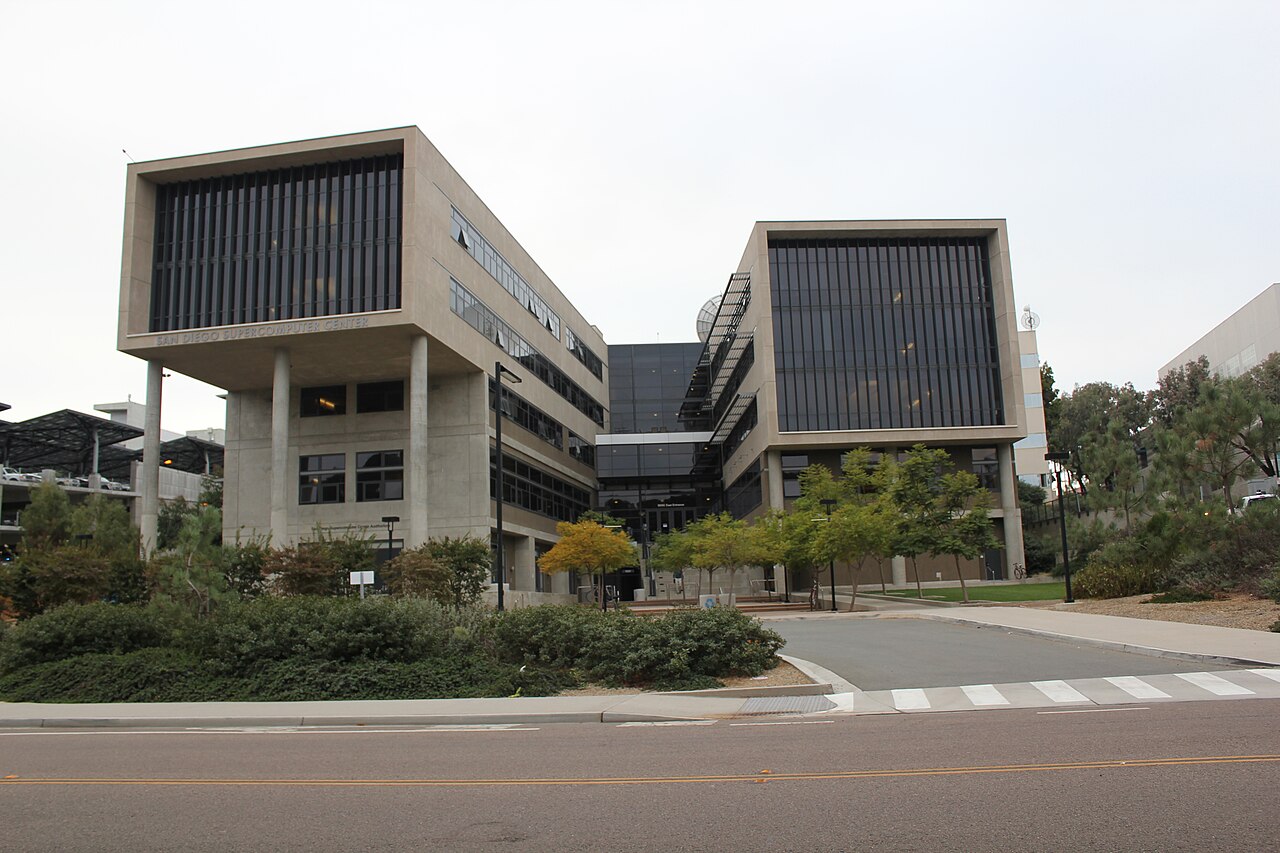
UC San Diego’s San Diego Supercomputer Center (SDSC) has received an $8.48 million, California Energy Commission-backed project to test a new way for AI data centers to receive and manage electricity. The effort is positioned as an operational demonstration: not simply a plan to add computing capacity, but a test of whether high-demand AI infrastructure can reduce waste, control costs and respond more constructively to grid conditions.[1]
That distinction matters. The rapid buildout of AI computing has made electricity delivery, conversion and load management as consequential as servers and accelerators. A data center that can vary non-urgent demand, manage on-site power resources and maintain compute service during grid stress could become a flexible grid participant. But the demonstration will need to prove that flexibility does not come at the expense of the reliability, performance and predictability that AI workloads require.
By the numbers
- $8.48 million: Project funding announced for the SDSC demonstration.
- 1 operational demonstration: The project is intended to test power-management capabilities in a working data-center environment rather than only through modeling.
- 2 core outcomes: Lower energy waste and cost, alongside improved grid reliability.
What UC San Diego is testing
SDSC’s project focuses on the architecture connecting data-center computing equipment to the electric system and on the controls that govern power use. The California Energy Commission backing places the work at the intersection of digital infrastructure and state energy policy, where large new loads must be accommodated without unnecessarily increasing system costs or worsening peak-demand constraints.[1]
The announcement does not specify the final equipment configuration, workload mix, capacity in megawatts, storage size or operating timetable. Those omissions are important: the value of the project will depend less on a schematic than on measured behavior under realistic operating conditions.
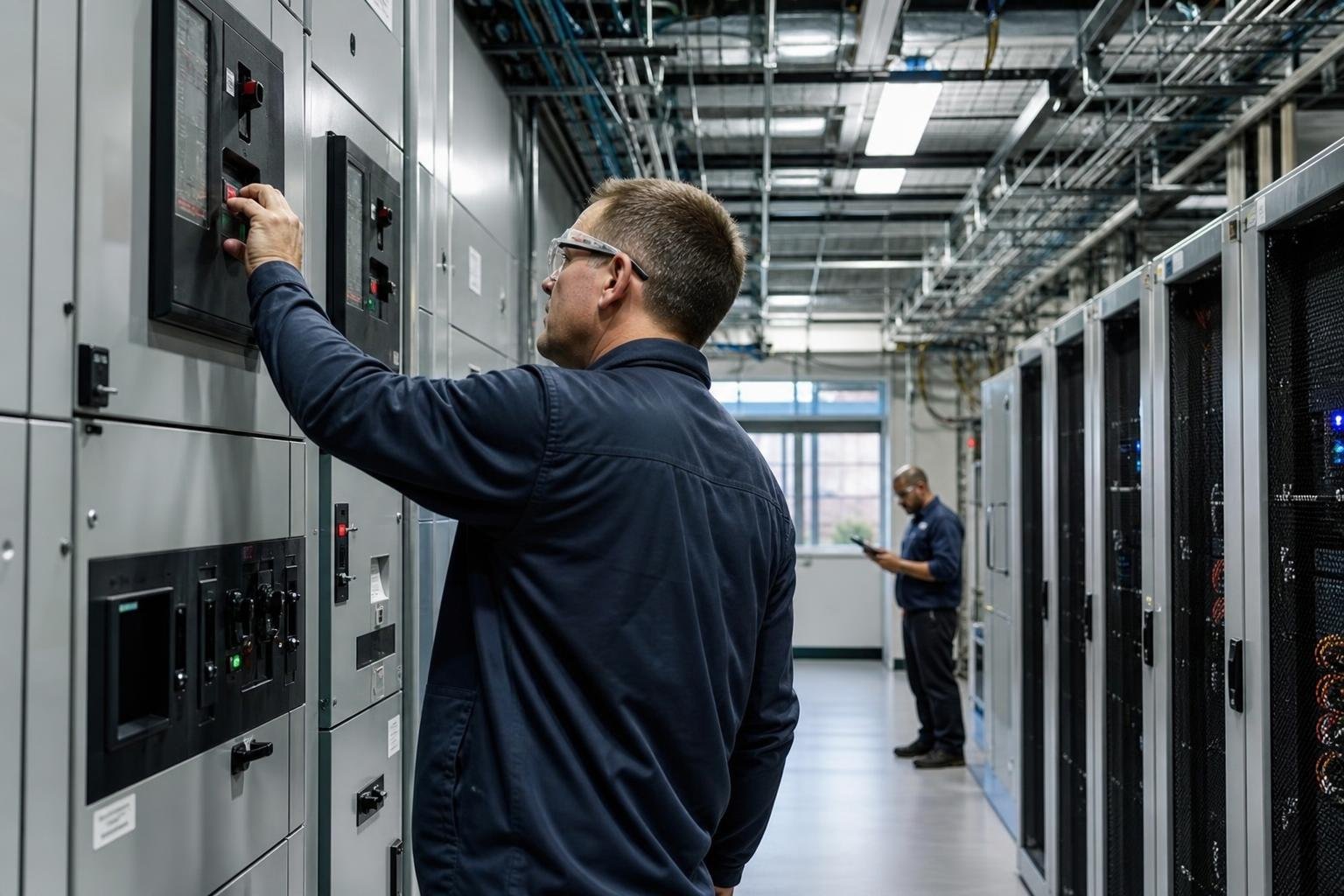
In practical terms, a modern power-management architecture can coordinate the boundary between utility supply and facility loads. Its building blocks may include meter and telemetry systems, automated controls, power-electronics equipment, backup generation or energy storage, and interfaces with computing schedulers. The key function is to make decisions across both sides of the facility: electrical assets must understand the needs of the compute fleet, while workload-management systems must understand power constraints and grid signals.
That differs from conventional data-center planning, which largely treats electricity as a continuously available input and designs around a fixed peak load. AI clusters complicate that model. Training and inference systems can have sharp power changes as accelerators enter service, jobs start or complete, and cooling demand responds to heat output. The result is a facility load that is large, variable and potentially expensive to serve during constrained grid periods.
Flexible load is useful only if compute remains dependable
For the project to matter beyond a single site, it must demonstrate three capabilities at once.
- Reliable compute: Power controls cannot create unacceptable job failures, data loss, hardware stress or unpredictable delays. Some workloads may be deferrable, but others—including interactive inference, research deadlines and operational services—have explicit latency or completion requirements.
- Lower waste and operating cost: The architecture must show measurable improvement in how power is converted, distributed and used. It should also establish that automated demand management can reduce exposure to costly peak periods without merely shifting costs or forcing operators into manual workarounds.
- Grid responsiveness: The facility must respond to real grid conditions in a way that is visible, verifiable and repeatable. That could mean reducing or reshaping demand when the system is constrained, while maintaining a defined level of computing service.
These goals can conflict. Curtailing compute is the most direct way to reduce demand, but it may be commercially or scientifically unacceptable. Drawing on local batteries can preserve service but adds capital cost, finite duration and replacement considerations. Moving workloads in time can help if jobs are interruptible, but not if users need immediate results. The central engineering challenge is therefore optimization, not simple load shedding.
Why this is more significant than another capacity announcement
Much of the AI infrastructure debate has centered on accelerator availability, server deployments and new data-center campuses. Those investments remain essential, but they do not solve the question of how a concentration of computing load interacts with the network that supplies it.
An operational demonstration has a higher burden of proof than an announcement of planned capacity. It must show that sensing, software controls and electrical equipment work together under changing workload demand and real utility conditions. It also has to establish governance: who is permitted to alter a facility’s demand, what service level is guaranteed to compute users, how performance is measured, and how operators recover from a failed control action.
For utilities and regulators, credible results could provide evidence that data centers can offer a more nuanced resource than a fixed new load. For operators, the potential benefit is a facility that can manage power costs and constraints more actively. For AI users, the test is whether these improvements remain largely invisible: infrastructure should become more efficient without turning compute availability into an uncertain variable.
Market implications and limits
The project could help establish a template for facilities where electrical and computing operations are managed as one system. That would create opportunities for power-management software, advanced metering and controls, storage integration, workload schedulers and utility-facing data-center services. It could also sharpen procurement criteria for AI infrastructure, elevating controllability and grid interoperability alongside rack density and accelerator performance.
However, the project should not be treated as evidence that all AI data centers can readily become flexible loads. The economics and technical options vary by site. A facility’s utility tariff, grid connection, generation mix, cooling design, backup-power rules, installed electrical infrastructure and contractual obligations to customers all affect what flexibility is feasible. A research-oriented environment may also have a different workload profile from a hyperscale cloud region or a colocated enterprise facility.
There are also legitimate concerns around reliability and transparency. Automated power controls need strong cybersecurity protections because they bridge operational technology and computing systems. Any claimed grid benefit should account for the full energy chain, including losses and the source of backup power. And reporting should separate short-duration demand reductions from sustained, scalable capacity relief. A demonstration that succeeds through one-off operational intervention is useful research; it is not yet a broadly deployable market product.
What to watch next
The next meaningful milestones will be operational rather than ceremonial: the selected architecture, the workloads included, the grid signals used, and the metrics published. The strongest outcome would be transparent evidence that SDSC can deliver defined computing service while reducing or reshaping electricity demand when needed—and that the approach lowers total operating costs rather than simply relocating them.
The California Energy Commission-backed effort gives SDSC a chance to test those questions at the level where the AI buildout is increasingly constrained: the electrical interface between digital workloads and the grid.[1] If it produces reproducible results, the project could inform how future AI facilities are designed, interconnected and operated. If the trade-offs prove too severe, it will still clarify the limits of treating computation as a dispatchable energy resource.
Editor’s Take
I see this as a more consequential AI infrastructure project than a conventional announcement about another cluster of accelerators. Compute capacity has value only when the power system can supply it economically and reliably. The useful target here is not a data center that goes dark on command; it is one that can intelligently distinguish between urgent and deferrable work, use its electrical assets efficiently, and provide a predictable service contract to users.
What I would watch most closely is the operating data. The $8.48 million award is meaningful, but it is not proof that flexible AI load is economical at scale. SDSC should publish how much demand can actually be adjusted, for how long, under which workload conditions, and what that action costs in delayed work, battery cycling or added system complexity. If those trade-offs are favorable, power-aware scheduling could become a standard design requirement for new AI facilities rather than a niche energy experiment.
References
- UC San Diego San Diego Supercomputer Center – https://www.sdsc.edu/news/2026/PR20260824-CEC-datacenter.html