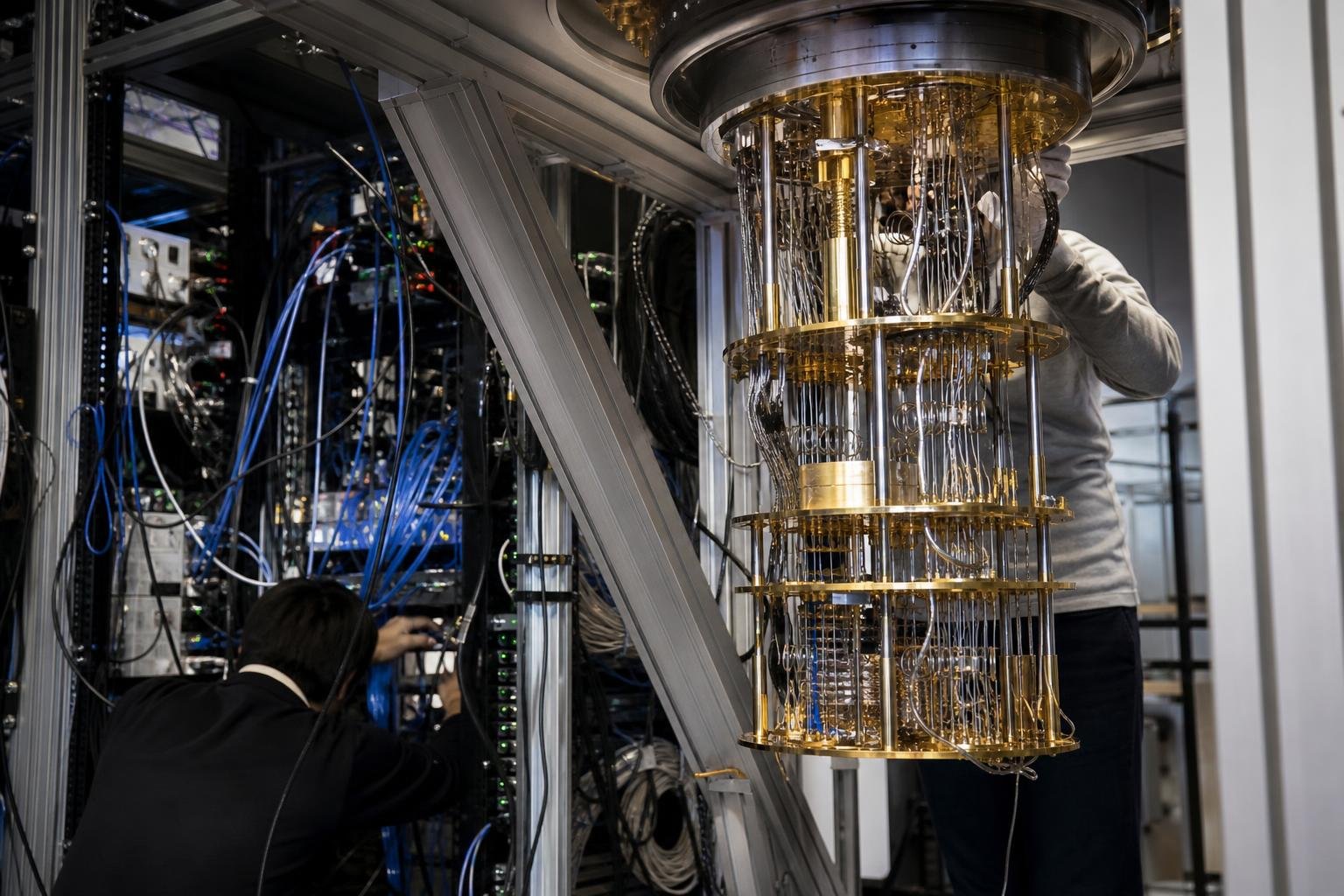
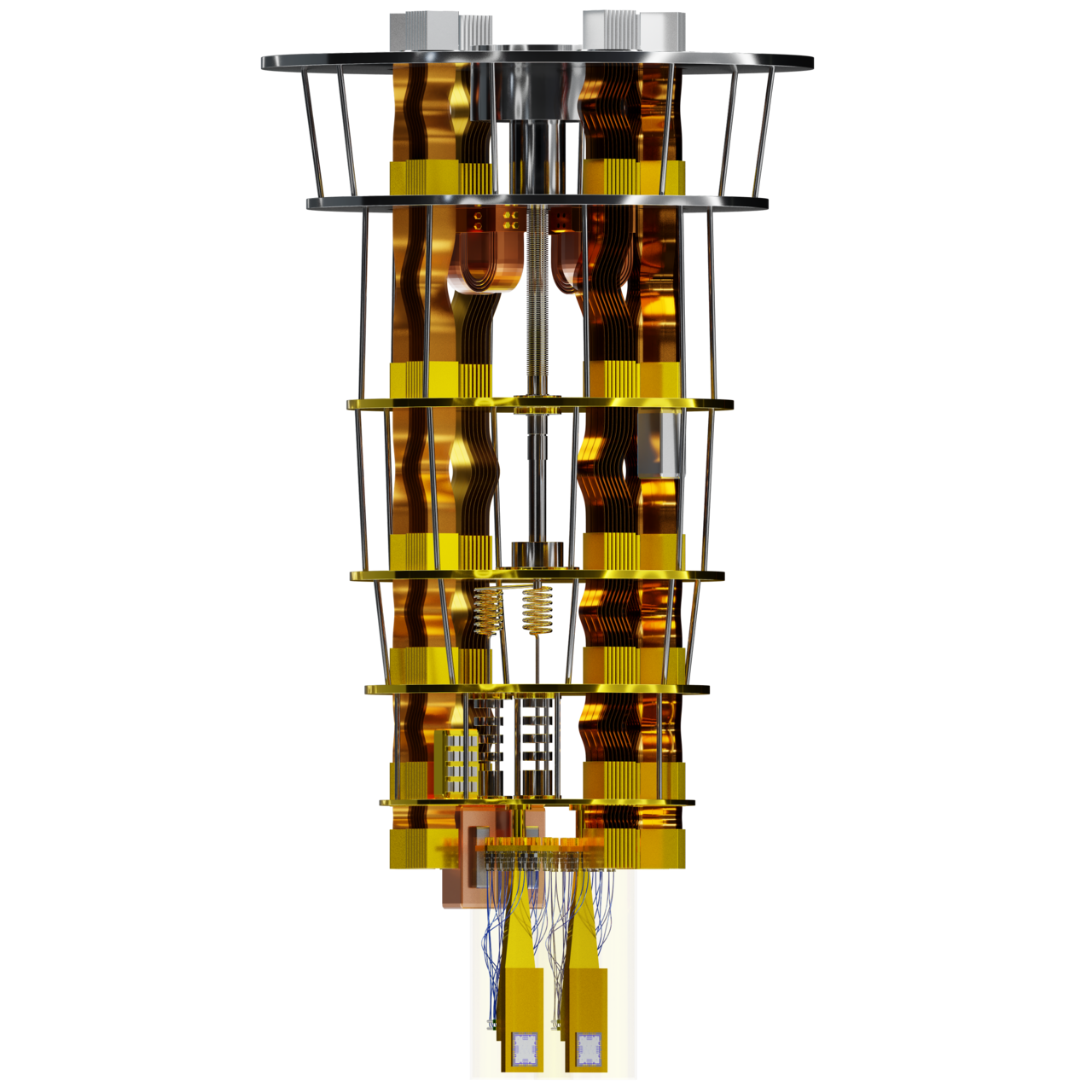
Google Quantum AI says it has demonstrated “magic-state cultivation” on its Willow superconducting quantum processor, reporting an approximately 40-fold reduction in error compared with an equivalent approach that does not use the technique. The work, published in Science, targets one of the least glamorous but most consequential costs in fault-tolerant quantum computing: producing sufficiently reliable magic states for non-Clifford operations.[1]
The result is not evidence that a broadly useful, fault-tolerant quantum computer has arrived. It is a component-level milestone. But it addresses a resource problem that can dominate the size, speed and operating cost of a future universal quantum machine. A system can have many physical qubits and still be impractical if it must spend most of them manufacturing, checking and distilling the special quantum states needed to run useful algorithms.
By the numbers
- Approximately 40-fold: reported error reduction for cultivated magic states versus the comparable non-cultivated approach.
- 1 processor: Google performed the demonstration on its Willow superconducting quantum processor.
- 1 critical resource: the experiment focuses on magic states, rather than increasing the raw physical-qubit count.
Why magic states matter more than a qubit headline
Quantum error correction protects information by encoding a logical qubit across many imperfect physical qubits. Error-correcting codes can efficiently support a broad class of operations known as Clifford operations, including several of the operations used to prepare, measure and manipulate encoded states. Those operations alone, however, are not enough for universal quantum computation.
A fault-tolerant computer also needs non-Clifford operations, commonly represented by gates such as the T gate. These operations are essential because they expand a restricted, classically simulable operation set into one capable of implementing general quantum algorithms. In leading fault-tolerant designs, including surface-code-based approaches relevant to superconducting hardware, the usual way to supply that capability is to consume specially prepared ancillary states called magic states.
Magic states are difficult because they cannot generally be produced at the required fidelity simply by applying an ordinary fault-tolerant circuit once. The conventional answer is magic-state distillation: prepare many noisy candidate states, process them through an error-detecting or error-correcting protocol, reject failures, and retain fewer states with lower error. Distillation works in principle, but it can consume substantial qubit area, circuit time and control bandwidth. For algorithms with large T-gate counts, the magic-state factory can become the dominant part of the machine.
That is why the relevant metric is not merely whether a processor contains more qubits. It is how efficiently those qubits can produce the high-quality non-Clifford resource an algorithm actually consumes. A large reduction in the starting error of a magic-state pipeline can reduce the number of distillation stages required downstream, improve output rates, or relax some hardware demands. The practical benefit depends on full-system details, but the direction is clear: cleaner inputs make the factory less expensive.
What Google means by magic-state cultivation
Google describes cultivation as a method for preparing magic states through a protected, encoded process rather than treating magic-state generation as a purely physical-qubit-level preparation followed only by later cleanup. The objective is to identify and suppress errors during state creation, producing a better logical resource state before it enters the more costly parts of a fault-tolerant computation.[1]
The distinction matters. A raw physical state can carry errors from control pulses, measurement, crosstalk, leakage and environmental noise. If those errors are passed unfiltered into a distillation protocol, the protocol must devote more overhead to removing them. Cultivation seeks to move error detection and rejection closer to the source of the magic state. In effect, it treats state preparation as an encoded computation with its own fault-tolerance problem, not as a commodity input.
Google’s reported comparison is therefore best read as an experimental statement about magic-state quality under the tested protocols, not a claim that every operation on Willow is now 40 times less error-prone. Nor does it mean that an eventual quantum application will run 40 times faster or require 40 times fewer qubits. The conversion from a state-level error improvement to a machine-level advantage depends on the physical error model, code distances, target logical error rate, factory design, acceptance rates and algorithmic demand for non-Clifford gates.
A meaningful test for the Willow program
Google Quantum AI is the central organization behind the result, with Willow serving as the superconducting processor used for the experiment. The publication in Science places the work in a more demanding category than a laboratory benchmark released only through a corporate announcement: the methods and conclusions have undergone journal review, although independent replication remains an important next step for any hardware result.[1]
The demonstration also represents a shift in emphasis for the quantum industry. Earlier milestones often centered on physical-qubit totals, single- and two-qubit gate fidelity, or the ability to preserve one logical qubit better as an error-correcting code grows. Those metrics remain essential. Yet a useful fault-tolerant system must join them with reliable logical operations, state injection, measurement, decoding, feed-forward control and the production of magic states at scale.
Researchers working on fault tolerance have long identified magic-state distillation as a major overhead driver. Google’s result addresses that consensus engineering problem directly. It does not eliminate distillation or prove that it will be unnecessary in future architectures. It instead suggests that the front end of the magic-state supply chain can be improved experimentally on superconducting hardware, where fast operations are attractive but error correction imposes stringent demands on calibration and control.
What the result does and does not establish
The strongest interpretation of the announcement is that Google has reduced an important error source for a fault-tolerant building block. That is valuable because resource estimates for quantum algorithms can be highly sensitive to magic-state error rates. A sufficiently large improvement in input quality can change the design point of a magic-state factory and, in turn, the hardware requirements for a target application.
The weaker interpretation—one that should be avoided—is that the result demonstrates a useful general-purpose quantum computer. It does not. A practical machine will need many logical qubits operating simultaneously, logical memories that remain reliable over extended computations, high-throughput magic-state generation, real-time classical decoding, robust mid-circuit measurement and feed-forward, and a system architecture that can maintain performance as hardware scales.
There are also questions that matter beyond the headline reduction. Industry observers will want to see the absolute error rates, the success or rejection probability of the cultivation protocol, its physical-qubit and time overhead, sensitivity to hardware drift, and how its advantage changes as code distances increase. A protocol that produces excellent states but accepts them infrequently, takes too long, or requires unusually favorable calibration may provide less system-level benefit than its error ratio initially suggests.
Comparison across platforms will be another challenge. Ion-trap, neutral-atom, photonic and superconducting approaches have different gate speeds, connectivity, measurement behavior and noise characteristics. The value of a cultivated magic-state protocol will be determined not only by its state fidelity but by output throughput per unit of hardware and by its compatibility with a complete fault-tolerant architecture.
Market implications: less overhead is a strategic advantage
For quantum hardware companies, fault-tolerance progress is increasingly becoming a competition over resource efficiency rather than raw device scale. Reducing the overhead attached to a key logical resource can improve the economics of future systems: fewer physical qubits may be needed for a given logical workload, or a fixed hardware budget may support a more capable logical machine.
That matters for prospective users in chemistry, materials science, optimization and cryptography research, although none should treat this announcement as a near-term application deployment guarantee. Most commercial quantum workloads still face the larger question of whether they can deliver a practical advantage once fault-tolerant hardware exists. What cultivation can change is the feasibility boundary: it may lower the engineering burden required to test those workloads on protected logical hardware.
The result also raises the bar for competitors. A credible quantum road map now needs more than an account of how physical-qubit counts will grow. It needs a credible accounting of logical error rates, decoding, non-Clifford gates, magic-state throughput and the total overhead needed to execute a real algorithm. Companies that can show improvements in those measures will have a stronger claim to progress toward commercially relevant fault-tolerant systems than companies emphasizing device size alone.
What comes next
The next milestones are likely to be more operational than theatrical: demonstrations of cultivation at larger code distances, detailed resource accounting, repeated performance over longer runs, integration with logical computation, and evidence that high-quality magic states can be delivered at a useful rate. Researchers will also need to show that the protocol remains advantageous when combined with the decoding and control systems a scaled processor requires.
Google’s report is important precisely because it focuses on the expensive infrastructure behind universal quantum computation. Magic states are not a consumer-facing feature, and a 40-fold error reduction does not translate into an immediate application. But fault-tolerant quantum computers will be built from such advances: improvements that make a necessary resource cleaner, cheaper and more scalable before the final machine exists.
Editor’s Take
I view this as more consequential than another raw-qubit benchmark because it attacks a line item that can overwhelm the economics of fault-tolerant quantum computing. If magic-state cultivation holds up across larger codes and higher production rates, it could reduce the amount of hardware devoted to making the non-Clifford operations that useful algorithms consume. That is the kind of improvement that can move a road map from impressive laboratory physics toward an engineerable system.
The figure to watch is not just the reported 40-fold reduction. The next disclosures need to show absolute logical error, acceptance rate, latency and magic-state output per unit of hardware. A superb state that arrives too slowly or too rarely will not run an industrial algorithm. The hype would be claiming that Willow has solved universal quantum computing; the real story is that Google has demonstrated progress on one of its costliest unresolved subsystems.
References
- Google Quantum AI, “Magic-state cultivation: A new path toward fault-tolerant quantum computing” – https://blog.google/innovation-and-ai/models-and-research/quantum-computing/magic-state-cultivation-quantum-computing/