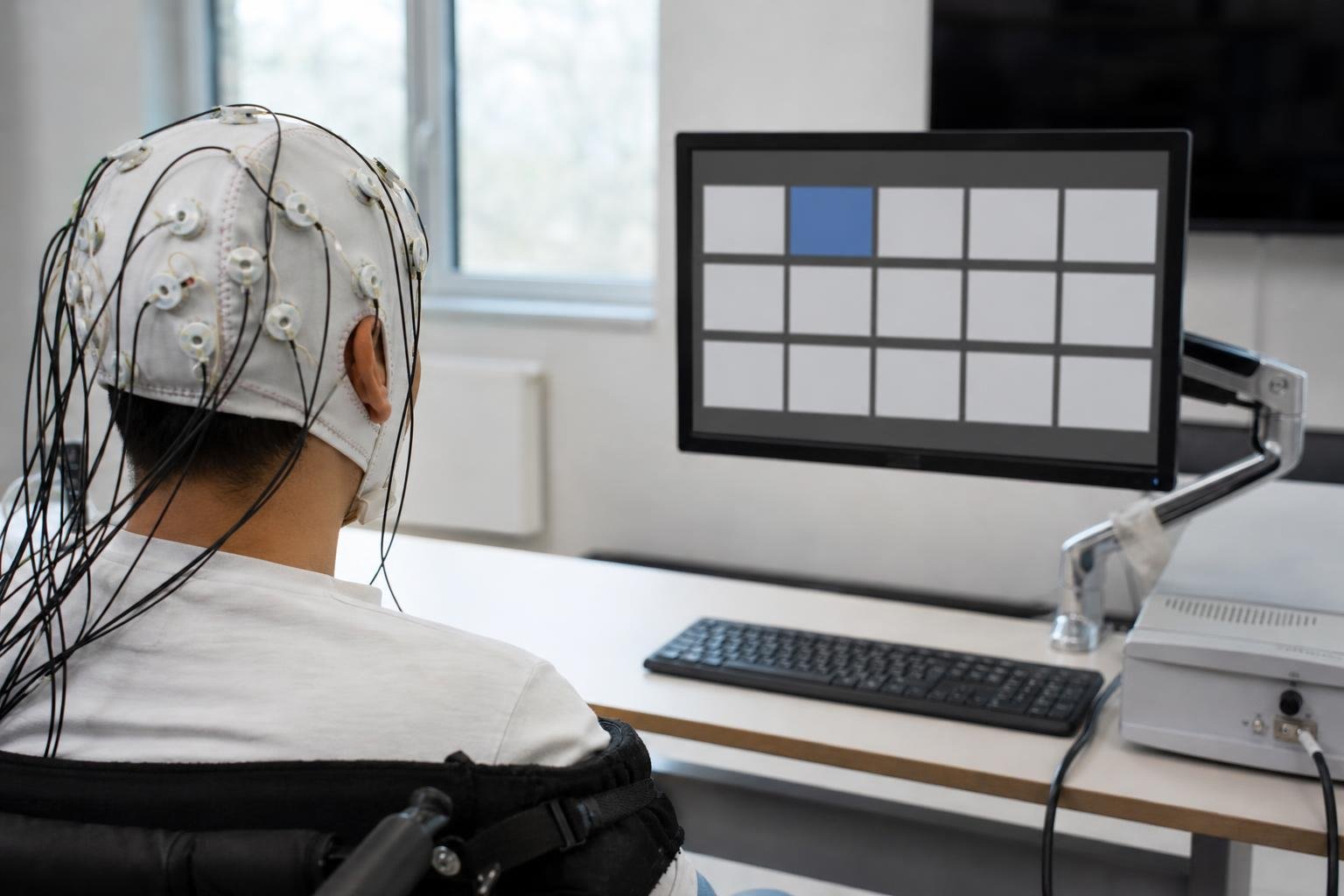
Researchers at Rutgers University have reported a noninvasive brain-computer interface (BCI) that nearly triples messaging speed by combining neural input with AI-generated language suggestions. The result matters less as a demonstration of autonomous “mind reading” than as evidence that a modest, lower-risk interface can become materially more useful when software shares part of the communication task.[1]
The system still depends on the user to select and confirm intended messages through the interface. AI does not independently determine what a person wants to say. Instead, it proposes likely words or phrases, reducing the number of slow, signal-driven selections needed to compose a message. That division of labor could be important for people who need assistive communication but cannot, or do not want to, undergo brain-implant surgery.
By the numbers
- Nearly 3×: Reported improvement in overall messaging speed compared with the underlying interface alone.[1]
- 1 shared task: The user provides intentional neural control while AI helps narrow the language choices.
- 0 surgical implants: The interface is noninvasive, avoiding implanted electrodes and the associated neurosurgical procedure.
The speed increase is primarily a language-interface result
The headline figure can be misunderstood. A nearly threefold gain in message communication does not necessarily mean the system suddenly extracts neural signals at three times the previous rate or reads a user’s thoughts with three times the accuracy. The reported improvement is an end-to-end communication result: a combination of neural selection and AI-supported language generation.[1]
That distinction is central. In a conventional BCI messaging system, a user may have to select letters, words or commands serially. Even when the user knows exactly what to say, each selection takes time, and errors can impose additional correction steps. A language model can reduce that burden by offering contextually plausible continuations. The user can then select a suggested phrase rather than construct it item by item.
In practical terms, the neural interface supplies agency and confirmation; the AI supplies linguistic compression. The user remains in the loop, but the system requires fewer control actions to produce a useful sentence. This is closely related to predictive text on a smartphone, except that the input channel is much slower and more physically constrained than a touchscreen keyboard.
The research therefore should not be read as proof that AI has solved neural decoding. It is a usability advance in which an AI language layer compensates for one of the longstanding limitations of noninvasive BCIs: limited communication bandwidth. The most meaningful measure is not raw neural-signal performance alone, but whether a person can convey an intended message more quickly and with control over what is sent.
Why noninvasive design may matter more than an implant headline
Implanted BCIs generally offer access to stronger and more spatially specific neural signals than systems that measure activity outside the skull. That signal-quality advantage has enabled striking demonstrations of cursor control, speech decoding and device operation. But it comes with a substantial trade-off: implantation requires surgery, clinical screening, long-term monitoring and management of hardware reliability and biological safety.
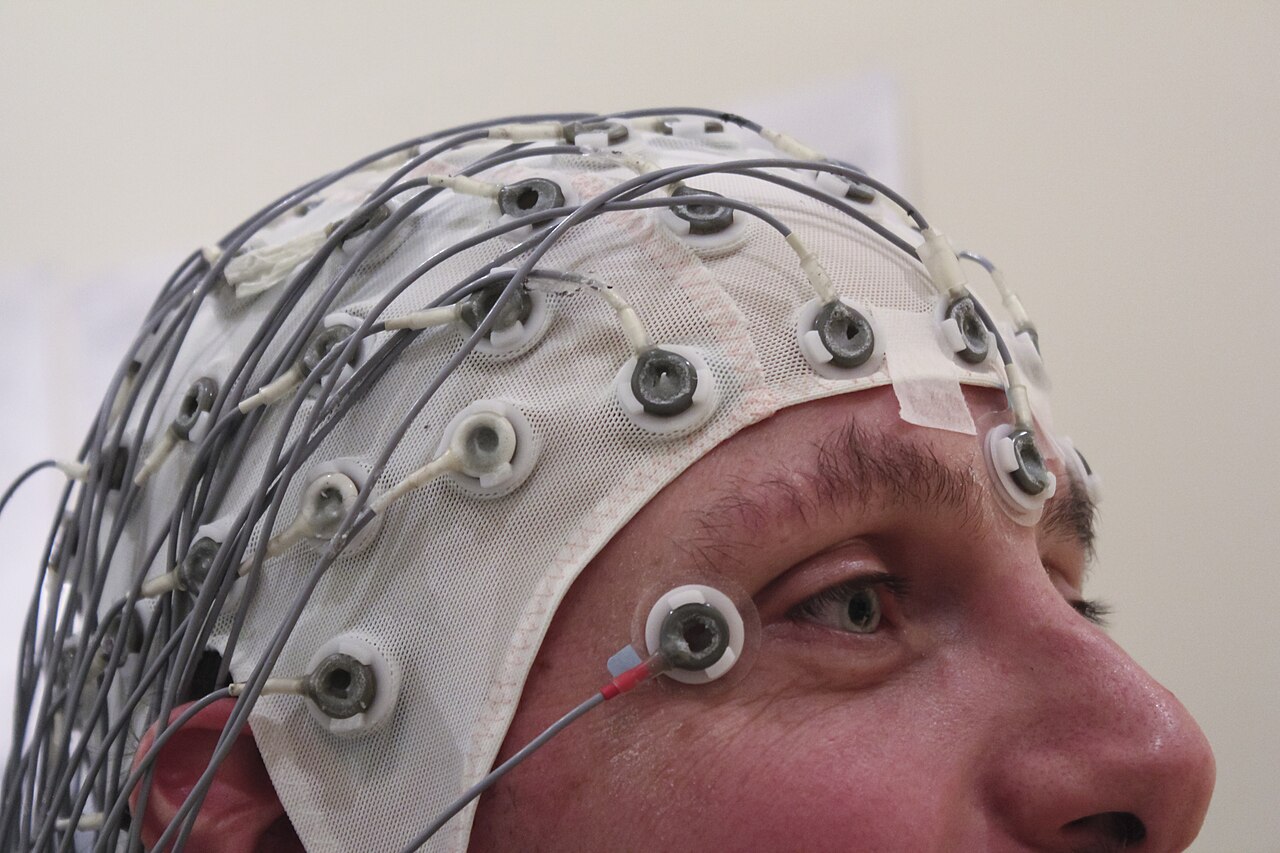
Noninvasive systems work with signals measured without placing electrodes in the brain. Their signal is weaker and more susceptible to noise, which has historically limited their speed and reliability. Yet their deployment model is fundamentally different. A system that can be fitted, adjusted and used without neurosurgery could be considered by a much wider group of patients, rehabilitation providers and care settings.
The broader BCI field has long operated along this trade-off. Invasive approaches can produce higher-quality signals, while noninvasive platforms are easier to deploy and avoid procedural risk.[2] The Rutgers result suggests that improved software may narrow the real-world usability gap even when the underlying noninvasive signal remains comparatively constrained.
That is particularly relevant for people with temporary communication needs, progressive conditions, or impairments that do not justify an invasive procedure. It could also matter in clinics and homes, where the feasibility of setup, training, maintenance and caregiver support can be as consequential as a laboratory performance record.
Control, accuracy and trust remain the hard problems
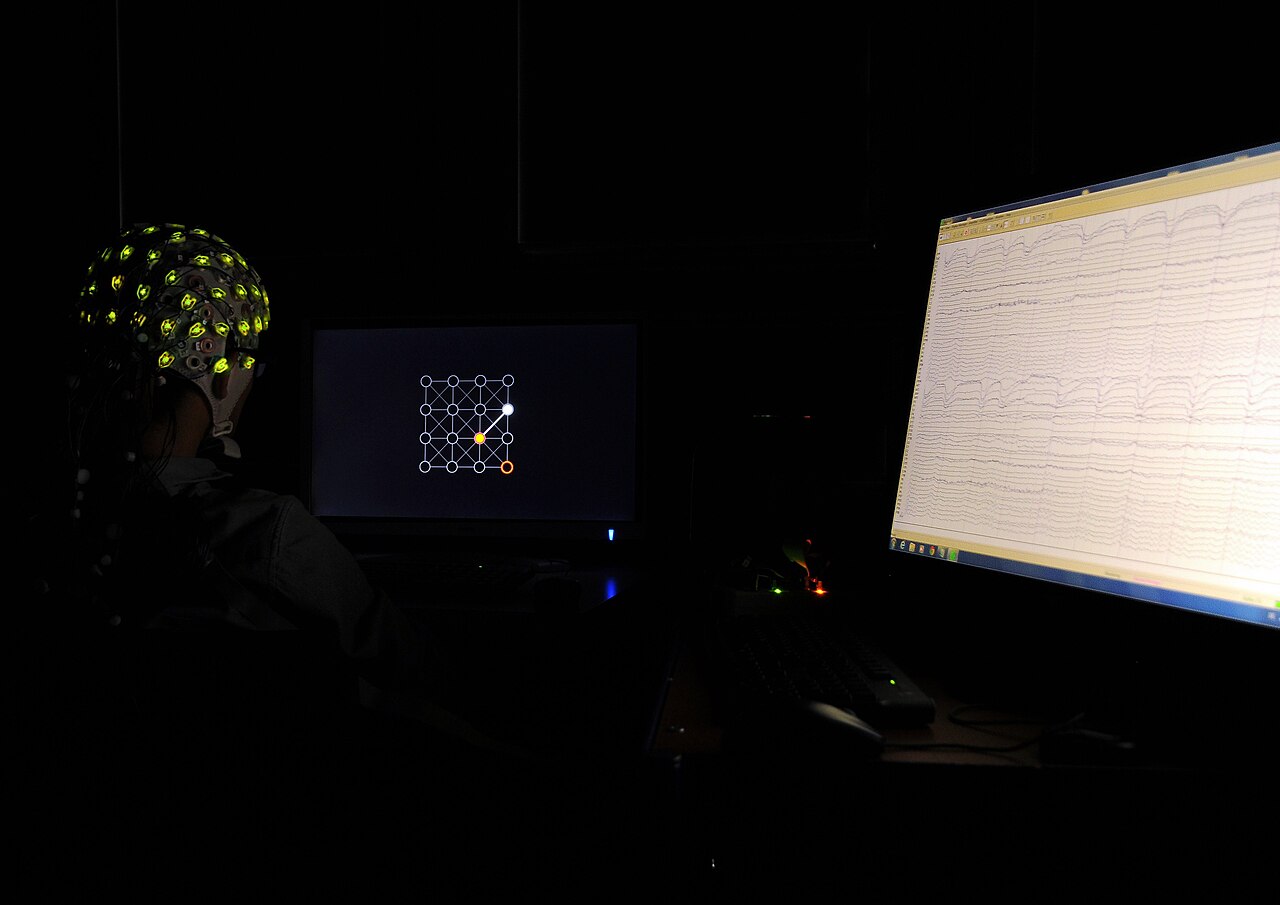
AI suggestions make communication faster only when the proposed language matches the user’s intent often enough to be worth reviewing. A poorly timed or overly confident suggestion can slow interaction, increase cognitive load or introduce an incorrect message. For an assistive communication tool, that is not a cosmetic problem. The difference between “close enough” and exact wording can matter in medical, legal, financial and personal conversations.
The critical safeguards are therefore user confirmation, clear correction paths and an interface that makes it obvious whether a phrase originated from the person’s direct selection or from a machine-generated proposal. The system should never treat a statistically likely continuation as consent. Its language model can rank options, but the BCI must preserve the person’s ability to reject them quickly and reliably.
There are also familiar privacy questions. Neural data, usage history and the text generated during conversations can be highly sensitive. Any path from research system to product will require careful decisions about where data are processed, how models are updated, whether personalization is optional, and what information caregivers or service providers can access.
Another unanswered question is how broadly the performance result generalizes. The supplied report describes a nearly threefold improvement, but the headline alone does not establish performance across different disabilities, levels of fatigue, home environments, languages or conversational tasks.[1] Future evaluations will need to report not only average speed but also error rates, rejection rates for AI suggestions, training time, durability of performance and user preference.
Commercial and clinical implications
The study points toward a potentially important product strategy for BCI developers: use AI to improve the usefulness of affordable or lower-risk hardware rather than relying exclusively on more invasive sensing. That could shift competition toward software quality, personalization, interface design and the ability to operate reliably outside a controlled laboratory.
For assistive-technology providers, the opportunity is not a general-purpose thought-to-text product. It is a communication system that reduces effort for a user whose existing input options are too slow, fatiguing or unreliable. Integration with established augmentative and alternative communication workflows, accessibility tools and caregiver-support systems would likely matter more than a single benchmark result.
The approach also creates a more nuanced competitive picture for implant developers. High-bandwidth implanted systems may remain necessary for users who need fine-grained, continuous control or rapid speech-like output. But a noninvasive interface that delivers useful message-level communication with AI assistance could address a different and potentially larger accessibility segment. The question is not whether software eliminates the advantages of implants; it is whether it makes avoiding surgery a good enough trade-off for more people.
What researchers need to show next
The next milestone is independent, longer-term testing with the people most likely to use these systems. Researchers will need to separate three measures that are often bundled into a single communication-speed claim: the rate of neural input, the rate at which AI suggestions are accepted, and the final rate of correct, user-intended messages.
It will also be important to test the system under realistic conditions. Language prediction performs well when conversation follows familiar patterns, but less well when a user needs to introduce unusual names, private information, technical vocabulary or an urgent correction. A strong assistive system must make common communication fast without making uncommon communication frustrating.
For now, the Rutgers work is best viewed as a practical systems advance. It shows how AI can complement a noninvasive BCI instead of replacing human intent or claiming to decode it autonomously. If that model holds up in broader trials, the most consequential benefit may be making brain-based communication accessible without making brain surgery a prerequisite.
Editor’s Take
I think the important engineering lesson is straightforward: do not judge a BCI solely by the bandwidth of its neural sensor. Communication is a system problem. If a person can reliably approve a well-designed suggestion, then language software can turn a low-bandwidth control channel into a substantially more useful tool.
The nearly threefold figure is promising, but it should be treated as a workflow benchmark, not evidence of a threefold leap in mind decoding. What I would watch next is the acceptance rate of suggestions, correction burden, performance with unfamiliar language and results from people using the system over weeks or months. If those numbers remain strong, the noninvasive path could have a more immediate market impact than many splashier implant demonstrations because it removes the largest adoption barrier: surgery.