
OpenAI says its models have helped optimize circuits used in Jalapeño silicon and improve designs for RISC-V processor cores, extending the company’s AI-assisted engineering work from software development into semiconductor design. The announcement matters less as evidence of autonomous chip creation than as a test of whether AI can shorten a costly engineering loop: turning a hardware change into a verified, implementation-ready design. [1]
Hardware teams already use extensive automation, but chip development remains constrained by iteration time. A proposed RTL or circuit-level change must be checked for functional correctness, synthesized or otherwise implemented, measured against physical constraints, and reviewed for side effects. OpenAI’s reported work with Jalapeño and RISC-V designs suggests that language models may become useful inside that loop—generating candidate changes, interpreting tool outputs, and accelerating debugging—provided that conventional verification and signoff remain the final authority. [1]
What OpenAI is reporting
OpenAI’s account describes model-assisted work in two closely related but technically distinct areas: circuit optimization for Jalapeño silicon and design improvements for RISC-V processor cores. The company presents the effort as an expansion of AI’s usefulness in engineering domains where correctness depends not merely on whether code compiles, but on whether a design satisfies detailed functional, timing, power, area, and verification requirements. [1]
That distinction is important. In application software, an AI-generated patch can often be exercised in a test environment, inspected in a code review, and deployed incrementally. In chip design, errors can propagate through multiple levels of abstraction. A mistake in a hardware-description-language change may produce a logic bug; a seemingly valid implementation may miss timing; an optimization can alter power or area trade-offs; and a defect that escapes verification can become extremely expensive after fabrication.
OpenAI’s central claim is therefore not simply that a model can emit Verilog, SystemVerilog, or related HDL syntax. The more consequential claim is that its models can participate in an engineering workflow that uses design context, tool feedback, and verification results to improve real hardware artifacts. The company’s report should still be read as a vendor’s account of its own work, rather than as an independently benchmarked comparison of AI systems across the semiconductor industry. [1]

Derivative work: IamMM, CC BY-SA 4.0, via Wikimedia Commons
Why the iteration loop is the real target
Modern digital chip design is a sequence of constrained optimization problems. Architects define behavior and performance targets. RTL engineers express that behavior in hardware descriptions. Verification teams build simulations, assertions, formal checks, and regression suites. Implementation tools translate the design toward physical layout while exposing timing, congestion, power, and area constraints. A change that looks locally beneficial can make the overall design worse.
That is why the potentially valuable role for an AI model is iterative assistance rather than unconstrained design generation. A model can help engineers navigate a large codebase, identify likely sources of a failing test, explain a synthesis or verification report, propose a narrow modification, and help prepare the next experiment. The result still has to survive the same gates that apply to human-authored changes.
For RISC-V cores, this process can be especially useful because processor designs combine control logic, datapaths, memory interfaces, privileged behavior, exception handling, performance features, and extensive compliance requirements. RISC-V’s open instruction-set architecture also supports a broad ecosystem of implementations, but the openness of the ISA does not reduce the difficulty of building a correct and competitive core. Microarchitectural decisions remain specific to each implementation.
For circuit optimization, the problem can be still more granular. Engineers may be trying to reduce logic depth, remove redundant operations, alter a state-machine implementation, improve a critical path, or preserve behavior while changing the structure that downstream tools see. AI assistance has practical value only if it helps teams find better candidates faster and if those candidates can be rigorously checked.
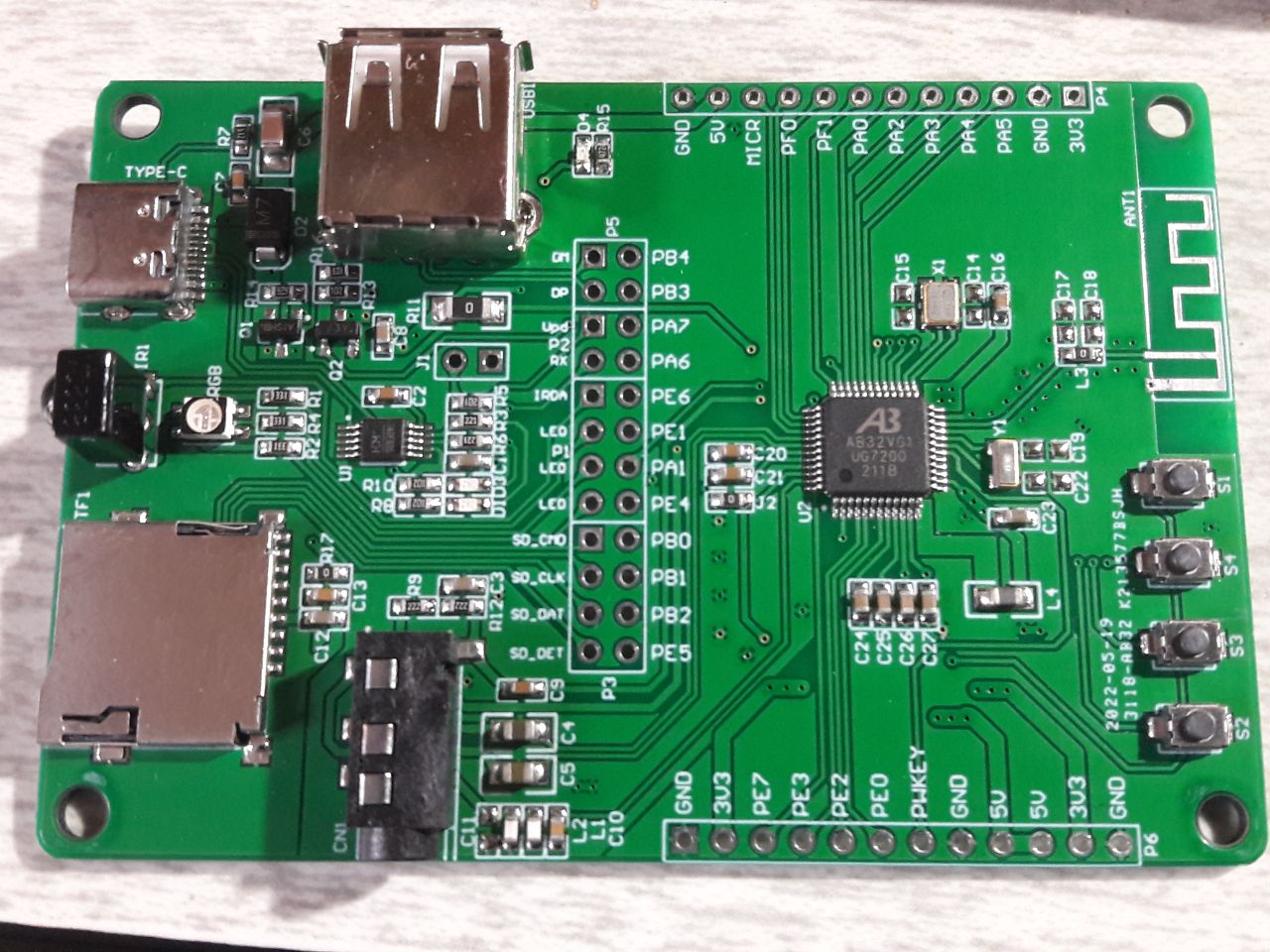
What this does—and does not—demonstrate
OpenAI’s report is meaningful because it places AI in workflows closer to silicon implementation rather than limiting it to high-level software tasks. The reported Jalapeño and RISC-V results indicate that models can be used on concrete hardware-design and verification work, where the outputs are judged against engineering constraints rather than prose quality alone. [1]
It does not establish that chip design has become autonomous. Semiconductor development depends on specialized tools, libraries, process-design rules, specifications, test infrastructure, and human judgment accumulated over years. A model may suggest a useful local change while lacking complete awareness of the system-level contract, the assumptions embedded in verification environments, or the manufacturing implications of a physical implementation.
Nor should an AI-assisted improvement in a particular circuit or core be treated as proof that every hardware team will receive the same result. The value of a model depends on the quality of its access to specifications, source repositories, test results, simulator logs, synthesis reports, and tool interfaces. It also depends on whether engineers can reliably reproduce, review, and validate model-generated work.
Verification remains the bottleneck and the safeguard
The most credible path for AI in chip development is likely to run through verification. Hardware verification already consumes a substantial share of engineering effort because a design must be tested across a large space of states, corner cases, interfaces, and configuration choices. Models can potentially help write testbench components, translate failure reports into hypotheses, generate assertions, trace signals through a design, and summarize regression results.
But verification is also where the limits become clearest. An AI system can produce plausible reasoning that is wrong, omit an edge case, or optimize for a visible test suite rather than the intended specification. In hardware, passing a set of simulations is not synonymous with proof of correctness. Formal verification, code and functional coverage analysis, equivalence checking, emulation, and disciplined human review remain essential depending on the block and the risk involved.
The practical question for engineering organizations is not whether an AI model can generate HDL. It is whether the model reduces the time required to reach a high-confidence, reviewable, signoff-quality result. That standard favors tools that preserve traceability: engineers need to know what changed, why it changed, which tests were run, what assumptions were made, and whether downstream implementation behavior moved in the intended direction.
Industry and market implications
If AI meaningfully compresses the design-to-verification loop, the commercial effect could reach beyond any individual processor core or chip. Semiconductor companies face continuing pressure to increase design complexity while controlling engineering schedules and non-recurring engineering costs. Faster iteration could allow teams to explore more design alternatives before committing to implementation, improve productivity on mature projects, and make smaller specialized-chip programs more economically viable.
The near-term beneficiaries are likely to be teams with structured development environments: well-maintained repositories, robust automated regressions, documented specifications, and repeatable implementation flows. Those assets give an AI system useful context and give engineers a way to validate its output. Organizations with weak verification discipline are less likely to safely realize the promised productivity gains, because faster generation of changes can also accelerate the creation of unreviewed defects.
The announcement also reinforces the strategic importance of RISC-V. Because the architecture can be implemented and adapted by many organizations, tools that lower the cost of improving cores, peripherals, and system logic could broaden participation in custom silicon development. Yet RISC-V’s openness does not eliminate the need for experienced design and verification teams, nor does it make physical implementation, software enablement, security review, or manufacturing qualification automatic.
Concerns: trust, security and measurement
OpenAI’s report raises several questions that will determine whether AI-assisted hardware development becomes routine. First is evaluation: companies will need results that distinguish a demonstration from repeatable productivity improvements across blocks, projects, and process nodes. Measures such as engineer time saved, verified bug discovery, quality of results, and impact on timing, power, and area are more useful than examples of syntactically correct HDL alone.
Second is intellectual-property and data governance. Chip repositories, verification environments, cell libraries, and implementation reports are among a semiconductor company’s most sensitive assets. Deployment choices will depend on access controls, isolation, retention policies, auditability, and the degree to which a model can be connected to proprietary tools and data without exposing them.
Third is security. Hardware bugs can create persistent vulnerabilities that software patches cannot always fully mitigate. AI-generated modifications must be examined for unintended privilege behavior, insecure debug paths, isolation failures, side-channel implications, and changes to safety-critical logic. The same AI capability that helps locate bugs may eventually assist adversaries in finding subtle weaknesses, increasing the importance of secure development and independent review.
OpenAI’s work is best understood as evidence that generative models are moving into a more demanding engineering domain. The benchmark for success will be whether they make expert hardware teams more effective while preserving the evidence, controls, and accountability required to put designs into silicon. [1]
Editor’s Take
I see the practical opportunity here in the unglamorous parts of hardware work: reading logs, tracing dependencies, proposing constrained edits, and getting to the next trustworthy experiment faster. Those tasks consume real engineering time, and a capable model connected to the right tools can make a serious difference without replacing the engineers who understand the architecture and own the signoff decision.
What I would watch next is reproducibility. The valuable evidence will be repeatable gains on projects with real regressions, real implementation constraints, and clear before-and-after verification records—not a model producing impressive-looking RTL. The hype outruns the facts whenever AI-generated HDL is treated as silicon-ready. In this field, the product is not a snippet; it is a verified design that behaves as intended after it is manufactured.