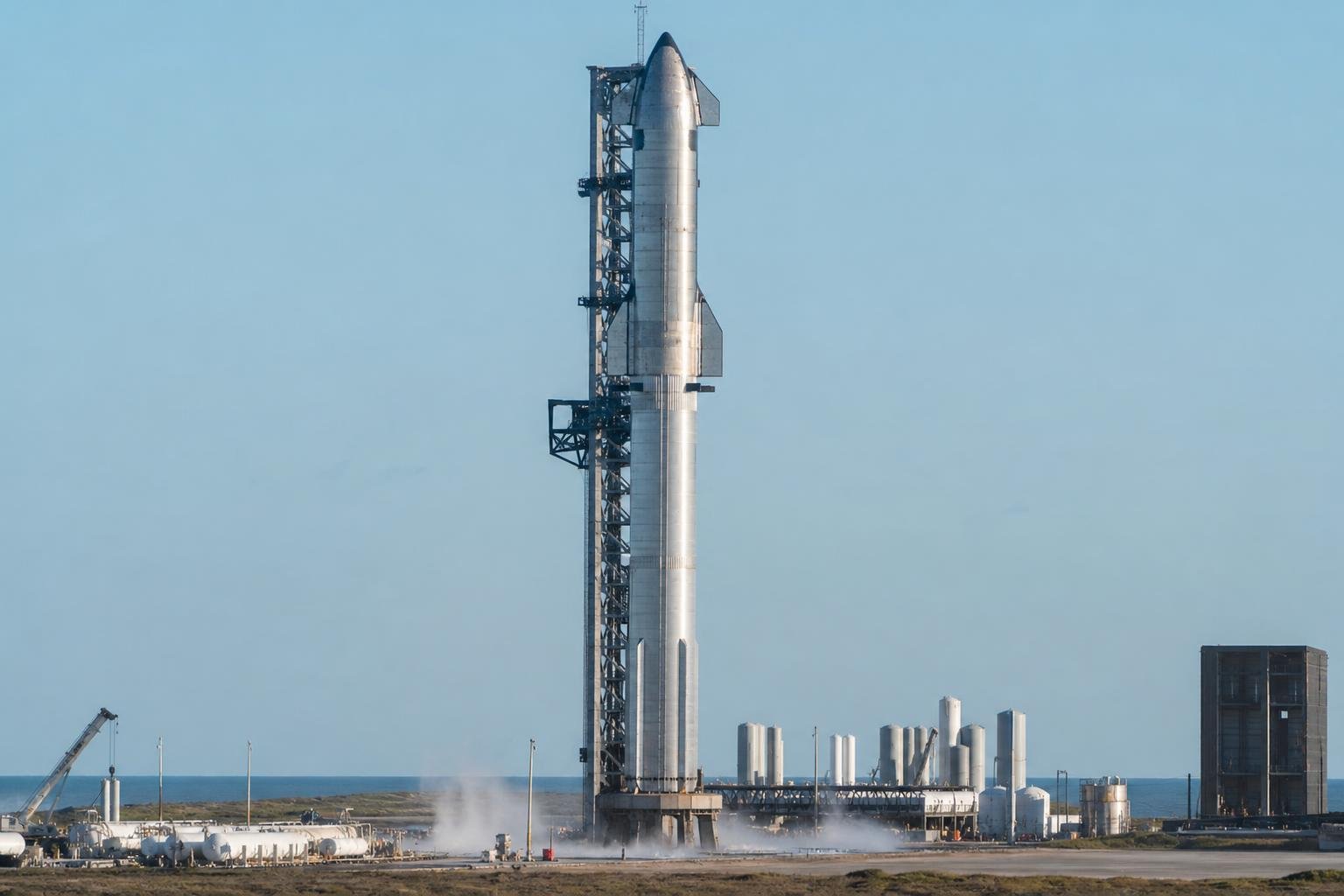
SpaceX’s first flight of its redesigned Starship V3 system delivered a consequential but incomplete success on May 22. The roughly hour-long Flight 12 mission sent Ship 39 to its planned suborbital trajectory, deployed 22 test payloads, survived reentry and executed a controlled splashdown in the Indian Ocean. Its Super Heavy booster, Booster 19, failed during its planned return to the Gulf of Mexico after multiple Raptor engine problems. [1][2]
The split result matters well beyond a single test flight. Starship V3 is the largest and most extensively revised version of the vehicle SpaceX has flown, incorporating new Raptor 3 engines, new recovery hardware, a larger upper-stage propellant system and orbital-refueling equipment. Its performance will shape the company’s plans for higher-capacity Starlink deployment, NASA lunar-lander work and a newly public IPO narrative built partly around Starship’s long-term economics. [3][7]
A new Starship reaches its planned trajectory
Flight 12 lifted off from Starbase, Texas, at 5:30 p.m. Central time on May 22, marking the debut of both the V3 vehicle and Starbase’s Orbital Launch Pad 2. Booster 19 and Ship 39 completed hot-stage separation, allowing the upper stage to continue toward a planned altitude of about 120 miles, or 194 kilometers. [1][2]
Ship 39 deployed 20 Starlink-sized mass simulators and two modified, camera-equipped Starlink satellites. The camera payloads were intended to observe the spacecraft’s heat shield during flight, providing data on a subsystem that has presented recurring challenges across earlier Starship tests. [2]
One of Ship’s six vacuum-optimized Raptor engines shut down during ascent. The upper stage continued on its planned profile with its remaining engines, an engine-out result SpaceX highlighted as an important demonstration of fault tolerance. Ship then conducted planned rear-flap structural-load testing and a banking maneuver relevant to future return-to-launch-site operations. It ultimately performed its landing flip, a two-engine landing burn and a controlled splashdown in the designated Indian Ocean zone. [1][2]
That sequence is meaningful progress, but it should not be confused with an operational recovery. Neither stage was intended to be caught by the launch tower on this flight, and neither was recovered for reuse. The test instead established that the new Ship design could reach its intended suborbital path, deploy payloads and make it through atmospheric reentry despite an engine loss. [1][4]
Booster failures remain the central qualification problem
The Super Heavy return was Flight 12’s major shortcoming. A Raptor apparently shut down during ascent, and additional engines did not operate properly during the boostback and landing sequence. The booster did not complete its planned controlled Gulf of Mexico splashdown and was lost in an uncontrolled or hard water impact. [2][5]
For a program built around full and rapid reusability, that outcome is more than a secondary blemish. Super Heavy needs reliable propulsion through launch, boostback, descent and landing before SpaceX can establish the turnaround rates that underpin Starship’s projected economics. The first V3 mission was deliberately a developmental flight, but the booster result leaves the new Raptor 3 and the return sequence as major areas for further validation. [4][5]
SpaceX did not plan a tower catch for Flight 12, so the missed splashdown was not a failed catch attempt. Still, a soft, controlled water landing would have been a useful intermediate demonstration for a vehicle intended eventually to return to Starbase for recovery and reuse. The distinction is important: the upper stage succeeded at controlled disposal after reentry, while the booster did not complete its planned recovery profile. [2][5]
What changed in Starship V3
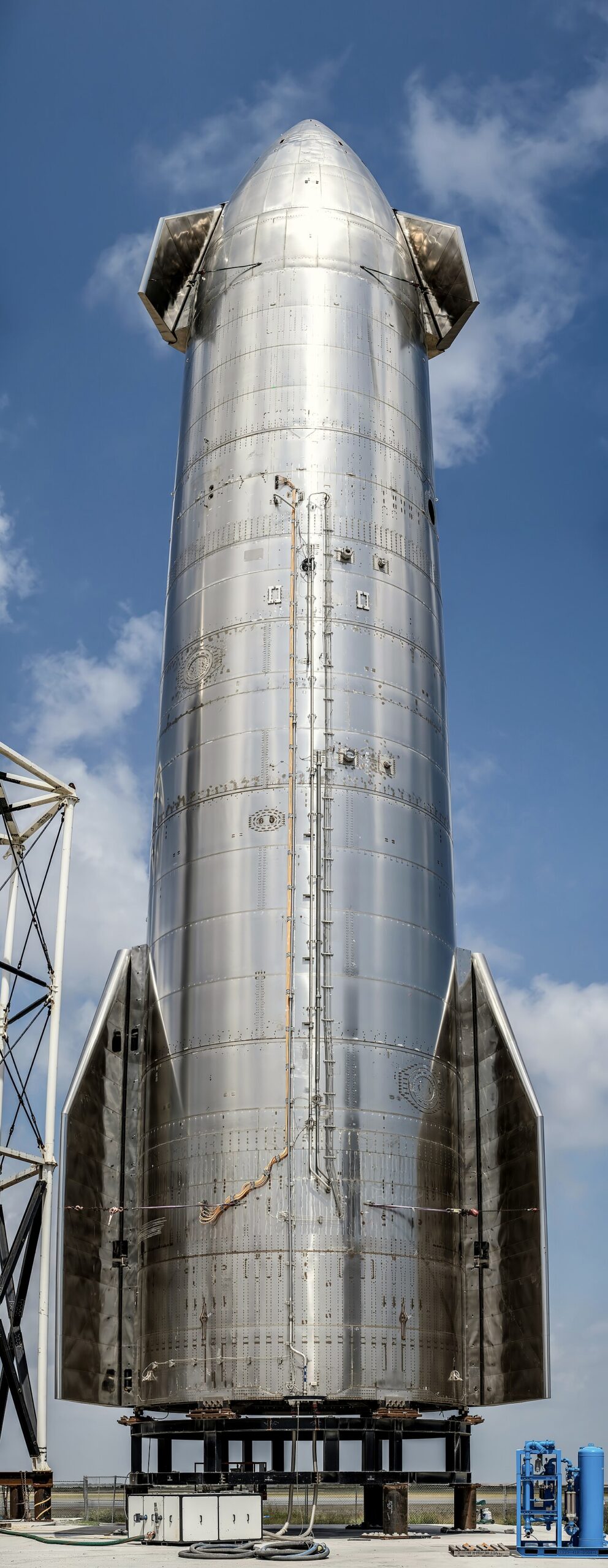
V3 is a substantial redesign rather than an incremental update. The combined system stands about 407 feet, or 124 meters, tall and uses Raptor 3 engines on both stages. Super Heavy has 33 engines and produces more than 18 million pounds of thrust at liftoff, according to SpaceX. [1][3]
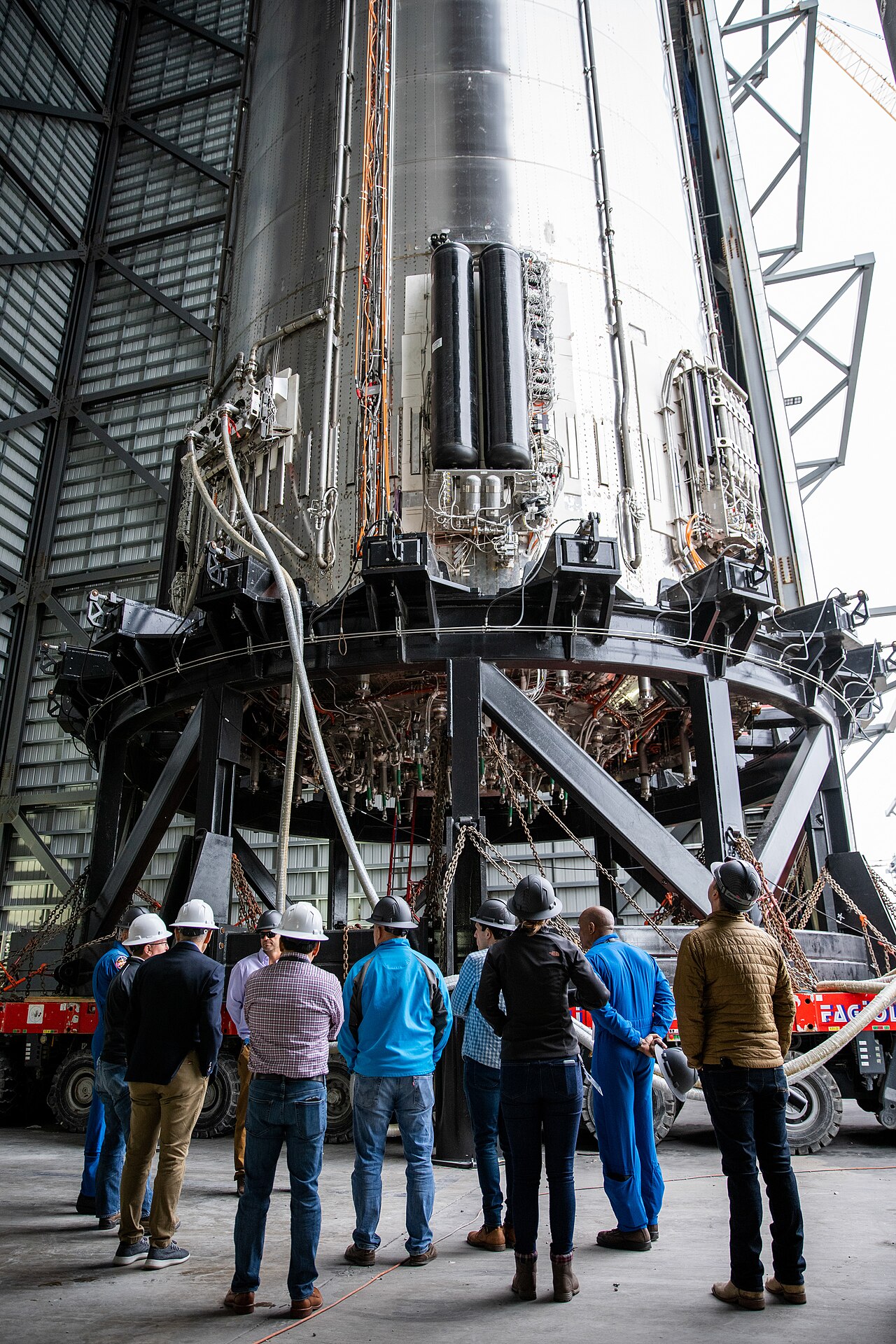
- Reworked booster architecture: Super Heavy uses three larger grid fins instead of four smaller ones. The fins are mounted lower on the booster to reduce their exposure to hot-staging exhaust. The hot-stage ring is integrated into the booster rather than used as a detachable interstage component. [3]
- Faster propellant flow and ignition: A much larger transfer tube, described as roughly Falcon 9 first-stage-sized, is designed to support faster and more simultaneous engine ignition during launch and landing burns. Revised aft-end routing and protection aim to improve the thermal resilience of propellant, power and computer systems. [3]
- More capable upper stage: Ship has a larger propellant tank, revised plumbing and wiring, upgraded reaction-control hardware and increased computing, navigation and camera capacity. [3]
- Orbital-refueling provisions: Four docking ports and cryogenic-fluid-management hardware were added for future tanker rendezvous and propellant transfer in orbit. [3]
SpaceX’s V3 target is more than 100 metric tons to low Earth orbit, versus roughly 35 metric tons associated with earlier configurations. That is a design objective, not a Flight 12 result: the mission was suborbital and carried test articles rather than an operational payload. [6]
Starlink economics are the near-term commercial case
Starship’s most immediate commercial value proposition is likely to be SpaceX’s own Starlink network. A large, reusable launcher with a high-volume payload bay could carry bigger next-generation satellites and more network capacity per mission than Falcon 9. The mass simulators on Flight 12 tested the deployment concept, while the two camera-equipped payloads were also part of the effort to gather heat-shield data. [2][6]
However, the economics remain prospective. Analyst estimates that Starship could materially lower SpaceX’s internal cost per kilogram depend on the company proving reliable recovery, limited refurbishment and a high launch cadence. Flight 12 did not establish any of those conditions. It demonstrated payload deployment and a controlled upper-stage splashdown, but it did not deploy operational Starlink satellites or return either vehicle for another flight. [4][6]
If SpaceX reaches those milestones, the implications would extend beyond satellite broadband. A launch system able to routinely lift more than 100 metric tons could alter the economics of large satellites, space-station modules, observatories and national-security payloads. At present, that is a market thesis contingent on engineering results still ahead.
Artemis needs capabilities Flight 12 did not test
NASA has selected a Starship-derived Human Landing System for Artemis lunar missions, while Blue Origin is developing its competing Blue Moon lander. The V3 flight advances relevant areas of propulsion, vehicle control, reentry and payload operations, but it does not resolve the core architecture required to take a lunar lander from low Earth orbit to the Moon. [3]
Starship must still demonstrate orbital cryogenic-propellant transfer, repeated tanker launches, long-duration propellant management, an uncrewed lunar landing and ascent, and rendezvous and docking with NASA’s Orion spacecraft. Orbital refueling is especially critical: a lunar Starship mission depends on accumulating propellant in Earth orbit before departing for the Moon. Flight 12 carried hardware intended for that future role, but did not conduct a transfer demonstration. [3]
The controlled Ship splashdown adds useful confidence in the upper stage’s evolving thermal-protection and landing systems. But the booster’s propulsion issues reinforce the distance between a successful developmental suborbital test and the repeatable reliability necessary for a crew-rated lunar transportation system.
An important test for the IPO story, not proof of readiness
Flight 12 came two days after SpaceX publicly filed for an initial public offering, putting unusual attention on the first V3 launch. Starship is central to the company’s longer-term growth case: it could expand Starlink capacity, create a large-payload launch business and support lunar transportation. [6][7]
The result fits the category of a partial success that investors and the space industry often tolerate on a first flight of a substantially new rocket. Ship’s mission supplied tangible evidence that several V3 systems work together under flight conditions. Yet the failed booster return means it did not validate the reuse model on which the strongest economic projections rely. [4][6]
SpaceX can reasonably claim a major developmental milestone: V3 reached its target trajectory, handled an upper-stage engine failure, deployed test payloads and returned through the atmosphere to a controlled splashdown. The more consequential question is whether the company can turn that one-off performance into repeatable operations. Booster recovery, orbital refueling, in-space engine relights and routine reuse remain unproven—and they will determine whether Starship becomes the commercial and lunar system SpaceX is promising.
Editor’s Take
Flight 12 is the kind of result I would call a real engineering win with a very expensive unresolved dependency. Ship reached its intended path, deployed payload test articles, tolerated an engine-out event and made a controlled reentry splashdown. Those are integrated-system accomplishments, not cosmetic milestones. But Starship’s commercial premise is not simply that it can fly; it is that both stages can fly again quickly, with minimal inspection and refurbishment.
The booster is therefore the part to watch most closely. Reliable Raptor operation through ascent, boostback and landing is the gating item for cadence, cost per kilogram and credible Starlink economics. The V3 hardware changes may ultimately enable that outcome, but this flight did not prove it. Similarly, docking ports and transfer hardware are useful preparation for Artemis, not evidence of orbital refueling. The next flights need to show repeatable booster recovery behavior and actual on-orbit propellant-transfer progress before the market should price in the most ambitious Starship projections.
References
- SpaceX – https://www.spacex.com/launches/starship-flight-12
- Associated Press – https://apnews.com/article/spacex-elon-musk-starship-rocket-launch-53eb1c43f870561788839b08c401bf8f
- Space.com – https://www.space.com/space-exploration/launches-spacecraft/the-worlds-biggest-rocket-how-spacexs-new-starship-v3-differs-from-its-predecessors
- Ars Technica – https://arstechnica.com/space/2026/05/spacexs-starship-v3-still-a-work-in-progress-mostly-successful-on-first-flight/
- Spaceflight Now – https://spaceflightnow.com/2026/05/23/musk-praises-epic-super-heavy-starship-launch/
- PitchBook – https://pitchbook.brightspotcdn.com/4f/4f/a0cae4df4fd7d6990cfc0f51c35b94/q2-2026-pitchbook-analyst-note-why-spacexs-starship-needs-a-big-splash-before-its-75-billion-ipo.pdf
- TechCrunch – https://techcrunch.com/2026/05/20/the-spacex-ipo-filing-is-filled-with-ai-bets-starship-dreams-and-elon-musk-at-the-center/