
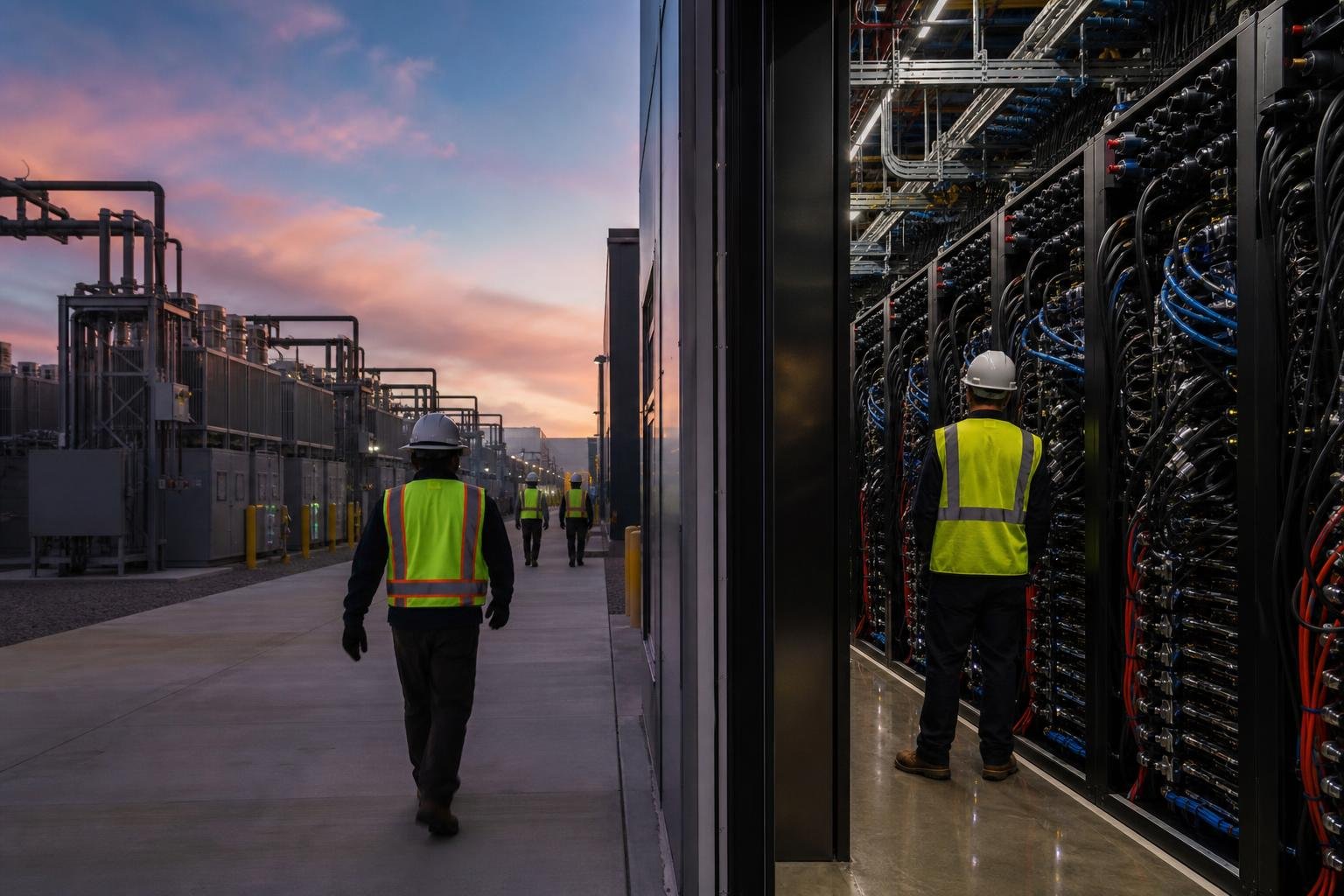
Anthropic’s agreement to lease large-scale AI compute from SpaceX’s newly combined xAI operation is one of the clearest signs yet that frontier-model developers are competing as much for power, data-center capacity and accelerators as for algorithms. Announced May 6, the arrangement gives Anthropic access to all available capacity at the Colossus 1 cluster in Memphis, Tennessee—publicly described as more than 300 megawatts and more than 220,000 NVIDIA GPUs within a month.[1]
The commercial terms disclosed in SpaceX’s May 20 IPO filing make the scale more concrete. Anthropic agreed to pay $1.25 billion a month through May 2029, with lower payments while capacity ramps in May and June. The agreements cover capacity across Colossus and Colossus II, not solely Colossus 1, and either party can terminate with 90 days’ notice.[4] The deal gives Anthropic a rapid answer to demand for Claude and Claude Code while giving SpaceX a marquee infrastructure customer and a substantial contracted-revenue story ahead of its public offering.
A dedicated block of frontier infrastructure
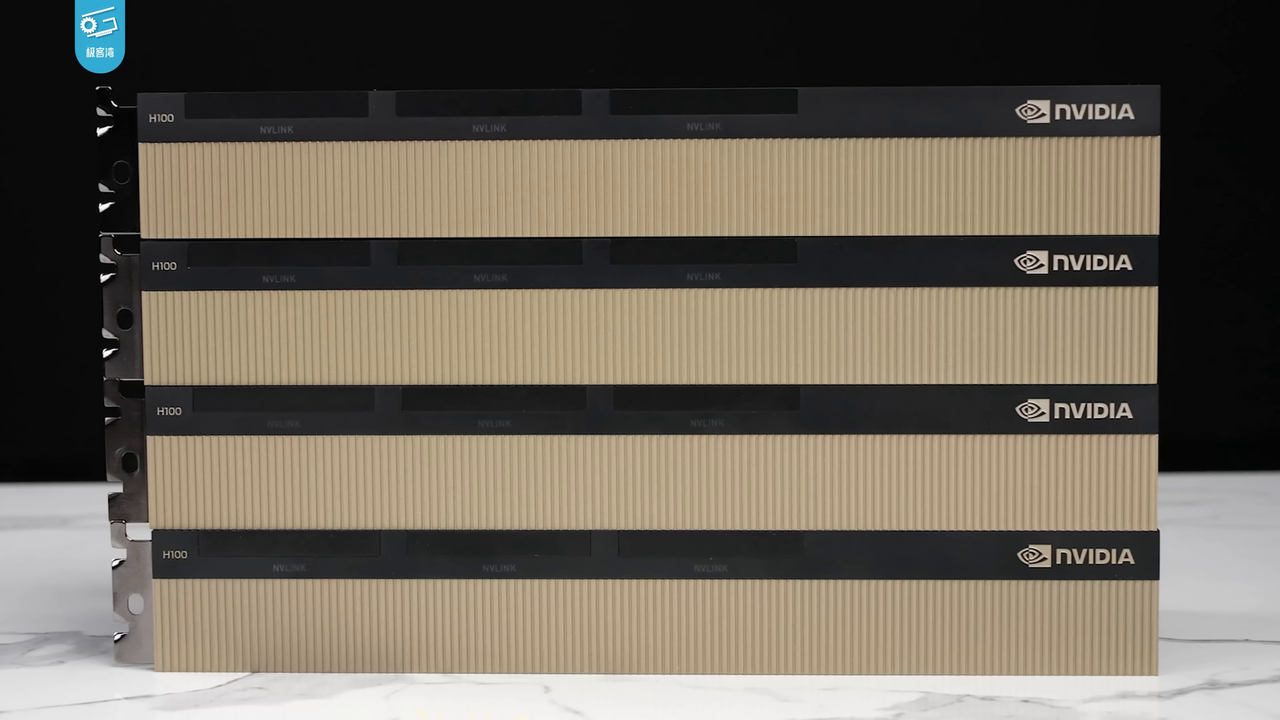
This is not a conventional cloud procurement in which a customer draws capacity from a broad shared pool. Anthropic’s May 6 announcement said it would use all available compute at Colossus 1, a cluster originally developed for Elon Musk’s xAI. The facility includes a mix of NVIDIA H100, H200 and GB200 accelerators and can support training, fine-tuning, inference, multimodal workloads and other high-performance computing tasks.[1][2]
That hardware mix matters, but the public disclosures leave important technical details open. Neither company has specified how many accelerators of each generation Anthropic will receive, the network fabric joining those systems, the training-versus-inference allocation, utilization targets, or service-level commitments. A cluster with more than 220,000 GPUs can be enormous on paper while delivering materially different results depending on interconnect bandwidth, storage architecture, software reliability and the fraction of hardware available at any moment.
The timing is equally significant. Anthropic said the capacity would come online within a month, indicating access to existing or nearly completed infrastructure rather than a multiyear greenfield data-center build. In a market where new power connections, transformers, GPU deliveries and construction schedules can delay deployments for years, near-term availability is a strategic asset.
SpaceX’s IPO filing broadened the known commercial scope. While the initial public announcement centered on Colossus 1, the filing described agreements involving Colossus and Colossus II. It did not quantify the capacity assigned to Anthropic at each location.[4] Musk has said that SpaceX moved its own principal AI training work to Colossus 2, making Colossus 1 available to outside customers.[6] That arrangement effectively turns an internally built AI cluster into a revenue-generating neocloud asset.
Why Anthropic needs the capacity
Anthropic framed the agreement as a way to raise limits for paying Claude users, particularly customers using Claude Code. The company said it would double five-hour Claude Code rate limits for Pro, Max, Team and seat-based Enterprise plans; eliminate peak-hour reductions for Claude Code Pro and Max accounts; and substantially increase API rate limits for Claude Opus models.[1]
Those product changes show that the pressure is not limited to training the next flagship model. AI coding systems can generate expensive, long-running inference workloads, especially when agents use tools, inspect large codebases and repeatedly call models during multi-step tasks. More capacity can improve customer access immediately even if Anthropic does not devote the entire cluster to pretraining.
The SpaceX agreement also broadens Anthropic’s supply base. Anthropic has already disclosed infrastructure relationships involving Amazon, Google and Broadcom, Microsoft and NVIDIA, and Fluidstack. It operates and trains Claude across AWS Trainium, Google TPUs and NVIDIA GPUs.[1] Adding SpaceX/xAI infrastructure does not replace those relationships; it reduces dependence on any single provider, chip platform or construction timetable.
Still, diversification has limits. A 90-day termination clause provides contractual flexibility, but shifting hundreds of megawatts of frontier compute is not operationally simple. Model-training stacks, inference fleets, data pipelines and scheduling systems must be adapted to the hardware and network environment. In a capacity-constrained market, locating comparable replacement compute quickly could be difficult, even though the agreement itself permits either party to exit.[4]
SpaceX turns xAI infrastructure into a business line
The transaction follows SpaceX’s February acquisition of xAI, which placed Grok and the Colossus infrastructure within the combined organization, sometimes referred to as SpaceXAI.[3] For SpaceX, the Anthropic agreement demonstrates a path to monetize capital-intensive AI facilities beyond its own model development.
At the disclosed rate, the commitment equals roughly $15 billion annually. Its nominal value exceeds $40 billion through May 2029 before ramp-up discounts and before accounting for the 90-day termination right. That is an unusually large customer contract for a data-center platform and useful evidence for investors evaluating SpaceX as more than a launch and satellite operator.[4][5]
SpaceX told regulators that the contracts were ordinary-course customer agreements and that capacity could be redeployed if Anthropic ended them.[4] That characterization is notable. It signals confidence that demand for high-density AI capacity is deep enough that the infrastructure has value beyond a single tenant, while also limiting the impression that SpaceX has become commercially dependent on Anthropic.
The partnership also contains a competitive irony. xAI’s Grok competes with Claude, and Musk had previously been hostile toward Anthropic. Musk has since described the arrangement as a reassessment, saying Anthropic’s work to make Claude “good for humanity” had impressed him.[6] The business logic is more straightforward: idle or surplus AI capacity is too valuable to leave unused when leading labs are willing to pay heavily for it.
Orbital compute remains a strategic concept, not a project
Anthropic also said it had expressed interest in working with SpaceX on multiple gigawatts of orbital AI-compute capacity.[1][2] The statement has drawn attention because it connects the AI industry’s terrestrial power constraints with SpaceX’s launch, satellite and space-systems ambitions. But it should not be read as an announced orbital data-center program.
As of May 24, neither company has disclosed an architecture, orbital altitude, satellite count, power-generation design, cooling system, launch cadence, financing structure or deployment timeline. There is no announced construction contract or finalized engineering program.
The appeal is understandable. Solar energy in orbit could potentially offer more consistent generation than ground-based solar arrays, and SpaceX has capabilities relevant to launching and networking large satellite constellations. Yet power generation is only one part of the challenge. A frontier-training system requires tightly coupled, high-bandwidth communications among large numbers of accelerators. It would also need to reject immense amounts of heat in vacuum, where ordinary air and water cooling methods do not work.
Radiation tolerance, component failures, maintenance, replacement launches, manufacturing throughput and transferring large volumes of data between orbit and Earth are further unresolved issues. The idea may eventually address land, grid and cooling constraints, but there is no public evidence yet that an orbital system could economically run frontier-model training at scale. For now, the orbital language is best understood as a long-range strategic direction.
Power, water and the social cost of scale
The deal underscores why AI infrastructure is increasingly a power-and-permitting story. More than 300 megawatts of capacity at a single allocation is comparable to the electricity demand of a major industrial operation. The ability to secure GPUs is no longer sufficient; developers also need substations, transmission access, cooling systems, generators, land and regulatory approval.
In Memphis, Colossus has already attracted concern from local groups and water experts over electricity demand, cooling-water use and potential pressure on the Memphis Sand Aquifer, the region’s sole-source drinking-water aquifer. E&E News reported that xAI paused construction of a planned water-reuse facility intended to reduce reliance on municipal water.[7] Questions surrounding power-generation arrangements and environmental permits are not terms of Anthropic’s agreement, but they are relevant to the long-term cost, reliability and public acceptance of the compute it is buying.
Ryan Mallory, chief executive of data-center operator Flexential, characterized the interest in orbital computing as evidence of how aggressively the market is searching for power and scale.[5] That assessment captures the broader significance of the Anthropic-SpaceX deal. The scarce input in AI is increasingly not just advanced chips. It is deployable, powered infrastructure capable of putting those chips to work now.
What the agreement changes
For Anthropic, the immediate outcome is more headroom for Claude subscribers and API customers, plus access to a large dedicated pool of NVIDIA-based capacity. For SpaceX, it establishes a major external revenue stream from assets built in xAI’s push to train Grok. For the market, it validates an emerging model in which companies that built massive clusters for their own AI efforts lease capacity to direct rivals when their internal workloads move elsewhere.
The agreement is therefore a landmark commercial compute deal, but not a complete technical blueprint. Its most consequential disclosed facts are the scale of the Colossus 1 allocation, the $1.25 billion monthly payment commitment, and the expansion of the commercial relationship across Colossus and Colossus II. The exact hardware allocation, workload split and operational performance remain undisclosed. And the orbital-compute component remains an expression of interest rather than an operating plan.
Editor’s Take
This is what the AI race looks like once model quality is no longer the only bottleneck: a frontier lab is effectively reserving an industrial-scale power plant, data center and accelerator fleet. Anthropic’s immediate objective appears practical rather than theatrical—keeping Claude Code and API users from hitting limits during expensive agentic workloads. For developers, that matters more than another benchmark claim: usable capacity determines whether coding agents feel reliable or frustratingly rate-limited.
The headline dollar figure is huge, but the engineering caveats matter. GPU count and megawatt capacity do not tell us the effective training capability without details on network topology, storage, failure rates, scheduling and the split between training and inference. I would watch for evidence that Anthropic can actually bring this capacity online quickly and translate it into sustained product availability. The orbital-compute discussion is strategically interesting, but it is far ahead of demonstrated economics; terrestrial power, cooling, permits and grid connections remain the real near-term battleground.
References
- Anthropic – https://www.anthropic.com/news/higher-limits-spacex
- xAI – https://x.ai/news/anthropic-compute-partnership
- xAI – https://x.ai/news/xai-joins-spacex
- U.S. Securities and Exchange Commission – https://www.sec.gov/Archives/edgar/data/1181412/000162828026036936/0001628280-26-036936-index-headers.html
- TechCrunch – https://techcrunch.com/2026/05/20/anthropic-will-pay-xai-1-25-billion-per-month-for-compute/
- Investing.com – https://www.investing.com/news/stock-market-news/anthropic-strikes-spacex-data-center-deal-as-it-plows-ahead-on-ai-coding-4664442
- E&E News – https://www.eenews.net/articles/xai-sidelines-major-water-reuse-project-as-ipo-looms/

_024.png)