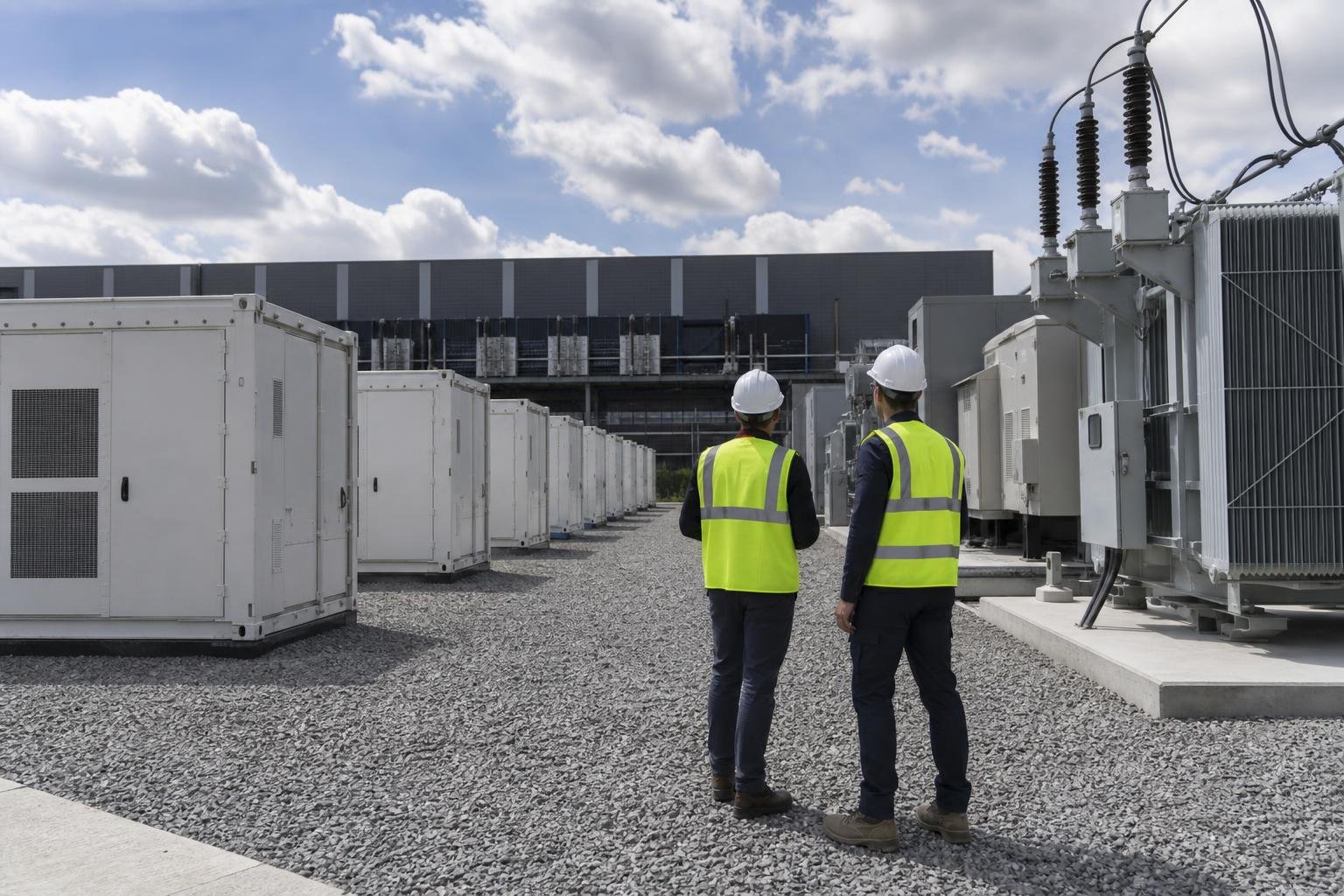
A SpaceX securities filing has revealed that xAI purchased $269 million in Tesla Megapacks in April, a striking measure of the power infrastructure being assembled around Elon Musk’s AI operations. The purchase was not announced separately by SpaceX or Tesla. It appeared in SpaceX’s amended S-1 registration statement filed with the Securities and Exchange Commission on June 1, after SpaceX acquired xAI in an all-stock deal effective February 2.[1]
The disclosure matters because it places utility-scale battery storage at the center of the race to build AI computing capacity. Large AI data centers need more than reliable electricity over the long term: they need a way to manage sudden load swings, constrained grid connections and construction timelines that can move faster than new transmission and generation projects. Still, the transaction is a related-party sale among Musk-controlled companies, not an independently negotiated order from a utility or unrelated cloud provider.
A disclosed xAI purchase, now reported by SpaceX
SpaceX’s filing states that xAI bought $303 million of Tesla goods and services between January 1 and April 30, 2026. That figure includes $269 million of Megapack purchases in April alone.[1] Because xAI is now part of SpaceX, the filing frames the sales as transactions involving the combined SpaceX group.
The document does not say how many Megapacks were ordered, where they will be installed, when they will be delivered or what portion of the $269 million covers equipment rather than installation, controls, service or other project costs. It also does not identify whether the systems are intended for a particular battery duration or whether they are linked to Tesla’s forthcoming Megapack 3 platform.
That lack of project-level detail makes capacity estimates speculative. Tesla’s currently published Megapack configurations provide either 1,927 kW of power and 3,854 kWh of energy in a two-hour design, or 979 kW and 3,916 kWh in a four-hour design.[2] But a purchase price cannot be translated reliably into megawatt-hours: utility-scale battery costs vary substantially with duration, site preparation, interconnection, power-conversion equipment, software, installation and long-term support.
SpaceX said its Tesla-related agreements were conducted under commercial, licensing and support arrangements on terms “no less favorable” than those offered to unaffiliated third parties.[3] That representation is material, but it is not an independent assessment of pricing, margins, financing or allocation terms.
Colossus provides the clearest deployment context
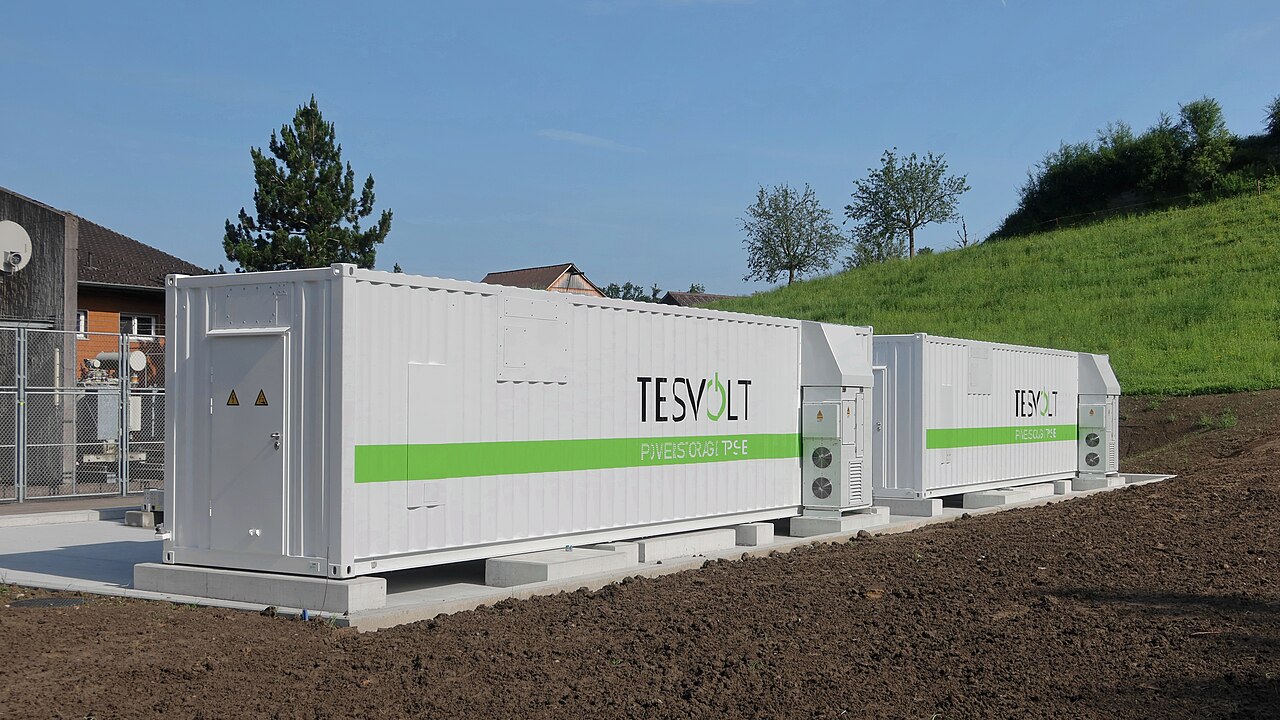
The most visible use case is xAI’s Colossus data-center operation in Memphis, where public reporting has described 168 installed Tesla Megapacks. The facility’s eventual electricity requirement could approach 1.1 GW, according to Data Center Dynamics, far beyond the immediately available capacity of a typical grid connection.[4]
For a high-density AI campus, batteries can play a role beyond traditional emergency backup. They can provide ride-through power during disturbances, reduce abrupt changes in load seen by the grid, limit peak demand, shift energy use across a day and help a site operate while transmission or generation upgrades are pending. They can also work alongside on-site generation and grid supply.
Those capabilities are significant, but they should not be confused with continuous power generation. Megapacks are generally short-duration systems. Tesla’s published configurations are roughly two- and four-hour products, with listed round-trip efficiencies of 92.0% and 93.7%, respectively.[2] A battery fleet can buffer a large campus and provide resilience, but it cannot economically sustain a multi-gigawatt AI operation indefinitely without ongoing grid electricity, generation or a far larger amount of longer-duration storage.
The filing does not specify whether xAI’s newest purchase is primarily intended for backup, peak management, grid services, support for a constrained interconnection or reduced use of local generation. It also does not tie the April order directly to Memphis. Those distinctions matter when evaluating both the commercial value and environmental effect of the systems.
AI infrastructure is becoming a storage customer
The order arrives as power availability increasingly determines where and how quickly AI data centers can expand. JLL projects that global data-center capacity will rise by 97 GW from 2025 through 2030 and says operators are increasingly examining behind-the-meter generation and colocated batteries as grid-connection waits in major markets can exceed four years.[5]
For Tesla, this trend opens a potentially important market beyond utilities and renewable-energy developers. Tesla deployed 46.7 GWh of energy storage in 2025, up 48% year over year, while its energy-generation-and-storage revenue reached $12.8 billion.[6] Those company-wide energy figures do not isolate Megapack sales, but they show stationary storage becoming a more consequential business alongside Tesla’s automotive operations.
Tesla has said Megapack 3 is scheduled to begin volume production in 2026, indicating that the company is preparing for larger storage volumes.[7] SpaceX’s filing, however, does not identify the model xAI bought, so the April purchase should not be treated as a confirmed Megapack 3 order.
The scale is notable even with those limitations. xAI previously bought $191 million in Tesla goods and services in 2024 and $506 million in 2025, while the April 2026 Megapack purchase alone totaled $269 million.[1] Reporting has characterized much of the earlier xAI spending as battery-related, but the filing explicitly itemizes only the April 2026 amount as Megapacks. It therefore provides strong evidence of substantial internal demand for Tesla Energy, while leaving the precise product mix of earlier spending unresolved.
Related-party sales complicate the market signal
The transaction is a powerful illustration of how rapidly AI developers are seeking physical power infrastructure. It is less conclusive as evidence of broad third-party demand because xAI, SpaceX and Tesla share Musk as a central executive and controlling figure.
SpaceX also disclosed that it purchased $147 million in Tesla goods and services in 2025, including $131 million of Cybertrucks, and $4 million during the first four months of 2026.[1] Tesla is listed as holding about 18.99 million SpaceX Class A shares, or less than 1% of the company’s post-IPO Class A shares under the filing’s assumptions.[1] These links make transparency around terms and product mix especially important.
The filing’s totals do not disclose Megapack unit economics, contract terms, delivery timing, project returns or Tesla’s margin on xAI orders. As a result, the purchase should not be read as equivalent to a $269 million order from an unrelated hyperscaler, utility or independent data-center developer. The more defensible conclusion is narrower: Musk’s companies are using Tesla’s grid-scale batteries as a major component of their AI infrastructure buildout.
Batteries do not settle the emissions question
Battery deployments can reduce stress on a constrained grid and may allow a data center to use electricity more flexibly. They do not, by themselves, determine the source of the energy stored. The emissions outcome depends on how and when the batteries are charged, and on the generation used when the facility needs more power than the grid can supply.
That question is particularly acute in Memphis. Environmental groups have criticized xAI’s use of natural-gas turbines near the Colossus site. The Southern Environmental Law Center said xAI had operated as many as 35 generators without permits, with combined capacity of up to 421 MW, while reporting has detailed challenges over permits and local air-quality impacts.[8] The NAACP has also called on officials to halt operations or enforce clean-air requirements, describing the project as a “dirty data center” near a historically Black Memphis community.[9]
Megapacks may help a facility smooth demand or reduce the frequency of peak generation, but they do not eliminate pollution from gas turbines or other fossil-fuel sources used to charge them. The SpaceX filing does not state how xAI plans to operate the new batteries in relation to grid supply or local generation.
What the purchase signals
The $269 million disclosure is an important data point in the convergence of AI computing and utility-scale energy storage. It shows that power management is becoming a core part of deploying large AI systems, rather than a secondary facilities concern. For Tesla Energy, it provides a high-profile internal customer with a demanding, high-load use case.
But the “new energy-storage era” remains an interpretation, not an announced industry milestone. The sale’s real significance will depend on details not yet public: installed capacity, operating strategy, project economics, grid impact and the extent to which similar battery purchases emerge from customers outside Musk’s corporate network.
Editor’s Take
The important signal is not that one Musk-controlled company bought batteries from another; it is that a frontier AI operator is treating power quality, peak management and interconnection constraints as core compute infrastructure. A data center cannot monetize GPUs that are waiting on a substation upgrade or tripping through a grid disturbance. Containerized storage is one of the few assets that can be deployed on a much faster schedule than new transmission, and that makes it commercially valuable even when it is not supplying all of a campus’s energy.
Still, the $269 million headline should not be reverse-engineered into a definitive gigawatt-hour order or treated like an arm’s-length hyperscaler benchmark. The useful next disclosures would be installed power and duration, delivery dates, the operating strategy, and whether the batteries displace peak gas generation or merely support it. Storage paired with cleaner supply and intelligent controls can materially improve a constrained AI campus; storage charged by fossil-heavy power is mainly a reliability and capacity tool, not an emissions solution.
References
- U.S. Securities and Exchange Commission – https://www.sec.gov/Archives/edgar/data/1181412/000162828026039276/spaceexplorationtechnologi.htm
- Tesla Megapack Design – https://www.tesla.com/megapack/design
- U.S. Securities and Exchange Commission, SpaceX Free Writing Prospectus – https://www.sec.gov/Archives/edgar/data/1181412/000162828026040874/spacexukfwp.htm
- Data Center Dynamics – https://www.datacenterdynamics.com/en/news/xai-deploys-168-tesla-megapacks-to-power-its-colossus-supercomputer-in-memphis/
- JLL, Data Center Outlook – https://www.jll.com/en-us/insights/market-outlook/data-center-outlook
- TechCrunch, Tesla’s Energy Storage Business – https://techcrunch.com/2026/01/29/teslas-energy-storage-business-is-growing-faster-than-any-other-part-of-the-company/
- Tesla Investor Relations – https://ir.tesla.com/_flysystem/s3/sec/000162828026026551/tsla-20260422-gen.pdf
- TechCrunch, xAI Generator Permits – https://techcrunch.com/2025/07/03/xai-gets-permits-for-15-natural-gas-generators-at-memphis-data-center/
- TechCrunch, NAACP Response to xAI Memphis Operations – https://techcrunch.com/2025/05/31/naacp-calls-on-officials-to-halt-operations-at-xais-dirty-data-center-in-memphis/