

Anthropic says an unreleased AI model has helped extend a verified lower bound associated with the Riemann hypothesis, one of mathematics’ most famous unsolved problems. The result is not a proof of the hypothesis, and it does not settle the question of whether all relevant nontrivial zeros lie on the critical line. Instead, it reportedly strengthens a computationally checked range in which the hypothesis holds. [1]
That distinction is central. The notable development is not that an AI system “solved” the Riemann hypothesis, but that an agentic research workflow appears to have produced a mathematically useful result: many automated research attempts, review by human mathematicians, and formal verification in the Lean proof assistant. If the underlying materials withstand broader scrutiny, the work would be evidence that AI can become a credible instrument for narrowly defined frontier-mathematics tasks.
By the numbers
- About 650: ideas reportedly tested by the system.
- 60: subagents involved in the research process.
- 1: longstanding unsolved hypothesis; the new work does not constitute a full proof.
What the Riemann hypothesis says
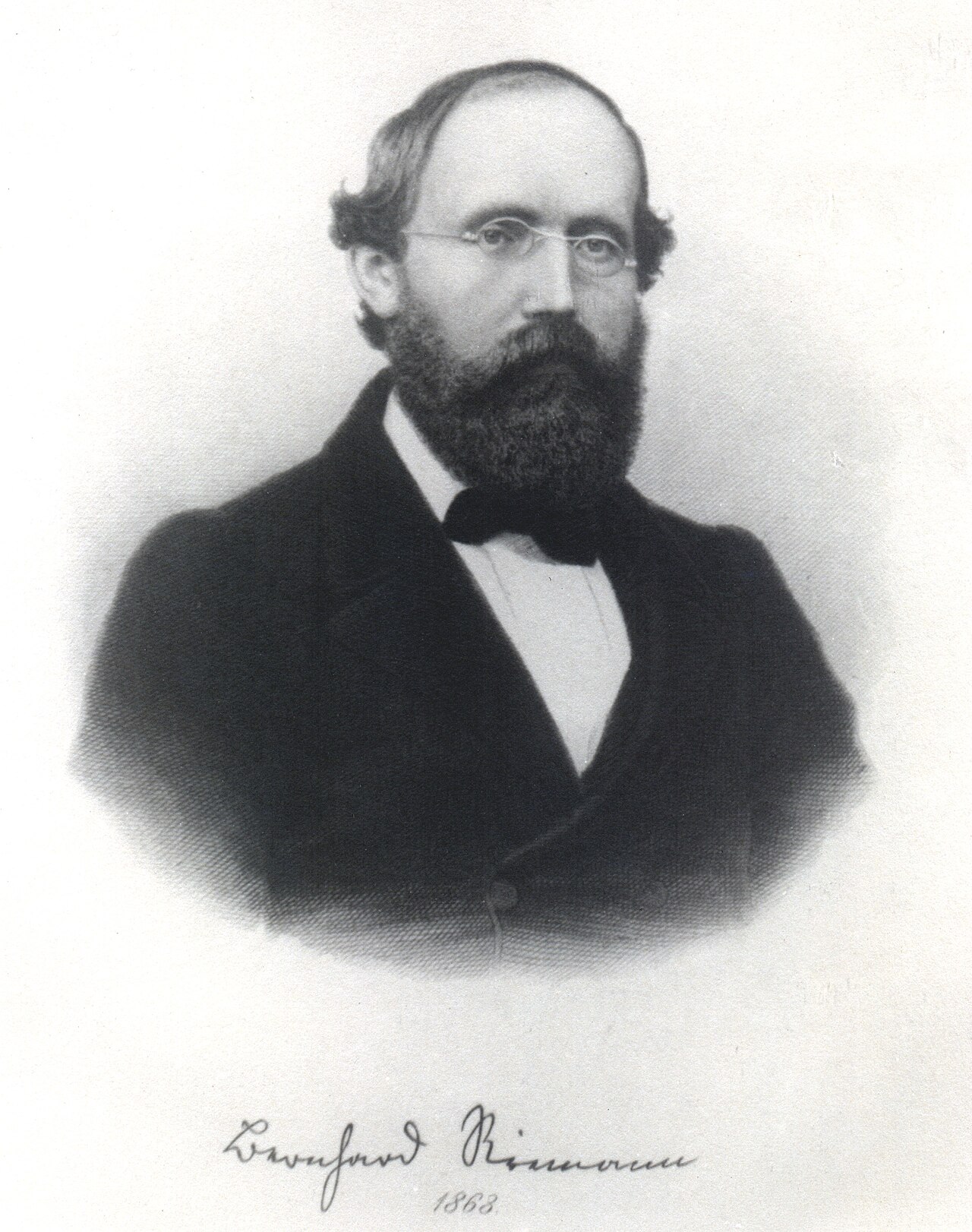
Formulated by Bernhard Riemann in 1859, the Riemann hypothesis concerns the zeros of the Riemann zeta function, a complex-valued function deeply connected to the distribution of prime numbers. The hypothesis states that every nontrivial zero of that function has real part equal to one-half, on what mathematicians call the critical line.
The problem matters because many results in analytic number theory become sharper or conditional on the hypothesis being true. Its implications reach the study of how primes are distributed, though a proof would not suddenly break widely deployed encryption systems; that common claim overstates the immediate practical effect. The Clay Mathematics Institute lists the Riemann hypothesis among its Millennium Prize Problems, with a $1 million prize for a valid solution.
Computational verification has long been a meaningful, but limited, part of the field. Checking that large numbers of zeros behave as expected increases confidence in the hypothesis and can support related research. It cannot establish a statement about infinitely many zeros. Anthropic’s reported contribution belongs in that first category: extending a finite verified domain rather than proving the general theorem. [1]
An agentic research pipeline rather than a single answer
According to TechCrunch’s account, Anthropic’s unreleased model explored roughly 650 ideas through a system of 60 subagents. That setup matters because difficult mathematics rarely yields to a single prompt-response exchange. A useful system needs to generate conjectures or attack plans, test cases, write and run code, identify failures, compare alternate approaches, and retain only work that survives checking.
In this case, Anthropic says its mathematicians reviewed the output and that the resulting work was formalized in Lean. Lean is a proof assistant: software that represents definitions and proof steps in a precise formal language, then checks whether each inference follows from accepted rules. Formalization does not guarantee that researchers chose the most meaningful theorem or that a surrounding informal interpretation is correct. It does sharply reduce the risk that a proof contains an unnoticed logical gap once the statement has been accurately encoded.
The workflow therefore has three distinct layers:
- Automated search: agents explore a large space of possible ideas and computational approaches.
- Expert evaluation: mathematicians decide which outputs are coherent, relevant, and worth developing.
- Machine-checkable verification: Lean verifies the formal proof artifact against its kernel.
Each layer compensates for a weakness in the others. Language models can produce a high volume of plausible-looking but flawed reasoning. Human experts can recognize mathematical value but cannot exhaustively inspect every generated branch. A proof assistant is exacting, but it needs a correctly specified theorem and a proof construction to check. Together, the three form a more credible research process than an unreviewed model transcript.
What has been verified—and what remains unknown
The public account leaves important technical details unavailable. The accessible reporting does not fully disclose the model configuration, prompt design, compute budget, code, proof files, or a complete independent-review record. Nor does it provide enough material for outside researchers to reproduce the claimed lower-bound increase from first principles. [1]
That limits how the result should be interpreted. Anthropic’s internal mathematical review and Lean formalization are substantial signals, particularly if the formal theorem precisely captures the computational claim. But reproducibility remains a separate standard. External mathematicians will want access to the exact statement formalized in Lean, the source code and numerical methods used, assumptions about numerical precision and error bounds, and the process by which the agents’ proposed ideas were selected.
The key question is also more specific than whether an AI produced a proof. Researchers will need to determine whether the advance represents a durable new method, a useful optimization of known computational machinery, a newly formalized version of an existing argument, or some combination of those. Any of those outcomes could be worthwhile. They carry very different implications for the pace of future mathematical discovery.
Why this matters for AI research and the market
Anthropic is one of the leading developers of frontier AI models, competing with OpenAI, Google, Meta and other organizations to show that general-purpose systems can perform economically valuable knowledge work. Mathematics is strategically important in that contest because it offers a high-bar test of reasoning: claims can often be specified precisely, intermediate steps can be checked, and results can be independently validated.
A credible contribution to number theory would not by itself demonstrate broadly reliable scientific autonomy. It does, however, point toward a commercially important product direction: AI systems that act less like answer engines and more like supervised research environments. Such systems could help specialists search literature, propose lemmas, generate experiments, maintain formal proof libraries, translate informal arguments into proof-assistant code, and document the provenance of research decisions.
The nearer-term market opportunity may be in domains with rigorous verification loops: software verification, hardware design, cryptographic engineering, formal methods, mathematical modeling and parts of scientific computing. In those settings, the value comes not from accepting a model’s prose at face value, but from integrating it into a workflow where compilers, tests, simulations, theorem provers and domain experts can reject bad output quickly.
For AI labs, the result also reinforces the importance of tool use and multi-agent orchestration. A model that can call code, delegate tasks, inspect results and revise a plan may be more useful in research than a larger model judged only on benchmark questions. Yet this approach also raises costs: running dozens of agents and performing expert review is substantially different from serving a single chatbot response. The eventual business case will depend on whether the research gains justify that compute and human-supervision expense.
Expert scrutiny is the real test
The established mathematical standard is conservative for good reason. A result becomes durable not when its authors announce it, but when other experts can inspect the definitions, reproduce computations, challenge assumptions and, ideally, build on the method. Lean gives the reported work an unusually strong verification component, but formal verification is most persuasive when the formal artifacts are available for others to compile and examine.
There are additional concerns specific to agentic systems. Parallel subagents can amplify exploration, but they can also repeat the same mistaken premise at scale. A language model may generate persuasive explanations for computational output it does not genuinely understand. And an internal team may, intentionally or not, select the most favorable result from a much larger set of unsuccessful experiments. Public release of logs, code, benchmarks and proof files would make it easier to distinguish a genuine methodological leap from a one-off research success.
Anthropic’s claim should therefore be viewed as a promising research report, not a reason to lower standards for mathematical proof. The encouraging part is that the reported process appears to embrace those standards: human mathematical scrutiny followed by formal checking, rather than an appeal to model authority. [1]
What comes next
The most consequential next step would be publication or release of enough material for independent verification. That includes the exact lower-bound statement, its relationship to prior records, the numerical implementation, the Lean files and an account of the human and automated contributions. Independent replication would turn an interesting corporate research announcement into a stronger scientific result.
More broadly, the episode may help establish a practical model for AI-assisted discovery. Rather than asking models to replace mathematicians, labs can use them to widen the search over ideas while putting formal tools and expert judgment at the points where correctness matters most. That is a slower and less theatrical story than an AI “solving” an ancient conjecture. It is also the route more likely to produce results that researchers can trust.
Editor’s Take
I see the important product signal here as the verification loop, not the headline association with the Riemann hypothesis. A system that can explore hundreds of avenues is useful only if it can leave behind artifacts that a mathematician, a compiler and a proof assistant can independently interrogate. Lean is doing crucial work in making the output more than a polished model narrative.
The next thing to watch is disclosure. If Anthropic releases reproducible code and proof files, and outside number theorists can verify both the claim and its novelty, this becomes a meaningful demonstration of an AI research stack. If the artifacts remain unavailable, the story is still interesting but should be treated as a vendor-reported result rather than a settled advance. The commercial lesson is already clear: the winning systems for technical work will be those that make review faster and evidence stronger, not those that merely sound most confident.



,_Mathematician_(2551069295).jpg)
