
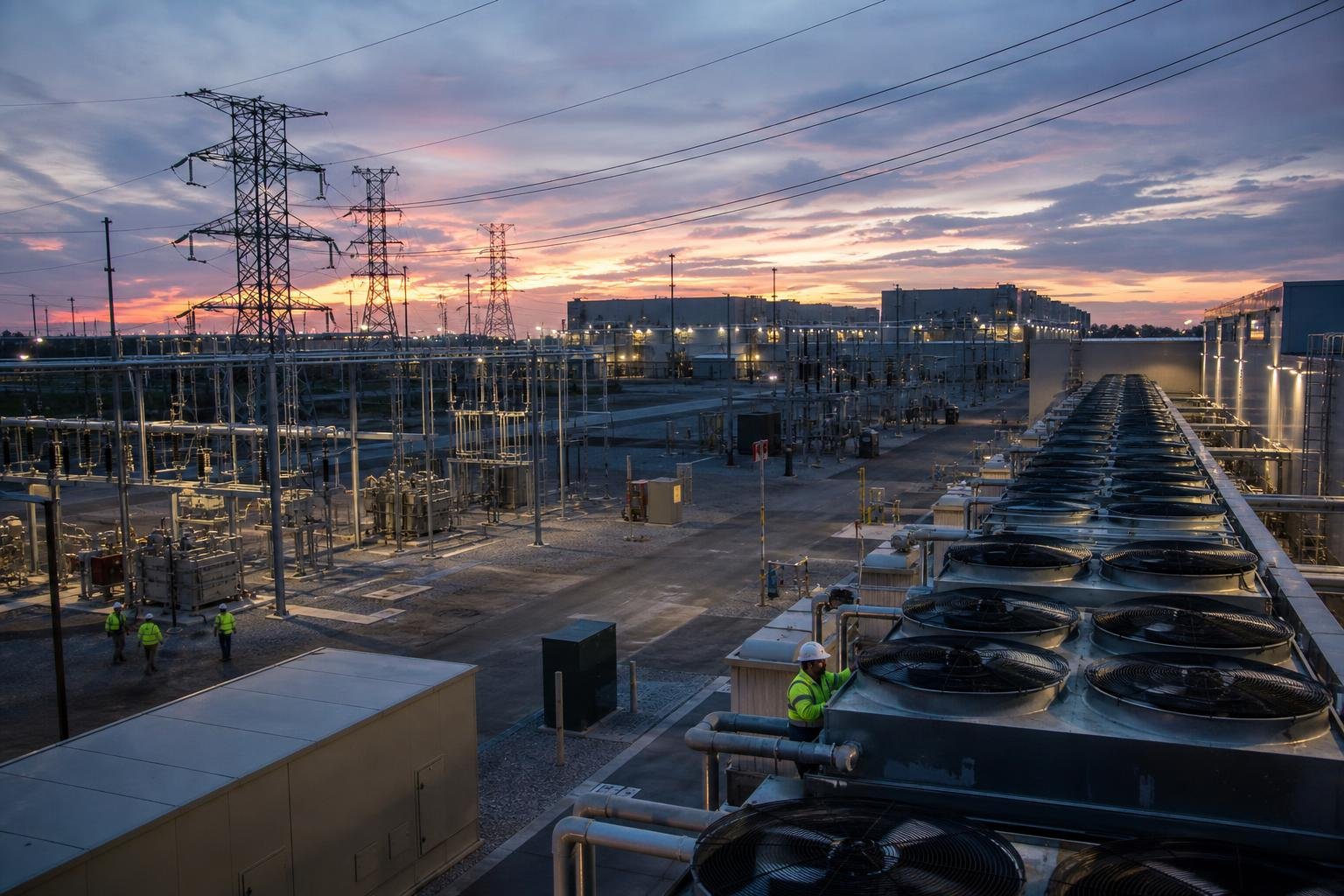
xAI’s architecture is best understood less as a single disclosed model blueprint than as a tightly coupled system: sparse transformer models, enormous GPU clusters, reinforcement-learning pipelines, built-in tools and distribution through X. That distinction matters because xAI has published detailed specifications for Grok-1, but not for the frontier Grok models that now underpin its consumer, developer and agentic products.
As of June 3, 2026, the company’s technical strategy has also become part of a broader corporate and infrastructure strategy. SpaceX acquired xAI in February, making it a wholly owned subsidiary and linking its model development with X, Starlink, launch capabilities and Musk’s longer-term ambition for space-based computing. Meanwhile, xAI is turning its Colossus supercomputing capacity into a commercial asset, including an agreement to provide Anthropic access to Colossus 1. [1][2]
The disclosed foundation: Grok-1’s sparse transformer
Grok-1 remains the clearest public reference for xAI’s underlying neural-network design. When xAI released its weights and reference implementation under the Apache 2.0 license in March 2024, it described a 314-billion-parameter sparse mixture-of-experts, or MoE, transformer. [3]
An MoE model does not use every parameter for every token. Grok-1 contains eight experts but activates two for each token, reducing the computation required at inference relative to a dense model with the same total parameter count. The approach is intended to let a model expand its total capacity without forcing every request through the entire network.
- 314 billion total parameters
- Eight experts, with two activated per token
- 64 transformer layers
- 48 query-attention heads and eight key/value heads
- 6,144-dimensional embeddings
- 131,072-token SentencePiece vocabulary
- Rotary positional embeddings and an 8,192-token maximum sequence length
The reference implementation also supports activation sharding and 8-bit quantization. xAI cautioned, however, that the released MoE implementation was not optimized for production. It was a transparency release, not a complete description of the company’s serving stack. [3]
That caveat is central to any assessment of xAI’s current architecture. The Grok-1 release does not establish that Grok 2, Grok 3, Grok 4, Grok 4.1 or Grok 4.20 use the same expert count, layers, attention configuration or parameter total. xAI has publicized capabilities and training methods for those later models, but not equivalent layer-by-layer specifications.
Scaling the system, not just the model
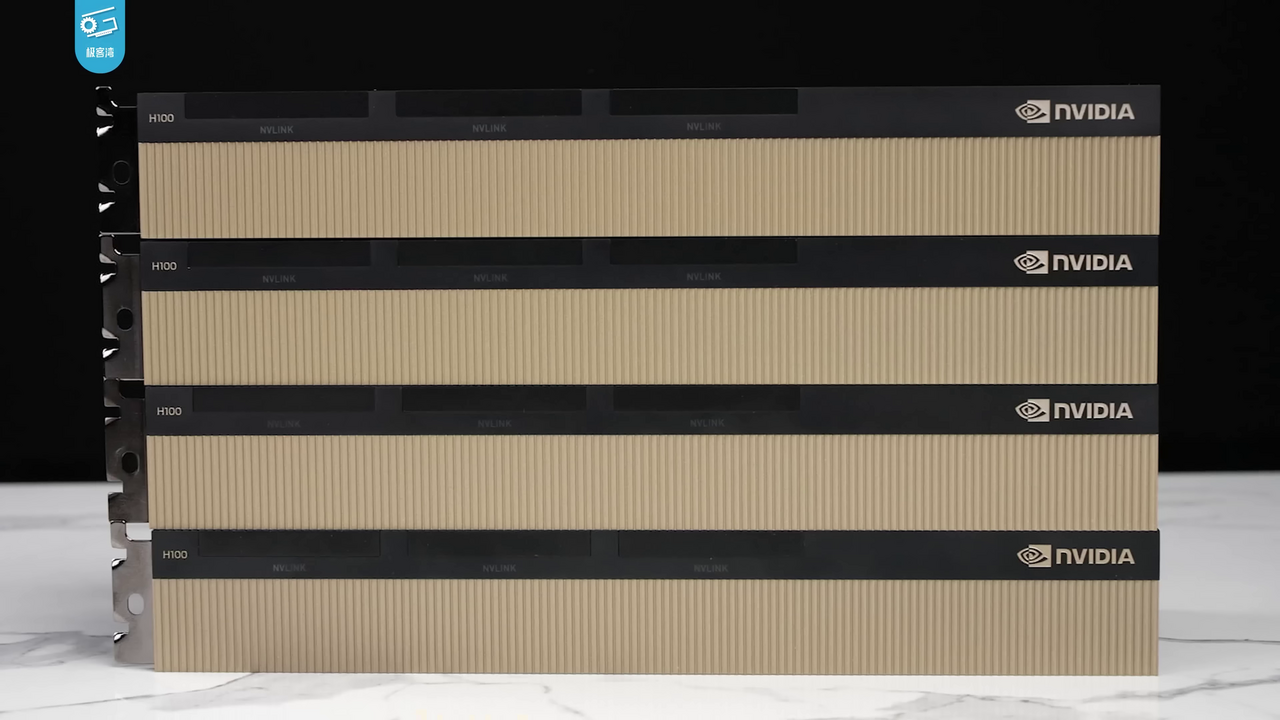
xAI’s more distinctive public engineering story is Colossus, its Memphis-based training infrastructure. The initial Colossus cluster was brought online in roughly 122 days and initially deployed about 100,000 Nvidia GPUs. It was later expanded to roughly 200,000 GPUs for Grok 4 reinforcement-learning work. In January, xAI said Colossus I and II together had surpassed one million H100 GPU equivalents, a capacity measure that should not be read as a literal count of identical H100 cards. [2]
By May, xAI said Colossus 1 had more than 220,000 Nvidia H100, H200 and GB200 GPUs and announced a compute partnership with Anthropic. The agreement signals that Colossus is becoming more than an internal training cluster: it is also being positioned as a compute platform for other frontier-model developers. [1]
The company’s early public descriptions of its training stack emphasized Kubernetes for orchestration, Rust infrastructure components and JAX for model training. The stated objective is reliable synchronized training across thousands or tens of thousands of accelerators, where hardware failures, networking faults and memory errors are routine operational risks rather than edge cases. xAI has emphasized automated fault detection and recovery, high model-flop utilization and useful compute per watt. [4]
This systems emphasis is a practical form of model architecture. At frontier scale, network bandwidth, storage, job scheduling, cooling, electrical supply and recovery from failed hardware can determine how much effective training a lab gets from its GPUs. xAI has said Grok 3 used 10 times the compute of its prior state-of-the-art models, while Grok 4 training incorporated infrastructure and algorithmic changes that produced a claimed sixfold improvement in compute efficiency. [5][6]
Those gains come with material constraints. Colossus’s rapid Memphis buildout relied in part on natural-gas turbines to supplement grid power, prompting environmental criticism and threatened litigation from the NAACP and environmental advocates. xAI said its temporary generation units complied with applicable law. The dispute illustrates that power and cooling are now as strategically important to frontier AI as parameter counts. [7]
Reinforcement learning as the reasoning layer
The progression from Grok 3 to Grok 4 shows where xAI has placed its most consequential technical bet: scaling reinforcement learning beyond conventional post-training preference tuning. Grok 3 introduced expanded reasoning modes, allowing the system to spend more time considering alternatives, correcting mistakes and working through difficult problems. xAI said those capabilities were refined through large-scale reinforcement learning. [5]
For Grok 4, xAI said it used its 200,000-GPU Colossus cluster to run reinforcement learning at approximately pretraining scale. That is a more ambitious use of RL than simply training a chatbot to prefer one answer style over another. The company said it broadened verifiable training data beyond mathematics and coding into additional domains, aiming to reward models for reaching checkable outcomes across more tasks. [6]
The implication is that xAI’s latest models are designed around a division of labor between broad pretraining and extended post-training. Pretraining supplies language, world knowledge and general patterns; large-scale reinforcement learning is intended to turn those capabilities into more reliable multistep reasoning and action. The exact algorithms, reward construction, datasets and model dimensions remain undisclosed.
The approach has generated competitive results but also requires careful interpretation. xAI’s Grok 3 benchmark presentation drew criticism over whether some sampling and consensus procedures were directly comparable with competitors’ single-pass results. Such criticism does not establish that a score is invalid, but it highlights why benchmark numbers need context on tools, reasoning budgets, sample counts and selection procedures. [8]
Tools, retrieval and agentic behavior
xAI’s architecture increasingly treats external tools as part of the model’s learned operating environment. Grok 4 was trained for native use of web browsing, real-time search, X search, code execution and other retrieval tools. According to xAI, reinforcement learning teaches the system when and how to invoke those tools during problem solving, rather than relying solely on an external workflow layer to decide what happens next. [6]
Grok 4.1 Fast extended that direction with a two-million-token context window and an Agent Tools API offering web and X search, code execution, document and collection retrieval, and MCP-based connections to outside tools. xAI said the model was trained in simulated environments with tools across multiple domains and optimized with reinforcement learning for real-world tool-calling tasks. [9]
By April, the Grok 4.20 model card also described advanced reasoning and multi-agent capabilities. But the public material does not disclose how many agents are involved, whether they are separate models or instances, how tasks are routed among them, or how they exchange information. The evidence supports a multi-agent product capability, not a complete public architecture for an underlying multi-agent system. [10]
This tool-centered design gives Grok a potential freshness advantage, especially because X supplies a large stream of real-time public discussion. It also creates a reliability challenge. Retrieval can surface current information, but X contains misinformation, partisan advocacy and adversarial content alongside useful firsthand reporting. System prompts, ranking choices and source-selection policies can therefore substantially affect answers even when the base model is unchanged.
Multimodality and the X distribution advantage
xAI has extended its autoregressive and MoE-oriented work beyond text. Grok 2 added vision understanding alongside improved text reasoning and coding, though xAI did not publish its detailed neural architecture. Aurora, the image-generation model introduced in late 2024, was described as an autoregressive MoE network trained to predict the next token over interleaved text-and-image data. It supports multimodal input and image editing. [11][12]
X is important to this stack in two ways. It provides a distribution channel for Grok and a corpus of fast-moving public content that can be searched at inference time. That combination differentiates xAI from labs that depend primarily on standalone apps, enterprise deployments or licensing partners. It does not eliminate the familiar risks around data quality, moderation, bias and manipulation; it makes governance of retrieval and ranking more consequential.
The SpaceX acquisition adds another layer. Musk has framed the combined company as a vertically integrated AI-and-space enterprise, linking models, social distribution, communications and eventually orbital computing. As of this date, orbital data centers remain a strategic objective rather than a demonstrated production architecture. Questions around launch economics, heat rejection, radiation, maintenance and low-latency synchronized training remain unresolved. [13]
What remains unknown
xAI’s public disclosures support a clear high-level picture: transformer-based foundation models, sparse MoE techniques in the one fully disclosed model, massive distributed training, reinforcement learning at unusual scale, native tools, long context and an increasingly agentic product layer. The company has moved quickly from a 2023 launch to infrastructure and products that compete with much older frontier labs.
But the most important technical details of current Grok models remain private. xAI has not publicly released their parameter counts, layer configurations, expert routing designs, training datasets, full post-training recipes or complete serving architectures. Claims that assign Grok 4 or later models a particular hidden parameter count or assume they replicate Grok-1’s eight-expert design go beyond the public record.
For xAI, the core architecture is therefore not one diagram of a neural network. It is a vertically integrated operating model in which model design, reinforcement learning, GPU infrastructure, search and tool access, X distribution, and now SpaceX ownership reinforce one another. Its strength is speed and control across that stack; its unresolved tests are transparency, evaluation rigor, information quality, environmental cost and whether the scale economics remain sustainable.
Editor’s Take
I see xAI’s real architectural differentiator less in a secret transformer recipe than in its willingness to treat compute, reinforcement learning, tool use and distribution as one product system. A sparse MoE model is useful, but plenty of labs can build one. The harder advantage is keeping enormous training runs productive, then connecting the resulting model to live search, code execution and a consumer distribution channel with immediate feedback loops.
The practical question is whether xAI can turn Colossus from a costly headline into durable unit economics. Selling capacity to Anthropic is notable because it tests whether the infrastructure can operate as a reliable platform, not merely an internal training asset. I would watch utilization, power availability, network reliability and the commercial terms of outside compute partnerships more closely than claimed GPU totals.
The hype outruns the public facts whenever people infer the internals of Grok 4-class models from the open Grok-1 release. We know the direction—large-scale RL, retrieval, long context and agent tools—but not the critical details of routing, rewards, data or serving architecture. For users, the proof will be whether tool-enabled Grok produces verifiable work with transparent sources and predictable costs, not whether it posts another benchmark win.
References
- xAI, “xAI Joins SpaceX” – https://x.ai/news/xai-joins-spacex
- xAI, “Series E” – https://x.ai/news/series-e?stream=top
- xAI Grok-1 GitHub Repository – https://github.com/xai-org/grok-1
- xAI, “Grok” – https://x.ai/news/grok
- xAI, “Grok 3” – https://x.ai/news/grok-3
- xAI, “Grok 4” – https://x.ai/news/grok-4
- Associated Press, report on Colossus power and emissions dispute – https://apnews.com/article/571c16950259b382f9eae61bd59260ef
- TechCrunch, report on Grok 3 benchmark methodology criticism – https://techcrunch.com/2025/02/22/did-xai-lie-about-grok-3s-benchmarks/
- xAI, “Grok 4.1 Fast” – https://x.ai/news/grok-4-1-fast
- xAI, “Grok 4.20 Model Card” – https://data.x.ai/2026-04-07-grok-4-20-model-card.pdf
- xAI, “Grok 2” – https://x.ai/news/grok-2?source=post_page—–9372906b1246—————————————&utm_source=openai
- xAI, “Grok Image Generation Release” – https://x.ai/news/grok-image-generation-release?_bhlid=53c025a4890fc67da23bb739457f225814dfb550&utm_source=openai
- Associated Press, report on SpaceX and xAI’s orbital-computing ambitions – https://apnews.com/article/2079f03fa888652b7fe836afe8b670a1



_024.png)