
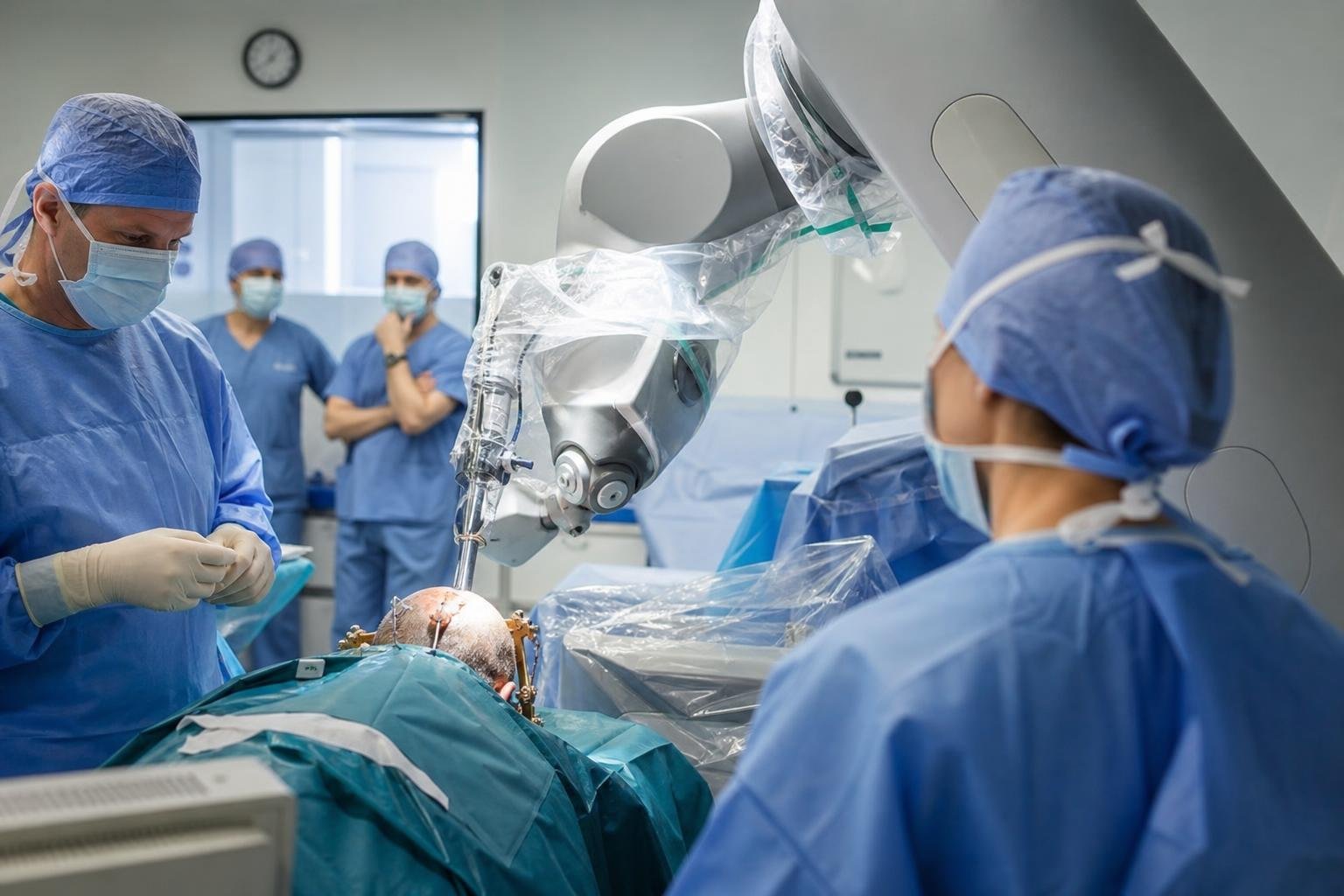
Neuralink’s biggest advances in 2026 have been less about a consumer “mind-reading” product than the difficult work of turning an experimental brain-computer interface into a credible clinical platform. As of May 26, the company has expanded its human trial population, pushed into speech restoration, disclosed a more capable implantation robot and reported engineering changes intended to improve signal reliability.
Those developments matter because the brain-computer interface (BCI) field is moving beyond isolated cursor-control demonstrations. The central test is whether implanted systems can deliver durable, useful communication and computer-access benefits to people with severe paralysis while keeping surgical risk, device maintenance and long-term reliability within acceptable limits. Neuralink has shown encouraging early signals, but its N1 system remains an investigational device rather than an approved treatment.
1. Neuralink’s human trial network reached 21 participants
On January 28, Neuralink said 21 people had enrolled in its clinical trials worldwide, up from 12 participants publicly reported in September 2025. The company refers to trial participants as “Neuralnauts.” Its early programs principally serve people with severe paralysis resulting from spinal-cord injury or amyotrophic lateral sclerosis (ALS), with the goal of letting them control computers, phones, applications and eventually robotic devices through intended movement signals.[1]
The system centers on Neuralink’s wireless N1 implant, a coin-sized device connected to neural tissue by flexible electrode threads. Its R1 surgical robot places those threads in the motor cortex, where they record neural activity associated with intended hand and arm movement. Software translates the signals into cursor motion, keyboard input and other commands, bypassing damaged pathways between the brain and muscles.
The increase in participant count is meaningful even if it remains small by conventional clinical-study standards. BCI performance can vary with the cause and extent of paralysis, brain anatomy, implantation location, signal quality and the body’s long-term response to implanted materials. A 21-person cohort gives Neuralink a broader base for evaluating those differences. Still, the company had not released a peer-reviewed aggregate safety or efficacy dataset by the May 26 cutoff, so public evidence remains weighted toward individual accounts and company disclosures.
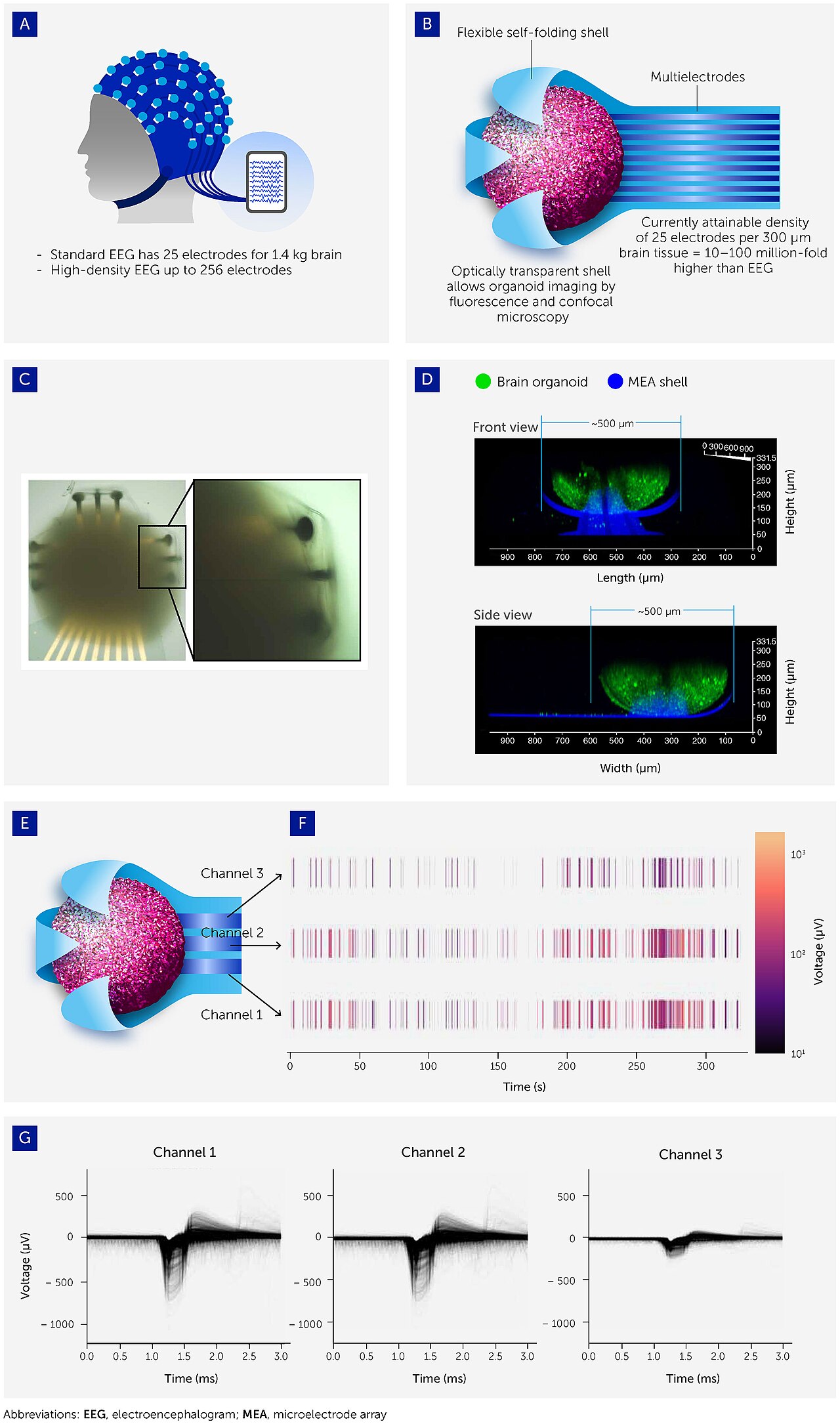
Lena Smirnova
Brian S. Caffo
David H. Gracias
Qi Huang
Itz, CC BY 4.0, via Wikimedia Commons
2. The VOICE study moved Neuralink toward speech restoration
Neuralink’s most consequential clinical expansion this year is its VOICE study, an early-feasibility trial for people with severe speech impairment and impaired upper-limb function caused by ALS, primary lateral sclerosis or spinal-cord injury. The trial, registered as NCT07224256, is investigating whether the N1 implant can translate attempted speech-related neural activity into text or synthesized speech.[2][3]
In March, the company publicized an ALS participant identified as Kenneth, whose disease had progressively impaired his ability to speak. Neuralink said the implant records activity in brain regions involved in speech execution and that machine-learning decoders produce communication output. The company has also previously shown speech-related functionality with Brad Smith, a nonverbal ALS participant who used thought-controlled cursor input and text entry, with output delivered through a synthetic voice modeled on recordings made before his speech was affected.
This is a substantially harder technical target than motor-cursor control. A cursor interface can decode comparatively low-dimensional movement intentions, such as a planned hand trajectory. Speech decoding must infer rapidly changing attempted articulatory or phonetic patterns and produce useful language at low enough latency for conversation. Neuralink had not publicly disclosed independently validated word-error rates, vocabulary limits, latency, calibration requirements or replication data for the VOICE program. The clinical potential is significant, but the public evidence is still preliminary.
3. A next-generation robot targeted the surgical bottleneck
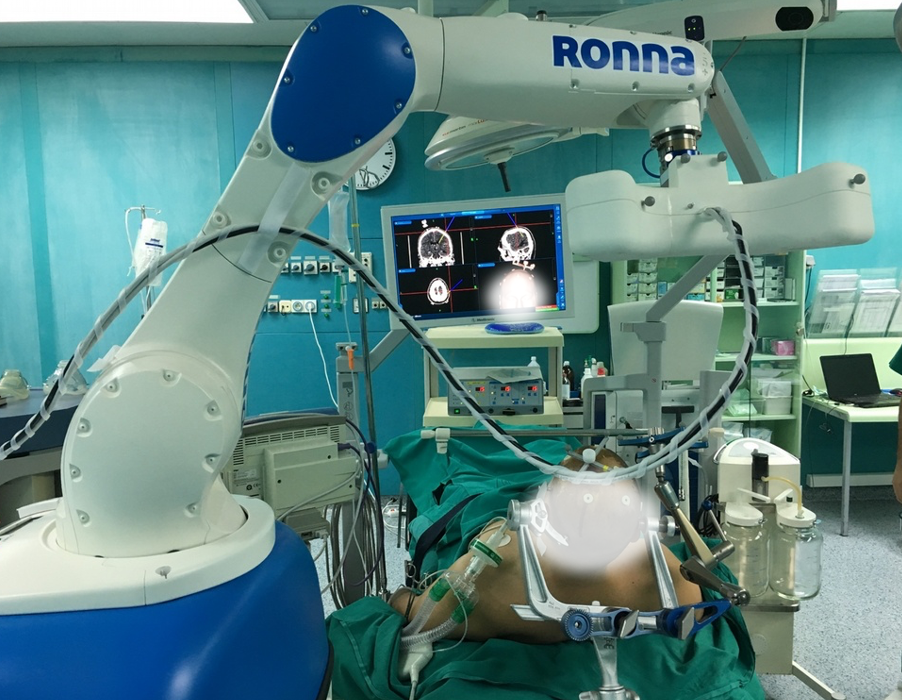
On May 21, Neuralink disclosed a next-generation surgical robot designed to make implantation faster, more scalable and able to reach additional brain regions. The company said the system had already completed a successful surgery.[4]
The new platform includes a smaller implant arm, eight cameras, added sensors, optical coherence tomography for subsurface inspection and movement across five axes. It automates the handling and insertion of the flexible electrode threads, which are thinner than a human hair and are difficult to place manually without damaging threads or blood vessels.
Automation is central to Neuralink’s strategy because surgical throughput could become a limiting factor even if the implant itself performs well. But the May disclosure did not describe fully autonomous neurosurgery. A surgeon still creates the skull opening, positions the brain for the system and supervises the procedure; the robot takes over for thread handling and insertion. Neuralink engineers characterized it as an intermediate system, not the completed autonomous platform envisioned by Elon Musk in earlier comments about high-volume production and automation during 2026.[4][5]
4. Thread-retention changes appeared to improve signal quality
Long-term signal stability may be the most consequential engineering challenge for implanted BCIs. Neuralink’s first publicly identified human participant, Noland Arbaugh, received an implant in January 2024 and experienced retraction of some electrode threads. The company said it responded with surgical and postoperative changes.
In its 2026 disclosures, Neuralink said 18 of the next 20 participants generated higher signal quality after those changes were introduced.[4] That is an encouraging company-reported result, since reliable neural recordings determine whether a user can consistently operate a computer over months or years. It is not, however, a substitute for independently published long-term data describing retention rates, signal degradation, revision procedures and adverse events.
Neuralink also said it is investigating a move from roughly 1,000 electrodes to 3,000, modified thread and implant designs, thread placement through or across the dura mater, and implantation in regions beyond the motor cortex. More electrodes could sample more neural populations and potentially make decoding more robust. They also raise engineering demands involving power consumption, wireless data transfer, thermal management, processing and biocompatibility. As of May 26, Neuralink had not publicly shown that a 3,000-electrode configuration had been implanted in a human participant.
5. Daily-use demonstrations made the assistive case more tangible
Neuralink’s public demonstrations increasingly emphasize everyday computing rather than controlled laboratory tasks. A British Army veteran identified as Jon Noble, reported as participant P-18, said in March that he could play World of Warcraft without a mouse or keyboard after roughly 100 days with the implant. Other participants have publicly demonstrated cursor control, gaming, web browsing, digital art and communication.[4]
For people with paralysis, that shift from a cursor demonstration to sustained personal computing is the practical point of a BCI. A wireless interface that works reliably for hours could expand access to communication, education, employment, entertainment and independent control of digital tools, while reducing reliance on caregivers for some tasks.
These accounts should be interpreted carefully. They are patient testimony and company-linked demonstrations, not standardized independent performance studies. Neuralink has said some users reached communication or cursor-control speeds comparable to or greater than conventional mouse use, but it has not provided a common independent benchmark for those claims.[4] The demonstrations also do not establish general-purpose mind reading, memory recording or a human-AI merger; they show assistive decoding of neural signals tied to intended movement or communication.
Neuralink is advancing in a more competitive BCI market. The company raised $650 million in a June 2025 Series E to expand clinical access and development, while Synchron is pursuing a less invasive endovascular interface, Precision Neuroscience is developing cortical-surface arrays, and Science Corporation is commercializing retinal and other neural-interface technologies.[6][7] The approaches involve different tradeoffs: high-density intracortical systems may offer more direct neural access, while less invasive approaches may reduce surgical burden.
Independent researchers continue to urge caution. University of Washington neurotechnology researcher Rajesh Rao has highlighted Neuralink’s robotic placement of flexible threads as a distinctive feature while noting that safety and feasibility remain unresolved. Penn State researcher Laura Cabrera has stressed that robotic placement does not remove the risks of brain surgery, including hemorrhage and seizures.[8] The decisive question is no longer whether BCIs can move a cursor; multiple groups have shown that. It is whether any system can provide sustained, clinically meaningful benefits with acceptable risk and a viable path to broad medical use.
Editor’s Take
The important Neuralink story is not gaming demos or speculative claims about reading minds; it is the unglamorous work of making an implanted interface dependable enough for someone with paralysis to use every day. Expanding to 21 trial participants and reporting better signals after thread-retention changes are meaningful operational milestones. If users can consistently type, browse, communicate, and control software without repeated recalibration or surgical intervention, that is already a valuable assistive product category.
VOICE is the development I would watch most closely. Speech restoration could create far more value than cursor control, but it also demands evidence that has not yet been publicly supplied: error rates, conversational latency, setup burden, performance across users, and durability over time. The next-generation robot matters commercially because implantation throughput and procedure consistency will determine whether this remains a boutique clinical capability or becomes a scalable service. For now, Neuralink looks like a promising investigational BCI platform, not a proven mass-market medical product.
References
- Neuralink Updates – https://neuralink.com/updates/
- Neuralink, Speech Restoration Trial – https://neuralink.com/trials/speech-restoration/
- ClinicalTrials.gov, NCT07224256 – https://clinicaltrials.gov/study/NCT07224256
- MobiHealthNews, Neuralink’s robotic system for BCI surgeries – https://www.mobihealthnews.com/news/elon-musks-neuralink-reveals-new-robotic-system-bci-brain-implant-surgeries
- Investing.com, Musk on Neuralink production ambitions – https://www.investing.com/news/economy-news/musk-says-neuralink-to-start-highvolume-production-of-interface-devices-by-2026-4427079
- MedTech Dive, Neuralink’s $650 million funding round – https://www.medtechdive.com/news/neuralink-raises-650m-funding/749848/
- Science Corporation, Series C announcement – https://science.xyz/news/series-c/
- Associated Press, Neuralink safety and feasibility context – https://apnews.com/article/9dbc92206389f27fd032825cf1597ee5


_to_allow_electrophysiological_output_recording.jpg)
